
Q&A: Tamar Kaprelian Holds Up a Mirror to Mentorship on Her Newest Single
INTERVIEW
INTERVIEW
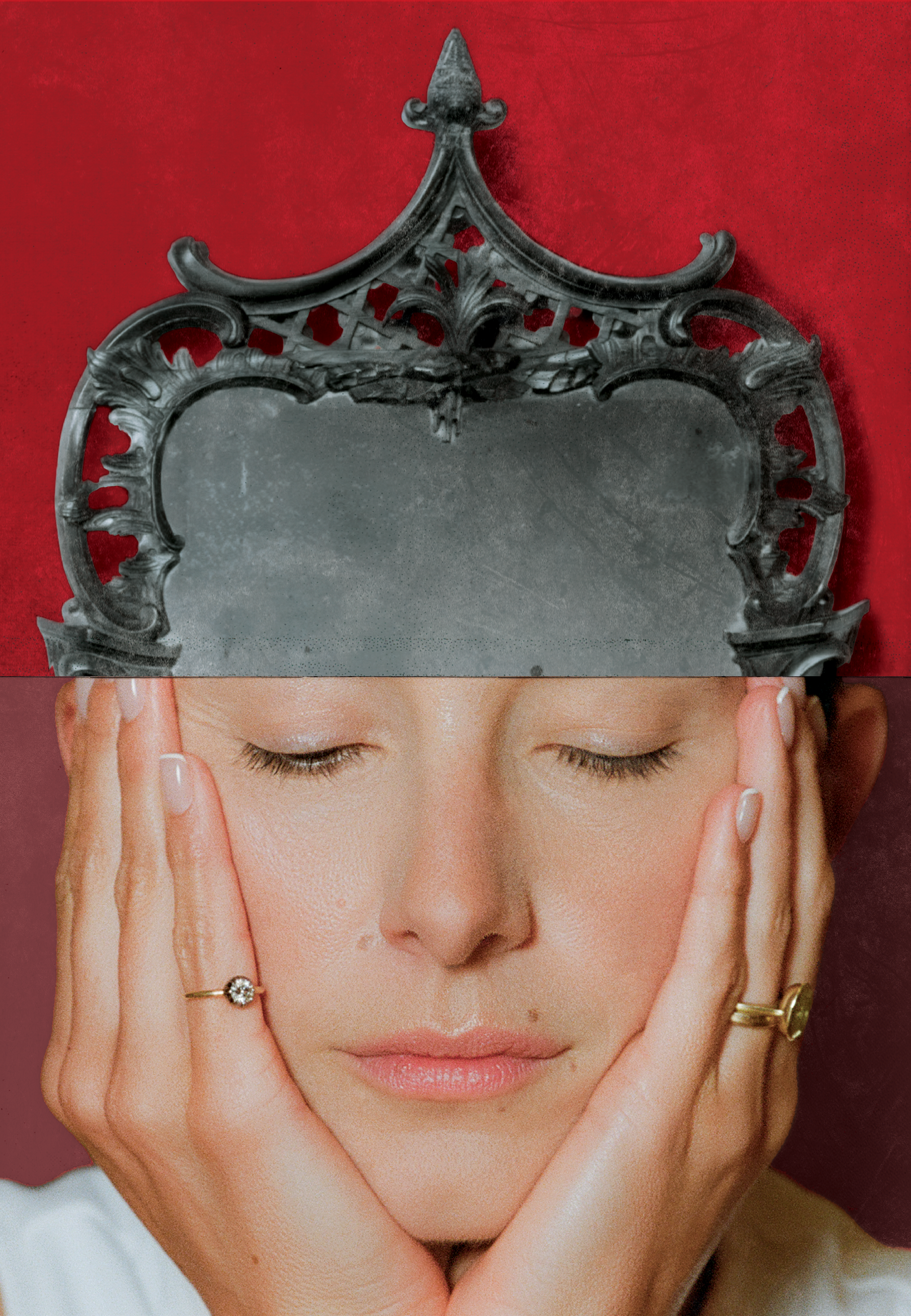
THERE’S A PARTICULAR KIND OF EXHAUSTION THAT COMES FROM POURING YOURSELF INTO SOMEONE ELSE’S GROWTH - and Tamar Kaprelian knows it well. On "Mirror," the multi-platinum singer-songwriter and co-writer behind the 4-billion-stream phenomenon "SNAP" turns that experience into something quietly devastating. Inspired by her own time managing a young female artist, the track examines the limits of mentorship: what happens when support, advocacy, and love run up against the one thing no one else can provide; the willingness to look inward.
"Mirror" arrives as the second chapter in a larger body of work Kaprelian has been quietly building around different forms of mothering. Where her previous single "The Only" explored the identity shifts that come with raising a child, this one extends that lens outward to the artists we champion, the women we pour into, and the moment we realize that growth can only happen when someone is ready to face themselves. It's a song about boundaries, projection, and the hardest kind of care: knowing when to let go. We sat down with Tamar to talk about where "Mirror" came from, what motherhood taught her about mentorship, and what's still to come.
LUNA: "Mirror" came out of a real experience mentoring a young female artist. How did you know that experience had become a song, and what was the moment it clicked?
KAPRELIAN: I've always written songs as a way of processing and releasing emotions, and "Mirror" was no different. While the song was sparked by one particular experience mentoring a young female artist, it was really the culmination of a pattern I'd noticed over the years working with several young women. I often found myself slipping into a maternal role when what I wanted was a collaborative one. Instead of building alongside each other, I would sometimes become the screen onto which frustrations, insecurities, or unresolved issues were projected.
One thing I've learned is that feedback can land differently when it comes from another woman. The same critique that might be accepted from a male executive can feel far more personal when it comes from someone who reflects something back to you. That's partly why I called the song "Mirror." Often, I wasn't being reacted to as I actually was; I was being reacted to as a reflection of whatever someone was struggling with at the time.
The song clicked when I realized I wasn't writing about one person. I was writing about a dynamic. And I was writing from the point where even the most patient among us eventually reaches a limit and thinks: I care about you, but I can't do your work for you. Some lessons can only be learned when you're ready to face yourself.
LUNA: You describe the song as being about "a different form of motherhood." How did becoming a mother yourself change the way you think about mentorship and what you can realistically give to someone else?
KAPRELIAN: Becoming a mother gave me stronger boundaries. Before children, I often felt responsible for everyone else's urgency. An artist would call at 10 p.m. on a Saturday, call four or five times in a row, and I'd feel compelled to respond. Motherhood taught me that attention is finite, and where you place it matters.
I'm actually a better mentor now because I'm more intentional. I can say no to the trip I don't need to take or the event I don't need to attend. I've learned that being present is more valuable than being constantly available, and that sometimes the most important thing you can give someone is the space to figure things out for themselves.
LUNA: Tell us more about your favorite line from the track.
KAPRELIAN: My favorite line is probably, "sometimes I feel like your mother and other times your punching bag," because it gets at something I've experienced more than once working with young artists. When you're deeply invested in someone, you inevitably become a place where a lot of emotions land. Sometimes that's trust, gratitude, and growth. Other times it's frustration, insecurity, disappointment, or fear. And often those feelings aren't really about you at all.
What I like about the line is that it captures the tension of caring about someone's development while also recognizing that you can't carry their emotional work for them. At a certain point, every mentor has to learn the difference between supporting someone and absorbing what they're unwilling to face themselves.
LUNA: "Mirror" follows "The Only," which explored identity shifts around motherhood. You've described these songs as part of a larger body of work around different forms of "mothering." How did that framework emerge?
KAPRELIAN: I think the framework emerged pretty naturally because I've always been interested in patterns. When I studied literature at Columbia, I was drawn less to individual stories and more to the themes that connected them. I love the idea of taking one concept and examining it from multiple angles over a longer body of work.
For me, that concept became mothering. Not motherhood in the literal sense, but mothering as a feminine instinct that exists whether or not you have children. In "The Only," it was about becoming a mother and the identity shifts that come with raising a child. In "Mirror," it's about mothering a young female artist and the emotional complexities that can come with that dynamic.
What's been interesting is realizing how expansive the theme actually is. The songs that follow continue the conversation in different ways. One, which comes out on September 27, explores the heartbreak of losing a significant relationship. And another, coming on November 3, looks at the idea of the motherland itself. As someone who has spent her life between Armenia and the United States, I've often felt caught between two cultures, never fully claimed by either. In that sense, it's a song about belonging, identity, and what happens when you're searching for acceptance from the very places that shaped you.
So while the songs are all very different, they're really asking the same question: what does it mean to mother, and what does it mean to be mothered?
LUNA: You co-wrote "SNAP," which has over 4 billion streams. How does the experience of writing something that massive shape the way you approach deeply personal songwriting like this?
KAPRELIAN: If anything, writing "SNAP" reinforced my belief that the songs that connect most deeply are usually the ones written from a place of complete honesty. When we wrote that song, we weren't trying to manufacture a hit. We were writing from a place of vulnerability and truth, in Armenia, and I think people can feel the difference. Audiences are incredibly good at detecting authenticity and magic, even if they can't articulate why.
What happens after is largely out of your hands. You can write a great song, but then it takes the right artist, the right moment, the right opportunities, the persistence, the teamwork, and a lot of luck. When all of those things align, something extraordinary can happen.
So in a strange way, the success of "SNAP" gave me even more confidence to write personally. It reminded me that specificity and honesty aren't barriers to connection — they're often the very thing that creates it.
LUNA: What have been some key sonic inspirations to you lately?
KAPRELIAN: I've been listening to a lot of Sheryl Crow, Kacey Musgraves, and Damien Rice lately, but for very different reasons. With Sheryl Crow, it's the tone of her voice and the production. There's something effortless and raw about her records. Nothing is overworked, yet every choice serves the song.
With Kacey, I'm drawn to both the songwriting and the sonic landscapes she creates. Golden Hour is one of those rare records where the production expands the emotional meaning of the lyric without ever competing with it. I'm also a huge fan of Daniel Tashian, who has written so much of that music with her. He's a brilliant songwriter and, as a fellow Armenian, someone whose work I've followed for years.
And then there's Damien Rice. What I love about songs like "Cannonball" is their sparseness. They're a reminder that a song doesn't need much production to be devastating. When the vocal is captured honestly and the emotion is real, a few instruments can break your heart far more effectively than a hundred tracks ever could.
LUNA: What do you hope the listener takes away from "Mirror"?
KAPRELIAN: I hope it encourages people to ask themselves a simple question: am I seeing this person clearly, or am I seeing my reflection in them? So many of our relationships are shaped by projection — by what we need, fear, or assume. "Mirror" is really about the moment you realize that caring for someone and understanding them are not always the same thing.
LUNA: You have more music coming out this year — what can you share about upcoming music?
KAPRELIAN: The songs coming later this year and into next year continue exploring the idea of mothering, though not always in the literal sense. One is about the loss of a significant friendship and the grief that comes with realizing someone you loved can no longer come with you. Another explores female friendship more broadly — something I think is both incredibly beautiful, when done right, and also incredibly difficult to navigate. We talk a lot about romantic relationships, but some of the most formative relationships in a woman's life are her friendships with other women, and those can be just as complicated, consequential, and heartbreaking.
The third song examines the idea of the motherland itself. As someone who has spent her life between Armenia and the United States, I've often been interested in questions of belonging, inheritance, and what it means to feel claimed by a place — or not.
Taken together, the songs are really asking the same question: who shapes us, who nurtures us, and what happens when those relationships become more complicated than we'd hoped?
LUNA: What intentions do you have for this summer season?
KAPRELIAN: My intention this summer is to practice discernment. I've spent much of my career moving quickly and saying yes to what came next. This season, I'm more interested in choosing carefully — where I spend my time, where I place my attention, and what deserves my energy. The older I get, the more I think a meaningful life is about curation, not accumulation.
