
Q&A: Terri Lyne Carrington and Social Science Cry for a Systemic Renovation in Sophomore Album ‘Trip the Night Fantastic’
INTERVIEW
INTERVIEW
☆ BY ELLIE GILBERT-BAIR ☆

PHOTO BY MEREDITH TRUAX
THE SOCIAL SCIENCE COLLECTIVE BELIEVES THAT A LIBERATED FUTURE NEEDS TO BE IRRESISTIBLE—so electric that everyone wants to partake in its collective radical imagination.
Trip the Night Fantastic, released via Candid Records at the end of July, comes seven years after their Grammy-nominated debut Waiting Game with more bounce but an equally salient call for freedom.
“We set out to make a dance album―music to make you move,” says drummer, educator and activist Terri Lyne Carrington, who leads the ensemble. The album’s title is a play on “trip the light fantastic,” a phrase from John Milton’s 1645 poem “L’Allegro,” which means dancing agilely, with fancy footwork. “We flipped the word ‘light’ to ‘night’ to reference the darkness being faced in trying times. While the album may inspire dancing, more importantly, we hope it inspires more care for one another,” Carrington added.
The ensemble’s core four―Carrington, multi-instrumentalist Morgan Guerin, pianist Aaron Parks and guitarist Matthew Stevens―collaborated with a robust list of eminent emcees, spoken word artists, vocalists and instrumentalists to activate this vision. Angela Davis calls our attention to the politics of imprisonment in “Abolition Song”; Aja Monet laments the unsung wailers, warriors and wordsmiths in “Blues Song (These Poems)”; and Arooj Aftab’s wordless melodies soar over Moor Mother’s patient profession of our resilience in “Prayer Song,” to name a few.
Carington’s commitment to envisioning a liberated world together extends beyond the protest music she makes with Social Science and others. She is also the proud founder and artistic director of the Berklee Institute of Jazz and Gender Justice.
“It's hard enough trying to learn how to play jazz, but then to be in spaces that aren't supportive of your gender, or any of your identities? These extra burdens are not cool,” she told Luna about the institute. “Identity Song,” the album’s second track, is an homage to her students who exist beyond the gender binary, the struggles they face and the beautiful future their existence makes possible.
Luna sat down with Carrington to discuss resisting the confines of genre, playing “life” and Trip the Night Fantastic.
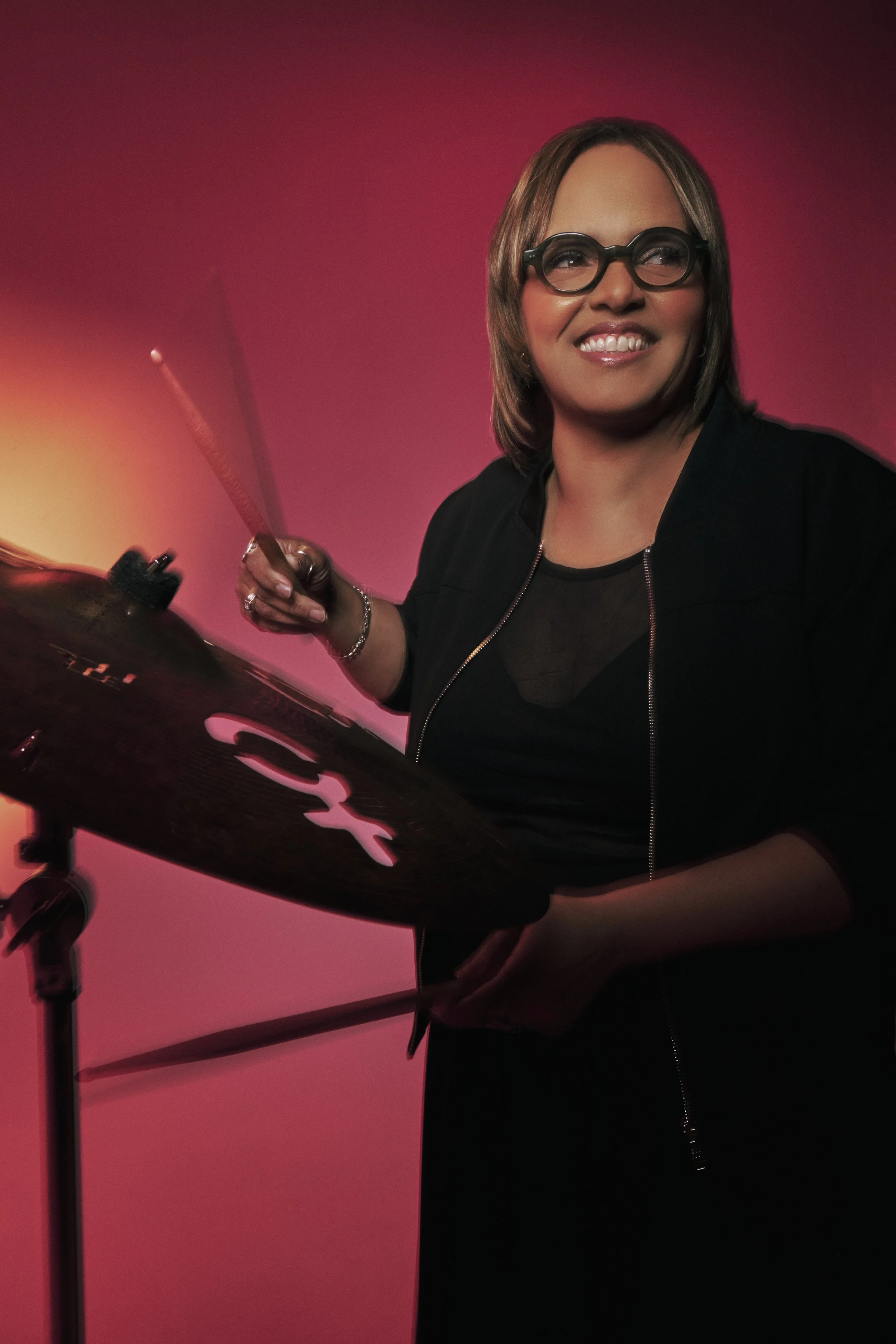
PHOTO BY MEREDITH TRUAX
LUNA: Trip the Night Fantastic is a beautiful record, and one element that stood out to me was the spoken word. How did you develop its place on the album?
CARRINGTON: Spoken word is something that’s very close to my heart. I write poetry. Over the years, I've written a lot more lyrics. The first Social Science album—that was all my lyrics, except for the spoken word and rap. On this album, I decided to recite my first spoken word piece on “Step Song.” I was pretty excited about that.
Two of my favorite spoken word artists are Moor Mother and Aja Monet, and I’ve had the pleasure of playing with them both. I asked Aja to [be a part of this project] before we had played together, but Moor Mother and I did a duo concert together for the Montreal Jazz Festival [in 2022]. And Tarriona "Tank" Ball is someone that I've really admired over the years with Tank and the Bangas, so it just came together.
The first Social Science album had spoken word and rap, so I was carrying that forward. I think sometimes, when spoken word is delivered, it can be more freeing. Rap is great and I love it; it just feels a little contained sometimes. With rap, you're within the beat. With spoken word, you can float outside of the beat.
The older I've gotten, the more I like to play freely. I think that's what we're all trying to do in life: find our freedom and exercise our freedom.
LUNA: Tell us more about how the world you’re building towards shows up in your music making.
CARRINGTON: I think whoever you are, whatever you're trying to accomplish, is going to show up in whatever you're doing—if it's sincere. As I've grown as a person, I've become more serious about marginalized communities and about trying to expand my own thinking. That comes up in my teaching. That comes up in, of course, my music. That comes up in conversation. You can't run away from who you are.
Wayne Shorter and Herbie Hancock—they taught me that we don't play music, we play life. We are trying to connect to humanity and others. You can do that without lyrics, with “just the music,” because the music is a part of who you are. But lyrics make it easier to get messages across, to use the power you wield through the arts. It can rally people. It can inspire. It can tell stories, tell history.
LUNA: As you’ve fought for equality in the jazz world and the world at large, has your relationship to power changed at all?
CARRINGTON: I don't think in terms of power too much, but it's a real thing. I’m part of several marginalized groups, so I don’t look at myself as having much power. But in comparison to some other people, I do have some. It’s relative.
I try not to think in a hierarchical way. That’s difficult because we teach the way we’ve been taught—whether by our teachers or our parents—so sometimes we have to relearn things and rethink things. But through working at Berklee for the last 20 years, I truly understand that young people are the future, and they’re moving the world forward. So I try to listen to them and to what’s important to them, not to totally instill my worldview in them. But the root of white male patriarchy—that’s something that many people can unify and struggle through together.
LUNA: You timed the release of some singles—“Identity Song,” “Solidarity Song” and “Abolition Song”—to coincide with celebratory dates for Black and queer people. What went into that decision?
CARRINGTON: I don't particularly care for these celebration months, but it's something that we have to use to get ideas and messages across, because it's when the rest of the world wants to focus on things.
I've always pretty much resented Black History Month, even though I understand the point of it. I have always felt the same way about Women's History Month. We should not need a month to celebrate things that we should celebrate all year. But I live in a society that has built these things, so why not release during the months that we’re celebrating these things?
Juneteenth, especially, now that it’s a recognized national holiday. I think it's great to draw more attention to its history. Honestly, growing up, I didn’t know anything about it. I grew up in Boston, and it was just not something that we celebrated. Ironically, it, in part, commemorates the years that freed enslaved Africans didn’t know they were free, and there are a lot of people in the North and elsewhere that didn’t know about this celebration. It’s like history repeating itself.
It’s also interesting that June is both Black Music Month and Pride Month. You know, it’d be nice if everybody had their own month if we’re gonna do it this way. But it's all just ways to get messaging across. And it just so happened that the album was ready to go.
LUNA: Let’s turn to some of the music. The driving, crunchy beat that goes under “Reckoning Song” feels like a unique turn. Tell us about the writing and production that went into creating that sound.
CARRINGTON: The core band—Matthew Stevens, Aaron Parks, Morgan Guerin and myself—wrote a lot of the music on this album together. But we also each brought in some songs. "Reckoning Song" was a song that Aaron brought in, and I asked Debo Ray, who also sings with us, to write a lyric because she’s very into rock music.
My first instinct was to thrash away, but I wasn’t really feeling it. It wasn’t speaking to me completely. So I thought, what if the drums were small and programmed, and it feels a little more electronic? There are some live drums in one section, too, but it’s interesting how you can get that crunchy rock feeling without big rock drums.
You don’t always have to scream to get that kind of energy out there, excitement out there, your point across. I was bringing it inside.
LUNA: “Solidarity Song” has a distinctive bluesy, country sound. What’s its story?
CARRINGTON: “Solidarity Song” started as a riff on the guitar that Matthew Stevens used to play at our sound checks. I always just liked it. I thought, I gotta do something with that. It made me think about blues and country music. Today, there is more crossover between these genres, and I don’t even like the word crossover because the blues is Black music. There’s Appalachian country music, too, but most of the country music we recognize today also stems out of the blues.
I really like the marriage of trap beats, programmed drums, with country feelings that Lil Nas X and Beyoncé and others have done. With this song, I thought about the marriage musically, and in the message. It’s a satirical take on stereotypes like the angry Black woman and Southern Confederacy-loving white dude, and how they feel like they’re naturally supposed to oppose each other. But if you’re working class, there’s a common enemy. We’re encouraged to be distracted by all the things that make us different, or the reasons that we shouldn’t like each other, but that keeps us away from what we should be focused on.
It was really great to have such a legendary singer, Miki Howard, on the track. And Larry Goldings, who sings the middle part, has made a lot of comedic videos in the past, so I thought he’d be perfect.
LUNA: What excites you about blending different musical traditions?
CARRINGTON: If we’re talking about blending—I was one of the people that helped bring the “Alternative Jazz” category to the Recording Academy for the Grammy Awards. And that’s because people are not living in boxes anymore, personally or musically.
I feel like independent artists have really changed the game. When you don’t have a record label trying to fit you into a box, you can make the work you want and see where it lands. I’ve been noticing a lot of creativity out there that’s not contained by what you grew up with, or what you studied in school, or the bin at the record store somebody says you need to be placed in. That creates the most interesting music. It’s like cultural exchange—how people from different walks of life can have interesting conversations, how you can allow yourself to be influenced by experiences you didn’t have. People want to continue to learn, study and grow.
In the music industry, it becomes a little problematic. Because you ask, what is it? What category does it fall in for this award or that award? That can be challenging. But I think it’s more important to make the art that you want to make and only worry about those challenges as they come.
The people that I played a lot with, like Wayne Shorter and Herbie Hancock—they didn’t stay the way they were. They kept inviting other elements into their artistry and into their presentations, so that’s the school I’m from. And I can’t play the way I played 30 years ago. I physically can’t do it.
LUNA: What’s next for you and Social Science?
CARRINGTON: I recently recorded New Standards Vol. 2, and I’m working on the book with another 100 composers. As for Social Science, I'm not sure what we'll do next. But I love these musicians and this particular project, so I'm sure, after a little time, we'll start working on new music too.
