
Q&A: Welcome to The Hails’ ‘Duckpond’
INTERVIEW
INTERVIEW
☆ BY GIGI KANG ☆
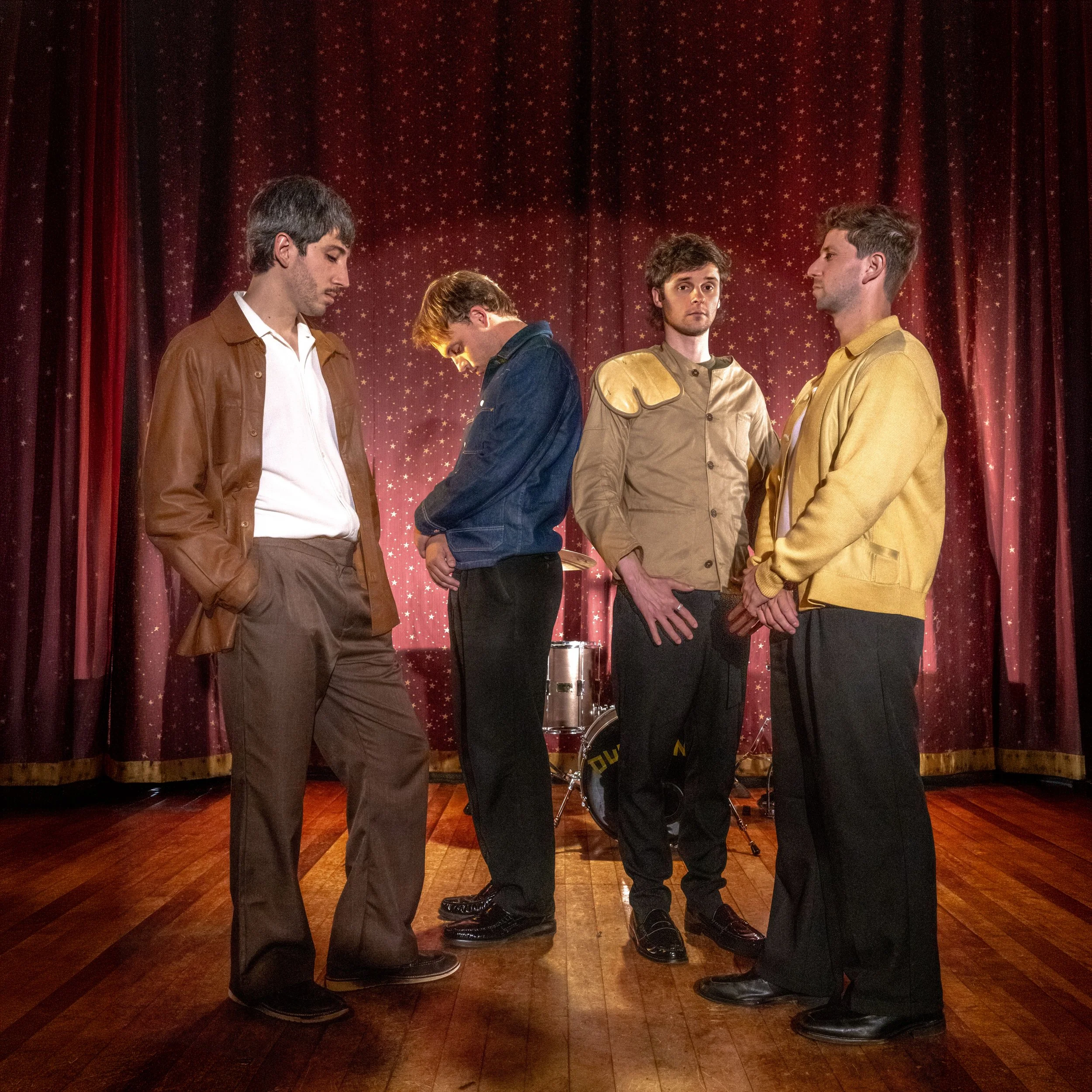
Photo by Andreo Otiniano
“A DUCKPOND IS A MAN-MADE STRUCTURE THAT’S A SAFE HAVEN—for small animals. You can look at this as a place for ourselves where we’re allowed to experiment. But at a certain point, we have to step outside of this safe haven if we want to grow in the ways that we want to,” says Robbie Kingsley of indie-rock band The Hails.
The metaphor of the duckpond is the band’s guiding image in their new chapter. Originally formed between uni friends in Florida, The Hails has been a ten-year project between Kingsley (lead vocals), Franco Solari (guitar/keys/vocals), Dylan McCue (guitar) and Zach Levy (drums). They’ve always created remotely with members living in different cities. For their upcoming album, the guys all met back in Florida to write.
For the first time in a decade, “every song was written in the same place and everyone was involved,” as Solari describes it.
The 14-track Duckpond comes out on October 23. We’ve already heard four singles off the project which all present a silky-yet-edgy sound that is classic to The Hails. The band also worked with Cultivision to create a world around the songs. The videos all build upon one another, following the same four characters played by the band as they navigate job searching, dream chasing, rejection and reality checks. It’s a clever show-don’t-tell approach that enhances the metaphor of the duckpond as these four characters obviously live in their own aloof world.
“They think they can keep putting on this show every day and they don’t have to make money,” Kingsley describes. “They don’t have to face reality. ‘Story of You and Me’ kicks it off.”
Read our full conversation with Kingsley, Solari and McCue below.
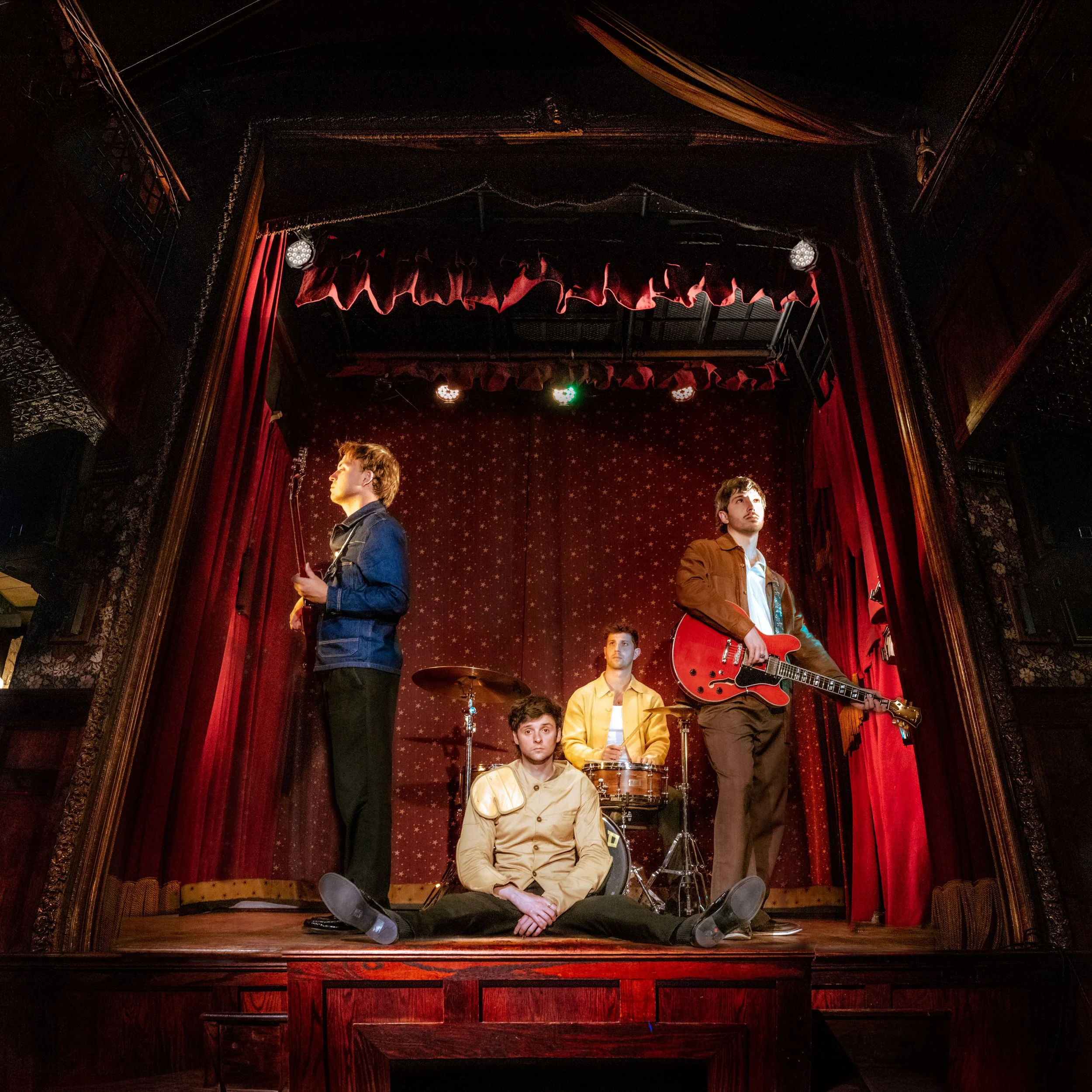
Photo by Andreo Otiniano
LUNA: What does “duckpond” as a word mean to you during this new chapter of the band?
KINGSLEY: We have a song on the record called “Ducks on the Pond.” We didn’t really want it to be a title track situation where one track is supposed to stand out, but that track ends the record. Shortening it into Duckpond, we wanted it to make the album about a fictional place. It’s also a call to a neighborhood in Gainesville, where we started at University of Florida, called Duckpond. The ethos of the record was writing in a house together and jamming like our old college times—the way that we feel music should be made. That’s the place, or mindset, of being in the duckpond.
More than that, I was thinking about how a duckpond is a man-made structure that’s a safe haven for small animals. You can look at this as a place for ourselves where we’re allowed to experiment. But at a certain point, we have to step outside of this safe haven if we want to grow in the ways that we want to. So it’s also an acknowledgement of where we’re at as a band.
SOLARI: Finding a name for the record took us a while. We had the song since June or July of last year and made the album by August. But we put it off—it was this looming thing of having no idea what to call it. It was called “LP 2” for nine months (laughs).
There were a lot of conversations that I remember Robbie and I would have. We were talking about the themes of the album. I really dialed in on this idea of defunct jobs. Some of the promotional videos that we shot where we're setting up bowling pins by hand. That was one of those [things] where it was how it used to be [as] young boys at the bowling alleys that would set the pins back up after people would knock them down. There was a lot of research, like the ice industry before refrigeration. Ice was harvested, farmed, then there were people who would deliver the ice. All of this stuff is gone, but at one point it was someone’s entire life.
In a way, part of this album was returning to how we started when we were just kids in a college house playing together. That had been gone from how we worked; it became super remote. Everyone was starting ideas on their own, then sharing back. So, in a romanticized way, I think what I found alluring with this idea of a fictionalized place is that it can be a place where some of those things still exist.
LUNA: It sounds like there’s a balance of nostalgia and breaking through into something new. Do you feel like that is where the band is as well in terms of your journey?
KINGSLEY: That has always been our essence. We love to honor our influences and we have a lot of different tastes and backgrounds. But, what motivates us to continue making music together is finding the ways in which those influences from earlier in our lives can inform the future. We’re always trying to strike that balance.
I think this album is a pretty good manifestation of that dichotomy. It’s the balance of wanting to develop as people and as musicians while embracing our strengths, and also pushing ourselves into new musical and creative territory.
LUNA: When you came together in that house in Florida, did you find a sense of empowerment in being together again?
KINGSTON: I feel a sense of empowerment when we present ourselves as a unified front. I was so tapped out of attempts at songwriting on my own. We had done plenty of songs that way before where everyone had written on their own or written in a duo. This was purely, “Whatever is made here is what we’re going to use. Nothing can be used from the past.” It’s almost a brand new band. Getting in that room together and seeing if there’s any magic between the characters in the room—that was some of the magic. Hopefully, it’s empowering for our future when we take this on the road for people to hear.
LUNA: For this newer music, you’ve said that you have a clear story to tell this time around. That’s definitely coming across in the cinematic approach you’ve been taking with the videos. What’s different with your approach to visuals this time compared to previously?
SOLARI: I think the headline is having a vision and a message. In the past, it’s been more out of obligation in terms of how the music industry has developed where you need to get people to care. In some ways, it’s been hard. I’m sure a lot of people struggle with adapting to that while retaining a sense of artistic integrity and not doing something just because people will see it. With this record, we’ve come to terms with the necessity of that and we worked with this production company, Cultivision. We had a lot of conversations with them which uncovered this loose story.
In a way, it’s a metaphor for what it’s like to be in this band—the ups, the downs and a willingness to get up and keep trying even if you get knocked down. The other piece ties back to how the music was made. This is the first time we’ve had a project where every song was written in the same place and everyone was involved. Having that sense of unity and conviction, it’s a lot easier to form a visual identity for that.
LUNA: In the video for “Fool,” the ending suddenly gets awkward as the band members walk off one by one. Tell me about the intention behind ending it that way rather than more of a triumphant end.
KINGSLEY: The ending of the song is loose. It feels like a band that is jamming their way out and maybe can’t figure out how to end the song. So, that was a representation of that. I love the song because of two melodies—one opens the song and it feels very Paul McCartney-ish to me, almost Ram influenced, and the other melody in the second verse is more of a The Rolling Stones type of sound. So, the song is fun because it has so many classic influences, but we’re toeing that line between a band that looks like they understand what they’re doing, while still figuring things out.
LUNA: In the “Story of You and Me” video, the band members are booing themselves, then they’re throwing flowers, then they’re throwing chairs. There’s an oscillation between appreciation and a sort of hatred. Where is that coming from?
KINGSLEY: I think it’s the reality of making art. You are your own biggest critic and your own biggest fan. We’re playing caricatures of ourselves and as the videos unravel, it’s evident that these four guys live together, they’re aloof and don’t really understand what’s going on. They think they can keep putting on this show every day and they don’t have to make money—they don’t have to face reality. “Story of You and Me” kicks it off.
LUNA: My favorite lyric in that song is “Take a chance, it’s human nature.” It makes me think about the people who risk it all and the people who play it safe. It can be difficult to separate them because there are external circumstances that can restrict someone from going all in, or certain privileges can liberate them. As artists, what’s your personal relationship with taking chances? Has it changed throughout your career?
McCUE: Making art is a risk, in any form. It’s impossible to begin the creative process if you don’t come to it with an openness to messing up and making something that other people might find bad. You have to block that out which is a hard thing to do because that’s also human nature. You’re hardwired to think about what others are going to think about you, especially if you’re an artist.
As Franco said, this album is the first time we’ve put out a project that consists solely of music that we all made in a room together, which isn’t inherently at risk. That’s how most bands do it, but it was a weird thing for us. We put pressure on ourselves to write an album within one summer and we were going to do it with a process that we had never done before. So there was definitely more than a little uncertainty, at least on my end, before starting that process. I think trusting that is a risk in and of itself.
SOLARI: Most of us are calloused to outcomes. If we weren’t, we would have given up already. The only place it feels like a risk is that time goes on and life goes on. I think about it as disconnected, the risk and the reward.
LUNA: I mean, you’ve been doing it for 10 years. Being together for that long comes with a lot of reality checks, I’m sure. But it can also come with unexpected successes, like opportunities that pop up simply because you chose this journey. What has being on this journey taught you about possibility? Do you feel like you’ve learned more about what’s possible in the world simply through choosing to do this together?
KINGSLEY: If I put myself in my shoes 10 years ago, this was not supposed to be my life. I’m a risk-averse person, but for some reason, being in a band and making music completely called to me and flipped my world upside down like a drug. It’s taught me about myself and I do have to face reality checks along the way. We’re at a weird point too where, along with so many other bands of our level, we still work odd jobs. I could have taken the safe route and done something with my advertising degree and lived a quiet life. But, as I keep going, go on tour, travel to new places and chase that high of making a song together, it’s just worth so much more than a decent salary.
If I didn’t pursue music, I probably wouldn’t have moved to New York. I’m learning that I truly am such a go-with-the-flow person. I don’t need to plan things and dreams don’t need to align so quickly. There’s such a passion for this and the people in my life all support it. That’s the best blessing I could ever receive. We’ve had such highs and such lows, and I know the future is going to be like that. Keep pushing—that’s the ethos of us right now.
McCUE: Being in a band teaches you a lot about the power of adaptability, not only creatively but generally. It really never does go according to plan. I don’t think there has been a single year where it’s panned out the way that we thought it would. Not always negatively—sometimes it goes better. There always is a way to figure it out. I think every band that has lasted X number of years can say the same thing. Because of this band, whenever anything goes wrong in life, I remind myself that I can figure it out if I have the right people around me.
LUNA: One of the coolest things you get to do because you chose this journey is touring. You get to meet the beautiful people who love you for who you are and love the music. What are you looking forward to with taking this new music on the road?
KINGSLEY: That’s really what we work towards. With this record, we were trying to cater to a live setting. We’re trying to invest in our live rig, so we’re going to look at getting some of our own lighting for the first time. We’ve upgraded into a bit bigger clubs this time, so that’s exciting in itself. It’s like a video game at times where you keep leveling up. It’s a whole new process to see what we’re made of and see how far we can push. I just want to be a touring musician for the rest of my life, so this is hopefully another step in that direction.
