INTERVIEW
INTERVIEW
☆ BY KIMBERLY KAPELA ☆
Dylan Mars Greenberg
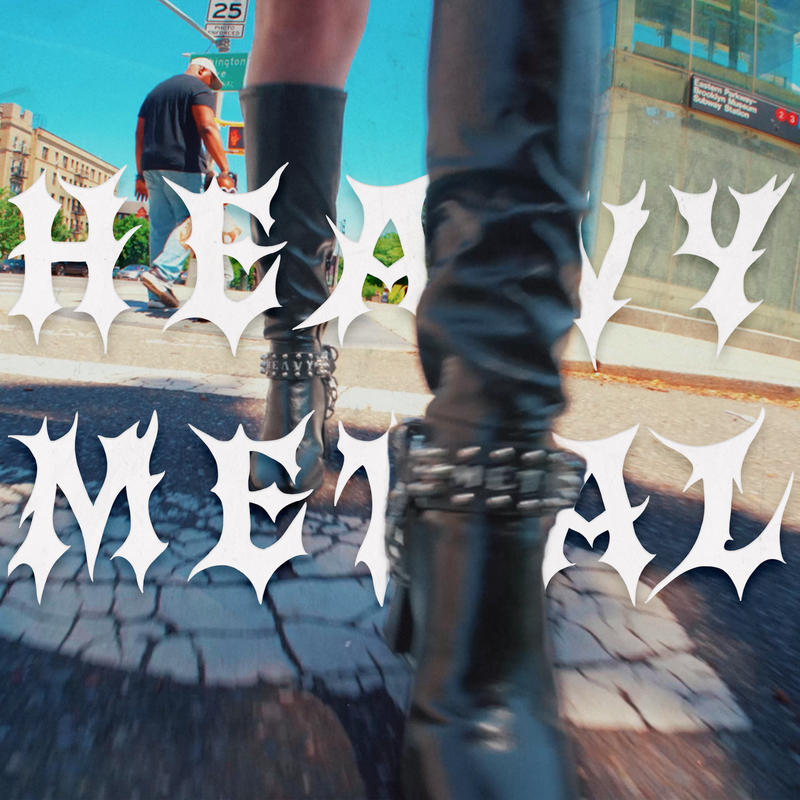
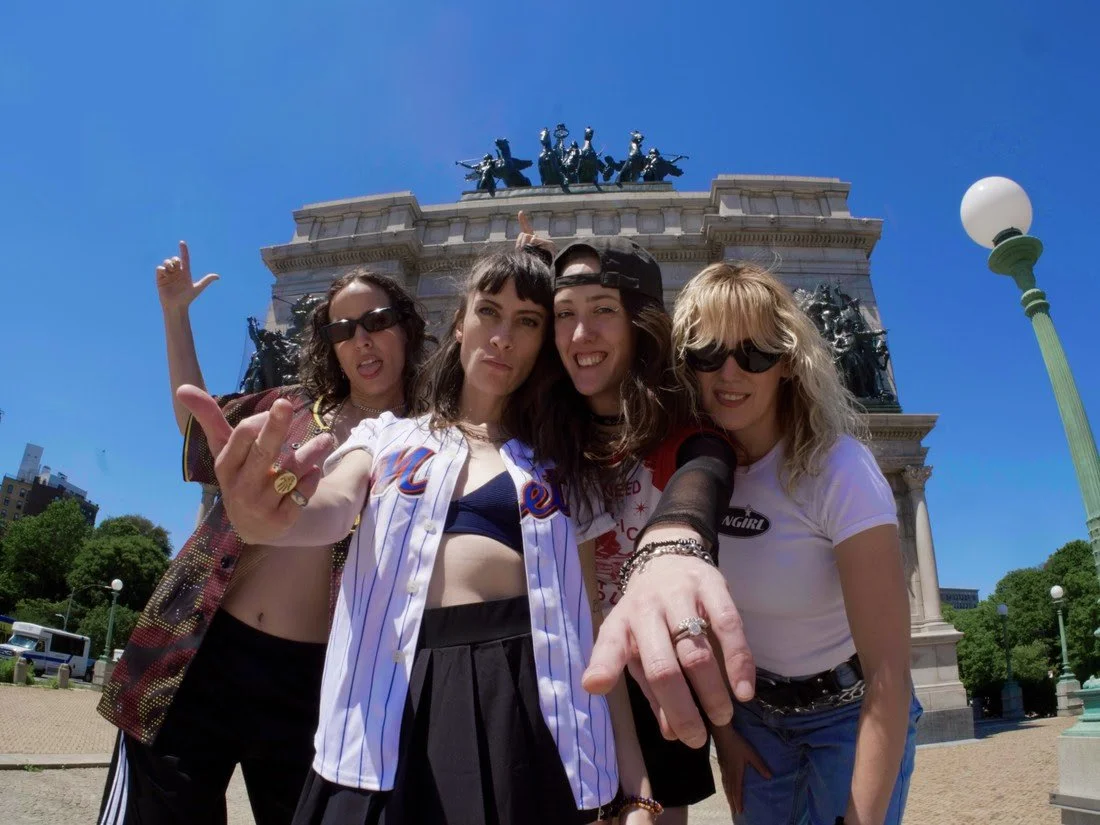
THICK TAKE AIM AT SYSTEMIC FAILURES — For punk band THICK, the personal is inseparable from the political. On their new single, “Heavy Metal,” the band confronts the systems that shape everyday life, from restrictions on bodily autonomy and inaccessible healthcare to school safety concerns and the exploitation embedded in late-stage capitalism. Rather than treating these issues as isolated crises, THICK connects them through a shared frustration with institutions that place the burden of survival on the people they are supposed to protect.
What began as a verse inspired by a Berkeley study examining heavy metals found in tampons quickly grew into something larger. The song became an indictment of the systemic violations that people experience in their daily lives, transforming an initial moment of alarm into a broader examination of power, inequality, and bodily autonomy.
“This song started as a verse or two after the Berkeley study came out about heavy metals being found in tampons and snowballed into a larger indictment of the systemic violations that we carry around every day,” the band says.
Throughout “Heavy Metal,” THICK examines the imbalance between those expected to endure the consequences of systemic failures and those who benefit from them. Survivors of sexual violence can face public scrutiny or isolation, women often shoulder the physical and financial burdens of contraception and reproductive healthcare, and teachers are left responsible for protecting students amid the threat of school shootings. These experiences may occupy different corners of public discourse, but THICK views them as symptoms of a broader system that prioritizes profit and control over human well-being.
“The violence and neglect we experience is a predictable result of systems that don’t see us as people, but objects to be exploited,” the band explains.
The track's critique extends beyond institutional failures to the consumer culture that encourages people to believe their individual purchasing decisions can meaningfully challenge systemic problems.
“We’re sold the idea that we can subvert the system with consumer choices, as if the main fix for a broken system is trying harder inside it,” the band says. “The real issue is who benefits when people are too broke and too tired to push back.”
The song also captures a new chapter for THICK. “Heavy Metal” marks the first recording featuring the band's evolved lineup, bringing its current members together in a track shaped by collaboration. The writing process unfolded spontaneously during band practice just weeks before the group entered the studio. Recorded at Studio G in Brooklyn with Jeff Berner, “Heavy Metal” is self-released, continuing THICK's independent trajectory.
“Heavy Metal” finds THICK confronting the systems that exploit, endanger and exhaust the people forced to navigate them. The band makes space for collective anger and resistance, reminding listeners that meaningful change cannot rest solely on those already carrying the weight of systemic failure.
LUNA: Thank you for talking to Luna. Our readers would love to get to know you and your music more. For any readers who aren’t familiar with you yet, what inspires your artistic style and sound?
NICOLE: Our sound has definitely evolved. I would always say once our sound was bands like Blink-182 and Fidlar, very melodic-driven, party music. Over the last couple years, especially with our newest configuration, we have four members now. We've evolved into a different sound.
KATHERINE: When we first started, I used to always say we were like if Blink-182 and Bikini Kill had a baby, and I think it's gone from there. I definitely lean a little more grungy, so Nirvana is a huge inspiration. It's an amalgamation of everything we grew up with. The throughline is honesty and melody, and so much of it is political by nature of just being women in music and writing about our life experiences, but I think that also is something we've been leaning more and more into over the past five years, and being less about partying and more about making a statement.
LUNA: Your newest single “Heavy Metal” tackles everything from bodily autonomy and inaccessible healthcare to school shooter safety drills and late-stage capitalism. What initially inspired you to bring these seemingly different experiences together under one song? What made it important to frame these issues as interconnected rather than isolated problems?
KATHERINE: That one was so fun for us to write. It was the last thing we wrote before we went into the studio. We started as a jam. We were jamming on it as a band, and then Nikki had the brilliant idea of why doesn't everyone write their own verse, so it pulls from all of our life experiences, which is why they are. It's touching on multiple issues that may feel separate, but I feel I think most people are encountering all of them. They're not really particularly unique to each other, but getting everyone's perspective and voices was a huge part of this song, and it was something that was done really with a lot of spontaneity.
NICOLE: We write something that doesn't need to fit the cadence of the first verse or the second verse, which is like so. A lot of our songwriting is pretty A B C A B C, where “Heavy Metal” is a style that fits you. What do I represent? Rosie is a teacher in school, and so I remember she came to practice that day being really devastated about doing drills with kids and putting them in cabinets. That was a real experience for her. She came into practice really upset, and I'm like, “Rosie, you found your lyric. Write about that experience and what it's like to be in schools and having to deal with that.” It was really fun to see what we tap into. I'm a therapist, so I'm around medication and people needing to get their pills refilled, so I went down the DSM 5 road. We all have a certain relationship to the lyrics that resonated with us.
LUNA: Bodily autonomy is at the heart of “Heavy Metal,” particularly when it comes to reproductive healthcare, contraception, and the consequences of sexual violence. How have you seen the conversation around bodily autonomy change, and what do you feel is still missing from it?
KATHERINE: Back to Roe v. Wade getting overturned, and as someone who in my twenties had an abortion, just knowing that even it doesn't matter why you're getting an abortion, you should be able to have access to it — whether it's medically necessary or not — at any point that you need it. I was thinking about places that I wouldn't want to live or even travel to, because you might not even be able to get care if you needed it.
NICOLE: Inaccessibility to everything. Inaccessibility to mental health because it's expensive, and insurance unless you have a corporate job, again, they all tie together. You don't have good health insurance unless you work a corporate job, and sometimes a corporate job sucks the soul out of you. Golden handcuffs, and it's really tough. With the heavy metals in my tampons part of the song, we're being targeted even with something we put in our bodies because the companies who make them don't care.
KATHERINE: That's what the chorus is about, where we're just getting fucked left and right. So much of it is tied to this late stage capitalism hellhole that we're living in, because when we're just being used for profit and for productivity, and we're not being thought of as humans to be cared for by our government or by the medical system, or by anything we're interacting on a daily basis, we're just an ATM machine for corporations. It just feels really oppressive.
LUNA: This is the first recording featuring THICK's evolved lineup. How has the band's current dynamic influenced your songwriting, sound or approach to making music together?
NICOLE: It's been awesome. Rosie's such a great drummer, and comes up with these ideas I don't think Kate and I would have necessarily thought of. We wrote a whole new album. There's a different style of guitar shredding and they bring different elements that give Kate more space to play with my voice or play with other things, versus as a three piece, it was hard to branch out.
KATHERINE: I think it's cool too because having an extra guitar allows us so much more by subtraction and addition because now the dynamic range has evolved, where we have more tools in our toolkit, so now when we have quiet moments, they feel even quieter. When we have big moments, they feel even bigger. I think the evolution also of just being able to play with the tension of dynamics more is really exciting and something I love about the new album we made together.
LUNA: “Heavy Metal” is self-released, following previous work released through Epitaph Records. What has releasing music independently allowed you to explore creatively, and how has it changed your relationship with your audience?
KATHERINE: Super interesting question. I think releasing it independently is nice because obviously you don't have any barriers, but also can be challenging because you don't have very much structure. When you think about artists, it's really all on you to make sure you're lining up all the dates, doing all the distro, all the promotion, everything. That at least sometimes a label can be a nice partner in that relationship. I think freedom is the flip side, and owning the rights to your own song is a huge upside as well. I would say there are pros and cons to both. Right now, we're trying to figure out what to do. Also, with the upcoming album, we're having the same conversation of what makes the most sense. The industry is in shambles, so it's hard to tell even what value is getting added by the older structural pieces of the industry. It's definitely a challenge either way.
LUNA: How do you hope listeners — especially your femme audience — can connect with or find power in this new era of music from you? What emotions or messages do you want to leave with them?
NICOLE: I think we always said from the get-go, relatability. They can do this. They can write this. They can share this moment. There's not a hierarchy. I think our music always tries to make sure there's not a hierarchy of power. There is inherent power when you're on a stage. I don't want to ignore that. But giving them the permission to feel, relate, and release what they need to release emotionally and whatever works for them.
KATHERINE: Hopefully, breaking down the barriers a little if people are intimidated and it can be really scary to step on stage. I know Nikki has said this a bunch, just start your own band. Pick up a guitar. I didn't start playing bass really until I was 25, and just decided one day that I wanted to do this. You don't have to be perfect. You don't have to overcompensate or make up for something. You deserve to be in these spaces.
NICOLE: Now, that we're aging, we're aging women, I didn't start playing music until 24. We got on Epitaph Records when I was 30, and we toured with Flogging Molly, Violent Femmes, and The Chats while I was 32. That's badass to be 30 on Epitaph Records.
KATHERINE: I'm trying to embrace it now. Let's inspire these young 30 year olds to do it because they're little babies now. 30 year olds are babies. It's so cool that we've been doing this together for 10 years or so. Thick has lived with us through so many life phases at this point, and that doesn't just go away, which is very cool too, to have let it evolve. You can keep on rocking.
LUNA: What is fueling your fire right now that’s pushing you into this new era of your career?
KATHERINE: At this moment right now, I feel like there's a little bit of a quietness in our creative space. We've just been so focused on the content of everything else that we haven't been writing new music, but we wrote an album.
NICOLE: It’s called Parts. It's based on this idea of all different parts of ourselves that make us whole. A lot of our songwriting was written in like I don't feel this way, but that's okay, and that duality. You feel this one thing and feel it fully, and this is what we're going to lean into. A lot of those songs are so different. The relationship with the male gaze, waking up to that with your body with grief. There's a lot of each song that has a different connection to a piece of us, and Rosie wrote one song. Jillian wrote one song. They have their own little voices in there too. But each song, I feel, has a whole part of us. I think what's keeping me motivated for this one is this is the first album we've done that I feel like we took time.
KATHERINE: I feel as though every piece of it was very intentional. We aren't putting out things that we aren't fully happy with, or making giant compromises for timelines. No matter what happens, this is a reclamation of our creative space and integrity that we can fill fully, which feels very different. That feels a little bit calmer to me, even though the album is not calm, the tone of the album is in no way calm, but I think the approach has a lack of anxiety.
NICOLE: It took us two albums to figure out how to record our vocals in a way that sounds like us, like live versus studio. We had a really hard time translating both, and this album, because we had more time, we were able to make sure our voices actually represent our energy on stage. I really think this album is us. If you hear this album and watch us live, they actually are aligned. I love the old albums too. It's just a different delivery that Kate and I didn't really know because we never did it before. You learn from experience.
LUNA: How are you feeling in this current era of your career and what does the rest of the year look like that you would like to share with Luna?
KATHERINE: I am feeling overwhelmed. There's a lot of moving pieces, and we have a lot to figure out for the album, and life is just overwhelming. Tying back to “Heavy Metal,” it's just a constant barrage of everything right now being horrible. “Heavy Metal” is very focused on our close world, but in the greater world, it's even more devastating and more complicated. I'm just trying to keep going back to the things that make me happy, so hanging out with my friends and making music is definitely one of those things that just like no matter what mood I'm in, I'm happy after I leave that space.
NICOLE: I think we're trying to figure out a way to relate to music that doesn't just involve the grind and touring. The last two albums, we put out an album and toured for a long time, and now we're trying a new formula. Let's write an album we really like, and let's make some videos we're really proud of. We're taking time to create content. I think we're trying to figure out how we want to exist in this world if we don't tour like we used to. How do we want to create this music and release this music? We don't have the answer yet, but we're in the process of figuring it out.