
Q&A: Wynd’s ‘The Shores’ Washes Over Our Memories, Reminding Us of Time’s Firm Grasp
INTERVIEW
INTERVIEW
☆ BY SULLIVAN JORDAN ☆
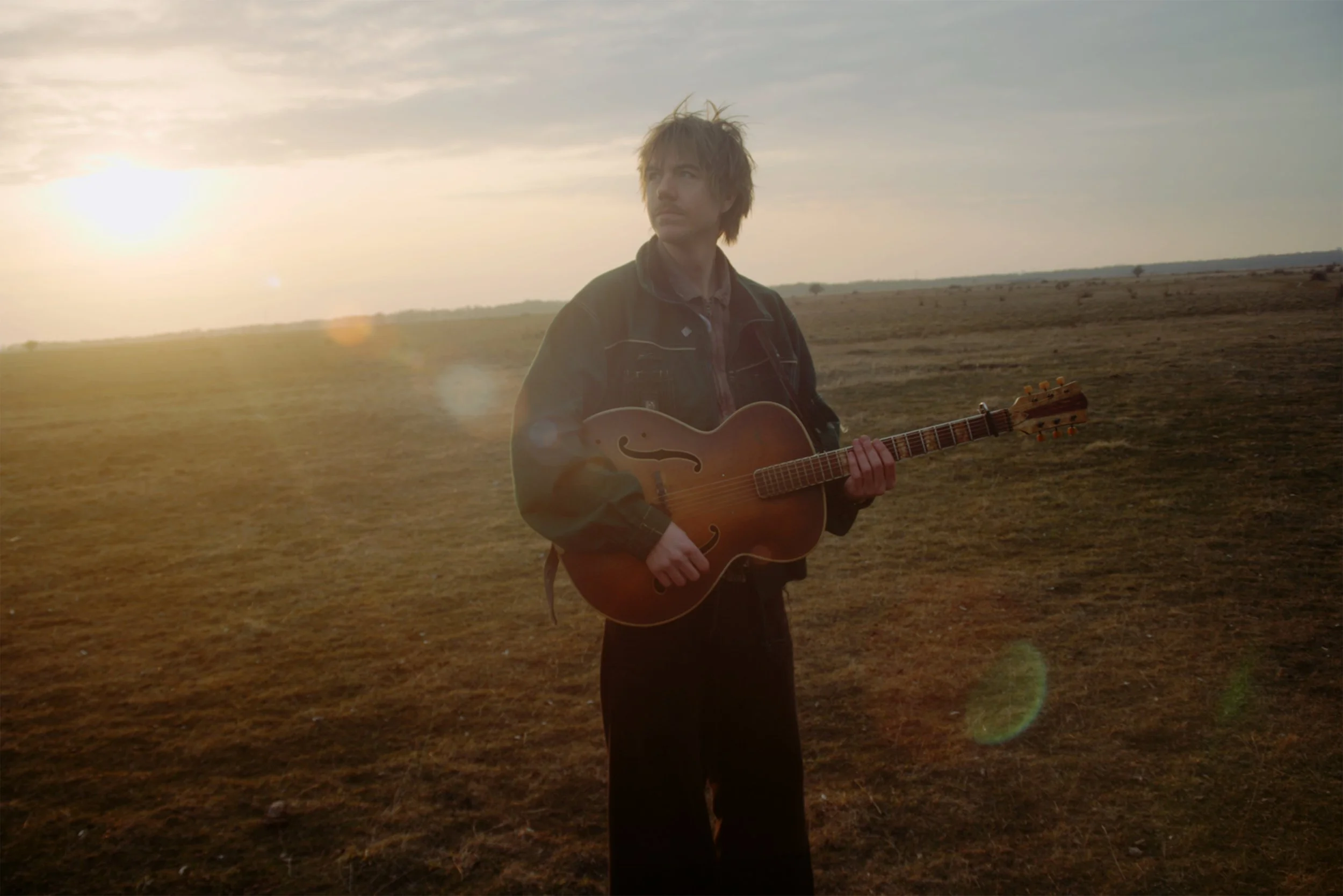
Photo by Kasper Leegaard
WYND IS A MUSICAL PROJECT BORN FROM THE NATURAL AND DELICATE INTIMACY of indie-folk musician and songwriter Morten Larsen. Using nature and personal experience as sonic, visual and poetic inspiration, “The Shores” takes the organic power and nostalgic momentum of the ocean to capture both the beauty and pain of time passing and memories fading.
Wynd embraces the challenge of slowing down as he uses a 4-track cassette recorder to craft his music. His patience and tender attention to detail shines in the resonant and soothing texture of “The Shores.” The track ebbs and flows, a wistful harmonica floating gently over waves of rustic guitar instrumentals and Wynd’s relaxed, yet bittersweet vocals. The song finds a steady rhythm, akin to the constant pattern of waves lapping against an ever-changing shore. Sometimes the waves hit the Earth in strong, heavy motions, and, other times, with a tender, gentle touch that invites us to soak in the ocean’s salty waters.
A gentle swirling of string instrumentals and harmonica builds into a fierce crescendo, growing more intense as Wynd’s vocals long to part with a memory of someone he once loved: “I wanted to write about sailing/Or any odd thing that she likes/But the words won’t find their way out/I can’t let the sea take her twice.” His timbre aches and stretches as he lets his heartfelt emotions take control and become one with the sweeping instrumental production. Wynd allows a minimal instrumental composition to find a natural rhythm, finding constant motion while moving through his hesitant acceptance that, despite time passing, there will always be feelings (and people) we cannot let slip away, no matter how hard we try or how hard we will them to abandon us: “She lives on the shores of my mind/And she’s not really sure how to find/The will to go swimming/To go swimming.”
Luna had the pleasure of speaking with Wynd about his creative approach to songwriting, his musical inspirations and what he hopes to convey in his music.
LUNA: Congratulations on the release of “The Shores!” Can you tell us a bit about the process of writing this song? How did the idea first come about and what was the journey from beginning to the final version we hear now?
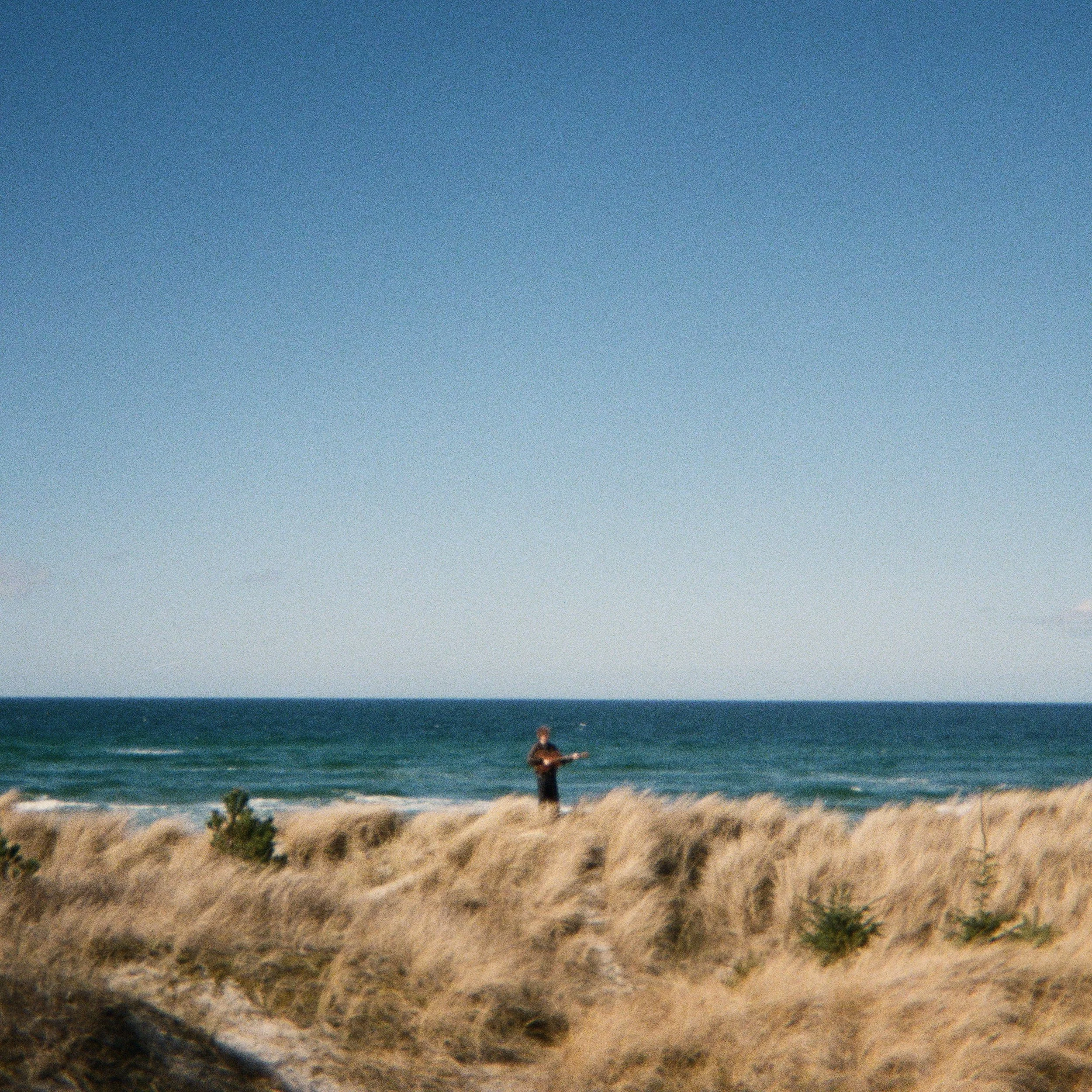
WYND: Thank you! It felt like the song had been brewing inside me for a long time but, once I put pen to paper, it poured out of me very quickly. There is a beach very close to my parents house, in rural Denmark, where I would go in the dead of winter last year [to] lie on the shore and reminisce. I was going through a breakup at the time and I liked the idea of writing about the tide’s endless pull, how the sea slowly reshapes the shoreline, as a way to describe how the memory of a person will slowly fade in time. I had the concept for a while, but I was too distraught at the time to really write it and I think six months passed until I finished and recorded the song onto my tape recorder. The final version is mostly a one-take with harmonica, backing vocals and violins done as overdubs.
LUNA: You mentioned recording “The Shores” on a 4-track cassette recorder. What inspired you to do that and how did that recording process inspire your songwriting and creative process for the song? How did you find the recorder?
WYND: I wanted to try out a more barebones approach to writing songs. Some of the albums that inspired me the most, like Bruce Springsteen’s Nebraska or Bon Iver’s For Emma, Forever Ago were written in a similar way. I happened to come across a Tascam 424 recorder while traveling in Japan last year and it felt like I was meant to use it for my project. I think restricting yourself by only having 4 tracks to record or only using acoustic instruments is a great exercise and it helps me focus on lyrics and melodies. We as musicians have become used to a fast-paced recording environment, using DAW’s, but when you’re recording on tape you have to have patience—there’s a commitment to the process, which I like.
LUNA: The lyrics of this song mention “the will to go swimming.” This lyric could be a metaphor to describe the fear of being emotionally vulnerable with someone else. Can you discuss those lyrics, what they mean to you and what you hope people take away from the song?
WYND: I really like that interpretation. When writing the chorus, I heard that line as a way of describing how the memory of someone can be persistent and powerful. There has to be a willingness and, like you said, a fearlessness to truly give to someone—it almost feels against our nature to do so. I think it’s great when people interpret my lyrics in new ways so that they apply to their personal experiences—your reading of the lyrics is definitely a more hopeful interpretation than mine.
LUNA: How did you first discover music and songwriting? Did you grow up around music and the arts?
WYND: I was fortunate enough that my parents signed me up for music lessons at a very early age, despite my family being all non-musicians. I played drums for many years as well as guitar, keyboards and singing but really what I always come back to is songwriting. There’s a freedom when unleashing your creativity that I only find when crafting songs.
LUNA: Who are some artists that have inspired you as a musician and are there specific albums or projects you return to when you need extra inspiration or when you need to step away from your own music for a bit?
WYND: I’ve mentioned a few already but I think the reason I’m always drawn to folk and indie-folk is because of artists like Joni Mitchell and Leonard Cohen. There’s a timelessness in their songwriting that I find myself returning to and that I never get tired of. Their music has stood the test of time, which is something I look for when putting together lyrics or making arrangements—how will this sound to people in 50 years? Currently, I also find both Adrianne Lenker and Laura Marling incredibly inspiring.
LUNA: Outside of music, what other hobbies or activities do you love that help you stay inspired or that help you find inspiration again if you’re going through a creative block?
WYND: I like to stay active with walks, runs and cycling. Being based in Copenhagen, I’m very fortunate to live in beautiful surroundings. The outdoors is definitely a place I go to when creativity fails or if I need inspiration. I’m also very into classic films, especially ‘60s [and] ‘70s Hollywood. Again, like with music from this time period, there’s an ageless quality that I find really inspiring when unwinding from making music.
LUNA: For listeners who are new to your music, how would you describe yourself as an artist?
WYND: I love to explore vulnerable emotions, the bittersweet. There’s a playfulness in my music, and definitely hopefulness as well, but I think the emotions that can be tough to deal with at times are the most interesting to convey. As an artist, I am all about the feeling my music translates to, and how my listeners relate to my songs. While the songs are based on deeply personal emotions, my goal is always to create a community and for Wynd to be a project that everyone can be a part of.
LUNA: What inspires you to be creative and make music?
WYND: Nature is a big inspiration for sure. “The Shores” is a great example of this—so many of our experiences as people can be mirrored in nature. Personal experiences are at the core of where I find my inspiration, but going out into nature lets me digest and convert those emotions into interesting song concepts. Outside of that, I try to surround myself with musicians I find inspiring, who are constantly pushing and exploring new sounds. Social media is a great tool for this too as it’s easy to find inspiring musicians from all over the world in an instant.
