
Spotlight: End Overdose Is Providing Community-Led Care at The Heart of Festivals
INTERVIEW
INTERVIEW
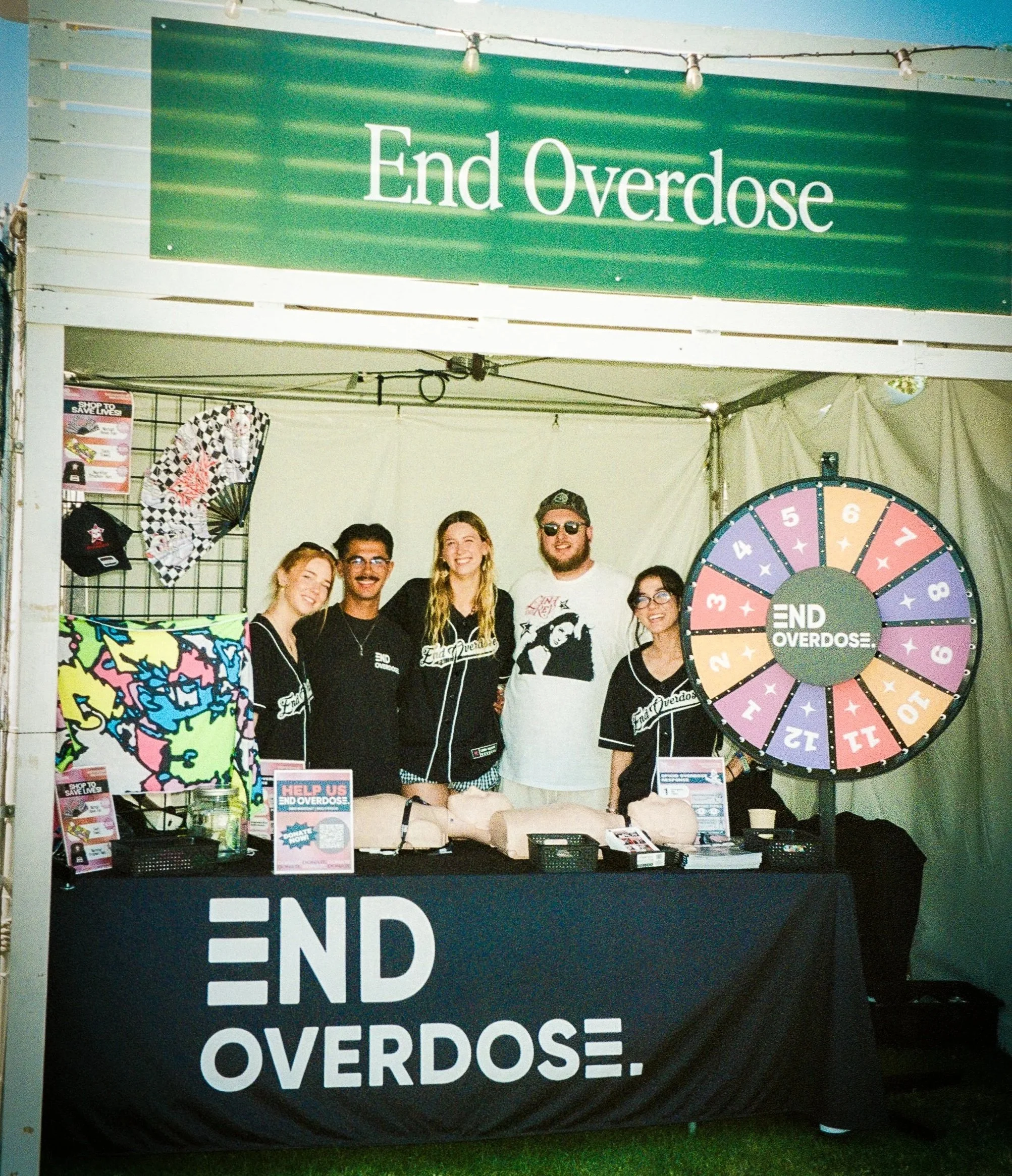
AT A FESTIVAL THAT OFTEN PRIORITIZES SPECTACLE AND THE NEXT HIGH-DEFINITION VISUAL, there is a quieter, more vital revolution happening on the polo field. For the fourth year running, End Overdose, a 501(c)(3) nonprofit, has set up camp at Coachella with a mission that has quickly become an essential part of the "festival regimen". Luna stopped by their booth right between the main stage and Outdoor Stage with Maddie Ward (COO) and Mike Giegerich (Director of Communications) to discuss how they are turning a medical necessity into a culture of community-led care.
When End Overdose first arrived on the live music scene a few years back, the conversation was largely about basic literacy, explaining what Naloxone was and how it functioned. Today, the landscape has shifted substantially. Attendees are no longer just curious; they are proactive, stopping by to restock their supply or add the training to their daily schedule alongside their favorite sets.
"What I think is a great thing that we see every year is we have so many people who are like, 'I saw you last year. I put it on my lineup to stop by the booth again,'" says Ward. This normalization of carrying Naloxone, the medication often known by the brand name Narcan, is a testament to the disappearing stigma in music spaces.
To meet the energy of a sold-out Coachella, End Overdose is diversifying how they reach the crowd. This year, the booth featured a prize wheel to incentivize training sessions. The goal remains the same: ensuring fans can recognize the signs of an opioid overdose and respond immediately.
But Giegerich and Ward emphasize that the training is about more than just a single medication; it’s about a broader ethos of looking out for your neighbor. Whether it’s an overdose, heat exhaustion, or a tent blowing away in the high desert winds, the booth serves as a hub for community building.
While Coachella serves as a high-velocity kickoff for their festival season, the organization's reach is year-round and nationwide. With 77 chapters led by volunteers and college students across the country, the resources distributed at the festival travel back to individual communities long after the music stops.
"People get to keep [the resources] after Coachella... they get to go back to all their individual communities and have this education," Giegerich explains.
The scale of their impact is already massive. To date, End Overdose has distributed over 750,000 doses distributed and over 705,000 people trained. As they expand their education into general substance use and opioid use disorder, their goal is set on a major milestone: hitting one million doses distributed and people trained by the end of 2026.
In a space where we rely on the people around us to make or break our time, End Overdose is ensuring that the Coachella community and beyond having fun and keeping each other safe.
Learn about their new trainings and take them yourself here.
