
SPOTLIGHT: Maggie Lindemann’s Relentless Authenticity Makes Her Identity as an Artist
INTERVIEW
INTERVIEW
☆ BY IVONA HOMICIANU☆
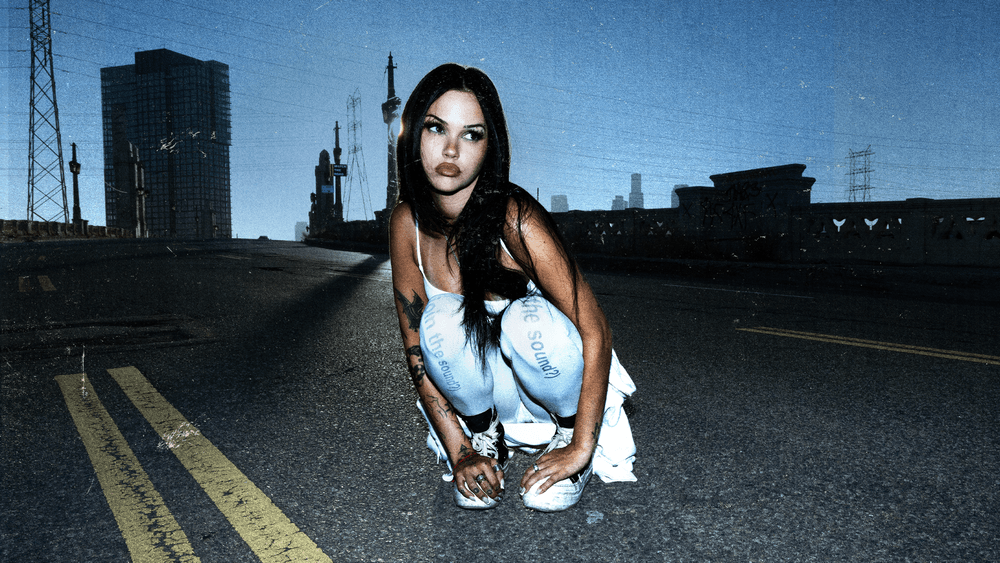
“I FEEL LIKE THIS TOUR IS SO DIFFERENT, I’M MORE CONFIDENT AND I’M HAVING MORE FUN” — On the last stop of the European leg of her “I Feel Everything” tour in Brussels, Maggie Lindemann’s evolution shined through even before she stepped on stage. When she released her album i feel everything last October, she seemed to be taking a more pop route while still staying true to her alternative sound. As I followed her discography from the very beginning, I was curious to discover how this record would translate to the stage.
Lindemann debuted in 2015 with slow pop songs. A year after that, she charted with “Pretty Girl,” a bubblegum pop single that debunked all the unspoken rules placed on young girls. The central line being “I’m not just a pretty girl,” she conveyed her defiance towards what was expected from her. When going from pop to alternative with “Knife Under My Pillow” in 2020, she seemed to be fitting perfectly into the punk pop scene, though that isn’t how she felt.
We met backstage at La Madeleine, a venue in central Brussels where she also performed her previous album SUCKERPUNCH (2022). As I entered her dressing room, she gave me a hug and invited me to sit next to her on the couch. She mentioned how surprising this tour has been, and how she didn’t expect to still have the reach she did.

“The other day, I looked out in the crowd, and I was like, “Oh my gosh.” The last time I toured was 2023, and for that whole time, I've been feeling really lost, so to come back and see so many people in the crowd… For a while I felt like I lost it all. I was like, “Wow, no one fucks with me anymore.” I just felt like I was done and I didn’t have a career anymore. To be here again and play bigger venues, and have more people in the crowd, it was a surprise,” she admits.
I wasn’t surprised to hear this, since imposter syndrome is a recurring theme throughout her discography. She opens up about this uncertainty surrounding her career on “i don’t belong here,” a vulnerable track that goes into the details of this particular emotion. When asked about how she handles this feeling of inadequacy, she reports that she’s figured out how to not feel that way anymore.
“I was having really bad imposter syndrome for a long time because I felt like I was having to change so much of myself and become this different person to fit into the environments I was in,” she explained. “I actually feel like this tour and this music and everything I'm doing, I'm finally myself again. I’m putting myself in places where I actually feel like I do belong and with people that actually love me and think I'm cool just the way I am has gotten rid of that completely.”
Imposter syndrome isn’t the only theme that runs through her projects. When it comes to “i don’t belong here,” she sings “I'd forgotten who I am, was I in on the scam?” which goes back to “novocaine” on her album SUCKERPUNCH, where she sings “Forgotten who I am / Got so ripped off by living / It all feels like a scam.” “evil,” a track about seeing through someone’s bad intentions, references “you’re not special” on her previous album as she admits, “I used to think you were special / But what made you special was me.” She reveals this is part of her writing process: “I like to do like parallels, so I'll use similar lyrics. I do that a lot. I feel like there's some songs that I've written that were like a beginning to end type of thing.”
Besides her debut album SUCKERPUNCH and her sophomore album i feel everything, she also released two EPs: PARANOIA (2021) and HEADSPLIT (2024). When she reflects on her previous projects, she highlights her growth throughout the process.
“I've learned what I like to do and what I don't like to do. I have been through so much from PARANOIA to now, so much has happened in my personal life that affected my work life. They always say, “Put your business first,” and that's the thing that finally clicked to me,” she adds.
She specifies that she loves hanging out with her friends and being in a relationship, but that is no longer at the forefront of her priorities. “Now that I'm older, I realize the only thing that really matters to me right now is my music. I've been open about not being that present in my work during the HEADSPLIT era, so I think putting my all into my work and really taking that as what I need to be doing has really helped change things.”
i feel everything goes through the phases of a toxic relationship. The opening track “fang” recognises the vampiric nature of a dynamic that drains you on a high-speed beat, beginning the album with a “BANG!” The pop influences come in with the following track, “spine” which recognises the disingenuity in the other person in the relationship. A more light-hearted pop track is “joyride,” which focuses on living in the moment and ignoring the red flags.
Despite that, the heaviness that we’re used to with her sound is still very much present. “let me burn,” featuring The Warning, unveils the unspoken thoughts that build up until they explode on a rock backdrop. “split” mixes punk, rock and pop in a high-speed portrayal of how it feels to not know where you stand with someone due to their rapidly changing moods. Everything comes to a peak with the title track which closes the album, “i feel everything.” The tension that builds throughout the storyline comes to an ebullition here, with Lindemann’s interpretation bringing every difficult emotion to the surface.
At the core of this record, there is an identity loss that comes with being in this encompassing relationship. “mourning” shows the discrepancy between body and mind, with the lack of trust in one’s own self giving the tone to the heavy production. “suburbs” considers changing identities altogether, leaving behind the career in the public eye for a more traditional life. She approaches the “grass is greener” mindset from a realistic point of view, which is that no matter what lifestyle each one of us chooses, we can’t outrun the problems we carry within ourselves.
“lost cause” encapsulates the overthinking spiral that also rejoins this identity confusion, showing the difficulty of living in a mind that is always cogitating. The production has a circular feel similar to the spiral expressed in the lyrics. This is also apparent in “2022,” a feature with Julia Wolf, who seems to rewind time to search for clues as to where everything went wrong. The distorted vocals that spell out “lost in you” are another proof of the complementary connection between lyrics and production. “heart drop” begins with a synth that brings an oddness to the atmosphere, which becomes more apparent with the distanced and distorted vocal processing. The chorus falls in line with a heartbeat then speeds up before the beat drops—a perfect encapsulation of the feeling the title references.
Lindemann admits “lost cause” and “heart drop” are the ones she keeps returning to. I asked how she operates to capture the exact feeling she’s experiencing in her songs. “I write down things as I think of them, but also when I'm writing and as the music is going, I think of different melodies. Sometimes the melodies will inspire different things for me to say.”
Since her identity loss is pertinent and present in this record as well as this period of life, I wondered what makes her feel most connected to herself, to which she responded with routine.
“When I'm at home and in my routine, I feel the most connected to myself. I'm having so much fun on tour, but I’m one of those people that is very all over the place. When I'm on tour, I lose my routine. I'm eating really bad. I'm not responding to texts. I'm very out of it, which I love because I have so much fun, but for me, it's almost like a false reality,” she explains.
Throughout the interview, Lindemann was very grounded in her environment. She was sitting in a comfortable position with her knees against her chest and made eye contact as we discussed her album. The conversation felt very friendly in nature, while she took time to respond in a genuine and authentic manner. It was shocking to see how different her energy was to when she would go on stage, where she becomes more imposing.
It is a stark difference from her last tour, with her confidence elevating the performance of this record. This all made me question what she has planned next with her music. She admitted she doesn’t know where she’d like to go next with her sound — given her affection for rock music, she finds her heavier songs thrilling to perform, but she’s also curious to explore other genres. Either way, she’s proved that each record she makes connects with people on a deeper level, and that no matter which way she decides to go, her authenticity and vulnerability resonate with people.
