
Q&A: Alexandra Alden Syncs the Surreal with the Sanguine in ‘when is it too late?’
INTERVIEW
INTERVIEW
☆ BY STARLY LOU RIGGS ☆
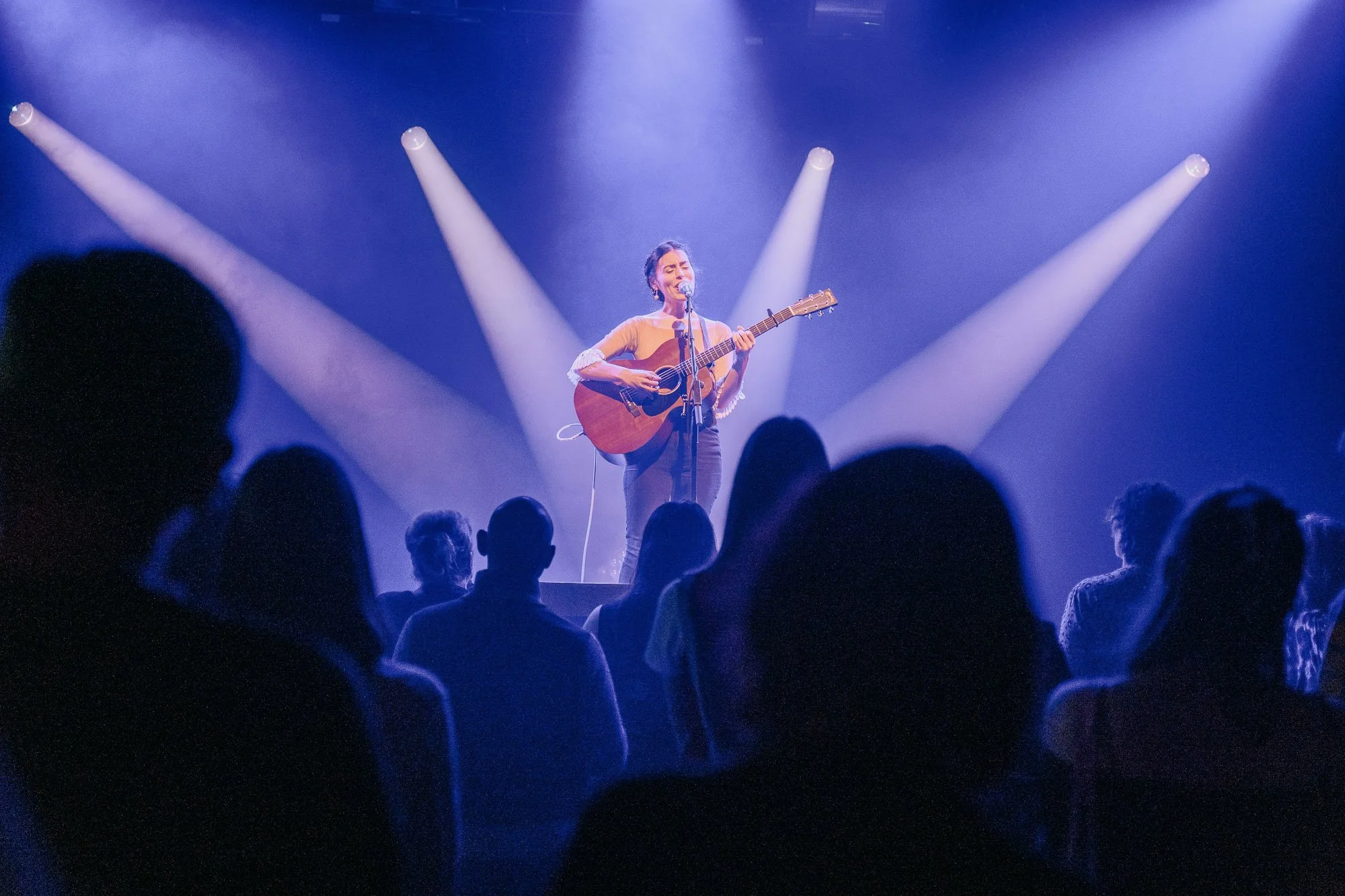
FROM A LEAF IN THE BREEZE TO THE MOST ORNATE ARCHITECTURE—Alexandra Alden delights in both the mundane and extraordinary. Drawing on her experience growing up in Malta, alongside vast travels around the globe, Alden’s bright-eyed sound shines through with dulcet guitar and a lilting voice, draped in lyrics about worn down shoes and moldy fruit. At times sounding fantastical, Alden embraces the profundity of simple moments.
Alden felt drawn to music from a young age. Her devotion to the craft shines through in a delicate combination of gentle rhythm and words that feel simultaneously universal and deeply personal. A frequent traveler, Alden writes what she knows: crying on trains, hotel rooms and meeting strangers she’ll likely never see again. The liminality of traveling allows for a specific kind of processing of the world, both seeing ones home from afar, and staying deeply in tune with each moment on the road.
Late last year saw the release of Alden’s sophomore album when is it too late?, an insightful look into the artist’s heart, mind and her personal progression as an artist. Ahead of a tour across the Netherlands, Luna was able to catch up with Alden about what it means to feel home, inspiration and her journey as a musical artist.
LUNA: Your song “stonefruit” was written on an “endless journey home.” Where were you traveling from? Where is home for you?
ALEXANDRA ALDEN: I was heading home early the next morning after a sold out show in Wroclaw, Poland. The night ended late, so I think I must have been on two to three hours of sleep at most after an intense week of back to back shows all across the country. It was such a great trip, though I was also quite wrecked by the end of it. I stayed up chatting with a photographer and we explored the city at night.
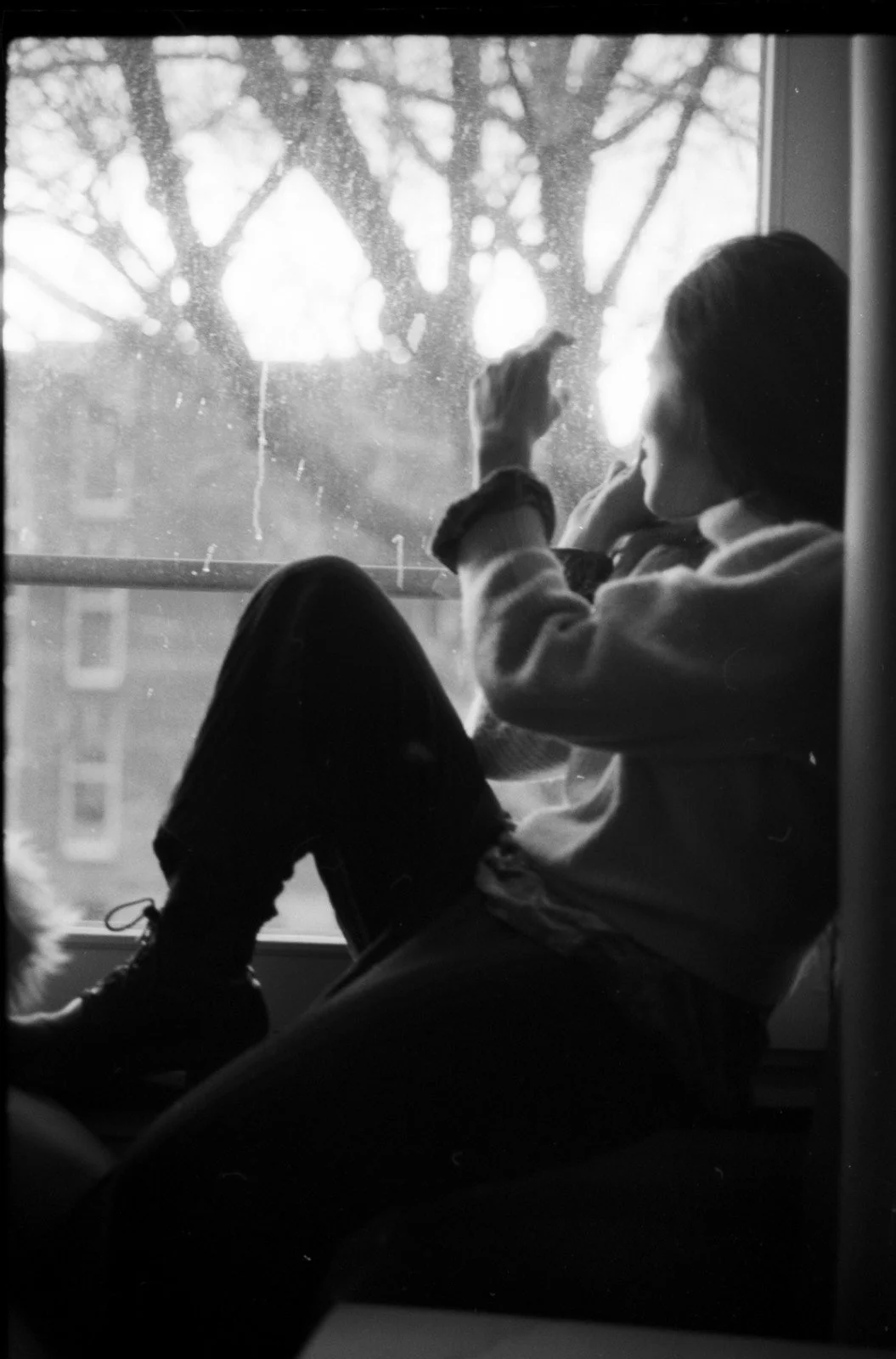
Early next morning, I tried to find the quietest, emptiest train carriage to sit in, hoping I might catch some sleep during my hours-long journey across Germany and the Netherlands. I ended up sitting at the very back of the train amongst all the bicycles and bulky luggage. I found a window seat and put my feet up. I half-napped, half-hummed a song that would end up being ”stonefruit” set to the swaying, rickety rhythm of the train making its way across the country.
My head was filled with impressions from the tour. I'd bought some beautiful ripe summer fruits from a vendor that I hadn't eaten and had to throw them away before my departure. At the time, I felt like I was my best self when I was away and when I was travelling. Now that the trip was coming to an end, the fun was over. I didn't like who I was becoming back at home and the rotting fruits seemed to embody that feeling. I was leaving my happiest self behind. It's sad to think about now. I also hadn't really confronted any of these feelings at the time or given them any place. I didn't feel like home was really anywhere. I felt very displaced. I was living in liminal space and this is what the album is mainly about.
LUNA: When did you start making music? How old were you and how did music come to you?
ALEXANDRA ALDEN: As a child I was always fascinated and moved by music. My parents encouraged a very artistic environment. My mum paints and my dad plays guitar. My extended family grew up making music and art, so I think it's very much in my genes. I remember going to Sunday mass, and I would be extremely bored until hymns were sung. I would cup my hands over my mouth and begin quietly singing my own lyrics on top of the hymns about stars and princesses and magical beings. I think this must have been how I first explored composing. I'd always invent my own melodies and lyrics on top of already existing music I would hear, whether it was my dad's CDs that he'd play at home or running around with my CD player and headphones inventing dances as I'd improvise along.
I began keeping a journal from a young age, though I don't particularly do that too much anymore. I always loved writing and reading. During my early teens I entered a brief goth phase where I would attend classical singing classes, piano, and I would stay up all night reading terrible vampire novels. I searched for a band to join, to no avail, and began playing my dad's acoustic guitar and writing my own songs as I accompanied myself when I was 15. The rest is history. I didn't know the term ”singer-songwriter” even existed. I just wanted to make music and would do it at any cost.
LUNA: You’re from Malta, but you’ve lived in a handful of countries. What brought on this movement? How do you think it’s changed you? Do you feel it has affected your art?
ALEXANDRA ALDEN: Moving around and also being from such a culturally diverse background definitely affected my music. I think it gave me a broader perspective of the world and the different ways people lead their lives. It made me more open-minded and curious about what it means to be alive and be part of several cultures. Having said that, I always felt a strong pull back to Malta, because of my grandparents, cousins and friends living there. I also crave looking at the sea and feeling the warmth of the sun. There is something very wild and mystical about the Maltese islands that I feel is inescapable when you live and are from there. I'm very fascinated by the Maltese language too, although I don't sing in it currently. I grew up with English as a first language so that comes most naturally to me. Culturally, Malta is a mix of Mediterranean, Arab and English influences, which is quite unique and makes for an interesting national identity crisis too. Seeing your roots from afar does make you appreciate them more.
I allow my music to be influenced by all these perspectives as much as possible, so I am never uninspired in that sense. It just becomes tricky to curate it in a comprehensive way at times and what makes the cut to the final album is only a fragment of my broader inspirations and ideas actually. I'm always curious about what the future might hold, artistically.
There is always this feeling of homesickness and longing for the sea, the sun and ripe peaches.
LUNA: Aside from the cohesive sound of this album, you’ve also curated a visually striking aesthetic. The music video for “Magnolia” is really unique, blending architectural animation and live action performance. What kinds of things inspire you visually?
ALEXANDRA ALDEN: I’m drawn to architectural spaces that hold memory, like Palazzo Parisio, for instance, or the Museum of Archaeology in Valletta (Malta). These are places where the past and present exist side by side. That tension really shaped the “Magnolia” video. Working with ŻfinMalta [National Dance Company] allowed me to explore that through movement. Their choreography brought a softness and fragility that matched the song’s sense of longing. It felt like watching emotion take shape in space.
The animations by Gideon van der Stelt highlighted the liminal spaces from which art is also born. Quiet in-betweens and taking moments to catch your breath and reflect, before moving forward again, are integral themes to my work. Those pauses, like the silence between notes or the space between movements often reveal the most truth. Nature plays a huge role in that for me. I find inspiration in small, almost imperceptible changes: a leaf curling inwards, the way light shifts across a wall, how everything is connected on a cellular level. I like to stare into the details because that’s where I find meaning and purpose: in the overlooked.
LUNA: Your songs and visuals almost feel fairytale-like: very light and bright, with a little bit of edge: like in “Wild Honey and Thyme” lyrics, “How does it feel in your tower of concrete in the sky / Do you feel high? / Is it power you desire?” What does it mean for you to write pop and folk songs—and generally pretty pleasant and happy sounding tracks—about moments of discomfort and turmoil?
ALEXANDRA ALDEN: For me, that contrast is essential. I am drawn to beauty as a vessel for difficult truths. Writing songs that sound sweet or serene allows the listener to lean in; and once they’re there, I can explore deeper tensions. Discomfort, longing, disillusionment: the shadows of the human psyche. In “Wild Honey and Thyme,” the fairytale imagery softens the critique, but doesn’t erase it. I think folk and pop music have always had the power to hold complexity in something deceptively simple. We all hold darkness and we must teach it to coexist with light.
LUNA: Is there one moment in your music career that was particularly impactful on you as an artist?
ALEXANDRA ALDEN: A few years ago, I found myself unexpectedly in a high-profile role on a televised reality show. It was surreal—suddenly I was being watched, quoted, criticised and celebrated, sometimes all at once. I had to learn, very quickly, how to stay grounded in who I was as an artist. That experience challenged me not only to defend my values publicly, but also to reflect privately.
After a long filming day, full of off-screen drama, I went home feeling completely ungrounded. My music had been dismissed by people in the production and I felt small in a space that demanded performance but rarely offered space for authenticity. That night, I wrote “Life Is Now.” It came out like a breath I didn’t realise I was holding. It reminded me why I do what I do. That song became a personal anchor. It’s easy to get swept up in other people’s narratives of success and that experience helped me return to my own.
LUNA: I’d love to hear more about the people you work with. Who worked on this album with you?
ALEXANDRA ALDEN: I’ve been incredibly fortunate to work with an amazing group of people on this album. Over the last few years, these collaborators have really helped bring the songs to life.
My bandmates and the musicians who contributed were essential in shaping the sound: Daniel van der Duim on keys and piano, Jurriaan de Kok on double and electric bass; Pete Galea on drums and percussion; Jimmy Bartolo on electric guitar; Ivan Nogueira on cello; and Loek van den Berg on saxophone. The album was produced and beautifully engineered by Chris Vella and co-produced by myself. I find myself leaning more and more into production with every album I make. I hope I will get to the point where I can self-produce completely too. I feel like taking the reins on production can also influence the compositional process of my songs.
I've known my bandmates since my teens, practically. I think that’s what makes the collaboration so special. I've seen them exit other projects and take on new ones in the meantime, so it's really special that we have continued to work together all these years. I am deeply appreciative of their trust in me and their enthusiasm for my songs. I always look forward to bringing new material to a rehearsal or a hang. They're great people and they're so much fun to be around—and just endlessly talented.
On the post-production side, Milo Ferreira handled the mixing at Cheese and Grain Studio in Frome, and Ocki Klootwijk took care of mastering at Rocktown Studios. I created my first two albums at Rocktown Studios and Milo has worked on some incredible albums. I sat in with him for mixing and I learned a lot from that whole process. He's quite the wizard and I look forward to heading back there in the future.
And finally, I have to thank Gideon van der Stelt, whose love, patience and artistic vision have been constant sources of strength. His artwork, videos and design work helped shape the visual world around the music.
LUNA: How did you connect with Gideon van der Stelt, who worked on both of your most recent videos?
ALEXANDRA ALDEN: Gideon and I first crossed paths in a way that is quite cinematic—he climbed in through the window during a rehearsal at our shared artist community space and our eyes met. We’d known of each other, but had never properly met until then. Later, he invited me to a screening of his film New Babylon, and I was completely floored by the quality and emotional depth of his work. From there, a creative dialogue unfolded naturally. We discovered a mutual love for liminal spaces, for the surreal and the dreamlike—artists like Tim Burton, whose work blends the uncanny with the intimate. Collaborating with Gideon on my recent videos has been a true meeting of minds. I admire his ability to capture vulnerability with imagination and craft. He's such a sweet, kind and genuine person too.
LUNA: You’ve played a lot of live sessions, and your video for “Stonefruit” ends with you smiling, about to play The Bowery Electric in New York. It feels like performing live is a very joyful experience, and it’s sweet to be able to see your engagement with the audience. What’s your favorite part of playing and performing live?
ALEXANDRA ALDEN: Performing live is where everything comes together. The songs, the words, the silence and banter between songs. The mistakes are also important. They keep you sharp. Suddenly everything that happens onstage belongs to everyone in the room. That interconnectedness you feel when playing a show is unlike anything else. It's theatre, but it's also therapy. When I first started out performing, I was terrified and nervous before every show. These days, I do still get nervous, but I also have become even more grateful for the experience of being listened to by an audience, and that honestly outweighs the nerves. I think you have to be very open to your audience and as an artist onstage. It has definitely helped me to become more comfortable in my own skin.
LUNA: I love that you have a track called “This Could Be My Last Song” that’s second to last. The song itself is about finding the right words, and how the music might stop coming to you. Is there a double meaning here in the playful track placement? And are you ever afraid of running out of inspiration?
ALEXANDRA ALDEN: I think about it all the time, from a place of curiosity. What happens if the music stops? That track plays with the idea of endings in all the creative and existential ways. It’s both sincere and a little tongue-in-cheek. Writing it was a way for me to lean into that uncertainty without trying to control it. I was deep in the questions.
At the time, I was home a lot but also feeling quite trapped. There was a lingering sense of doom, like something was always out of place. I'd moved houses already 10 or 11 times by then and thought I'd finally found myself in a settled place, but I'd never felt so unsettled emotionally. I found myself disassociating, trying to view my life from the outside. I’d ask myself things like, “Is this actually okay?” or “If the walls could hear this, would they think it’s normal?” The song came from that strange space where I started questioning what I'd accepted and what needs to change. It’s one of the most personal tracks on the album and yet it also feels like a conversation with something bigger than myself.
LUNA: With that, I’m curious about your song writing process! How do the songs come to you? Do you have any sort of songwriting rituals, or things that inspire you the most as you’re working on tracks?
ALEXANDRA ALDEN: My process is a little bit scattered these days. I just try to fit in an hour of writing wherever I can. The other day I wrote a song in 2 minutes and then that was all the time I could squeeze in. I have lyrics written across my notes pad on my phone, scraps of paper, notes on laptop, docs, a writing pad. It's honestly a mess and I feel like I need to become a bit more organised again because I start losing things.
I usually start writing at the guitar and at the piano until I find a chord progression that stirs some emotion or matches the one within me and melodies begin to form. Lyrics and melody come simultaneously, usually.
I'm overwhelmed by a strong emotion before a song comes out, and the only way to feel better is to create a song. It's better than any therapy I've ever been to, actually. Though I also have a harsh inner critic, and I believe having a kinder inner voice would probably make day to day life a bit easier.
Waiting for the right moment to make things is probably a recipe to never make things, because life is short. Time flies by. And to answer my own album's titular question “When is it too late?” It can definitely be too late at some point, when you don't have your health left and when greater responsibilities take up your time leaving little time for your own personal play. That's what making music is to me. It's allowing yourself the chance to literally just play.
LUNA: How do you think you’ve changed since you first started writing songs?
ALEXANDRA ALDEN: I think I’ve become a little less precious about songs. When I started writing, I thought everything had to be profound or poetic to matter. Now I care more about truth, even if it’s a bit messy or mundane. I think I find more beauty in the mundane and the everyday, instead of big adventures. I’m more interested in nuance at the moment and discovering the beauty of stability. These days I also find that I am more able to write from a joyous space, which is a bit of a new feeling I'm happily exploring.
LUNA: What’s next on the horizon?
ALEXANDRA ALDEN: I've got an incredible tour coming up around The Netherlands with more dates to follow across the EU. In January, I'm performing in Amsterdam, Groningen and Nijmegen with my full band and as a duo. I'm really excited to be bringing these new songs to these incredible cities! I also hope to start self-producing my next album very soon. I'm writing more songs at the piano these days, so I might also bring that to the stage at some point.
