
Q&A: Andrea Bejar Finds Her Sound and Flourishes With Debut Album ‘In Bloom’
INTERVIEW
INTERVIEW
☆ BY SAMANTHA SORIA ☆
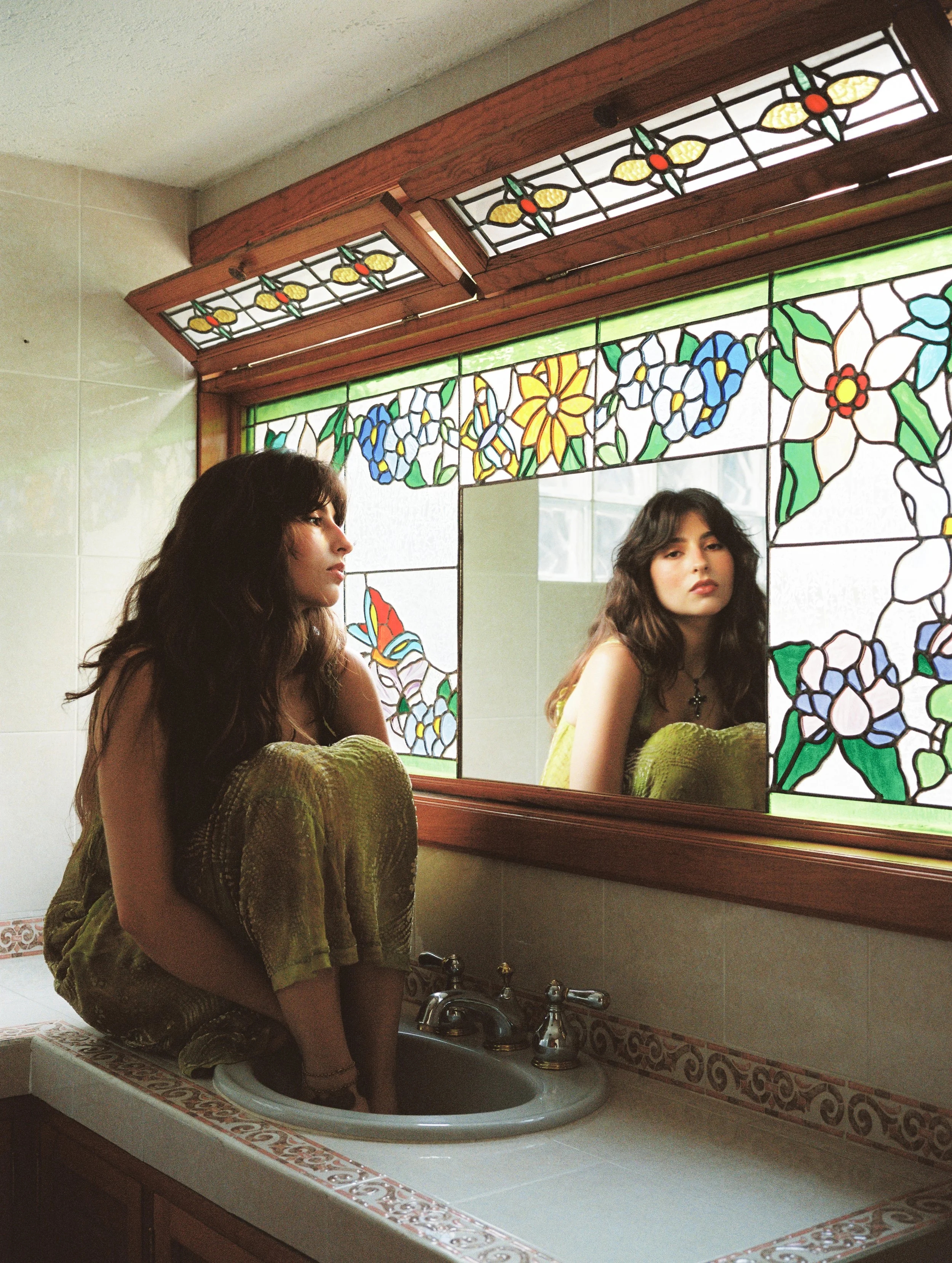
Photo by Summer Schantz
MAKING A STATEMENT—For Mexican-American artist Andrea Bejar, it was important for the singer-songwriter’s debut album to be a statement. “I always said that I wanted the EPs [like Love Again] to be a window into who I am, and I wanted the album to be an open door,” said Bejar. With the exciting release of her debut album, In Bloom, out now, the sonic world Bejar spent time searching for and honing has successfully paid off.
With its impressive, seamless bilingual storytelling that shows how courageously Bejar opens up her heart, In Bloom not only demonstrates that vulnerability is anything but a weakness, but also shows that sometimes the best songs come from discussing the things that usually make us uncomfortable.
In conversation with Luna, Bejar dives into the sonic world of In Bloom. She talks about what it was like tapping into themes such as womanhood, grief, heartache and aging, but, most of all, in a personal favorite moment during this discussion, Bejar talks through the pure joy she experienced as she came to discover how immensely proud and in love she is with her work.
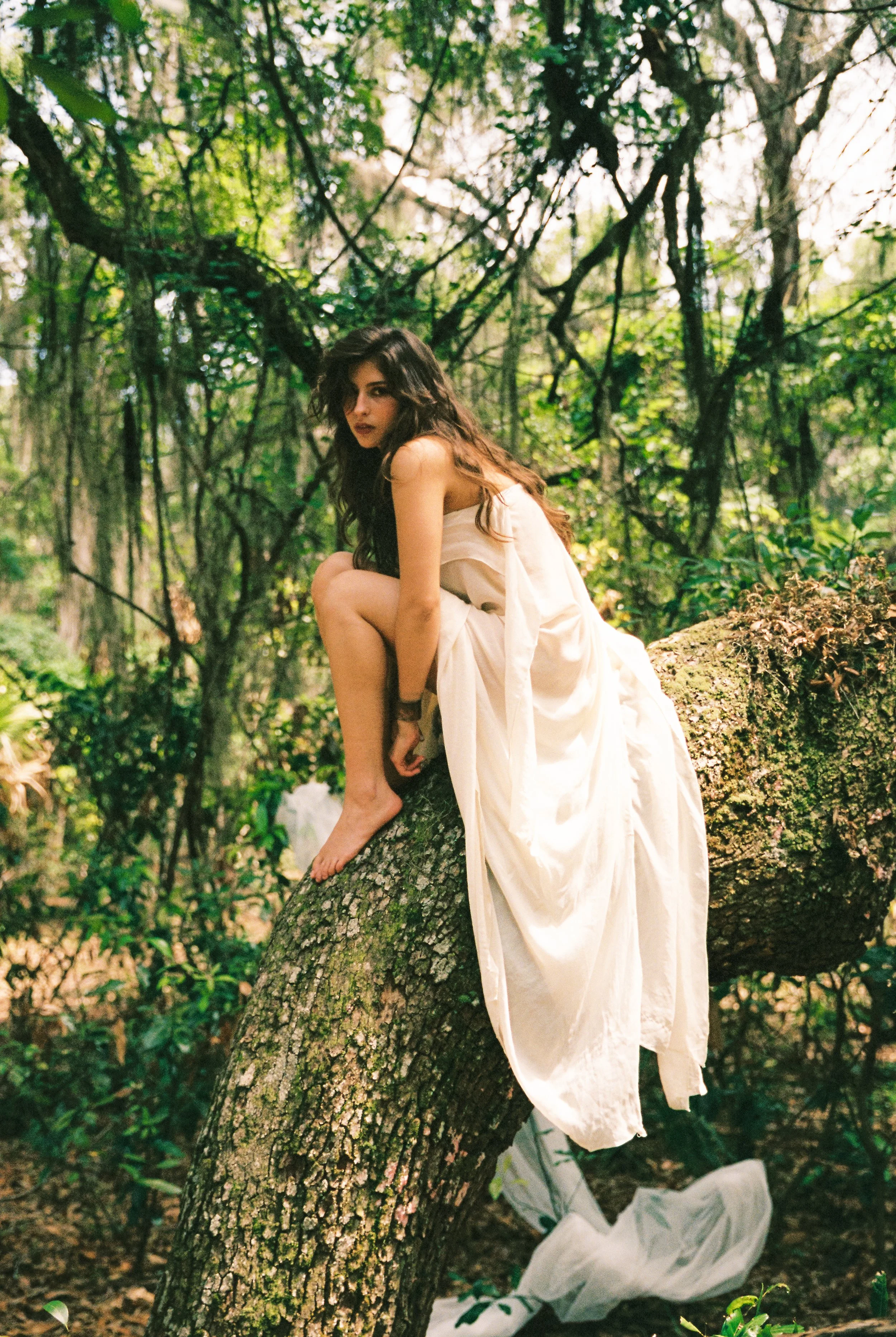
Photo by Summer Schantz
LUNA: Before we dive into the album, I gotta ask—How has it been for you touring with the legend, Colombia’s pride and joy, Juanes?
BEJAR: (laughs) Are you Colombian?
LUNA: Yeah!
BEJAR: It's been awesome! The fact that he's invited me to sing “Fotografía” the last couple of nights has honestly been crazy for me because I've been listening to Juanes literally for as long as I can remember. I think one of my first memories of listening to music is dancing [to] and singing "La Camisa Negra.” His music is ingrained in my childhood, and I can't believe that this is real life. That I'm able to open for him, tour with him and sing with him on stage. It's crazy!
LUNA: You describe In Bloom as a coming of age album that touches upon themes of womanhood, heartache, anticipatory grief and the fear that comes with growing older. What was it like to tap into these feelings? Was it intimidating considering it being a debut album or was that something you were determined to explore and learn something new about yourself within the album’s creative process?
BEJAR: Yeah, I think the latter for sure. I've always been a very open person when it comes to talking about things that I've gone through or my feelings, especially with the people that I love. I've always been very okay being vulnerable so there wasn't ever the fear of having a thought that people might not resonate with it. That was not really in my mind which I think was so helpful writing it because I was like, “I don't care who was listening to this.” I knew that my family was going to [listen], and there are a couple of songs about that and things that I grew up with, but we really have a good relationship, and I think they know me. Same thing with my boyfriend. Maybe there were a couple of songs that might have sparked X,Y and Z feeling, good or bad, and then I ran with it.
The thing about writing is that you’re inspired by a lot of small things. For example, “Te Vas A Arrepentir (Don’t Hurt Him)” is a song that was inspired by a story that my mom told me about when she was younger. She wasn’t married to my dad—it was when she was dating and seeing other people—and I took that, and some of my own experiences of a momentary feeling that I felt, and poured that into the song along with stories that my friends have told me about, things that they’re feeling. So it’s a culmination of different stories or things that I felt for a moment that I’m exaggerating and digging into. Not exaggerating in the way that I didn’t feel that way but more so that the world isn’t ending. Essentially, I’m just embellishing the stories and other songs like the closing track “Tell Me I’m Beautiful,” [which] talks about being scared of getting older and what that means in today’s society and needing some external validation.
I feel as women, a lot of the time, until we come to our own, even when we’re younger, we’re always looking for external validation from our parents, siblings, and now with the internet, that’s also changed so much. As humans we're always looking for external validation because sometimes our own words and brain is warped about ourselves as well, and I think that as women, we grow up with a lot of expectations from everyone else, and having to look a certain way, and having to be a certain way—being gentle but also strong—so many things that juxtapose each other that we're always battling with, and apart from that, you have the societal pressure that the older you get, the less desirable you are, and for men that's not the case.
For men, it's the opposite, and it fucking sucks that we live in a society where that is not true a lot of the time for us. I also think that it's up to us to change that mindset within ourselves because I look at my grandma and I look at my mom and I'm like, “You're the most beautiful person I've ever seen, and I wouldn't change a thing about you. I don't see your wrinkles, this new sunspot that you got, your eye bags—I don't see all of these things because I love you so much.” I see the person that they are and I see myself in them, and these are things that come to mind when I'm thinking about other people, and I wish that I could be that kind to myself sometimes. I wish that they could be that kind to themselves as well.
“Tell Me I’m Beautiful” has a lot of layers, and it was something that I was feeling a lot because at the time, I was like, “I'm 24, and I like haven't even released my album yet, and there are people that are at the height of their careers when they're 25, and they started doing this when they were 15, and I'm just behind, and I haven't accomplished the things that I want to accomplish in my career.” When I zoom out, I'm like, “Well, I’ve come a long way for three years of releasing music!”
It's always this internal battle, and I think it's the fear of becoming less important, becoming invisible to other people's eyes because you're getting older, which I know also isn’t true because the people and women that I love and that are around me, I genuinely believe that they become more beautiful the older they get. So it's this weird thing where I wish I could feel that way about myself, and I wish they felt that way about themselves and it's training the brain.
LUNA: You have spoken about how you think in Spanish and how you also feel in Spanish and in English as well. Were there times during the production where you thought about not incorporating that switch between languages? That's something I’ve always thought about with artists that sing in two languages—how do you know when something is strictly an English song, versus English and Spanish?
BEJAR: I don't! (laughs) I think the beauty of being able to write in both languages is that you have more to work with. [With] “Sharpen the Knife,” I started writing that song fully in English, and then I was like, “What if the song switched perspectives?” and now the song is about my grandma. What if it was my grandma talking to me? Then that made so much sense to say it in Spanish.
The opening song of the album, “Quédate Un Ratito Más,” is a song about anticipatory grief that I've always felt about losing my grandma. I have a really close and wonderful relationship with her and I've always been so terrified of what my life would be without her that I think my brain is thinking about these things and making myself upset about it and feeling the grief before it happens is gonna make me feel it less when it does happen, which is not true at all. It's gonna make me feel less present with the time that I have with her right now, but that's a feeling that I've always felt, and something that I've always had to battle with in my brain. That song is for her, about something that I've felt since I was little, and my first language is Spanish, so that feels right to write in Spanish.
I feel like I don't think about it, like it’s just what my mood is that day, what the chords are. There are very few times that I go into a studio and I'm like, “I want to write a song in Spanish today.” It just happens and it’s something that I wouldn't want to change in the future. Whatever needs to come out comes out in the way it has to. I'm not forcing it, and I think that's a better way to write and connect with people more.
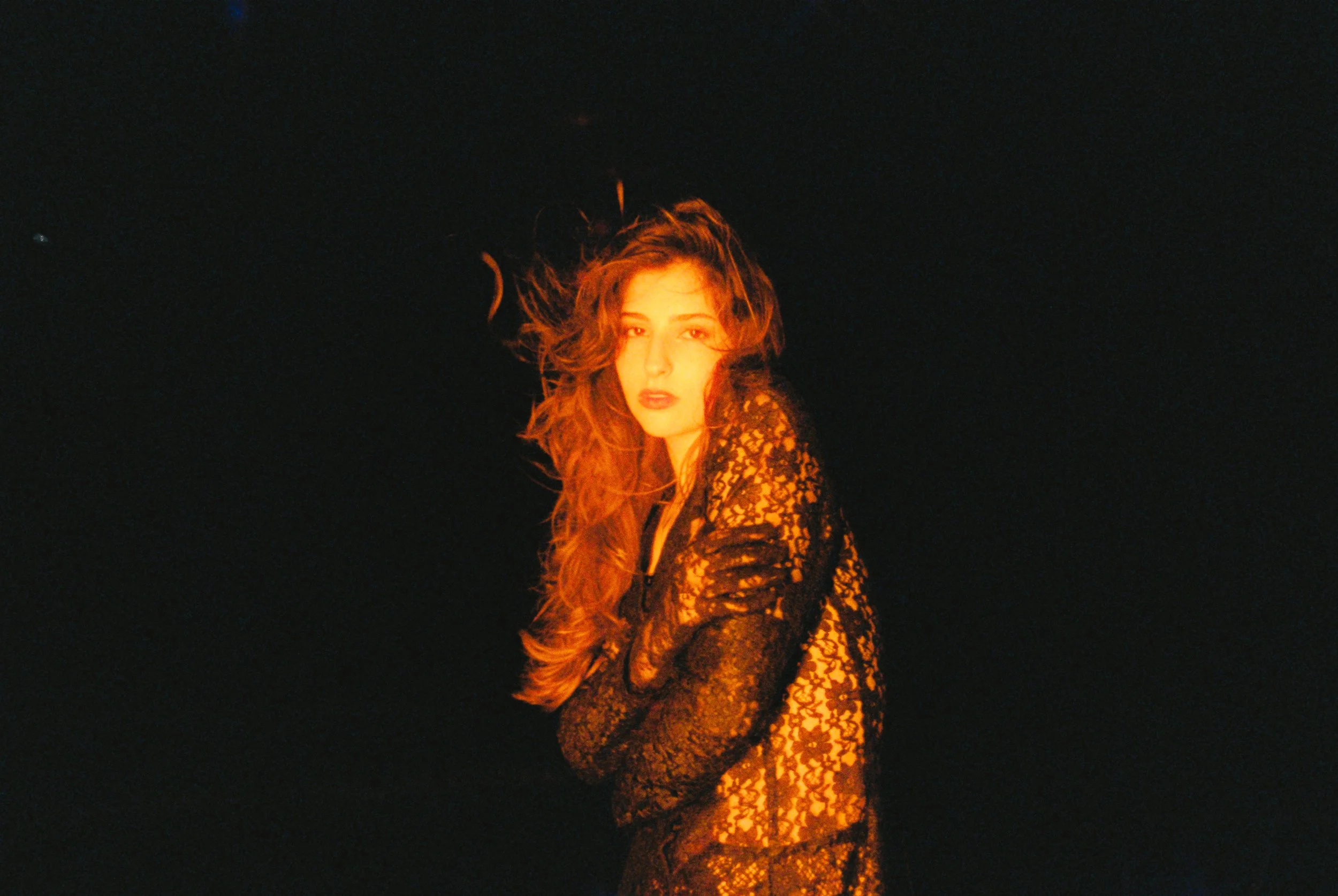
Photo by Summer Schantz
LUNA: A lot of songs on this album really captured my attention but the one that really stopped me in my tracks was “The Shadow Of The Killer.” Other than the fact that you have a killer vibrato, can you walk me through the story behind this song?
BEJAR: Yeah, it was one of those songs that was really fucking hard to write, and I knew that one of the things—in the brainstorm page I had about the album—was: what are the things I've carried down from my mom, my grandma, my great-grandma, my great-great-grandma—all of the people I didn't even know, but who were in my mom's or my grandma's or my great-grandma's lives. How has that affected me as a person, and how has that changed who I am without even knowing?
It started with my mom. My mom is Lebanese—I'm of Lebanese descent—my great-grandpa was from Lebanon. I think that some men in Lebanon, at least the ones I know, have a bit of a stronger character, and that doesn't necessarily mean it's always a bad thing. They have stronger characters, they feel their feelings very strongly, and my mom mentioned that she grew up with that a little bit from my grandma.
For example, my mom knew a different version of my grandma than I did, obviously, and she'll tell me stories about things she grew up with that make me say, “I don't believe you! That's not the same person! What do you mean?” So I wanted to talk about the things that get passed down to us without us even wanting them to.
One of those things is when I feel uncomfortable, or whatever it is I'm feeling, I like to keep it inside and not really tell anybody. My mom is someone who, if something bothers her, will blurt it out, and sometimes says it in a way that, for example, someone with a different personality type (like me) doesn't receive it well. I'm sure there are going to be a lot of things my kid says about me that they wish I did differently when they were growing up. It's also their first time, and they're learning as they go—our parents.
So I think there were a couple of situations where maybe I wish things would have been handled differently. Like whenever things happened around the house, with chores and stuff, she would always be like, “¡Andrea, limpia tu cuarto!” [Andrea, clean your room!] like any good Latin mother.
It would cause me a lot of anxiety, whenever she would get mad about me not doing maybe the things I was supposed to do, and that she asked me to do a billion times—because I also recognize there were a lot of things that maybe I didn't listen to her the first couple of times—but like the dishes, that being one thing, and I was like, “Oh my god, I'm never gonna be the type of person that yells at anyone for not doing the dishes.”
LUNA: It’s always the dishes, isn't it?
BEJAR: I know! Naively, of course, I said that when I was younger—and now with my boyfriend, I ask him to do the dishes, and he's like, "Yeah, yeah, yeah, I'll get to it." Then it's the next day, and the dishes still aren't done (laughs). It's this fire in the pit of my stomach that I've never felt before, and there's something in that. That's why that song starts with that. It's this feeling you have inside that you can't control; it’s passed down generation after generation, and it's this built-up resentment and anger around this one thing because you're carrying what your grandmother carried.
It's trying to see, “Can I be the one to change that? Can I be the one that reacts differently when these things happen?” Maybe you can't, and it's just the fear of “Fuck, now, will I pass down this trait that I don't love to my daughter? Is this something that will continue to happen?” I hope it doesn't! But I'm gonna fuck up my children in one way or another, because every parent will, and no parent is perfect.
It doesn't matter if you go by the rule book and you don't raise your voice. There's always something that you're going to do wrong, and I think it's good to accept that, but I think there are certain things that you need to look inward and be like, “These are the things I really want to change so that my child doesn't go through the same thing that I went through, or that my mom went through, or that my grandma went through.” So it's speaking about generational trauma! (laughs) I wrote it in a way where it's like, “she's hiding in the kitchen, embroiled and persistent.” It's just this thing—this feeling you get in the pit of your stomach that you can't really fucking control.
LUNA: “Entiérrame En Él” is such a beautiful song. Sonically, it’s got this dreamy landscape but when you place it next to its lyrics, it’s almost bittersweet. Would you say lyrically, this song is the most mature in terms of personal growth?
BEJAR: I feel like it is because it comes with this enthrallment with someone. It's being so in love with someone that you're basically saying “Bury me in your heart.” Essentially, that's what you're saying, and it's just a deeper way of loving. I feel like the song captures that. It's not just a love song about one person. It’s saying that, if the world separates us for whatever reason, you'll always hold a part of me. Don't forget the moments that we spent together.
It's not necessarily saying, "Oh, I'm scared of this," or being like, "You did this to me, and I did this to you." It's not a breakup song where one person feels like the victim and one person feels like the one that caused the problem. It's just like life happens and recognizing that, but I hope there's always a piece of you with me and a piece of me with you. So in that way, yes, because I don't think the song comes with any anxiety, which I feel comes with being wiser and being able to let things go when you're older.
I think another song that does that—that does come with the fear—is "Tell Me I'm Beautiful," another song that I feel is very, very honest. As I've gotten older—at least for me—I feel more honest now with myself and with the way that I feel than when I was younger. So in that way, that feels more mature to me, and I'm able to talk about something that maybe I don't want to talk about, and that makes me feel uncomfortable. That, to me, is growth. So that's another song that I think is more mature.
LUNA: Are there songs on this album that communicate with one another or are the same side of the same coin?
BEJAR: Yeah, I think “Wild Woman” and “Tell Me I'm Beautiful” are. There are a lot of songs about being a woman, and I'm so happy I was able to tap into that. I want to keep tapping into it in future songs I write. It’s just accepting who you are as a woman—accepting your faults, but also celebrating how amazing it is. I hope I get to be a woman in every lifetime, and I hope I continue to see the world the way we see it. I feel like that's really special and should be celebrated, which is what “Wild Woman” is about.
Then, on the other side, there's “Tell Me I'm Beautiful.” Being a woman comes with all of these heavy things as well that aren't even imposed by us—they're imposed by society. I think it's about trying to break out of that, and also recognizing it and seeing how we can change it, because we're the only people who can stop feeling that way, which is so much easier said than done. But we need to celebrate the years we've been able to live, instead of criticizing ourselves for a new wrinkle, line, sunspot or the way our face has changed over the years.
So those are [but also] the songs I wrote about my grandma, like "Quédate Un Ratito Más," which is about anticipatory grief and all these things I was talking about. "Angel" is also about my grandma. I feel like the ones that have a continued thread are probably “Delicately,” “Wild Woman” and “Tell Me I'm Beautiful.” They're the three [songs] where I see all sides of acceptance, but also the fear and celebration of the feelings we have as women.
LUNA: You once shared how the concept of a debut album lost its meaning during the past decade, how after the successful release of “Marigolds” people were telling you that you should capitalize on that breakout moment and put out an album, but you wanted the opposite, you wanted your debut to be “really special, and to have something to say.” Now that your debut is finally here, how was the wait and do you think you’ve found that sound of yours that you’ve been searching for?
BEJAR: I do! I was talking about this with my therapist the other day, and I was saying how I was scared that maybe not a lot of people were going to listen to the album, and how I don’t really want to have expectations for it because I don’t want it to do worse than I think it will. I think that’s something that after my first EP, I was like, “Oh my god, these songs are so amazing, and they’re gonna do so well, and I’m gonna be famous by next year.” Then, for my second EP—this was after “Marigolds,” and the buzz from “Marigolds” was dying down—I was on tour, and I was less focused on how many streams it got or how my videos were doing with the songs I was posting. Social media is a huge part of being an artist now, for good and for bad.
Something I realized early on was that I couldn’t—and it’s way easier said than done—place value on the views or how well a song was doing on social media or Spotify. That didn’t tell me if a song was good or not. With this album, I was talking about it with my therapist, and we were talking about how scary it is to put it out and have it not be received in the way I want. She asked me if I meant that maybe people listening wouldn’t understand what I was trying to say and might take it in a bad way. I was like, “I’m not worried if people don’t like the songs, because I love them and I think they’re great. I love this album. I said it because it is true—I genuinely love every single song on this album, and I think it’s a great album.”
She said, “Wait, Andrea, I’ve never heard you talk about your music that way. I’ve heard you say that you’re proud of your songs, but I’ve never heard you say that you don’t care about another person’s opinion because you love it so much and you’re so confident in what you’ve done.” Then she asked, “Can you tell me more about that? Can you sit with it for a second and tell me how it makes you feel?”
I couldn’t tell her. I was like, I don’t know. I’m proud of myself for it, but she said, “No, give me a feeling—what does it feel like?” I’m like, “I guess I’m happy.” Then she said, “Okay, your homework for this week is to listen to the album top to bottom and feel what it’s like. Tell me what you feel when you’re listening to it.”
When you’re in the album process, you’re critical about everything. First you’re writing it, then you’re doing rewrites. Then comes finishing the song with production. It goes into mixing, then mastering… You have to have a super critical ear for both. So the only times I had listened to this album were when I was listening to it critically, because things needed to change. I couldn’t enjoy it, even though I knew the songs were good—which is why I was like, “I don’t care if anyone doesn’t like a song, because I love it.”
I was finally able to listen to it top to bottom. I was like, “It’s ingested; there’s nothing I can do to touch any songs—it’s done, it’s over, I can enjoy it now.” I got to the end of the album and started crying because I felt so happy and content with how I said everything. I was so proud of myself for being able to write out my thoughts so well, and this is all personal stuff. I like to put whatever was in my diary into a song in the way I felt was right, and that’s what makes me love this album so much.
I think my answer to your question is yes, because I did it for myself, and I feel like I listen to the album and I understand myself a little bit more. That was always the goal: for me to connect with people, and for people to listen to it and be like, “Okay, I know Andrea now—I know who Andrea is.”
I try not to sound annoying when I say that I genuinely love it and I’m so proud, but I’m also really happy I get to say that. Because a lot of times before, there would’ve always been something I said I would’ve changed. I’m sure that if you ask me in five years, there will be things I wish I had done differently for this one. But for right now, for the moment I’m in and the place I’m in, it feels perfect for me, and that’s all I wanted from it. That’s all I can ask for from the music I make—that I feel connected to it, so that other people can hopefully feel connected to it, and we can all feel connected to each other.
