
Q&A: wilt Defines their Grunge Sound on Anticipated Debut Album ‘when no one’s watching’
INTERVIEW
INTERVIEW
☆ BY AMANDA COLLINS ☆

Photo by Sarah Eiseman
“THIS IS OUR NORTH STAR ALBUM”—Chelsea Rifkin, vocalist of Los Angeles alternative rock band wilt, shares regarding the band’s debut album when no one’s watching. wilt’s Aaron Liebman and Andrew Perrea (guitar) and Dan Bermudez (drums) would agree. With guidance from Carlos de la Garza, sage producer of legends such as Paramore, the four-piece band collaborated with each other for the entirety of the album’s process, from its songwriting to its live-recording, making the final product fulfill each of their visions.
wilt has already grown a dedicated fan base, with a notable social media presence and many tours, including a recent tour supporting Jutes, already under their belts. Released today, wilt’s grungy and inventive debut album now serves as a defining moment for the band.
“It's honestly going to be some clarity on what we are, who we are, who we want to be and what we're going to bring to all the scenes,” Rifkin shares.
Rifkin’s loud-quiet-loud style vocals are a shining staple of the album, specifically heard in the album’s opener “dent,” taking listeners through melodic hardcore screams to an angelic, softer closing.
With punk, hardcore, shoegaze and 90s grunge influences, wilt gets darker on when no one’s watching. A not to be missed riff of the album is on “closure,” with guitarist Aaron Liebman stating it “has to be the riff of the album.”
“rats,” with a heavy and hungry opening, is one of the tracks that the band is most excited to perform live. “It’s wilt at our heaviest, and I love it,” Rifkin shares.
Emotionally, when no one’s watching is a testament to wilt’s personal journey with imposter syndrome, a feeling that the band members have shared throughout their rise in recognition. Success does not automatically change a person or fix all previous problems. As Perrea shares insightfully, “getting to your goals is a very fleeting satisfaction.”
“You can always say ‘just try to focus on the good things and be happy with what you have,’ but it's a basic human feeling to always want something else. The grass is always greener somewhere else,” Rifkin shares.
wilt goes from describing the soul-searching they did individually and together, to letting readers in on inside jokes made throughout their studio sessions, such as the band’s ritual of ordering salad, whether chicken salad or salad with chicken, and the difference between active and “sedentary” rock.
Read below for Luna’s lively conversation with wilt on their debut album when no one’s watching.
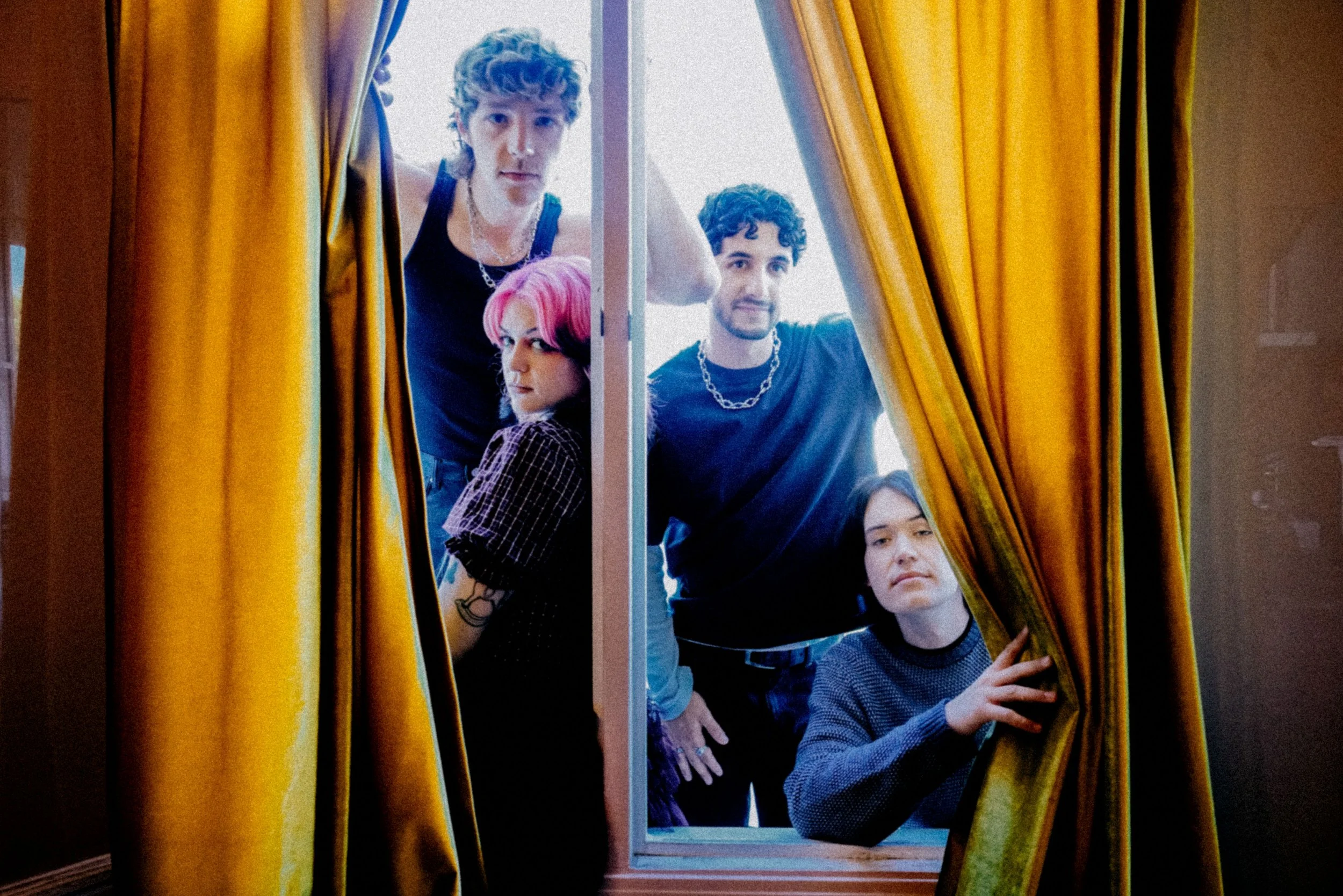
Photo by Sarah Eiseman
LUNA: Congratulations on the upcoming release of your debut album, when no one’s watching! What do your day-to-days look like leading up to the album’s release? How are you guys feeling as a group?
RIFKIN: We're decompressing from tour because we've just been on tour for like six and a half weeks. We have the excitement, the album's coming out, but at least for me, I've been relaxing and trying to chill out a little bit because I know it's gonna get crazy again really soon. We're all getting together tomorrow for our practice for our release party that we're having in LA. I can't believe it's in like four days. I cannot believe that it came up so quickly.
PERREA: I think we're definitely nervous too. Yeah, it really snuck up on us. I think we definitely knew ahead of time that doing this tour with Jutes that we just got off of would be really intensive and, sure enough, it was. It was really, really rewarding. We're all coming off it feeling super stoked. At the same time, it is really like “whoa.” We blinked our eyes at the start of August, and now the album's right around the corner. It's less of a day-to-day schedule, more like a day-by-day schedule.
We're going off to San Diego on Thursday to properly finish the tour, and then we're working in rehearsals. We're gonna play the album in full at our release party, and we’re running around doing interviews and trying to make social media content. Doing everything that we can to really make the album go and give it the love it needs.
LUNA: Totally, and talking about the album and giving it the love it needs leads me to my next question, which is: wilt has been gaining recognition and a dedicated fan base for the past few years. Now, with your debut album’s release, what do you want the album to introduce about wilt as a sound and as a band as compared to previous releases?
RIFKIN: Yeah, I think that this album is like wilt at our “wiltiest.” This is our North Star album. We really found our sound, and I think it's very evident through the songs on this album. I think that's one thing that I'm definitely gonna put forth, which is that up until now, I think we have had great music, but it all sounds a little bit different. It all sounds like us, but it all has different influences, different tones, and different melodies and lyric themes and stuff like that. But this album really is a really full thought out, like fledged, one piece. So I think it's honestly going to be some clarity on what we are, who we are, who we want to be and what we're going to bring to all the scenes.
LIEBMAN: Yeah, something I was thinking is that I just hope that this album is bigger than the songs. We've had collections of songs before, but we've never had a really ambitious concept that we've tried to package as one piece. I'll be really stoked if the album gets referenced as more than just the songs that are on them.
LUNA: What was going on in the backgrounds of your own lives that influenced the album’s creation?
RIFKIN: We started writing it a long time ago. Some of the first songs we wrote for it were "dent” and “bundy,” which are both singles, and we wrote those around three years ago. We even played them on our first U.S. tour, and so it's been different throughout. What has been a really prevalent theme on the album—something that I deal with daily and have been since the beginning of wilt—is the feeling that I have the things I've always wanted and I've always worked for, and I've worked so hard and put everything into, so why do I still feel like shit?
It's also about imposter syndrome and feeling like I'm not cool enough to be in this space or not talented enough of a writer to make impactful music. We've all struggled with that separately. Another big theme in this album is the idea of, “what is wilt when no one's watching?” We've had this social media presence from the get-go, and it's never not been a thing in our band. We've never been like, “Oh, we have to go market ourselves now.” We always have been doing it literally from the beginning before we even had any music out. So there's this feeling of, who actually are we as musicians? What do we actually want to make when things are separate and nobody is watching? When it's just what we want and just what we're passionate about? I think that that is very prevalent in the music because it's a lot of our influences on our sleeve. It's a very collaborative sound. It got a lot heavier. It's just really exciting.
LUNA: What would be your advice to people who are dealing with that imposter syndrome? Or with the experience that you now have, do you have any advice for your past selves?
RIFKIN: I wish someone else would give me advice on that, because I'm still feeling it. Writing the album and writing all these songs about it definitely gave me some kind of clarity, I would say, but also so many people have said how relatable of a feeling it is. I don't know if anyone has good advice to not look at that. You can always say, “just try to focus on the good things and be happy with what you have,” but it's a basic human feeling to always want something else. The grass is always greener somewhere else.
I mean, at least with us, I've been trying to focus on the good. We just came off an amazing, huge tour for us. We're about to go on our first headline Europe tour, which is a crazy sentence. We've been to Europe twice this year, which is something that I have always wanted. When we go to Europe and play in Europe that's how I know we've made it. Also, just really trying to focus on the wins and how they've made us feel and also how they've made us closer and grown our friendships. That's something, at least recently, that's been really helping me be like, “Let me just be happy for myself.”
PERREA: Achieving more will not make you feel better. Getting to your goals is a very fleeting satisfaction. I think for anyone dealing with the same feelings that we've been dealing with, it's a battle of choosing the happy thoughts, and it's more of a mental game you play with yourself more than anything. I think that's the moral of the story.
LIEBMAN: Did anyone say go to therapy? I feel like that's probably the shortest answer. Just talk about it with people. Also, try to find people that are kind of in your space, like at the same level that you're at. That really helps to make connections with people who are, because it's very hard to explain to someone these feelings that might not even be in the creative space. If you're finding someone else who's doing these tours or is releasing music, it's very strength-in-numbers if you can find some solidarity with people who go through the same things. Even just talking about it goes a long way, we have found.
PERREA: Yeah, I think one positive aspect of all this is that as we made the album, or at least as the album develops and we're about to put it out, we have found a chosen family that is really supportive. Our team helps us, which we didn't have until a little over a year ago, and they keep us sane by being other people that are really big advocates for us. Also, the people we've gone on tour with we have this intense connection and this understanding of what each other's going through. Also just making friends on social media that are also doing the same stuff as us, like our friends Misfire, who we ran into on tour a week ago. You make these friends and start to see people doing the same thing and create a little community. Even if we don't get to see each other, or hang out a lot, you connect on that shared base experience.
RIFKIN: Something that especially makes me feel connected to those types of people is this feeling of having so much going for you, but still feeling kind of depressed and upset about everything. It can come off as ungrateful to people who are experiencing that same thing, you know. Having that immediate shared experience with the kind of people that we've been touring with has been super reassuring and just does feel more comfortable; like you have that sense of family.
LUNA: Love that. Thank you all for such insightful answers. That makes total sense, like you're still human. You're yourself wherever you go, and internal problems don’t always change just because the external circumstances do. So, thank you guys for thinking about that.
You mentioned your friendships and building community as something that really helps imposter syndrome. Since the album was a total collaboration in terms of songwriting and production, where the band would be in one room working together, were there any surprising routines, rituals or inside jokes that formed during sessions?
LIEBMAN: (Laughs) We had chicken salad. Oh yeah, like every day.
RIFKIN: Well, so chicken salad: that's kind of part of the inside joke. We had this one specific salad from this restaurant in LA called Chin Chin, and it was a Chinese chicken salad. It's a famous thing there, and we got it every day because it was always buy one get one free, so cheap. There was an inside joke because Andrew would call that chicken salad, but it's more like salad with chicken. You know, like it's not chicken salad, it’s salad with chicken. So that kind of became a thing.
PERREA: I remember one inside joke, which basically happened the first day we came in to make the album with Carlos, where he was like, "So, are you guys active rock?” We had never heard that word before. For those uninitiated, it's like a form of rock that you probably hear all the time, but maybe don't like radio rock. Or it could be a twist on what people might call dad rock.
RIFKIN: What are some examples, Andy?
LIEBMAN: Well, like you could say since they’re everywhere, it's any popular rock song that's heavy that would get played on like..
RIFKIN: Like Linkin Park. Foo Fighters.
PERREA: I'm gonna just look up active rock on Spotify.
LIEBMAN: Also like Bring Me the Horizon.
PERREA: (Looking up active rock on Spotify) I feel like the U.S. Billboard mainstream rock chart would have it.
LIEBMAN: Breaking Benjamin.
PERREA: Greta Van Fleet. It's a lot of fun. It's like stuff that has been born out of the 2000s, like post grunge. Anyway, these are bands that do really, really well, but we don't think about as much because we're more alternative. But, it became a running joke through the sessions of like, “Oh, how active is this part?” Yeah, it was like, “This guitar riff is a little bit too active rock.”
LIEBMAN: Or it was like, “Maybe these drums need a little more activity.”
RIFKIN: Active is a spectrum, and we definitely lean into the active and also lean away from it in certain aspects. What's a word for “kind of active?” That's the genre we are.
LIEBMAN: If you're not so active, if you're not super active, maybe you're sedentary. Sedentary rock.
Yeah, those sessions were such a such a vibe, and Carlos definitely became like our dad, honorary father figure for those. We've been on two tours since then, so the exact album studio vibes have faded a little bit, but it was a really, really wholesome time.
LUNA: Speaking about Carlos, we know that when no one’s watching was produced by Carlos De La Garza, who is well known for working with legends like Paramore. What did Carlos bring to the album and your creative process?
RIFKIN: Dude, like so much, honestly. He was this type of producer that didn't want to step in and change things. He just wanted to elevate them. I think he heard our demos and really believed in our sound, and believed in our mission statement of what we were setting out to make, and he honestly just elevated all of that. He really made us go deep into the tone zone. That was another thing that was prevalent, going into the tone zone.
LIEBMAN: Andrew said it best. It was like, Carlos didn't put his sound on us, we put our sound on Carlos, and he really just took it and he…
RIFKIN: Raised it up.
LIEBMAN: Yeah. He took all of our ideas and was like, “Okay, what if we did this in a big studio instead of a garage?”
RIFKIN: He took it to the next level.
LIEBMAN: Something huge that we've never done before was a live track. So, in most modern situations, you're recording one instrument at a time. Normally starting with drums, then you do bass, guitars, vocals. Instead, we did all the instruments at the same time, like all the main instruments. It was a matter of just like, “Holy shit, this studio is really expensive.” We needed to get as much bang for our buck as quickly as we could, but also I was in the room with Dan recording the parts at the same time. I could look over at him, I could look over at Andrew, and yeah, we just never had that recording experience before. Really nerve-wracking because I make a mistake per take, so it was cool to rehearse for that and it definitely gave us a lot of confidence.
RIFKIN: I'd also say because we love playing more than anything, like we love playing shows, and every time we're up there we come off so giddy, and so sweaty, but so giddy and just on cloud nine, and so getting to record our album like it was just a performance I think added a lot of life and energy to the songs as well.
BERMUDEZ: I feel like in a lot of recording situations, and prior to this, we were mostly self-produced; entirely from recording, mixing, mastering, all that stuff. But when you're thinking about too many things all at once, it can be really hard to find a unifying voice amongst the band. I think with Carlos, we were able to take our brains out of the technical side of things a little bit more than we're used to, and think about who we are as musicians, as artists, as writers, etc. That being said, he didn't take full control of the technical stuff. He knew that we all care about that, so it was a good balance of letting us speak through our instruments, our experiences, and whatnot, but put light guardrails on it.
LUNA: Speaking of production, track “closure” is described as the “guitar-nerd song.” What moments similar to that riff on “closure” felt like breakthrough moments while working on the album, where you could feel like the lyrics or sounds were going to be the foundation of the final album?
RIFKIN: I think a big one was like the end of “dent,” like the breakdown part where it gets all noisy and super post hardcore-y and loud. I think that was a big part. That's also one of the first songs that we wrote, and so I think it was a really big defining sound that we knew we wanted to bring to the album and keep creating off of that. “closure” is another one where Andy wrote this guitar riff that was so emotional, but also like so Weezer at the same time. He had written this amazing song based off of his previous relationship, and then we collaborated more on the lyrics and changed some stuff around, and it became larger than life. That was another one. One of the biggest foundations of wilt is our riffs. We're a guitar band. That's a main focus in our music, and so “closure” is a really good example of that.
LIEBMAN: “closure” has to be the riff of the album. It definitely is. I think also Andrew and I do a lot of back and forth guitar parts where we'll play at the same time, but we'll be communicating—call and response, if you will. There's a bunch of that throughout the record, and there wasn't one single crazy breakthrough where we were like that's the sound we've been looking for. It was just a collection of little things that have built up over time that we were like, “Oh wait, all these things are wilt.”
BERMUDEZ: The one argument I have against that is the title track “when no one's watching.” That was huge. It felt, at least to me, like a breakthrough moment in the studio because it was the song that I think was leaning the most, now you get it, active.
RIFKIN: It was very Muse.
BERMUDEZ: Yeah, through our collaboration and Carlos's additional vision, there were a few points where that song became so different in a lot of ways and, I think for all of us, it was like we didn't even look back. It was like, “Oh no, this is the song now.” Yeah, felt more so formulated before then.
PERREA: Yeah, that one had a really big vibe shift. Not even in the form, but just literally the tone of the performance. It started out very like Queens of Stone Age influence, and then did end up like a lot more Radiohead. A moment I remember fondly from the writing for the record was when we made "don't run away again.” We had this instrumental that we loved, and then the top line of another song that was like dead and gone and, at the 11th hour, realized that you could kind of…
RIFKIN: Glue them together.
LIEBMAN: Yeah, really, we barely changed the melody. It just fit almost perfectly.
RIFKIN: We basically just changed the chorus.
PERREA: Finished writing the lyrics. Chelsea does most of the lyrics, but we were able to get in the room together and iron out some words on “closure” and also “rats.” There's some self-referential lyrics in the album, which I think is really cool. Songs that have lyrics from other songs. The other thing I really remember fondly was when we did “rats.” That was one that had a really cool start to demo, but we hadn't quite figured out what the chorus was, and we definitely wrote that in the studio with Carlos, just jamming around on a guitar and had an idea for what the nerds call a reharmonization.
RIFKIN: It’s one of our favorites. We played it on tour this past one, and it was a crowd favorite too. It's so, so fun to play. It’s wilt at our heaviest, and I love it.
LUNA: Which songs are you most excited to perform live?
RIFKIN: “rats,” it’s exciting every time because it's still new. I think it's really fun. I get to really scream in it and just go wild. My favorite part is when it has the breakdown because Andy and Aaron just run around and jump around the stage and dance going crazy and we all get to go kind of wild for one time at our set and get really punky with it.
LIEBMAN: Yeah, like a rare outro moment. There's a bunch of outros on this album like “dent,” “rats” and “when no one's watching” that we never used to play.
RIFKIN: I'm also really excited to play “when no one's watching” again. We previously played the old version a couple times. That was super fun because it's a really high energy, interesting song. So I'm really excited to play the new version. I’m curious to see what it's gonna end up like. It'll be really fun. Then, once again, I would also say “closure.” I think once the album's out, “closure” will be the anthemic song of the album. It's also definitely the most emotional and slow and sad, and it's so relatable. I think performing that live once people know the lyrics will be really, really awesome.
LUNA: If you were to introduce fans to your album as a whole by using only one word to describe it, is there a word that comes to mind?
RIFKIN: Dan, you're a wordsmith. What are you thinking, king?
PERREA: Wilted.
LIEBMAN: Sandwich. Me and Andy are the bread, Dan is like the sauce, and Chelsea's like the meat.
RIFKIN: (Laughs) Why am I the meat?
LIEBMAN: You’re the most important part.
RIFKIN: What if you’re a vegetarian?
LIEBMAN: (Laughs) I’m not a vegetarian.
LUNA: Is there any surprising advice you would give to your past selves from when your band first formed that you guys think you could have really used now that you have the perspective you have now?
RIFKIN: Yes. Get over it. Get over yourself. Get over it, you know. Don't be afraid to put yourself out there. For a long time I had a stick up my ass and cared so much about what other people thought, and primarily only what other people thought, and not really what I thought. Yeah, just get over it. That's what I would say.
PERREA: Yeah, I think that's pretty good advice.
LUNA: What's the biggest takeaway you guys are hoping your fans take from when no one's watching, or that you yourselves got out of it through the process?
RIFKIN: The feeling that you're not alone and you're not ungrateful. This is just human nature. You don't have to feel guilty about your feelings or things not being enough because everyone feels that way in some capacity.
PERREA: You’re great even when no one is watching. Keep going.
LUNA: Love it! As we wrap up, what's on the horizon for wilt?
RIFKIN: We leave for Europe and the U.K. in a couple weeks. Super excited for that. We are going to be doing some headline dates early next year. We don't know where yet. Definitely LA. We’re going on tour with The Warning, which we're super excited for. It'll be our biggest tour yet in April and May, and also we'll be playing some of our first festivals next year that we're really stoked about. We're gonna keep writing, and we're gonna keep making funny videos and notes and posts. Yeah, and you'll never get rid of us.
LUNA: Well, that sounds super exciting! Before we go, is there anything I didn't get to ask that you guys would like to have mentioned during this conversation?
RIFKIN: Just make us seem really cool and funny, probably.
