
Q&A: Armin Van Buuren And Adam Beyer Bridge Thirty Years Of Dance Music History At Coachella 2026
INTERVIEW
INTERVIEW
☆ BY SOPHIE GRAGG ☆
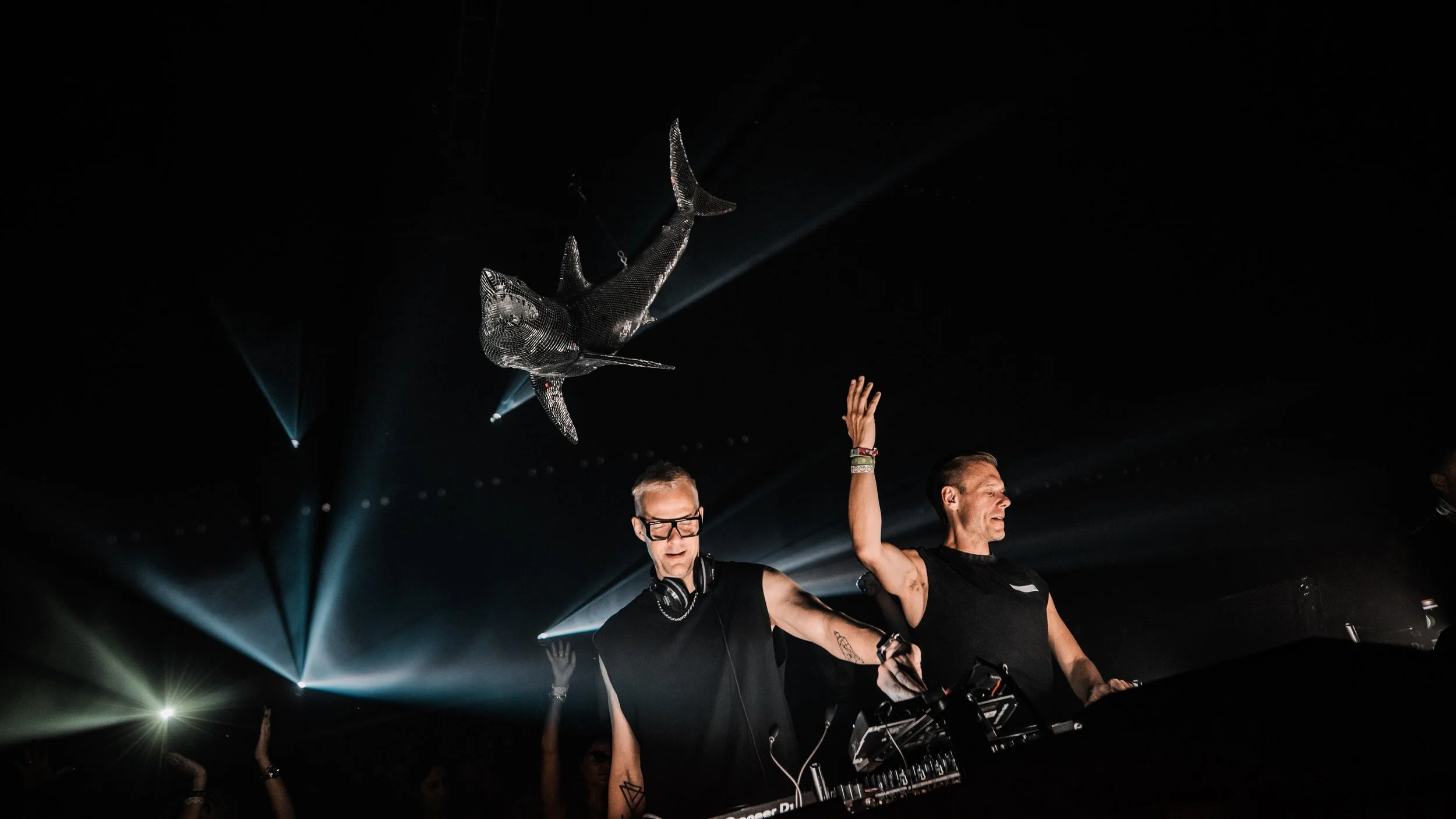
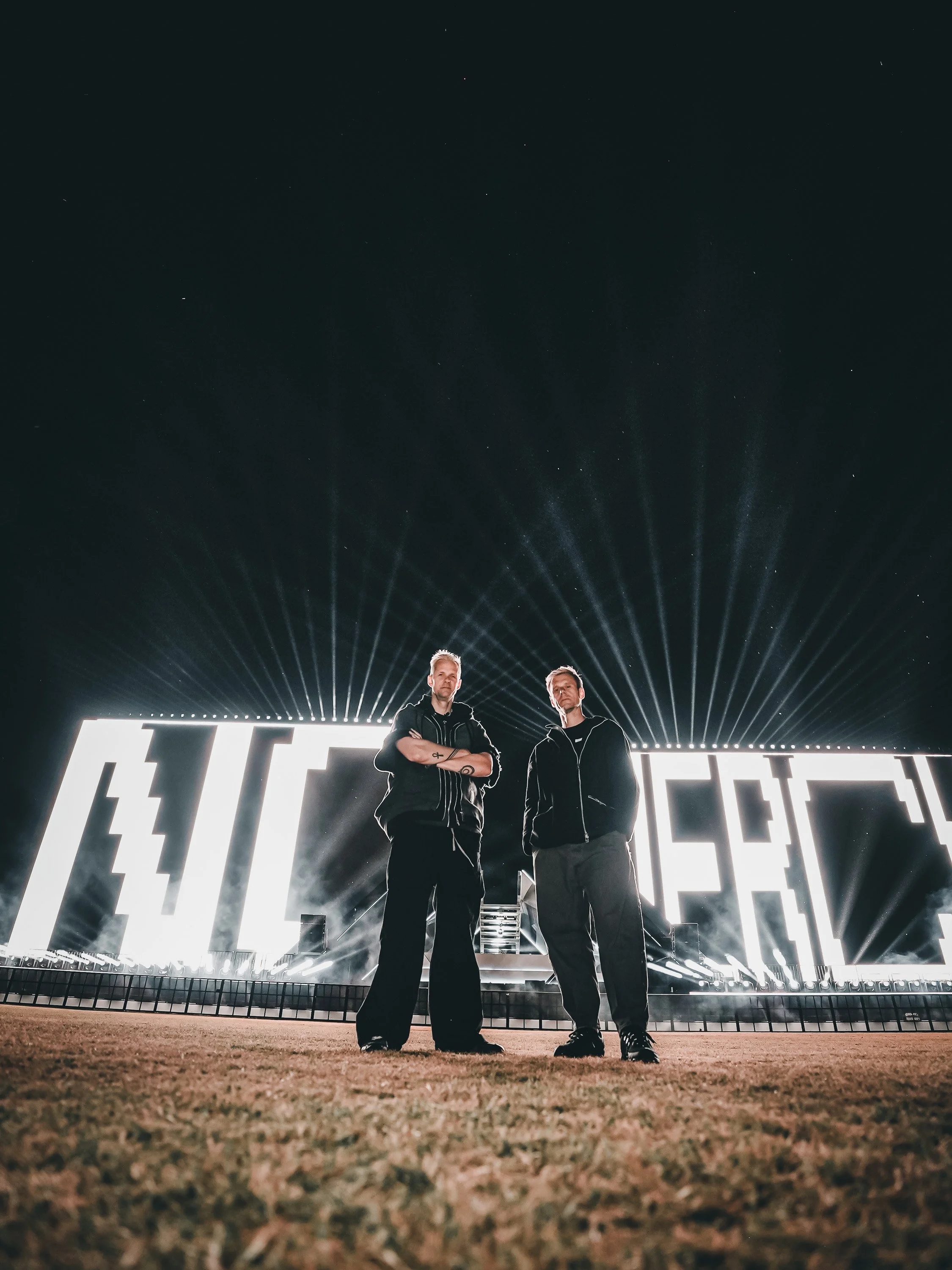
TWO OF THE MOST LONGSTANDING, PROMINENT ARTISTS IN THEIR RESPECTIVE CATEGORIES, Armin van Buuren and Adam Beyer collided their worlds of trance and techno at Coachella this April for not one, but three of the most legendary sets the desert has ever seen. For Armin, it marked a long-awaited return for the first time since 2005 and for Adam, it was a continuation of his reign as the king of the underground. Together, they transformed the Empire Polo Club into a testing ground for a new, unified sound.
With countless chart-topping hits, two of electronic music’s most successful independent labels (Drumcode Records and Armada Music), and a combined tenure of over 60 years in the industry, the duo have remained at the forefront of the scene since the ‘90s. They have survived every trend, continuously adapting and evolving while pushing their respective categories into the global limelight for the past three decades.
These B2Bs were defining moments in music history. They serve as a testament to how Armin van Buuren and Adam Beyer have evolved beyond legends into enduring forces, shaping the sound of generations. We sat down with the two titans to discuss the "techno trance" movement, breaking down genre walls, and why 2026 was the perfect time for this historic collision.
LUNA: Between the two of you, there is over 60 years of dance music history. You’ve both seen every trend come and go. Why did 2026 feel like the right time to finally collide the worlds of A State Of Trance and Drumcode on a stage as massive as Coachella?
ARMIN VAN BUUREN: After COVID, the boundaries between all genres of music disappeared a little bit. Techno guys started playing more trancey melodies and trance guys went faster, etc. 10 years ago this couldn’t have happened.
ADAM BEYER: Techno and trance used to sit in separate rooms, but over the years those lines blurred. The kids who grew up on both are now the ones making and playing the music on the same stages. And after 30 years of Drumcode and 25 years of A State of Trance, it’s all about evolution. You don’t want to repeat yourself. You want to open up the sound, bring in new collaborators, cross audiences—and in 2026, this feels very natural.
LUNA: Armin, this is your first time back at Coachella since 2005. The festival landscape has transformed entirely since then. How does it feel to return not just as a solo titan, but as part of a collaborative experiment with Adam?
ARMIN VAN BUUREN: I think it’s very exciting. These times call for special moments and playing b2b with Adam is a special thing as we don’t do it often. I think Coachella expects you to think a little bit outside the box; in fact, it challenges both of us.
LUNA: Trance and techno are often seen as two sides of the same coin, but they carry very different emotional "weights." When you’re behind the decks together, how do you find the middle ground between Armin’s euphoric builds and Adam’s driving, industrial precision?
ARMIN VAN BUUREN: We went into the studio in Miami and we discovered there’s actually quite a few tracks that we both like and play. We now call that sound ‘technotrance’—it’s two genres with one pulse.
ADAM BEYER: What makes it work is that both understand tension, just in different languages. Armin builds it more through melody and release; I tend to build it through pressure and restraint. But emotionally, we both are actually aiming for the same point: when the crowd loses itself in the sound, moves as one, and just feels the music.
LUNA: Coachella sets are famously visual. How did you work together to ensure the production reflected both the "Light" of Trance and the "Shadow" of Techno?
ARMIN VAN BUUREN: We already gave a preview on our socials and tested it last night. Visually it will also be a blend of both our worlds, merging into one. It really feels like we unite here, sonically and visually. It’s not techno, or trance, it’s technotrance—it’s a representation of both categories coming together for a moment of pure unity.
SANDER RENEMAN (Creative Director): From the beginning, I wanted Technotrance to feel like more than just two iconic artists sharing a stage at Coachella. As Creative Director, I focused on building a visual identity that could give the collaboration its own world. That led to a natural blend of both genres in an immersive style—one that respected the darker, more driving character of Adam Beyer’s techno, while also embracing the emotional lift and lightness of Armin van Buuren’s trance. The goal was not to separate those worlds too much, but to let them merge into one visual language. That’s where the concept came alive—not as opposites, but as two forces shaping the same experience.
LUNA: Do you feel that this B2B is a statement against the "genre-fication" of dance music? Are you trying to prove that at the end of the day, it's all just one continuous pulse?
ARMIN VAN BUUREN: I think we want to show that music can become interesting once you start crossing borders without losing your sound. Adam is techno and I am trance, but what happens if you try to combine? There’s nothing wrong with “genre-fication”, but music is music and the label doesn’t matter that much. It’s all about the feeling it evokes.
ADAM BEYER: We don’t look at it as a statement against anything, really. We don’t see it as pushing back on genre labels. For us, genres have always been more like reference points than boundaries. They help people describe things, but they don’t really exist in the way the dancefloor experiences music. Nobody in front of the booth is thinking “this is techno” or “this is trance”—they respond to rhythm and emotion.
LUNA: How did your approach change between these two weekends after seeing how the crowd reacted the first weekend?
ARMIN VAN BUUREN: We want to play three different sets. Quasar will be more high energy as we have a longer set time and can build and play with the audience a bit more, while Yuma will be a little bit more cool and groovy as it’s more of a “club” feel.
ADAM BEYER: For the second weekend, it wasn’t about changing direction, but about leaning into contrast more intentionally. On Quasar, we can push the peaks a bit further because we know the crowd will follow. And in a more intimate setting like Yuma, it makes sense to stay deeper, more hypnotic, almost like a proper club vibe.
LUNA: After these sets, do you think this collaborative sound is something that will live on through a joint release or a collaborative EP, or is it intended to be a "you had to be there" moment in time?
ARMIN VAN BUUREN: We’ll be premiering some new tracks we did, so we will definitely release them soon.
ADAM BEYER: We wouldn’t be premiering new music if we didn’t believe it should exist outside of that moment. If something connects that strongly in a live environment, it usually means there’s a second life for it. In sets, in different contexts, it’s a vision more than just ‘we had to be there and do something.’
