
Q&A: Valley Boy Makes Sense of the Aftermath on ‘Children Of Divorce’
INTERVIEW
INTERVIEW
☆ BY SHEVON GREENE ☆
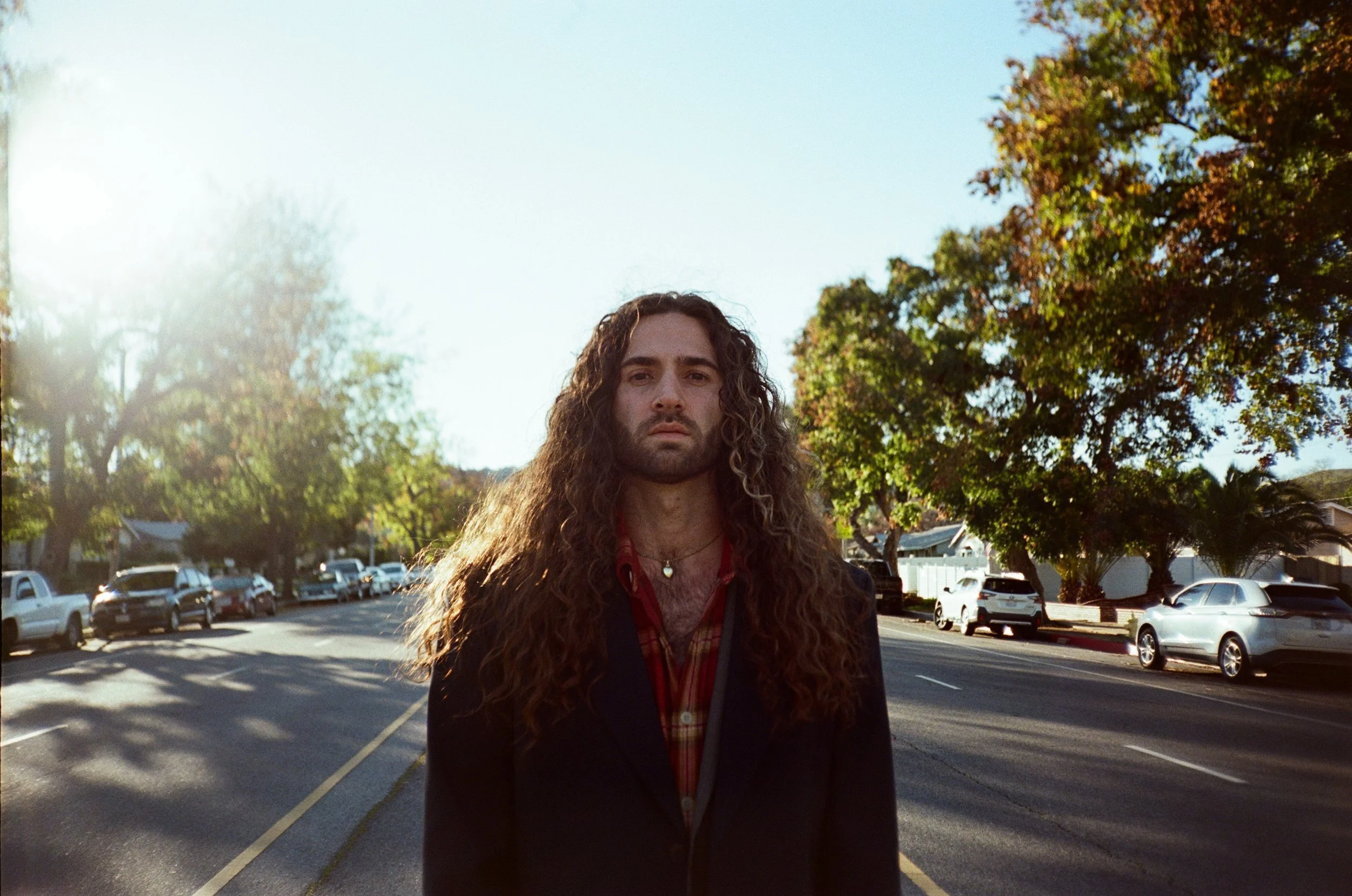
Photo by Delacey
BEING A CHILD OF DIVORCE ISN’T RARE—but talking about it honestly, years later with clarity, is. It’s an experience that sticks with you and subtly shapes you, even if you don’t realize it until long after it’s “over.” With his debut album Children Of Divorce (out May 1), Valley Boy invites his listeners into a glimpse of his past and his perspective on it now.
The 13-track project feels like a collection of short stories. Each song is centered around a real person and the lasting impact of growing up in fractured homes. Rather than following the traditional route, it takes you on a journey of emotional aftermath ranging from childhood experiences into adulthood. Most tracks are named after specific people, grounding the record in real lives while allowing the stories to stretch beyond just one perspective.
Ghaleb Amaradio does an incredible job of balancing this project with both honesty and care, approaching each story as truthfully as possible while still honoring the people within them. There are moments of compassion, like “Diana gets an email,” but there are also heavier and more devastating stories, like “Evan in my Japanese beer.” These stories led to Ghaleb Amaradio creating a spectrum of how these experiences were processed over time. More than revisiting the past, this project reframes it and shifts the feeling of anger to understanding.
Listening to Children Of Divorce unexpectedly hit close to me, yet the specificity of certain lyrics still felt universal. Even after it ends, the album sits with you, positioning Valley Boy as an artist with undeniable passion and talent.
We caught up with Valley Boy about building Children Of Divorce, navigating personal storytelling and what it means to grow up and move forward. Read below for more.
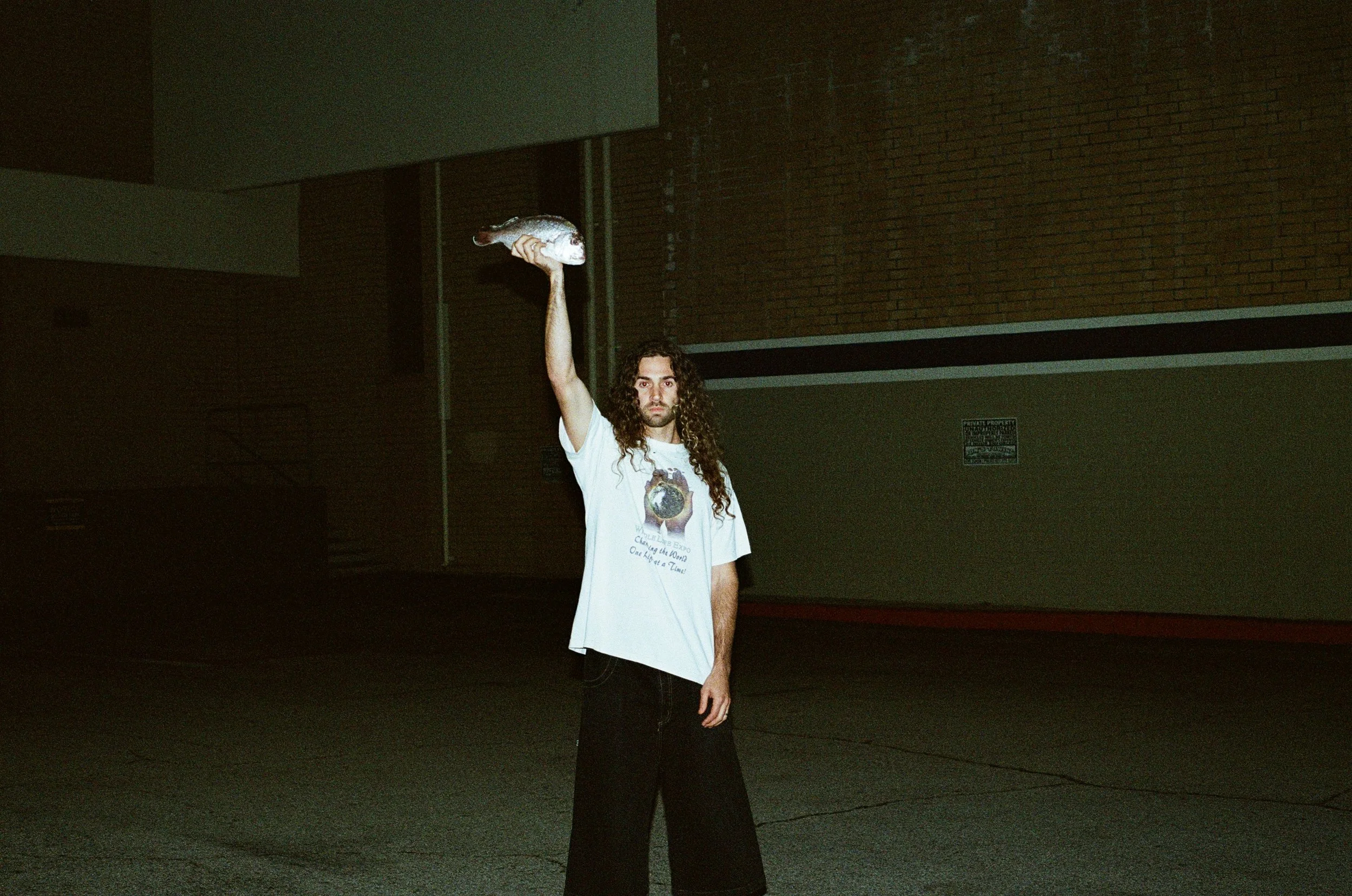
Photo by Delacey
LUNA: From listening to the record, Children Of Divorce feels like a collection of short stories, almost like case files, rather than a traditional album. At what point did you realize the project needed to be a full concept record instead of just individual songs?
VALLEY BOY: That’s a great question. It was barely a decision—it felt like it could only be that. I was like, I have to make an album about this, and it has to be a concept album. There’s too much on this subject to talk about anything else. If you’re going to start an album, you might as well just go.
I consider this my first full-length album as an artist, and it took me too long to make, but I always planned for this to be the first one. I’ve always wanted to make a concept album first.
The hard part wasn’t deciding; it was deciding how. There were so many ways I could’ve done this. Is it going to have skits? Is every song going to sound the same, or will they take influence from the characters? Is it chronological? Is it based on vibe? Those were the questions that kept me up at night for over a year. I went through so many iterations of this record. But deciding it would be a concept album was never the hard part.
LUNA: A lot of the tracks are named after specific people, like Diana, Ian, and Rachel. How did you approach writing about real people in a way that tells their stories but remains respectful?
VALLEY BOY: Honestly, I hope I was respectful. That was something I thought about a lot—the journalistic aspect of the record, where you’re really putting things out there. My barometer was always: I can’t tell every story, but the ones I do tell, I’ll tell honestly. I was reading Joan Didion, and she wrote about how, in journalism, you eventually sell everybody out. To tell the truth, you don’t tell what people want—you tell exactly what you saw, the best that you can. That really inspired me. But it was tricky; what is the truth, and what part of it matters? Some songs went through multiple versions searching for that.
“Ian the actor” went through three versions. The first was angry. Then I stepped back and realized it wasn’t fair; I wasn’t telling his story honestly if it was colored by my emotions. The album wasn’t about sh*tting on people. It was about sharing stories of people I love and how we all carry this strange cross differently.
For people I could reach, I showed them the songs. With Ian, I showed him a version that felt respectful, and he still wasn’t comfortable. I almost cut it. Then I kept working until it felt true and respectful, and he approved it. It was tricky, but it made me love people more. It made me see their truth more clearly.
LUNA: That reminds me of “Diana gets an email.” It reframes someone who hurt you with compassion. Was that difficult to write?
VALLEY BOY: I loved writing that song. I wish I could have understood what she was going through when we were younger. She was my first toxic ex—she hurt me—but we were teenagers. It felt like the end of the world, especially with everything happening at home. But writing it, I realized she came by that honestly. I didn’t have perspective back then. I was new to the abandonment thing, and she already knew it way more than I did. I couldn’t appreciate how much of a void she had in her life.
I wish the song was longer—I wish I could have written more—but I like that it’s short and sweet. I didn’t want to hold a grudge. I just wanted to say, “I see you now, and I hope you don’t feel guilt.”
LUNA: Maybe there’s a “Diana gets an email” part two someday.
VALLEY BOY: If I ever find her email [laughs].
LUNA: That’s the email in question. I love that. I wanted to ask about sequencing. It feels really intentional, especially starting with “James, age twelve.” How did you decide the order?
VALLEY BOY: I spent so many sleepless nights on the tracklist. There were so many versions—songs cut, added, moved around. At some point, I realized I needed to take people through the journey somewhat chronologically. It was important to start with “James, age twelve,” because that’s when it began for me. I was self-conscious [about starting with this track]. It’s quiet, it’s soft, but it’s the truth. I wanted it to feel like a 12 year-old in shock. Not angry yet, just confused, unsure where to stand.
Then I wanted to introduce the “cast” as I met them and age through the album. I had to cut so many stories. I kept realizing everyone I loved came from divorce. But I had to focus on where it started and how it grew.
From there, I wanted people to feel how the wound grows. You don’t know it at first, then you start recognizing it in others. You’re drawn to people with the same brokenness. Sometimes that’s beautiful, sometimes it leads to toxic relationships.
Eventually, you gain perspective and maybe learn to forgive. I didn’t want to wrap it up neatly, but it was important that the album ends with “Tell the Kids the truth.” What I went through was hard. What everyone goes through is hard. I wanted to validate that. If I could, I’d write a million songs about it, and it still wouldn’t be enough.
But at the end, I wanted to say this: your parents are kids too. They’re not God. And that’s hard to accept. But holding onto anger isn’t the answer either—you have to feel it, then learn to let it go.
LUNA: Thank you for that; that really helps put listeners into your shoes. I wanted to ask about “Evan in my Japanese beer.” It’s really heavy (and touches on a life lost in a drunk driving accident). How did you decide it was necessary to include?
VALLEY BOY: That was really hard. I wish I didn’t have to write that song. I wasn’t trying to exploit his story. I knew I had to ask his family for permission, and if they weren’t okay with it, I wouldn’t release it. I tested it on tour too. I wanted to see if it brought anything meaningful or just pain. People connected to it deeply. They shared their own losses. It made me realize that even when there’s no silver lining, sharing grief helps us process it. Not everyone gets to keep going, and I think it was important to honor that. We’re all still here, figuring it out. And even though it’s hard, we still have the chance to make things better. That’s why it felt important to include his story.
LUNA: I noticed you’ve done a lot of live performance videos with your singles. I really liked “Mona (you stayed),” especially because it was in your mom’s garage. How does performing those songs live, especially ones this personal, change your relationship to them?
VALLEY BOY: With the live videos, I always feel like I translate better live than recorded, so I wanted to find ways to show that. With “Mona (you stayed),” I was like, let’s bring it home—literally go into my mom’s garage and do it there.
I also shot a series of videos in places from my childhood—a strip mall we always went to, the 7-Eleven, the Mexican food place, the pizza spot. I even went to my high school parking lot at midnight and shot stuff there. I definitely felt like a creep, like I’m not a high school student anymore—please don’t call the cops [laughs]. But it’s been fun to bring the music back to the places that inspired it.
Most of all, I love playing it for people. I did a full band show recently and just played songs from this record. I love being able to communicate these feelings and feel them received; that’s really special. And I love playing with other musicians. I’m very much a live guy. A lot of my influences are live performers, like Jeff Buckley, and that’s something I’m trying to lean into more. When I play these songs live, they expand; they become more than the recording.
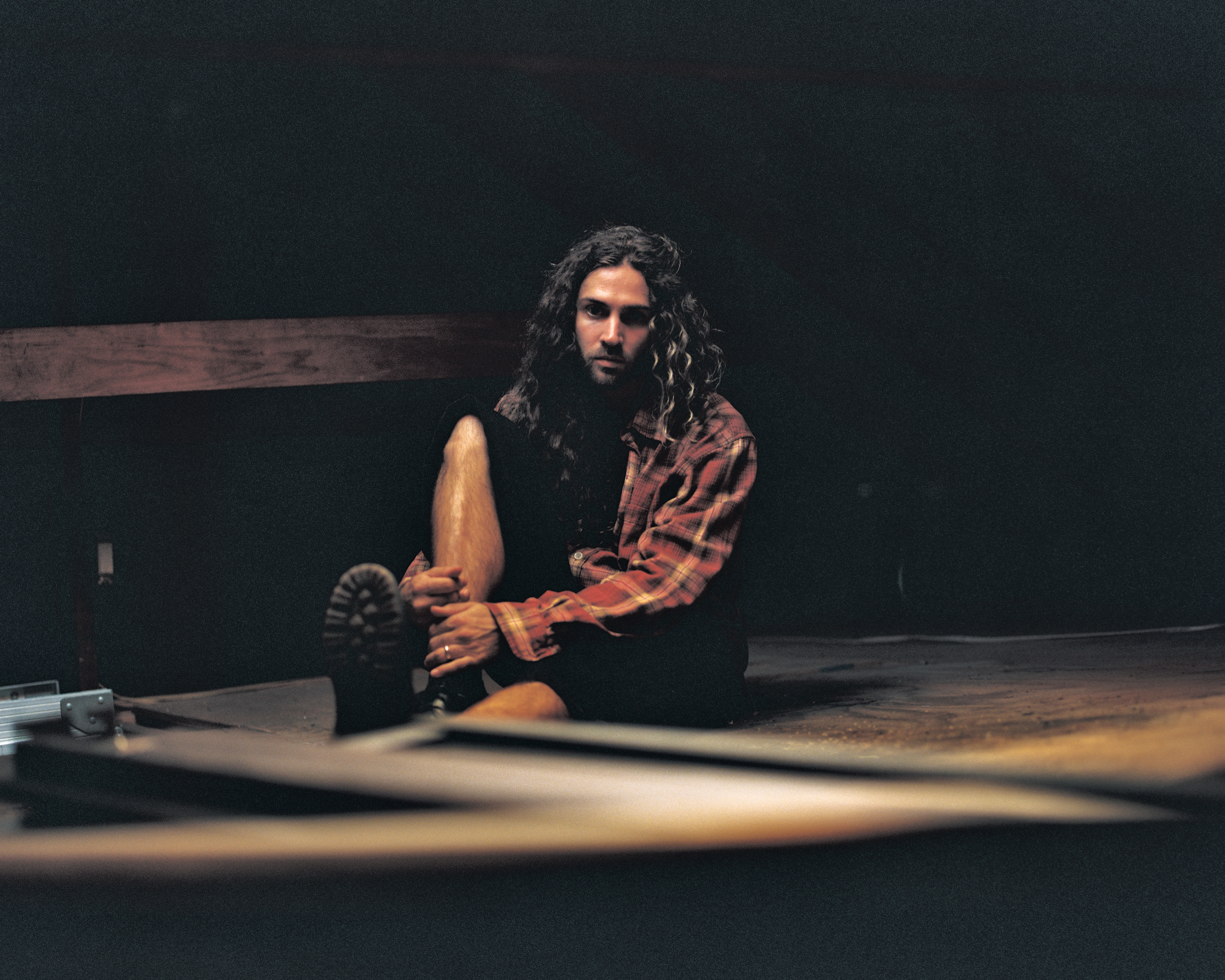
Photo by Cole Silberman
LUNA: That’s awesome. It’s great you’ve gotten to perform them live already. You mentioned the tracklist landing at 13 songs intentionally. I know you had more and had to cut some, but what does that number represent?
VALLEY BOY: There were versions that stopped at 17, and even and versions that stopped at 20. But 13 felt weirdly and cosmically right. It’s an unlucky number—it’s the floor hotels skip. That’s the floor we’re born on. I was told by people to make it 12, because that’s a “perfect” number—12 months, 12 hours—but I didn’t want that. So it’s intentionally 13. It’s unlucky, it’s odd, it’s imperfect.
LUNA: I like that you went against that. Were there any moments where you worried the album might be too personal to share?
VALLEY BOY: Yeah. I had both fears—I worried it was too personal, and I worried I didn’t share enough. So I chose the middle path. I’m not under-sharing, but I could have shared more, and that’s okay. With a concept record, you’re tapping into something bigger than yourself. Divorce is bigger than me, bigger than any one story. I had to accept it would never be perfect. I was always going to share too much and not enough at the same time, and I accepted that.
LUNA: Do you have plans after the album is out, or are you taking a breather?
VALLEY BOY: I want to release a “director’s cut” of the record—an extended version with songs that didn’t make it. I was really inspired by Lord of the Rings; the extended editions and all the behind-the-scenes footage. I love that idea of expanding the world.
And then, something totally different—I’ve been working on another project with [my wife] Delacey. We made an album called Honeymooners, and we wrote a second one last summer. So while I’m releasing this very heavy, trauma-focused record, I’m also working on something about love. It’s kind of the opposite [laughs]. We’ll start recording that once this album is out. It feels like a way to cleanse some of the heaviness.
