
Q&A: Baby Queen Talks “Feel Something,” Emotional Contradictions and Trusting Her Instincts
INTERVIEW
INTERVIEW
☆ BY SHEVON GREENE ☆
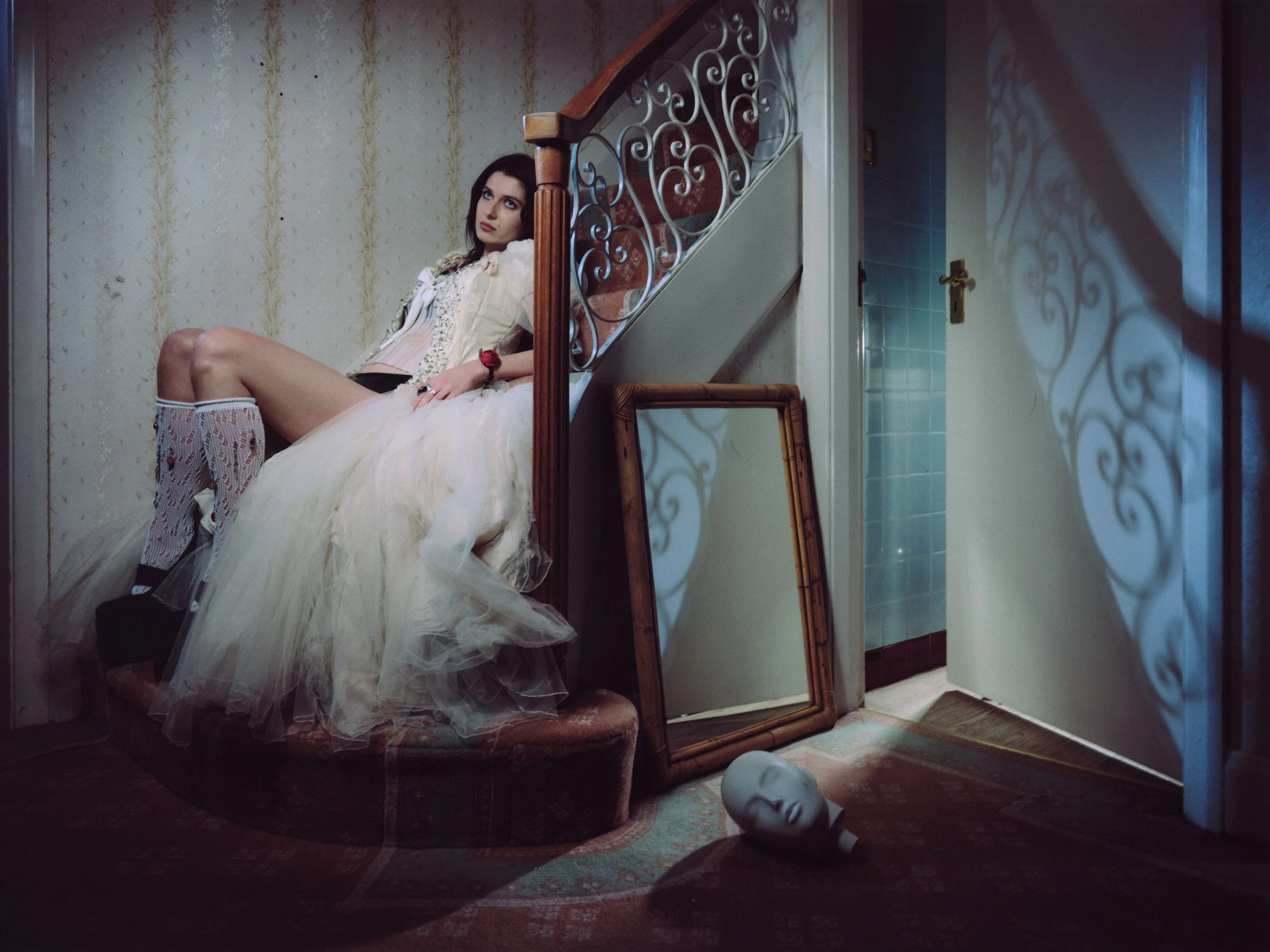
Photo by Elif Gönen
FOR BABY QUEEN, A FEELING IS ALMOST NEVER SIMPLE—Her newest single “Feel Something,” out today, captures the thrill of a forbidden romance, where desire overtakes common sense and emotions shift between excitement and chaos. With ‘80s-inspired textures, driving drums and soaring guitars, the track is cinematic, like an anthem made for late-night drives or the pivotal scene of a coming-of-age film.
The South African-born, London-based alt-pop artist born Bella Latham first hit the spotlight with her sharply accurate commentary on modern life, especially with her acclaimed debut album Quarter Life Crisis in 2023. Since then, she’s toured alongside Olivia Rodrigo and Conan Gray and has even seen her music featured in Netflix’s Heartstopper, grounding herself as one of alt-pop’s most compelling young voices.
“I Hope You Don’t Remember Me” introduced her return phase with an emotional twist. It’s the perfect combination of dreamy synths and soft, reflective voices with an explosive chorus that makes you want to get up and dance. It’s a track that flips the traditional heartbreak narrative by exploring the urge to disappear from someone’s memory after rejection. Together, both songs become parts of a larger emotional story unfolding.
We sat down with Baby Queen to talk about the tension and vulnerability behind her latest singles, the cinematic world shaping her upcoming music and what she’s learned since the Quarter Life Crisis era. Keep reading to hear more about the stories, influences and creative freedom driving this next chapter of Baby Queen.
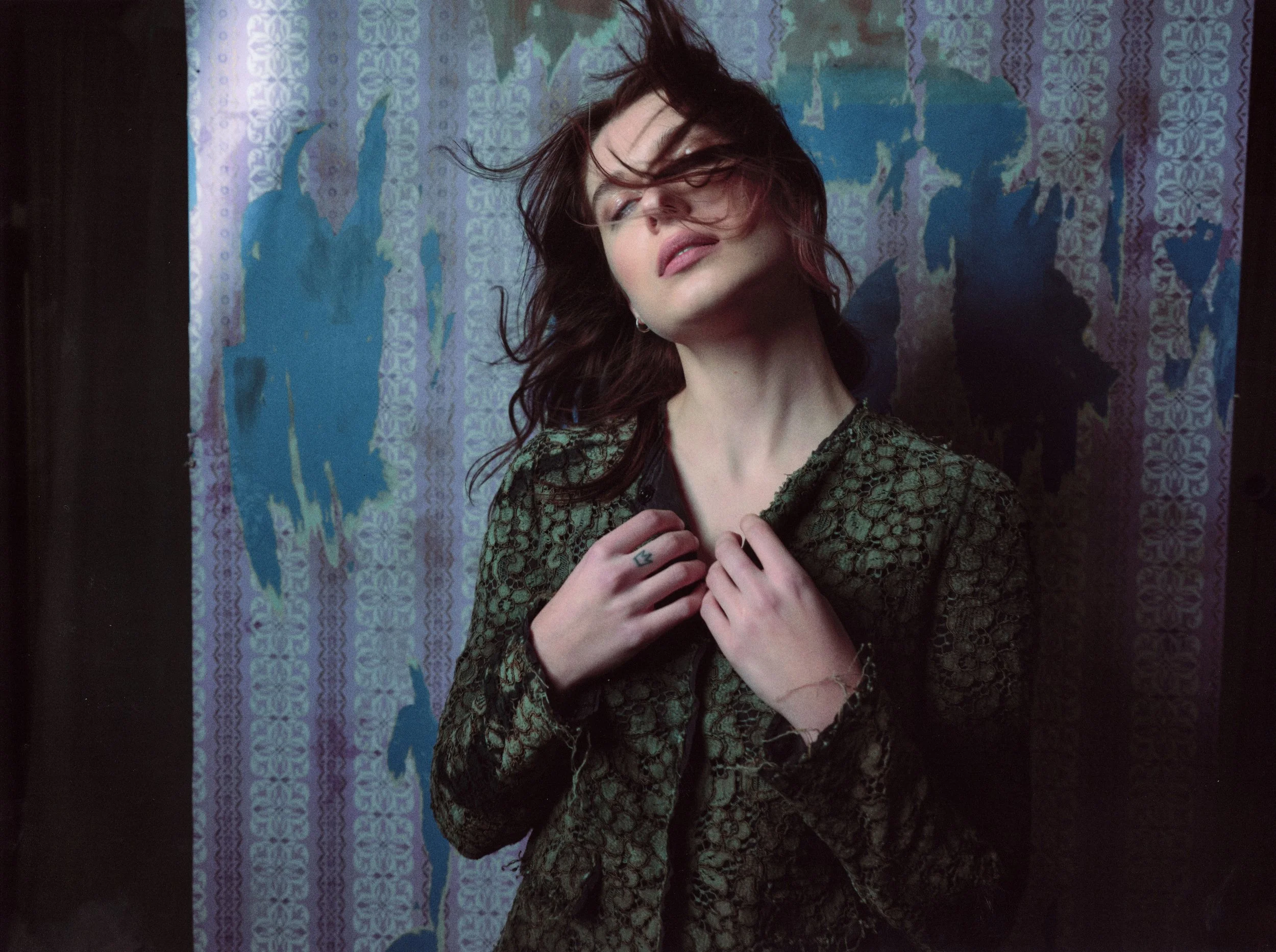
Photo by Elif Gönen
LUNA: I loved listening to “I Hope You Don’t Remember Me.” From what I read, it kind of flips the idea of wanting to be remembered; almost the opposite of that. What made you want to explore that opposite emotion, that urge to erase yourself from somebody’s memory after rejection?
BABY QUEEN: The lyric “I hope you don’t remember me” is in another song I wrote. That song’s been worked on for a while, and I remember looking at that lyric and thinking it was such an interesting line. A lot of this music comes from a place of shame and internal insecurity. The idea of being forgotten by somebody stems out of that shame, but it can also be defiant—saying “I hope you never think of me again.” The reason I liked the phrase so much was because it’s a spin on what you expect someone to say. There are so many great songs about wanting to be remembered. There’s also a level of sarcasm in it, because part of me obviously does want to be remembered. That pain comes through too. It was fun to play around with.
LUNA: It’s one of those niche emotions that isn’t talked about much in music. It’s cool that you explored that in your lyrics.
BABY QUEEN: It was fun as well because it’s not something you’d expect a musician to say when they’ve been away for a while. You’d expect them to say essentially the opposite. I enjoyed the humor of that.
LUNA: Were there any songs or artists that influenced the sound or concept while you were building the track?
BABY QUEEN: I was thinking about The Beatles and The Beach Boys in the verses. We wanted a sonic distinction between the sections because it adds to the humor and narrative of the song. Then in the chorus I was thinking about Robyn quite a bit. We almost treated it like two different songs produced totally differently. It was difficult to combine them, especially when mixing, because you’ve got this ‘60s-style guitar song and then something completely different in the chorus.
LUNA: Yeah, for sure. The verse feels slower and quieter, and then the chorus swells into something more danceable. Was that intentional from the beginning?
BABY QUEEN: I had the phrase “I hope you don’t remember me,” and I was thinking about Prince—specifically “I Would Die 4 U”—and the way that chorus just arrives. I was in the car with my producer Alex Casnoff and started singing it. We knew we wanted the verses to sound different so the chorus would feel satisfying and unexpected. Alex and I have worked together for a few years, and he’s incredible. We draw from very different references, and he’s opened me up to a huge world of music. That verse melody actually came from him sitting down at the piano. We decided to combine these two very different ideas. I also hate pre-choruses—I notoriously don’t write them—so it suits me to just have two sections (laughs).
LUNA: You’ve described working with Alex as finding someone who instinctively understands you creatively. Did that collaboration unlock anything else new for you as an artist?
BABY QUEEN: This process was very different for me. It was about following instincts and intuition. When I first met Alex, I was just going into rooms trying to find something—bringing ideas from my laptop or starting fresh. When I walked into the room and heard him playing keyboard, I immediately felt like he was playing what my brain wanted to hear. He’s an incredible keyboard player with classical influences like Steve Reich. We recorded a lot of this music in Los Angeles with a full band of live musicians, rehearsing songs for hours before recording. It was a very live, musical experience; an old-school way of making a record. I learned a huge amount and feel like a completely different artist because of it.
LUNA: That’s really awesome, finding someone who challenges you creatively but also aligns with you. Moving into your upcoming single “Feel Something,” both that and “I Hope You Don’t Remember Me” feel cinematic; like songs you’d blast in the car or hear during an important movie moment. Do you think about storytelling visually while writing music?
BABY QUEEN: It’s interesting you say that, because the songs get even more cinematic on music I haven’t released yet. These are big songs—I’m not making small songs. I’m a maximalist. There’s definitely a visual world attached to the sounds. It might come from the experience that sparked the song or where I was when writing it. I definitely have color palettes and visuals in my head for these songs. It’s strange because you can never fully translate what’s in your head into something consumable.
LUNA: “Feel Something” explores the thrill of a forbidden romance where desire takes over common sense. What drew you to that tension as a theme?
BABY QUEEN: It came from a real relationship I found myself in, but it’s not foreign behavior for me to be attracted to something I shouldn’t pursue. That tension between romance and turmoil has always been part of how I’ve experienced love. I’m in therapy now, which is great (laughs). This was one of the first songs I wrote for this process, and it’s really about the inception of a feeling; the very beginning of the story.
LUNA: That’s interesting, because it almost feels like the beginning of the narrative while “I Hope You Don’t Remember Me” feels like the end and was released first.
BABY QUEEN: It’s a combination of things. I really wanted the first thing I said to be “I Hope You Don’t Remember Me.” In hindsight I’m glad we didn’t release “Feel Something” first, because the music that’s coming shows everything that happens between those two songs.
LUNA: It almost feels like those movies that start at the end and then say, “You’re probably wondering how I got here.”
BABY QUEEN: Exactly [laughs].
LUNA: Looking back on the Quarter Life Crisis era, touring with Olivia Rodrigo and Conan Gray and the success of “Colours of You,” what lessons are you bringing into this new chapter?
BABY QUEEN: You’re constantly learning. I look back at the version of myself from a month ago and realize I know more now. I’ve always been a bit of a people pleaser and haven’t always trusted my instincts the way I should. In this industry, other voices become involved in what you’re doing, and in the past I didn’t fully trust myself. A big decision I made when starting this new music was that I would fully trust myself, 100 percent.
LUNA: Your recent Hoxton Hall show had that unforgettable entrance with the horse-drawn funeral carriage symbolizing the death of the ego. Where did that idea come from?
BABY QUEEN: When I began making this music, I felt incredibly rejected in multiple areas of my life. For the first time, I felt truly defeated. I realized I wasn’t magnificent or special in the way I had imagined. I actually put the whole idea of being a successful musician down for a while and sat with the idea that I might fail. I experienced a kind of ego death. I was also ghosted, which didn’t help [laughs]. The funeral carriage idea came from joking about that feeling, and it spiraled until we had two horses and a full procession.
LUNA: I love the dramatics of it.
BABY QUEEN: We’ve got free will, right?
LUNA: Exactly. You’ve lived in South Africa, London, spent some time in New York and LA. How have those places shaped your songwriting?
BABY QUEEN: Between South Africa, London, and Los Angeles, I feel like I have three different lives. Every time I leave one place I cry, and I’m relieved when I arrive at the next. South Africa is where I came from; I mostly just listen to music with my dad there. London and LA have very different creative energies. London’s gloomy weather is more conducive to creating. I live a quiet life there and feel connected to the work. In LA it’s easy to get swept up in something happening to you, but it’s harder for me to feel grounded.
LUNA: That makes sense. Even the weather can change your creative energy.
BABY QUEEN: I can’t write in the sun [laughs].
LUNA: Right, who even does that? One last question: what excites you most about the world you’re building for this new era of Baby Queen?
BABY QUEEN: What excites me most is that fully trusting myself has removed a lot of creative boundaries. I want to make the best music I possibly can. I gave everything to this process, and I’m excited to live it and see what comes back from all that effort.
