
Q&A: The Fables and Folklore that made Beatrice Deer’s ‘Inuit Legend’
INTERVIEW
INTERVIEW
☆ BY IZZY PETRAGLIA ☆
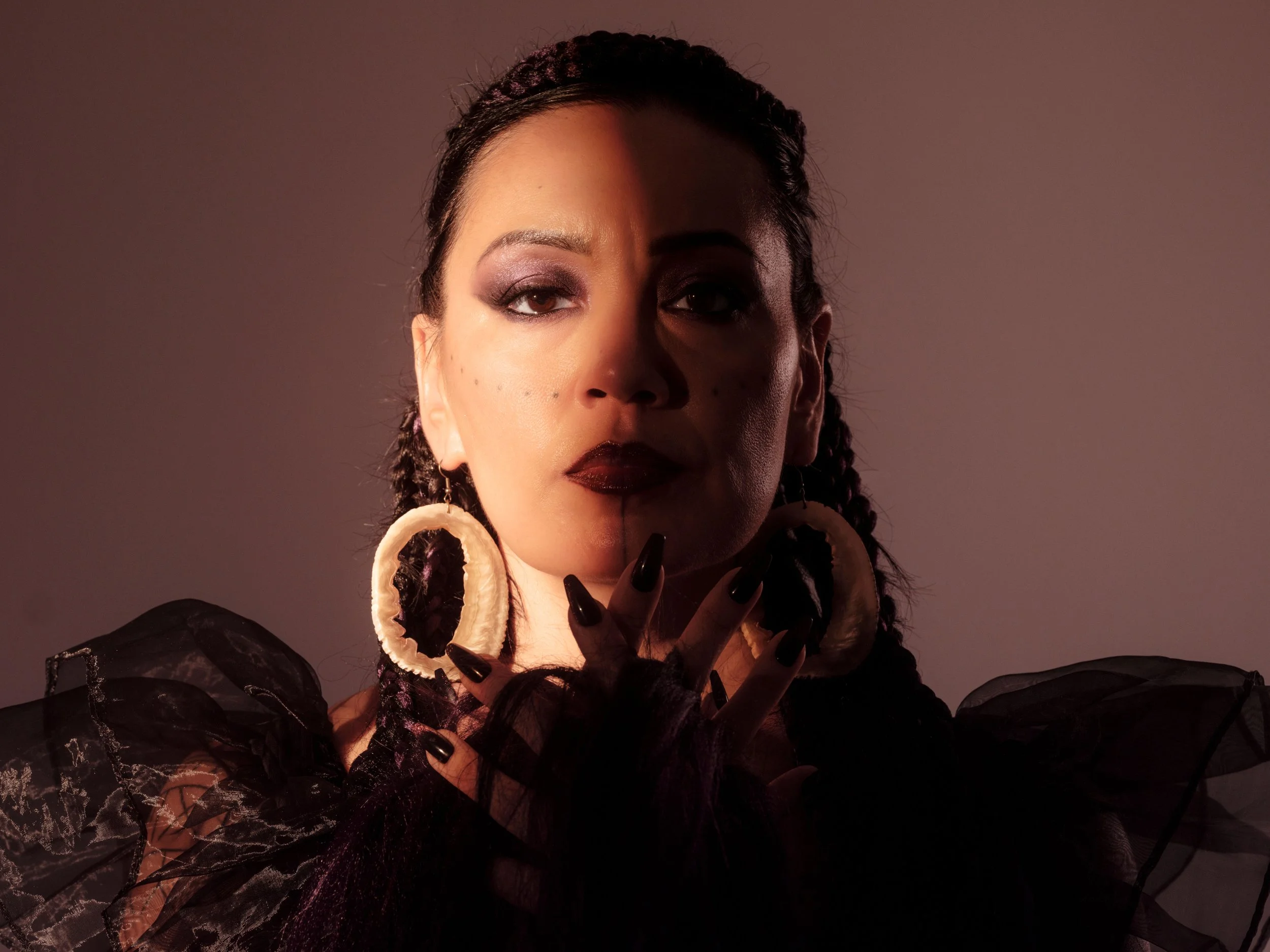
Photo by Alexi Hobbs
OVER THE COURSE OF SEVEN ALBUMS—Beatrice Deer has become an expert of blending traditional folk, indie rock and Inuit throat singing to share cultural stories through a well-versed lens. Her eighth album, Inuit Legend, is a continuation of the path she’s forged as an acclaimed artist originating from the village deep within the Canadian Arctic, Nunavik. Deer utilizes Inuit Legend to create a modern depiction of folklore and history she’s learned from her ancestors, heavily exploring the depths of generational trauma in a direct yet metaphoric manner.
One of the sole motivators behind Deer’s musical career is honouring her heritage to generate a dialogue around the lives of Indigenous people that the education system lacks. Through reclaiming previously-banned art forms like Inuit throat singing, she succeeds at both educating and enchanting listeners with her transcendent bodies of work. Inuit Legend is intentionally deep-rooted but leaves room for Deer’s enjoyment throughout its creative process to shine through. Beatrice Deer touches further on the stories laced within Inuit Legend while chatting with LUNA prior to its release.
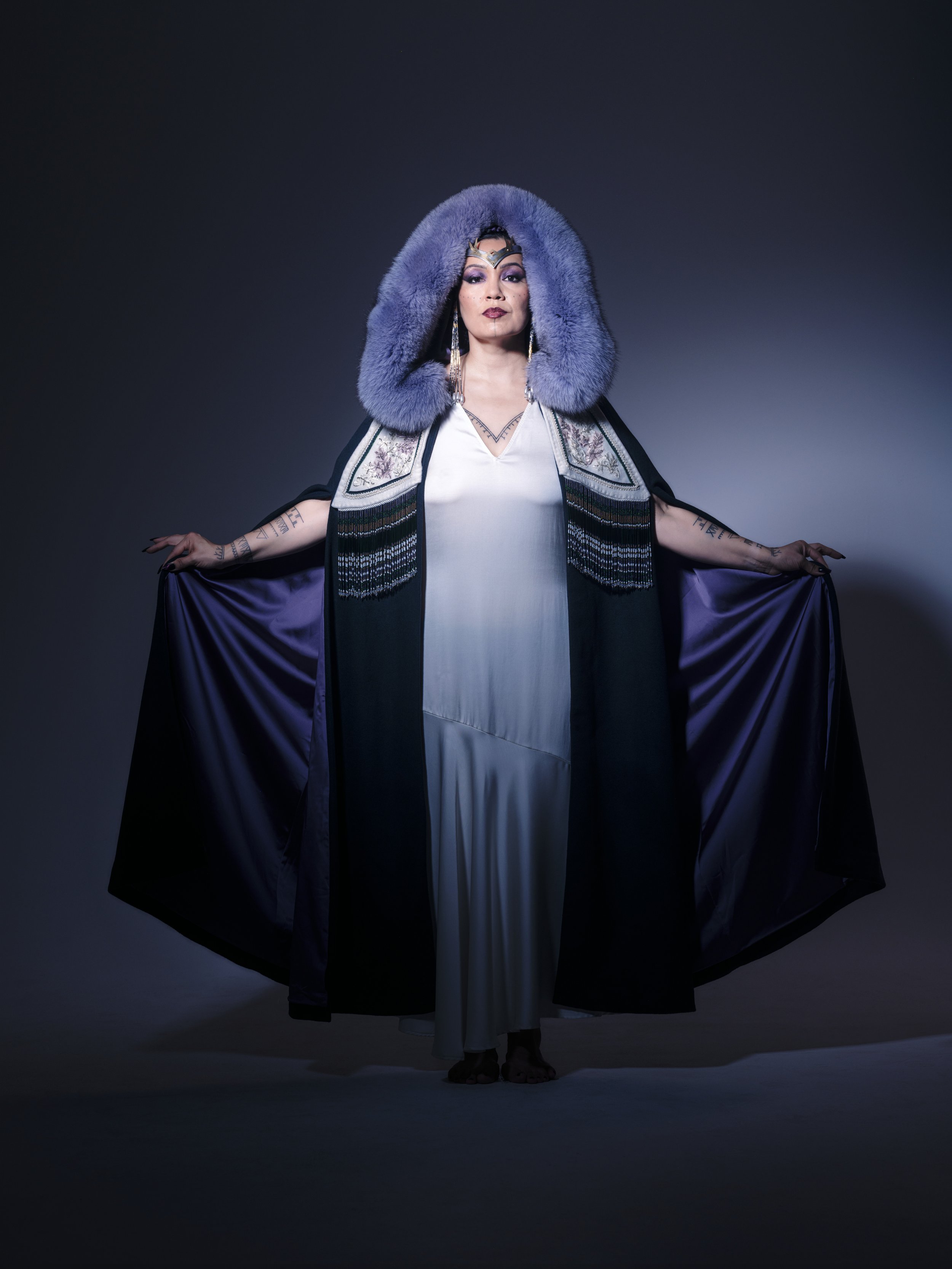
Photo by Alexi Hobbs
LUNA: You’re now based in Montreal but grew up in the small village Nunavik, Quebec, correct?
BEATRICE DEER: Yeah, when I was growing up, we had around 300-350 people. Now the population has grown to close to 500. I moved away when I was 23.
LUNA: What did your music discovery journey look like while growing up in a small village, and how did it spark your artistic career?
BEATRICE DEER: Growing up, it was cassette tapes then CDs. We didn't have MuchMusic or MTV, so as a teenager, I would record MuchMusic on VHS, so I could watch it back and I’d stock up on CDs. It was so expensive back then, so I had to choose wisely and hope that I liked the whole album.
I grew up on Guns N' Roses, the Cranberries, some dance like MC Mario, that kind of vibe. On the local radio, we also had a blind FM DJ who played a lot of bluegrass and also Inuktitut music from Nunavik and Nunavut. Nunavik is an Inuktitut-speaking region. I dreamt of being a rock star when I was a kid. I grew up watching Disney movies when I was a little girl, and then I started watching Grease and other musicals over and over again.
To this day, there are barely any music classes in Nunavik, so there were no music classes when I was growing up. My mother is a pastor, so I grew up going to church as a little girl, and enjoying music there. But as far as musicians, my mom plays accordion and my dad plays guitar and bass. Every Christmas, they played square dances for the whole community. That was a lot of my musical influence.
LUNA: Beyond the discovery aspect, what was it that actually got you to start making music?
BEATRICE DEER: As long as I can remember, I wanted to be a singer. It was just always there. One moment that I can define was when I was copying Ariel in The Little Mermaid as a little girl and realizing “Oh, I have a nice voice.” And when all my friends and the school were doing Christmas concerts, I was like “This is my time to shine.”
LUNA: You did kind of touch on this already, but how would you compare and contrast the music communities in Nunavik and Montreal?
BEATRICE DEER: There is no similarity at all. In Nunavik, it's so limited. There's no music stores. It's hard to get equipment up there because of the costs. I moved to Montreal for four reasons; music was one of them. I moved for music opportunities, to pursue college, for my mental health, and for my kids to have a better education. When I moved to Montreal, it was with my ex-husband at the time. We were a duo for a long time until we sought out other professional musicians, and that's where our careers changed.
It's night and day. At my first festival, I was 18 years old in Kuujjuaq at the Aqpik Jam, and my band was my father, my cousin, my ex-husband, and myself. I remember being super proud, but also feeling so limited. I wanted bigger, I wanted better, but it was just not possible. Now, I play with the most amazing, incredible band, and I'm grateful. I get emotional thinking about how amazing they are, and how lucky I am that I get to have that. I have what I deeply wanted when I was a kid. It's priceless.
LUNA: It must be so special, and with the album, I know a lot of your work thus far is rooted in a lot of cultural storytelling and sharing your personal experiences. What stories can listeners expect to hear on Intuit Legend?
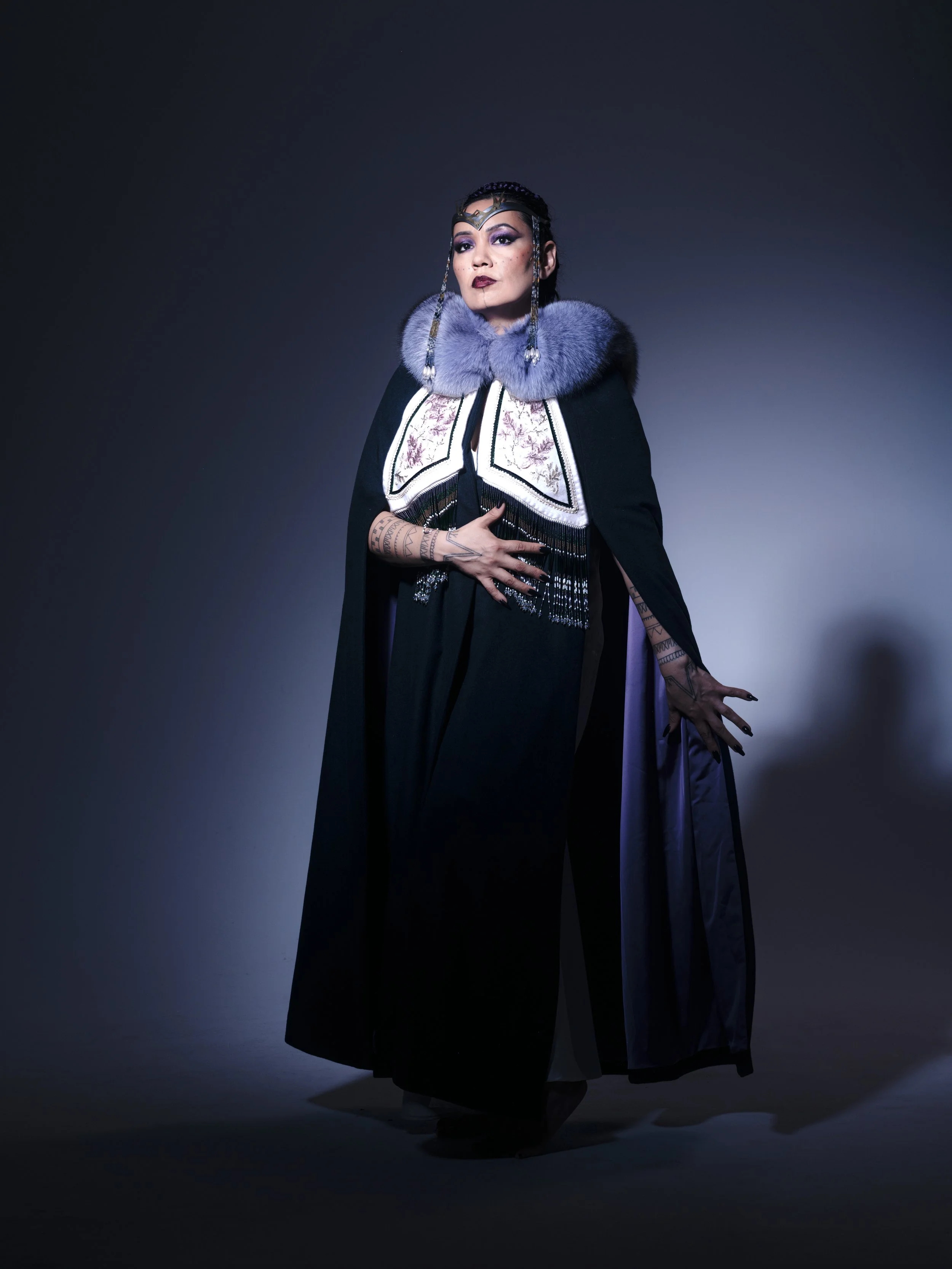
Photo by Alexi Hobbs
BEATRICE DEER: This next album is completely different from my other work. My other work is very personal, it's everything to do with healing and moving forward with life. This time, the album is solely about Inuit legends. Our legends are ancient, they have metaphors, and they have meanings behind the stories. All the legends are mostly very dark. It was our people's way of teaching lessons, especially since they also strongly believed in these legends and their transformation stories.
Each song is its own story, but some are still personal. “Epidemic” is about my grandmother and her infant who died during the German measles epidemic in my homeland. These stories are passed down from generation to generation. Some I learned first hand from my elders, and others I researched in a book.
Some songs are sung in third person, while other songs are sung in first person. I was getting into what I imagined the mental state of that person was. On ‘Caterpillar', for example, the more rock/grunge song on the album, [there] is a woman who couldn't have any children but so desperately wanted them. So while her husband was gone hunting, she found a caterpillar and decided to keep it as her baby. She started feeding it from her breast, but instead of milk, it was sucking her blood. And as it grew, she became obsessed and in love with it. I was trying to imagine the psychosis that goes behind that, followed by her husband coming home from the hunting trip. He finds the caterpillar inside his mitten trying to stay warm, is shocked by it and throws it on the ground and stomps on it. It’s stories like that.
Even with “Epidemic,” the song about my grandmother, I realized that I never grieved her because I didn't know her. I figured her death didn’t really affect me, or at least I thought it didn't. I knew the story from when we were teenagers because we had an incredible history teacher when I was in high school. While we were learning the history of our village, we learned about my grandmother and the 11 other people that died over three weeks. That’s a lot of people in those days, especially when you think of the population of a village. There must have been less than 50 people. Since it was 1953, they weren’t equipped with medicine. There were no nurses or doctors and there weren't enough vaccines. People started dying, including my grandmother. Everybody was so sick that they couldn't bury the dead, they had to stack the dead in the porch of the igloo and wait until everybody was well enough to do anything.
So just imagining the incredible shock, disbelief, and despair–not knowing if more people are going to die, the desperate pleas of the priests that wrote, and the pain and helplessness they felt. That’s when I wept, as if my grandmother just died. And I realized “Oh my God, I'm grieving her.” That was quite the experience. My grandmother was buried with her infant baby in the same coffin.
LUNA: It really gives you a new different perspective to hear stories like this one, it shocks you back into reality. I can’t even imagine having to go through something like that.
BEATRICE DEER: And this was less than 100 years ago.
LUNA: You’re doing a great job sharing these stories as well.
BEATRICE DEER: That's part of our culture. I consider my music to be a continuation of sharing our traditional stories.
LUNA: And when you’re blending indie rock, folk, and traditional Intuit storytelling, what is the overarching goal that you seek to communicate with your listeners?
BEATRICE DEER: I just love blending my tradition with cool music. It's a form of decolonizing as well, because throat singing was banned by Catholic missionaries. We almost lost that practice because of oppression and colonization, and now it's come back. My ancestors were forbidden to throat sing, now I'm paid to throat sing and travel around the world. A lot of Inuit have actually lost their language because of colonization as well. My mother's generation were punished for speaking Inuktitut in their classrooms, but now I'm a simultaneous interpreter. I sing in Inuktitut, I'm fluent in Inuktitut. It feels like we win. We win every day. But it's a battle still, because we're a minority and racism still exists.
LUNA: As sad as it is, decolonization is an ongoing battle.
BEATRICE DEER: And it's exhausting sometimes.
LUNA: I'm sure, there's always going to be people who want to be on the side of the oppressor. It’s sad that it’s unrealistic that anyone will ever be on the same page. There's always going to be someone who doesn't want to move with the times or move within the practice of basic human rights. We see that actively to this day, if anything, now more than ever.
BEATRICE DEER: What's happening in the US is so unreal. It's like watching a movie.
LUNA: And it's really jarring when you're scrolling through content. One minute, it's videos of people, including children, getting detained by ICE. The next, it's someone at a coffee shop.
It's not the fault of anyone, it just feels like we’re being conditioned to be desensitized to seeing content like that.
It's nice to hear that a goal of yours within your music is to educate as well. You’re reaching new people, taking something that was once banned, and you're tapping it into a place of culture where it can be appreciated in a different way. People who may not be familiar with throat singing can now become familiar with it. When you think of that goal in relation to your upbringing and the moments that kickstarted your career, what connections can you identify and how does that continue to motivate you?
BEATRICE DEER: I just share my cultural pride. We're raised to uphold our Inuit values, respect the land, respect each other, sharing our food and our hunt, the incredible craftsmanship that we have as Inuit. We're able to make our winter clothing. The great values that we have like raising children in a certain environment with the stories and the language that we have, the songs that we have, the resilience and the ability to create something out of nothing. My ancestors invented the igloo. They built a house out of nothing with minimal equipment. We waste nothing. We respect the environment and it's the total opposite of capitalism. Capitalism is just spend, spend, spend, make, make, make, profit, profit, profit.
LUNA: Would you say the whole idea of crafting something out of nothing is a huge motivator for you as you continue to build your career out?
BEATRICE DEER: Yeah. Using your creativity and your imagination, it's the most satisfying thing that a person can do. It's amazing to make something out of nothing.
LUNA: And finally, up to this point in your career, what has allowed you to feel personally successful?
BEATRICE DEER: I'm incredibly blessed that I'm using my natural talent as a livelihood. I used to work full-time for other organizations, doing my art, and I was completely exhausted all the time. Since I've made the decision to be my own boss, doing my art and interpreting full-time–and now designing clothing, as tiring as it is, I'm so happy to be able to do that. That's success for me.
