
Q&A: Billie Marten is a Force of Nature Ready to Return Home
INTERVIEW
INTERVIEW
☆ BY LUCY BULLINGTON ☆
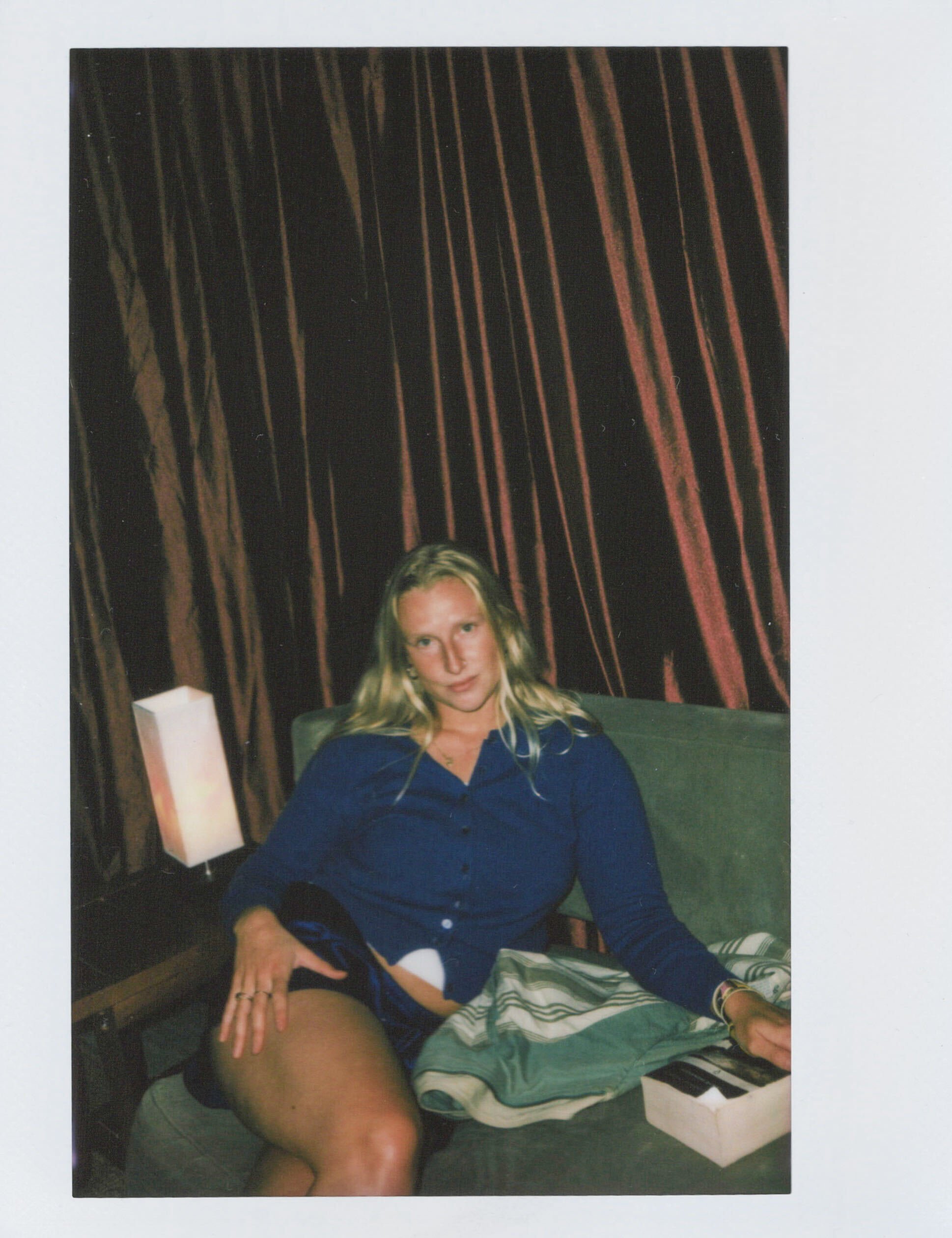
Photo by Lucy Bullington
I watched from backstage as Billie Marten waved goodbye to the crowd at Outside Lands Music Festival in San Francisco. After finishing her set with "Leap Year," she left the audience in an adoring, dream-like haze. The moment she was out of sight, she flopped onto the ground beside her trailer, melting into the cold grass in an exhausted and satisfied relief.
"How's it going?" a friend inquired.
Billie sighed playfully. The twenty-seven-year-old musician has spent the last two years on various supporting and headlining tours away from her home in London, and was now wrapping up a year of touring her fifth studio album, Dog Eared. Her wry smile and sigh told us all the same thing—Billie Marten was ready to go home.
It’s clear through her music that Marten possesses a delicate, highly imaginative view of the world. She brings feelings and ideas to life by personifying the world she’s observed, both the beautiful and the banalities. Long-distance lovers become "two weeping willows throwing an arm to another" in "Willow;" in "No Sudden Changes," she’s "dust in the breeze" tugging at a lover’s sleeve. What makes her lyricism so addicting is this romantic tether to nature.
Her mind wanders into the subtle crevices of the earth, using a feathered voice to trace the parallels between natural forces and human emotion. She never has to over-explain or lean into literalism in her lyrics; her meaning comes naturally through her metaphors. When I ask her about this ability she tells me, “Nature is a form that you speak through; like writing anything, you always need a vessel.”
On stage she is a calm and steady force. As each song progressed, the size and attentiveness of the crowd only grew. I had a hard time spotting an audience member who was not caught in a steady, transfixed sway admiring Marten on stage.
Last fall, while photographing her New York show at Music Hall of Williamsburg, there was one moment that stopped me completely. The second she launched into "Willow," I found myself unable to do anything but listen. I quietly lowered my camera and sat against the barricade. She enveloped the entire room into the kind of absolutely present moment that makes you leave behind the thought of anything corporeal or retrospective and focus only on the words hanging softly in the air. It was an unforgettable live music moment where, once the song ended, the audience erupted, all having shared the exact same trance. That’s the power of Billie Marten.
She is a well-spoken and sweet conversationalist. Marten structures her words thoughtfully and her constant reading clearly translates into her boundless and creative vocabulary. When we sit down, I ask what she’s currently reading. She pulls out a 1,300-page copy of The Count of Monte Cristo. As I stare down the goliath of a book, noting her bookmark well past the halfway mark, she offers a cool and brief summary: "It's essentially The Shawshank Redemption, but in 1815."
Luna had the chance to sit down with her and cover life on tour, her relationship with the natural world and much more. Read the full interview below.
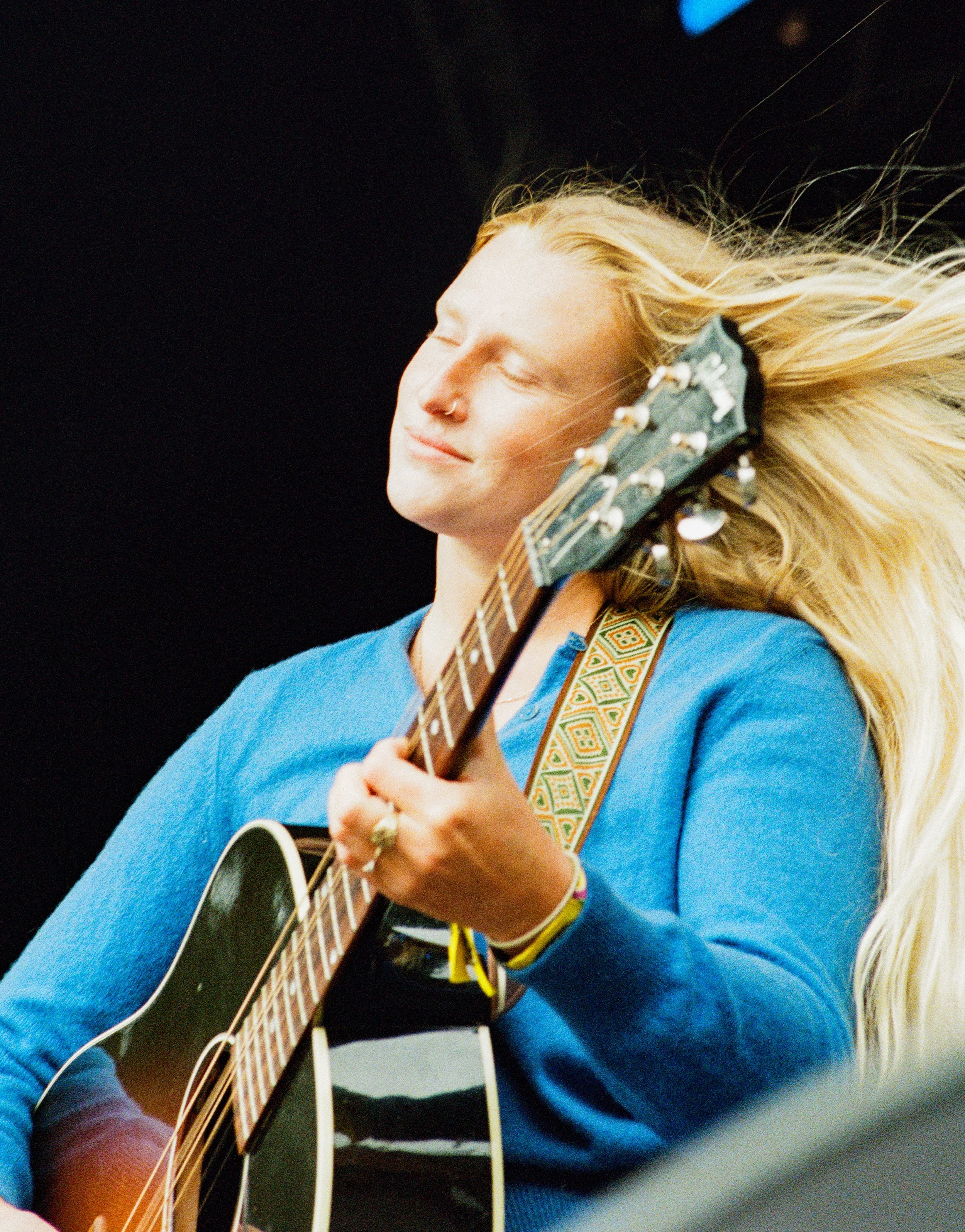
Photo by Lucy Bullington
LUNA: So, I want to start off by asking you, very randomly: what are you reading right now?
MARTEN: Oh, perfect question! I’m reading—and I will show you, because it’s hilarious—The Count of Monte Cristo.
LUNA: Oh my! That’s so long.
MARTEN: Yeah, it’s 1,300 pages, but you’re not thinking about that when you’re in it. It’s beautiful. It’s one of the most epic adventure stories in the world. It’s essentially The Shawshank Redemption, but in 1815.
LUNA: Do you like to read on the road?
MARTEN: Yeah, I read a lot on the road.
LUNA: It feels like you’re finally winding down after a lot of touring.
MARTEN: Well, today marked two years off-and-on of touring.
LUNA: I’m curious, because this month also marked a year since Dog Eared, and almost ten years since your first album. You said in a past interview that you’d like to someday write the song that fully embodies you and says it all, even though you’re constantly changing. What do you think is the closest you’ve gotten to writing that song?
MARTEN: I think as each song gets written, the latest one is the closest. When you first start writing songs, they are huge, swathing statements. You feel like you need it to epitomize your entire being, your personal statement and your view on the world. I feel like that’s how a lot of us fall into it—we have something to say, and music is the vehicle.
But as you write more and more, it becomes less about statement pieces. It becomes smaller, more intricate, delicate and present. For instance, the new one today was just a quick written exercise, a little flash in the pan. Then it gets fleshed out over time.
LUNA: I was going to ask about that, too. One of my favorite things about your lyrics is how you personify nature. What is your writing process like with that?
MARTEN: I think I’ve always used nature as my main writing tool, including the entire animal kingdom. I feel like I far too often reference those things! But it’s one of the most quintessentially simple and easy things for a society to speak through. Nature is a form that you speak through; like writing anything, you always need a vessel.
I was reading Laurie Lee the other day, who is one of my favorite authors. He was talking about writing a book, but it applies to writing anything. He said writing is like designing a house: how do you want people to walk through the front door? What sort of lighting do you want? How soft or rough is every surface? Are these small, crooked rooms full of steam and smoke, or are they large, expansive and grandiose?
LUNA: When you picture your recent album, Dog Eared, what does that house look like? What scenery or setting comes to mind? A bar? A landscape?
MARTEN: It’s easy to say a New York bar setting because we spent a lot of time doing that, but for me, it’s more of an abstract, amorphous shape. When I think of that record, it’s like an inky blue, sort of an inkwell puddle or a petrol slick. It’s watery, bubbly, and I’ve always said it reminds me of a lava lamp.
LUNA: I think that’s so interesting because when you look at the cover of Dog Eared, it’s very abstract, but Drop Cherries is a very defined portrait of you. How do you think that visual shift embodied the change in sound?
MARTEN: Drop Cherries felt like a very clear representation of who I was, and I needed a lot of time to get there. Having started so young, I was never able to have that privilege…it was all just out there. Drop Cherries was the clarity I’d been searching for for a long time. That album then allowed me to take a step back, as people normally do on their second record, and blur the canvas a little bit.
LUNA: As you’re writing new stuff now, how do you picture it? How is it different?
MARTEN: I don't think it is different; I think a lot of it is much the same. All artists get stuck in that cyclical process: writing, recording, playing, writing, recording, playing. It’s really about the idiosyncrasies within that process. Obviously, you find new things to write about on a daily basis, but the core remains.
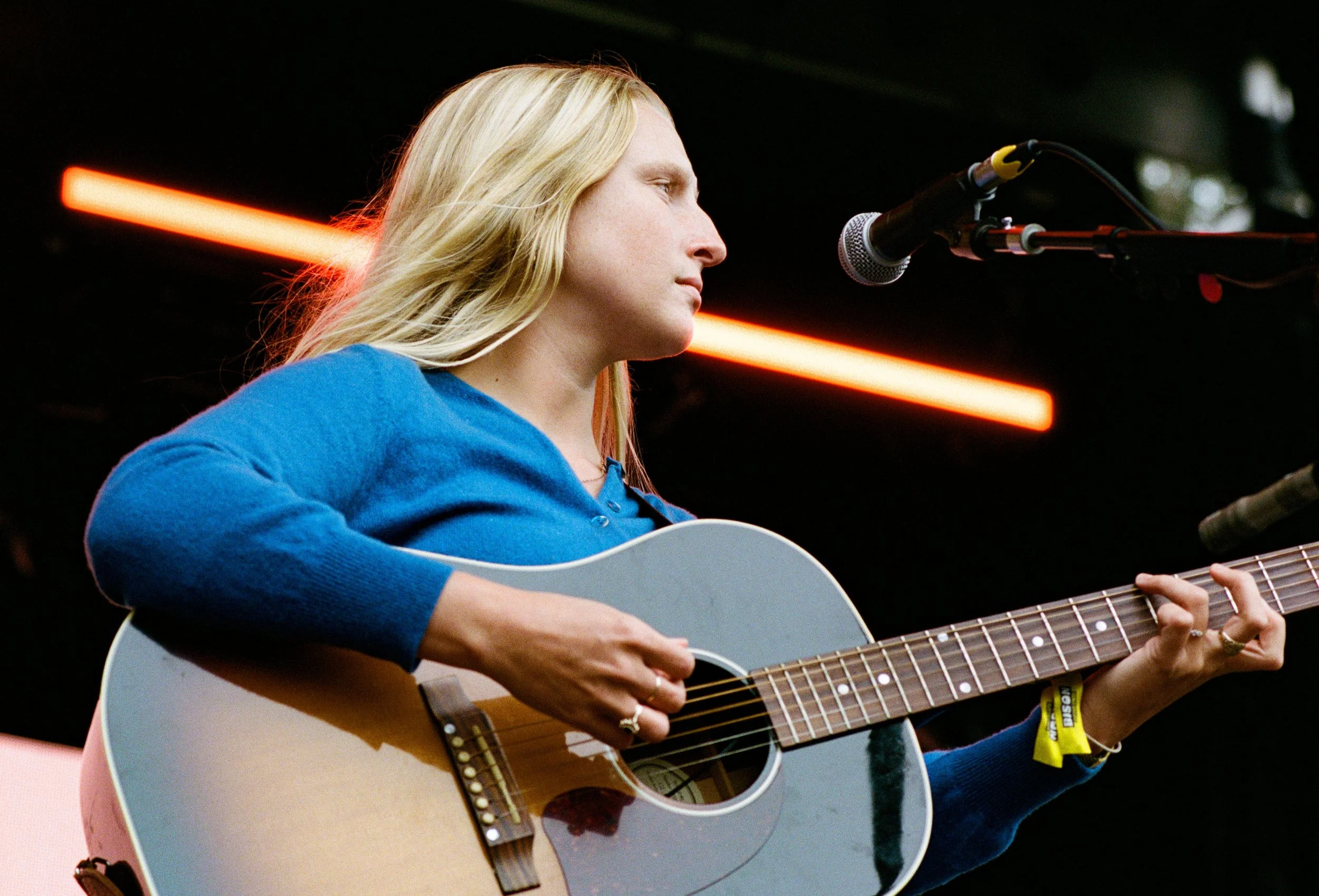
Photo by Lucy Bullington
LUNA: You’ve mentioned that you feel like you’re always changing. What do you think remains constant?
MARTEN: Change is the only constant. That was a big realization of mine, that change is literally the only thing in the world, and in yourself, that stays the same.
LUNA: I remember shooting your show in New York last November. When you played "Willow," it was one of those live moments that felt so insanely present. Afterward, it felt like the whole crowd was collectively experiencing that same feeling. It seems like that song has such a hold on people. What is the story behind it?
MARTEN: That song was written in a hotel room in Seattle on the first day of a tour years ago. It came out in about ten minutes. It’s about long distance and missing my person. When you’re the one traveling, people think you’re having all these grand experiences, growth and presence. But in reality, a lot of life on tour is just the tangle of hotel sheets, strip lighting, green bananas and the banality of modern life. So that song was kind of a smoke signal.
LUNA: I love that so much. Are there any specific literary references hidden in your songs?
MARTEN: Probably! There are likely a few in there, though I can't think of any specific ones off the top of my head.
LUNA: Do you have a favorite lyric written by someone else?
MARTEN: An old favorite of mine was Nick Drake’s "I'm paler than the weakest blue," which really resonated with me as a child and teenager. Right now, it’s probably a Paul Simon line from "I Do It for Your Love." There’s a particular verse in there that talks about the northern and southern hemispheres that I just love. (“The sting of reason, the splash of tears / The northern and the southern hemispheres / Love emerges and it disappears / I do it for your love I do it for your love”).
LUNA: That’s gorgeous. I have two quick final questions for you. Have you ever written or thought about writing in other forms outside of songwriting?
MARTEN: I am starting to write in prose and written form. Tentatively exploring musings, jottings and essays.
LUNA: That’s amazing! And lastly: what’s next for you?
MARTEN: Home. Home for a very long time.
LUNA: Where is home?
MARTEN: London. I fly home tomorrow, and then I’m going to crawl into my cave.
LUNA: What’s the very first thing you’ll do when you get home?
MARTEN: Water my plants.
