
Q&A: Darcy Baylis on Building the Sound of ‘Emotronica’
INTERVIEW
INTERVIEW
☆ BY FAITH LUEVANOS ☆
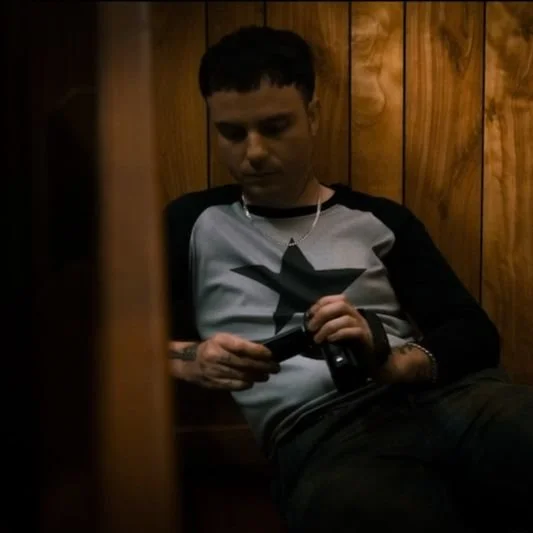
Photo by Elsa Gottvall
FOR AUSTRALIAN-BORN, LA-BASED ARTIST AND PRODUCER DARCY BAYLIS, HE HAS NEVER FELT CONFINED WITHIN ONE GENRE—With music that seamlessly exists in the space between emotion and experimentation, Baylis returns with his latest offering, Emotronica. The 10-track album pushes forward the emotronica genre that he helped pioneer and has features from some of his closest collaborators like Photographic Memory and Ninajirachi.
Baylis is deeply involved with the creation of both electronic and emo music outside of his solo project, which allows him to pull his favorite elements of each genre to create something new, something addictive. From producing for artists like daine, Wisp, Ninajirachi and Wicca Phase, to being a part of LA emo band Car Underwater, each end of the spectrum provides a unique perspective into his world.
After a two-year hiatus from his solo project, Baylis felt like there was no better time than now to release Emotronica. Since moving to LA, he has been encompassed with creativity and supported by his community around him, making the release of the album feel like divine timing. He continues to push the boundaries of what the emotronica genre can become.
Luna caught up with Baylis to discuss the making of the album, the key components that define the genre, his move to LA and more. Read the full interview below.
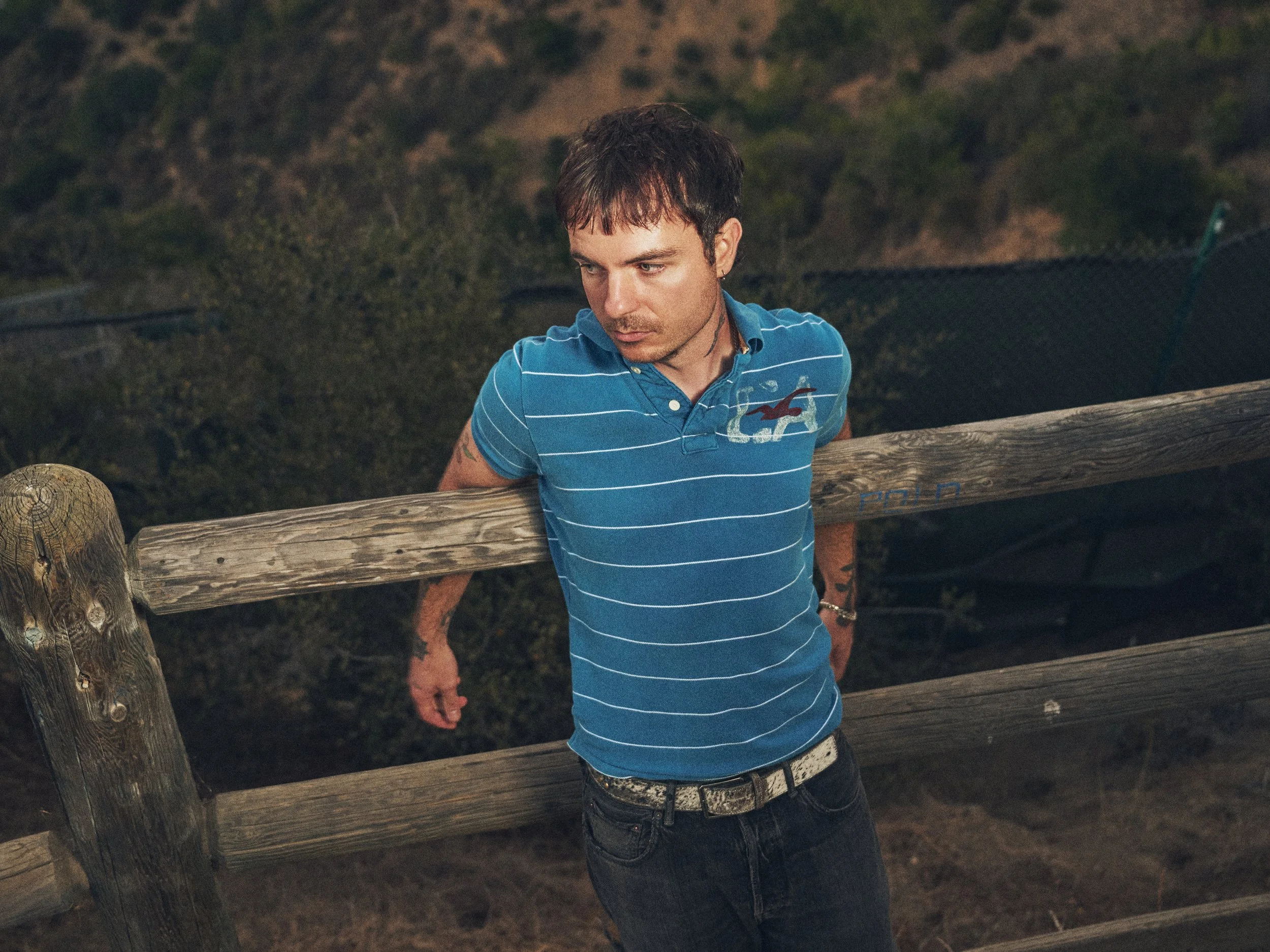
Photo by Malik Campbell
LUNA: For our readers who may be discovering your music for the first time, how would you describe your sound?
BAYLIS: Emo dance music.
LUNA: You’ve helped pioneer what’s being called “emotronica.” What would you say are some of the key components that define the genre?
BAYLIS: I think a lot of it comes down to the chord progressions. I basically learned how to make music from just putting on records that I liked and playing guitar along to them until it sounded right. So I think a lot of it comes down to the chords and the melody that that type of music tends to use, and then pairing that with a lot of the electronic sounds you hear in EDM—a lot of really bright trance synths, supersaws—just pairing the emo songwriting with the contemporary EDM production.
LUNA: When you first sit down to make a song, is the foundation reliant on the emo elements or the electronic ones?
BAYLIS: I think they both happen at the same time. I feel like 90% of the time when I start making one of my songs, I'll start with the synth lead, and the way that I write those, I don't really play it on the keyboard. I just loop eight bars and I click in the notes manually until I have a melody that makes sense, and then I'll add a bass line to it, and then I'll fill in the chords. Once I have a bed that starts feeling like a progression, that's usually when the vocal parts will start to just come to me in my head. I'll maybe sing one line here, sing one line there, and just go from beginning to end that way.
LUNA: In order to pair these two genres, I feel like you have to have a wide taste in music. What was the starting point for you to pursue music?
BAYLIS: I have an older sister who I'm super close with, and she put me onto a lot of music when I was in elementary school. I started going to shows and my mom would literally pick me up from elementary school early if I wanted to go to a show and she would take me. In Australia, we would have matinee shows in the afternoon, which were under 18, and the 18+ show would be at nighttime. So I'd go to a lot of shows during the daytime, and that was my introduction to music, playing guitar, everything.
A few years later, in my teens, I discovered dance music and got my first laptop and taught myself how to produce in a similar way to before, where I would just take songs that I liked and put them into Logic and just go bar by bar of copying everything that was going on to understand it. I didn't really get a formal training in music until later when I went to college to study music theory, and that was a lot more of contemporary classical music. I feel like after going through all of those three stages, I began to piece it all together. It's the way that I make music now.
LUNA: As a teenager, was it hard to have the discipline to sit down and learn how to produce?
BAYLIS: No, I've never had any trouble. I think the only thing I ever want to do, to this day, is make music. If anything, I need to discipline myself to go out and have fun and do other things because this is the only thing I want to do.
LUNA: Your new album Emotronica is officially out, and this marks your return to solo music after a couple of years. How did you know it was time to get back to it?
BAYLIS: In between all the time I spend producing for other artists, I always take my laptop with me everywhere that I go, so I always have anywhere from 50 to 100 demos that I'm just sitting on, and I just chip away at them in between other sessions. Eventually, I put my 10 favorite songs in a playlist, and I was just sending them to my friends and I think it was the encouragement of my friends being like, "So what's happening with these ones? When are they coming out?” I was like, “I don't know, when should it come out?” They were like, “ASAP.” So, I think having that community of people around me that I can share music with and bounce ideas off of really helped me get to a place where I'm like, “Okay, this feels like it's telling a story from beginning to end, and it feels fleshed out.” It just felt like a good time.
LUNA: For a lot of artists, the music they release was made years prior. Which song is the oldest one on the album?
BAYLIS: The oldest one is probably the second track, “Light FM,” which I think dates all the way back to 2020 when I was still living in Melbourne and I was driving in this area called Richmond, and I saw a big billboard for a Christian radio station called Light FM, and it just said “Light FM, turn towards the light.” I just thought that was such a beautiful concept, like “Turn off the radio, find God and listen to music.” So that was the initial inspiration for that song, and that had five or six different versions until it was where it is now.
The most recent one is probably “Visa” that I did with Max, Photographic Memory, which we made in the studio a couple of months ago.
LUNA: Were there any tracks on the album that you felt were a little difficult to finalize?
BAYLIS: No, I feel like a lot of the more recent tracks came together quite quickly, and it's usually that way when I have a song that I keep coming back to over, literally, years. “Light FM” for example—all different versions were at different tempos with different arrangements, and I really love the concept of a song taking as long as it takes to finish, and there was a version of it that I could have put out, but I just kept thinking it could be better. So sometimes songs take years, and other times they take a day, an hour, even.
It's totally random as to which song ends up where, and even when you're working on songs with other artists, you never know which one's going to come out, what it's going to end up sounding like. I think that's a beautiful part about making music, and especially making music with other people: you're not fully in control of it. You follow it and see where it goes, and sometimes it ends up somewhere totally different.
LUNA: Something I admire about you is the way you flourish in collaboration. When you’re beginning a session with someone else, what’s something you feel is mandatory in order to open up and make it a more comfortable experience?
BAYLIS: The hang has to be good; that's the most important thing. When you're working with anyone, especially for the first time, the hang has to be good, and you just need to be able to get along with someone, be open, ask questions and really get to know someone before, because it's a nerve-wracking thing being like, “Let's just meet and make a song for the first time.”
That's the really beautiful thing about this studio that we have here in East Hollywood: people are always coming and going. It's a very open door. Sometimes people come through who don't make music; they're just there to hang and meet new people. Some of the people that come through take photos, make art, make clothes, whatever. But having that community of these really great people, I think, really helps inform what happens musically in that space.
LUNA: Do you feel like your solo work offers you more of a chance to be explorative and musically daring in comparison to working alongside other people?
BAYLIS: I think it's both. It makes it easier and more difficult that there are no limitations on what song I want to make, versus when someone comes in, they're like, "I want to make a song that sounds like this.” And when it's just me, it's like, “What do I want to make the song sound like?” I have no idea, and I really genuinely don't know until it's finished. So sometimes it takes a lot longer because it's just me by myself, exploring and asking so many questions, but I think that's a really fun part about it as well because there are no limitations.
LUNA: Some producers can’t decide when a song is done because they feel like there’s always something else they can add. Do you have these moments when you’re making music?
BAYLIS: I'm almost the opposite approach. I think it's important not to be too much of a perfectionist in music. I know sometimes people will spend ages deliberating on which hat sample to use, which snare sample to use, and really getting in the weeds of it. The way that I see it is, if the song is good, then everything else makes sense. Everything has to come back to the song and the structure of the song, the chords, the lyrics, the melodies. That, to me, is the most important thing when I'm making a song, because everything else is just a matter of taste, and it's super subjective. It's important for me, anyway, to not be too much of a perfectionist. Even on my record, there are plenty of things where maybe [in] a vocal take, you can hear the AC in the background, or maybe there's a weird clip or something like that. But if the take is good and the performance is good, that supersedes everything else.
LUNA: That’s the beauty of electronic music—any sounds can be an added layer to the production.
BAYLIS: That's what I love about the era that we're living in now, where music production has been so democratized, where anyone can get on the computer and get a copy of Ableton, and the barrier to entry is so low. I think that's beautiful because you just hear so many different types of music now that you maybe wouldn't have 20 or 30 years ago, when not everyone could make music like that.
LUNA: Within the emotronica genre, who are some other artists you’d recommend?
BAYLIS: Oh, so many. There’s an artist who’s on my record; they’re a duo called forever ☆, and they just came up on my algorithm and then I reached out to them because they were doing really similar stuff. It’s a lot of breakbeats and distorted guitars with really pretty vocals.
Then Max’s project, Photographic Memory. He and I have been on such a similar tip for so long. People joke that he’s the American version of me and I’m the Australian version of him because we’re just so in sync when it comes to our music taste. There’s another artist from Berlin I love called Sparrow, and I became friends with them when I was living there. His music is really amazing and super underrated.
LUNA: Since you’ve moved from Melbourne to LA, do you feel like this change of scenery has changed the way you approach music?
BAYLIS: I feel like as soon as I got here, I just fell into a really awesome community of other people that are making music, and just getting to know everyone here, and being in the studio every day and meeting people—I think that's opened doors to a lot of collaboration. Whether it's people who worked on the record or people who have heard it.
LUNA: Any final thoughts you’d like to share with your fans and our readers?
BAYLIS: Thank you for listening after all this time. I'm really excited to have this record out, and I'm really grateful to everyone who featured on it and worked on it. Thanks to everyone who's listening.
