
Q&A: Eden Samara Takes Listeners Up Mountains and Through the Jungle with ‘Odyssey’
INTERVIEW
INTERVIEW
☆ BY MOLLY PECK ☆
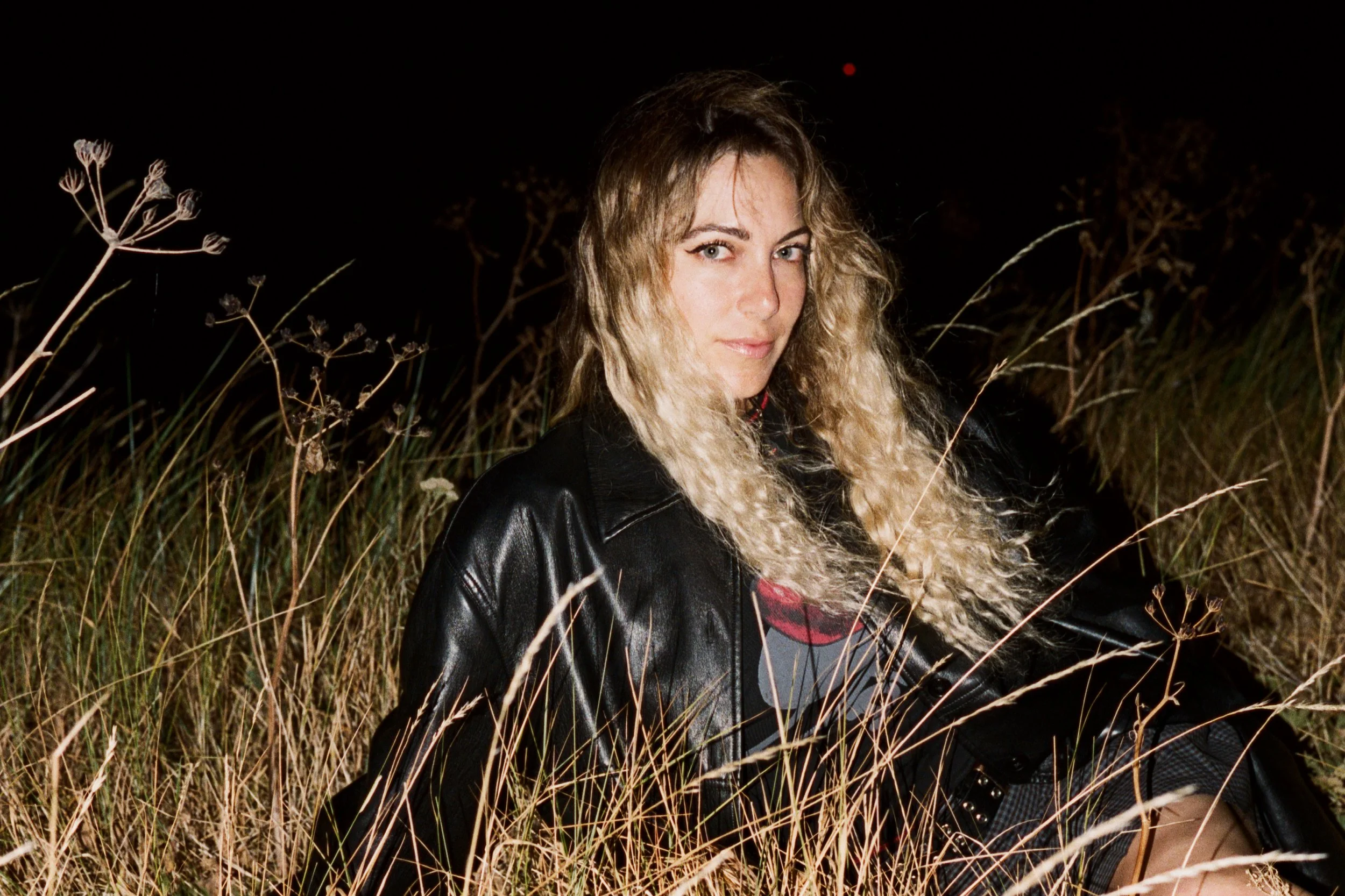
Photo by El Hardwick
EDEN SAMARA LAUGHED—when asked about working with her frequent collaborators. “These are the people who know me really well,” she said in reference to Loraine James, TSVI and Tim Reaper, all of whom worked with Samara on her latest project, Odyssey, which was released on September 4.
Working on a second album offered Samara the chance to hone her skills and experiment with new sounds. She has been focused on learning more about producing and, of course, working with new collaborators. A total of seven different producers and artists contributed to the album—so many, in fact, that Samara worried that it wouldn’t sound cohesive enough. The title Odyssey came, in part, from the wide variety of sonics listeners will hear on the album.
Samara’s vocals and storytelling keep Odyssey feeling like an Eden Samara record. The goal was to take listeners on a journey starting at rock bottom. “It’s up to you to take away what you interpret,” she said, and described releasing the project as the “final step” in a personal healing journey.
The album opens with “Voyage,” a choral track accompanied by harp that feels almost like a hymn, but somehow smoothly transitions into “Punish Me,” a dreamy, electronic track that accelerates the BPM. “Mystery,” “Oracle” and “Soft Landings” continue the upbeat, electronic vibe, while “Up The Mountain, Down The Stairs” and “Swan Song” enter more surreal territory. “Unsatisfied” stands out as particularly interesting, featuring Samara’s voice mimicking the beat of J Balvin’s smash hit “Mi Gente” in soft “ha” noises.
Samara is excited to take the stage and see fans react to her new music in real time. She played her first show after the album’s release in London on September 9—in collaboration with Loraine James, naturally. Samara designed the show with the help of another friend, Tom VR.
“This process helped me realize that a lot of people at very high levels have other engineers or tech people involved on the technical side,” Samara said. “I'm not doing the whole thing alone. In fact, it made it so much more fun to work with Tom.”
Luna recently sat down with Samara to discuss Odyssey, working with friends and her take on Christopher Nolan’s latest.
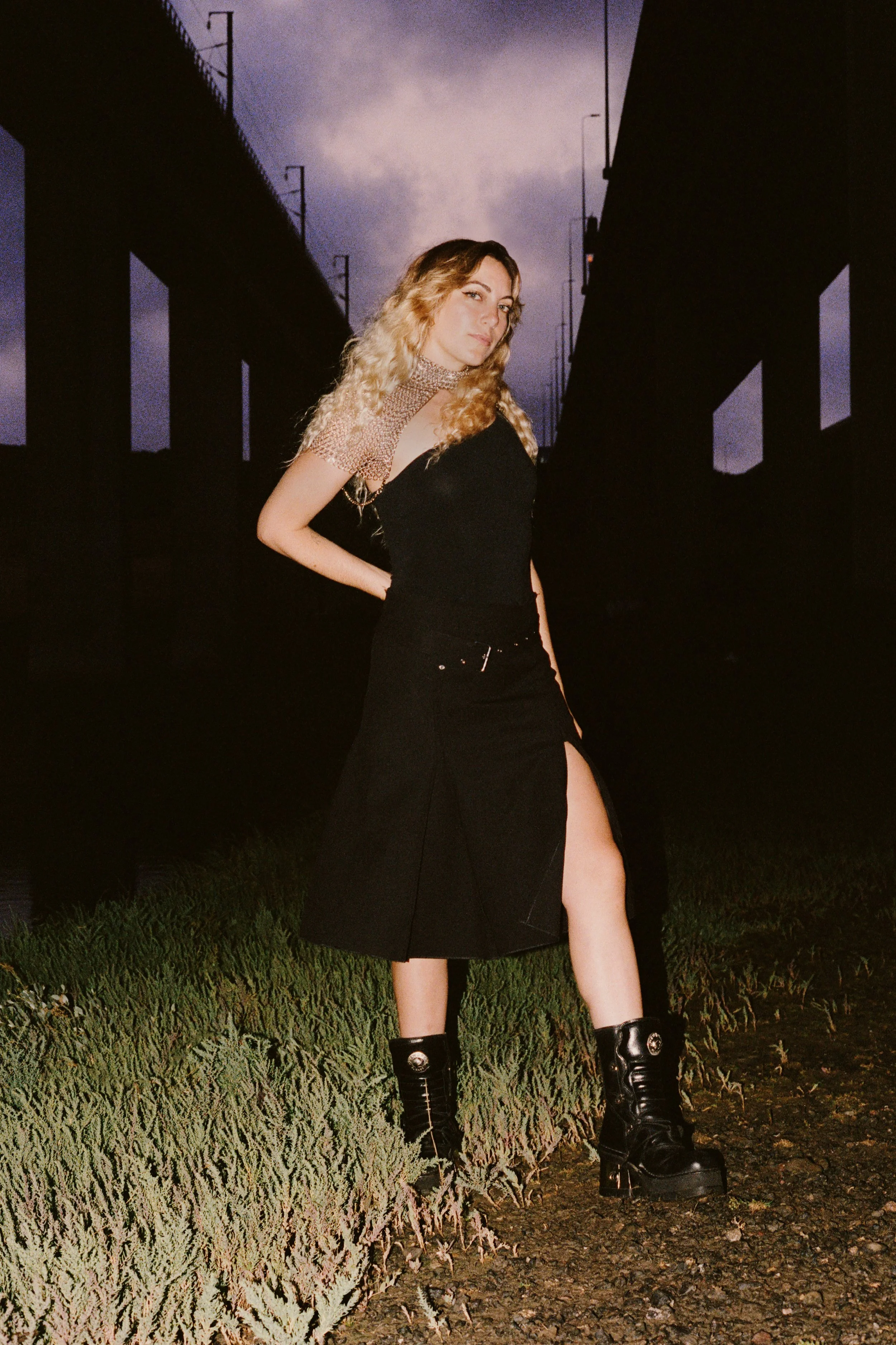
Photo by El Hardwick
LUNA: You tend to mix genres in your music. Which genres do you think are most present on your new album, and what inspired you to mix those genres?
SAMARA: I don't know if there's one genre that's most present on the album because it goes on quite a ride through different types of music. The album starts with choral music, and then it increases in intensity as we build up to techno and jungle. The single, “Oracle,” is probably the peak of how intense the music gets, and then it goes down from there. There's this arc, which almost emulates the feeling of climbing a mountain, which I also talk about on the record. It's meant to take you somewhere—where that is, is up to you. It's me telling a story through music, and it's up to you to take away what you interpret.
LUNA: Are there any artists who you consider your biggest influences?
SAMARA: Dev Hynes is a huge influence. I’m very influenced by the way he records and the texture of the human voice that he manages to preserve in his recording style. That's really interesting, especially because a lot of electronic music is so heavily processed, so it's very interesting to mix those. A lot of the sounds I'm using are electronic sounds that might be stock Ableton sounds or even sounds from Splice. I'm not against using Splice for things; I don't think it matters where you get a sound. There's a website called freesounds.org that I get samples from, and I think it's very interesting to mix that with the organicism of the human voice.
Blood Orange would definitely be a massive influence, and just an expert at preserving the feeling of having people gathered in a room together singing around a piano, and manag[ing] to capture that on a recording.
LUNA: You're from Canada originally. What drew you to the UK music scene?
SAMARA: London, Los Angeles and Berlin are known for being hubs where creatives gather and where the industry infrastructure is present. I knew it was London or Berlin for dance music if I wanted to be more involved in where the scene was happening on a greater, international level. I had the opportunity to go to London just by chance. My partner at the time was offered a job transfer, and they offered to pay for our move, so I took that opportunity.
LUNA: Your new album, Odyssey, comes out in less than a month. How do you feel about that?
SAMARA: I feel excited to wrap up a chapter of my life the album dives into. Having the music come out feels like the final step in truly moving into the next evolution, not just as a performer, but as me, Eden, as a person who went through a challenging period and came out the other side and wrote music about it. I feel like I did the work, healed, processed and moved on from that time in my life long before the album is actually being released. To have the music come out feels like the final step in wrapping up that chapter and moving forward into being an active artist again.
I took some time away during that chapter of my life to work on myself and my personal life, and I think that's really important for artists to do. We're not machines. I think about this as “I'm giving my life to this.” If I have a lifetime, then sometimes that requires taking care of the instrument that keeps me going. It's really good for artists to step away. But to have the record out feels great. Just to be an active member of the community and start to meet more people like you! If I hadn't written more music and put it out, we wouldn't be hanging out right now.
LUNA: How did you choose the title Odyssey? How does your album connect to Homer’s The Odyssey?
SAMARA: I purposefully didn't put “the” in the title. I did not want it to necessarily reference Homer. Obviously there's a bit of reference there, but I needed a way to, in one or two words, encapsulate the amount of genres that you hear on the album. I needed the listener to understand in a succinct way that we're going on an adventure together. Odyssey felt like the best way to describe that. Otherwise, I didn't know how I would prepare the listener to hear choral music, indie rock, jungle, UK garage, techno; I needed a way to prepare people so that they weren't confused by it.
I worried that there wouldn't be enough cohesion, even though I do think my voice, my songwriting and my production that is present throughout the album is what allows it to feel cohesive, and like it's coming from one person. There are seven other artists and producers who contributed production and songwriting. The songwriting comes from me, but even in producing, they're helping write the songs. It felt like [having so many collaborators] could get dicey, so I wanted a way to encompass that we're going to go through some very different sonics together. And that’s an adventure! But it doesn't necessarily need to be Greek by any means. It's my own mythological story.
It was also very bad timing with the Christopher Nolan movie coming out. I thought about changing it, but my team told me not to. When the record comes out and once the movie hype passes, people might be finding this record a year, two years from now, and they're not going to remember that the movie came out at the same time. I decided that it was important to have a title on the record that informs how people understand it.
LUNA: How was your approach to making Odyssey different or similar to how you created your debut album, Rough Night?
SAMARA: It was similar in that I was recording all the vocals myself. I feel like I did a better job. I learned more through this album, using different compressors and leveling up in terms of the amount of production that I contributed to this record. On the first album, I just recorded all the vocals. I added some production, but it was more other people doing the production. Part of the reason why there's a four-year gap between my albums—2022 was the last one—is that I wanted to do more of the production myself for [Odyssey]. That required learning, and fucking things up and then trying them again. That's something that was new to this album, being able to contribute more of the production myself, which felt really good.
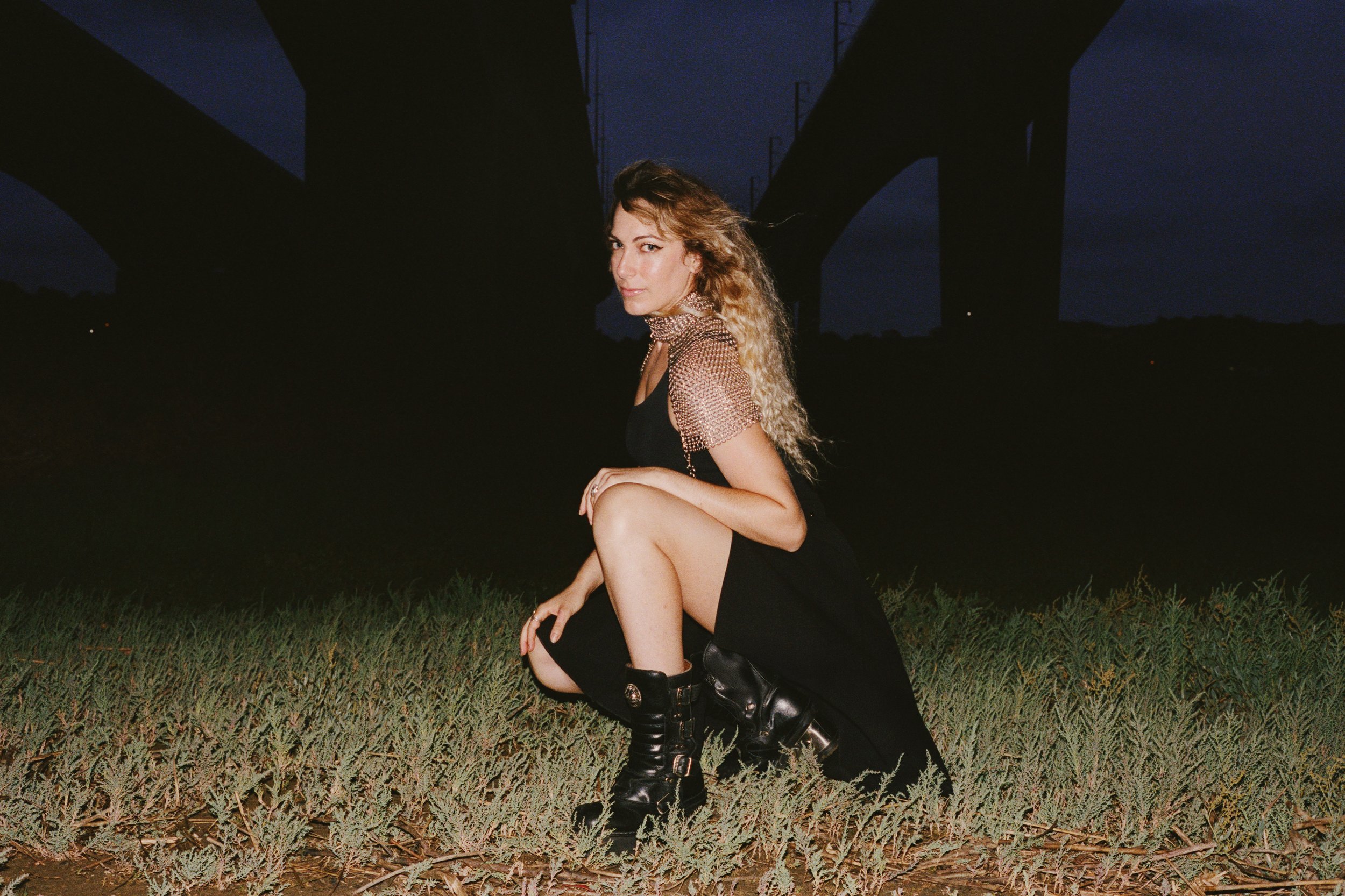
Photo by El Hardwick
LUNA: The album artwork is absolutely stunning. How was it created?
SAMARA: Oh my god, I'd love to tell you about this! There is a shop that used to exist in Toronto, down the street from me, called Likely General. It's a shop that championed women, non-binary and queer makers and craftspeople. It was an incredible shop, and it was my favorite one in the city. I used to go in there all the time. Alicia [Nauta] always had different artworks displayed in the shop, and I always really, really loved her work. She was in the back of my mind like a pipe dream, like maybe one day we could do something together. I actually bought a piece of her artwork years ago, while I was back in Toronto, and brought it to London with me.
This artwork from Alicia has been in my house, on my wall, manifesting that one day the right project would come along. I was very grateful that she said yes when I asked her to work on this album. She's so sick. She makes clothes and handmade lamps; she's someone who likes to make stuff. I really resonate with that because I love to make shit. It's good for the soul.
LUNA: Why did you choose “Oracle” and “Punish Me” as the singles for the album? How do these two tracks introduce listeners to the sounds and themes of the album?
SAMARA: “Punish Me” was chosen a little bit out of sentimental value. It was written three years ago; it's the oldest song [on the album]. It was the first song I wrote that I knew was going to be on the album. Part of the reason why we picked it was because we wanted to come out the gate with a bop and something summery, but in terms of theme, I do think that it ties in. One of the threads that goes through the album is learning how to recognize patterns that I was repeating in my life. I was like, “Oh my gosh, this has reached a breaking point. This needs to end.” Part of this theme that's running through the album is learning how to catch those patterns and walk away from them. “Punish Me” is about when you're deep in the spiral. You're like, “Oh my god, I just slept with that person again, when I said I wouldn't.” It's when you're like, “Oh shit, I'm hitting rock bottom, I’m deep in bad, bad habits, and this needs to change.” That was a nice way to start things where you're like, “Okay, here we are, we're at rock bottom.” It sets the scene for the album, which is a mythical adventure, but it's also my life, and it's me trying to figure out how to deal with my shit.
“Oracle” we chose as a single—we, as in me and my team—to contrast “Punish Me” with something that's a bit of a banger, but also shows the range on the album. I'm very influenced by Jungle, and I'm heavily involved in the dance music scene in London. I wanted to show some of the places the album is going to take us. “Oracle” is the peak of how intense the production gets. It's not an album full of bangers. It's quite contemplative, but that is where we get to in terms of like, “Let's fucking go.”
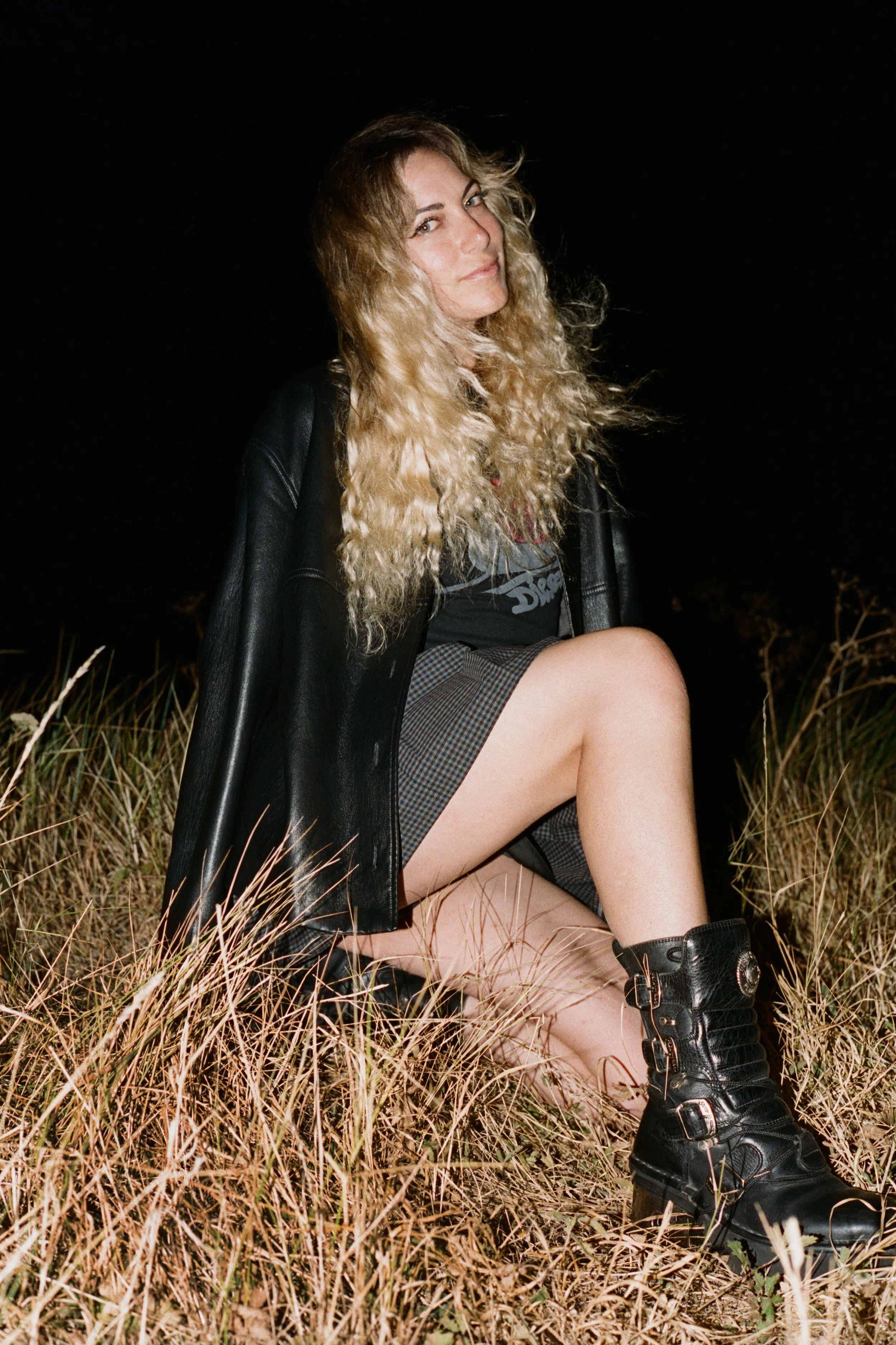
Photo by El Hardwick
LUNA: You reunited with several frequent collaborators on this album, including TSVI, Tim Reaper, who produced a remix of “Oracle,” and Loraine James. What is it like being able to work with the same producers on two different projects?
SAMARA: Loraine and I have been making music together since I moved to London. Gu and I— TSVI, his name is Gu—have as well. We've all been writing together for a while. Some of that music no one's heard and will never come out.
Loraine and I started writing together in 2020. It's very easy and very fun. It makes me laugh, the formality of saying, “Working with these producers,” because these are the people who know me really well, and vice versa. We're there for each other when shit happens, and those relationships have really flourished because of that. It shows up in our songwriting, being able to have fun together; like when I told Lorraine, let's write an indie rock guitar track for this album. We both love the challenge of doing different things.
Tim Reaper got involved because we were introduced by a mutual friend from Canada, who he also collabs with on Jungle stuff. He agreed to do a session for the album, and then we actually became really, really good friends and have made a bunch more music together since then. It's all about community and friendship, and that's how music should be! It makes it really enjoyable.
LUNA: You’re playing a show with Loraine [James] in London a few days after the album release. Will it be the first time playing the album live?
SAMARA: Yes, it is. It's my first show back after a couple of years of hiatus. That's the kickoff to a whole new live performance, a whole new show, new gear, the works. I'm really excited; it's been really fun putting it together.
I want to shout out another friend who's very talented and lovely, Tom VR, who acted as a consultant on the creative side of putting the show together. He helped me look over arrangements and made that creative process really fun and exciting. My desire to collaborate, and how much fun and joy I got from that also extended to this process of creating the show. I thought that artists built their shows alone, and I think some of them do, but this process helped me realize that a lot of people at very high levels have other engineers or tech people involved on the technical side. That's nothing to be ashamed about. I'm not doing the whole thing alone. In fact, it made it so much more fun to work with Tom, so I really want to shout him out for that.
LUNA: What else is coming up for you after the album release?
SAMARA: I have more music upcoming that I'm really looking forward to sharing. This is just the beginning of a new chapter of releasing lots more music. A tour will, I hope, follow once those [releases] come out. I've tried to make sure that they come out fairly close together to keep the momentum going.
LUNA: Any closing statements?
SAMARA: I just want to say how important it is for people to keep making art, even though the conditions of trying to finish an album and trying to release it…the cost of living is going up intensely for so many people around the world. I was speaking to someone recently online who lives in Latin America, and they're like, “Working two or three jobs and doing music is super normal for us. We've done that our whole lives.” It put into perspective how being able to make art, and having the time to make art, is such a privilege.
If there's anyone reading this that's just fucking exhausted, then let this be a sign to finish the thing, even if it takes years longer than you were hoping for. The best way to protest against AI infiltrating art is to keep making human-made art. That's my spiel for the day.
