
Q&A: the booyah! kids Make it Their Own on ‘Cover Girl’
INTERVIEW
INTERVIEW
☆ BY SHEVON GREENE ☆
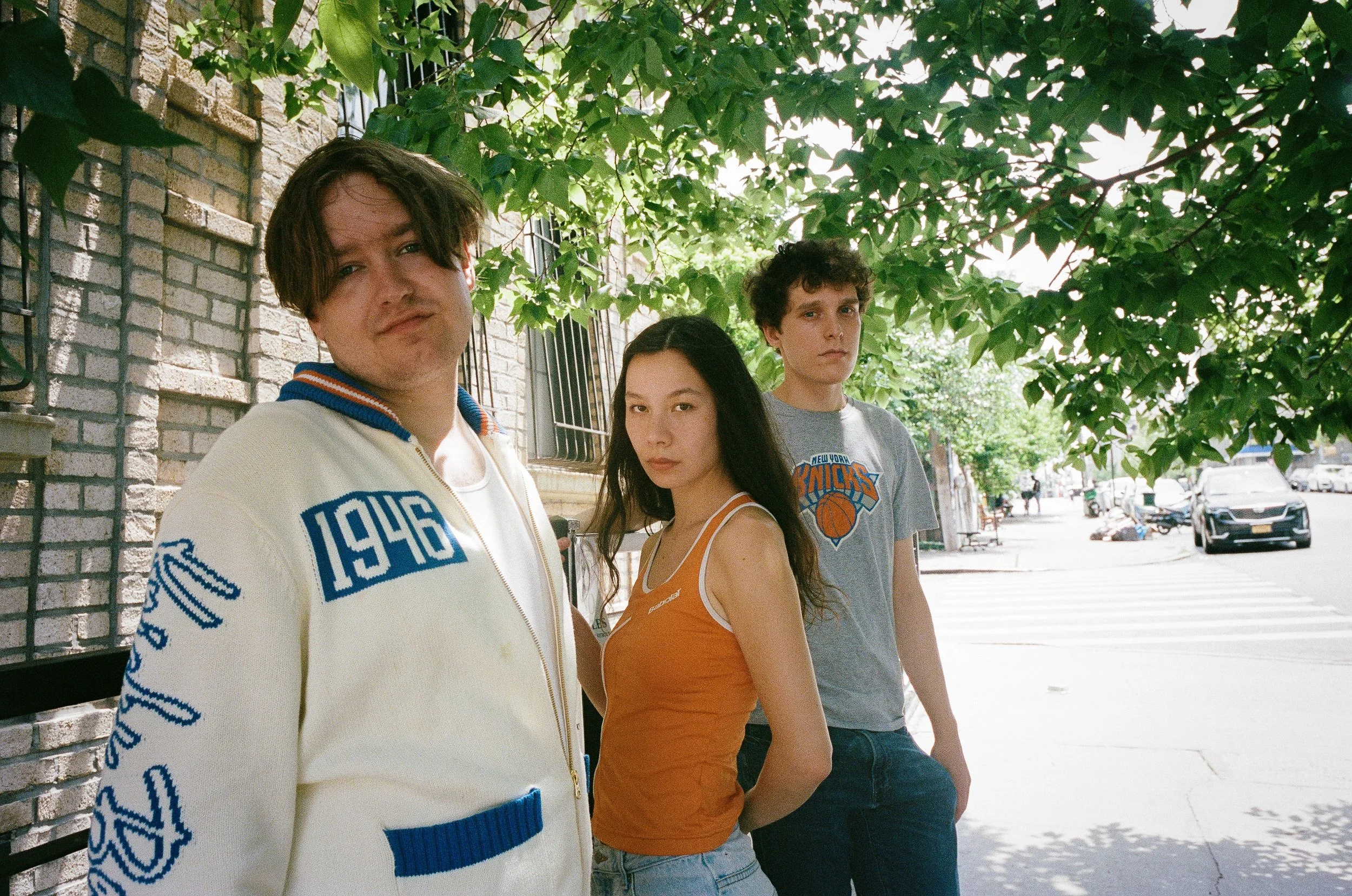
HOW DO YOU MAKE SEVEN SONGS THAT BELONG TO OTHER PEOPLE SOUND UNDENIABLY YOURS?—the booyah! kids have seemed to figure that out entirely. On their EP Cover Girl, out today, the New York trio were inspired by songs spanning decades, genres and varying levels of familiarity, filtering each track through their playful, synth-heavy universe they’ve spent years building together.
There are classics that you’d recognize within seconds like their take on Nelly’s “Ride Wit Me” or “Dreams” by Fleetwood Mac, then there are some deep cuts you might’ve never stumbled upon like Hannah Cohen’s “Earthstar” or the obscure 2009 song “Would You Care” by The Matrix featuring Katy Perry. Regardless of where each of these tracks came from, the common denominator here is simple: they’ve all come from Aidan Ludlam, Emma Lee and Julian Kaufman’s minds and they saw what they could do with them. With nothing but big dreams and a Korg Minilogue, acoustic guitar and classic drum machine sounds, the trio approached each track with a goal of making it feel right at home in the booyah! kids universe.
Although they’ve been around since 2018 and have known each other since high school, 2026 is their first year making the band their sole focus. Once “rwm” set off on a viral frenzy, the trio began playing sold-out headline dates and are even slated to open for Parcels this fall. But with all of that, they still have a soft spot for both their fans who have been there since the start eight years ago alongside the new fanbase they’ve gained over the summer.
Luna caught up with the booyah! kids to talk about turning other artists’ songs into their own, digging for unexpected deep cuts, learning what a booyah! kids live show can be and finding themselves in an unexpectedly big year. Read below for more.
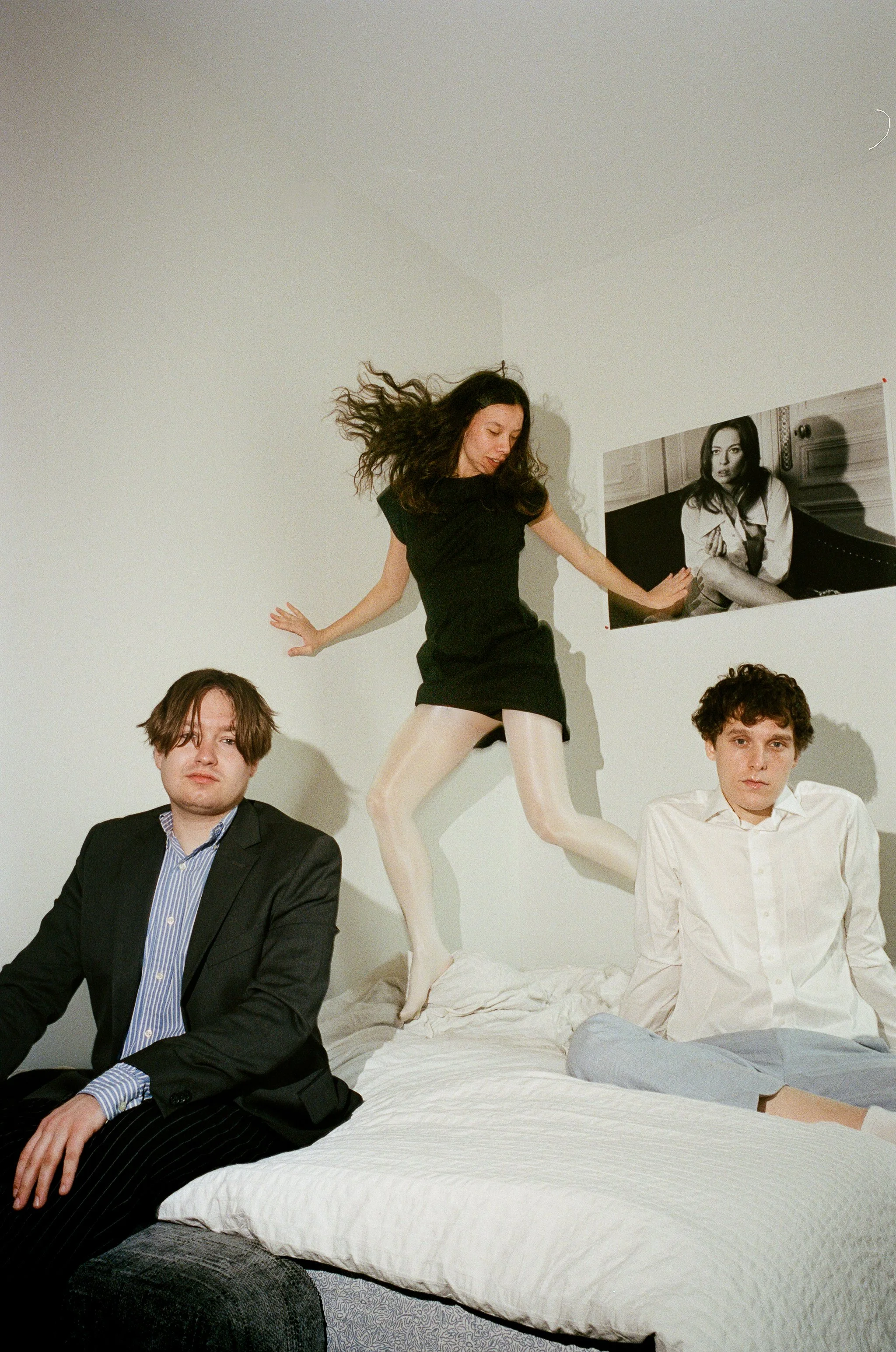
LUNA: I love that the tracklist for Cover Girl is such a fun mix of songs. There are some that everyone knows and loves, but there are also some very specific deep cuts. When you decided to make an entire project out of covers, how did you decide how to make them into your own songs rather than just something you wanted to cover?
KAUFMAN: We have a really distinctive sound and sensibility, and we wanted to make sure, no matter what song we put on the EP, that if someone didn't know it was a cover, it would feel very much at home within our discography. So it's all one synth, the Korg Minilogue, some acoustic guitar and classic drum machine sounds.
LUNA: I'm curious to hear more about the process of narrowing down what songs you guys decided on. How did you decide which ones made the cut?
LEE: It was kind of trial and error, or just exploration. I'd say it started with "rwm." We were unsure what to do with it exactly. We didn’t know if it belonged on a full album or if it was going to be one cover on an EP of originals. The idea came from, "Oh, we have this cover. Let's give it a home with a bunch of other covers," and that was something we were doing on our socials.
Once we had that plan, it became, "What songs do we love? What songs do we love that are not synth-pop already?" And trying a bunch of those. Some of them are maybe a song that Julian's been wanting to do forever, or a song that we'd covered on social media, or a song like "Passionfruit," for example, that we used to cover in our live show years and years ago but never released. It was trying a bunch of different songs and then seeing from there what worked and what made a cohesive project.
LUNA: It's cool that it's a mix of different places where the inspiration for all of them came from. I wanted to ask a little bit more about "rwm" because I love that it really took on a life of its own. I love that you kept little details like the "must be the money" chant in the background. When you're covering or interpolating something as recognizable as a song like that, how do you decide what pieces you want to keep so it's still recognizable versus which parts you want your own spin on?
KAUFMAN: One of the fun parts of making that was being self-aware [of] who we are and what the original song is, and almost having our version of the song be itself a joke about that. Keeping all the important parts, but then with these two verses or some of these arrangements, the lyrics are almost about not really being able to live up to that standard of the chorus. The first verse is like being on a date, keeping both hands on the wheel. Although Nelly would probably definitely be driving with one hand (laughs). Or the second verse is this guy promised that he'd take this girl on a really good date, but then he couldn't roll a J and forgot his lighter, and he's sweating. So we kept enough to keep it recognizable, but then we filled in the details to make sure that the audience understood how ridiculous and ironic the whole thing is.
LUNA: As you're building up to the release of the EP, have there been any pinch-me moments?
LUDLAM: Definitely the release of "rwm." We didn't really know what to expect. We didn't know if it would be a bad release or a good release, but we couldn't have asked for a better reception and release of that song. But I think the real pinch-me moment right now is that we're just working really hard and everything is falling into place. "rwm" came out and now we're doing this headline run of shows this month, which is another pinch-me moment. We announced these shows this summer and now we have a couple sold-out shows in places we haven't played in years. That's really amazing.
LEE: I'd echo the timing of it all. Aidan said it well. We've been grinding because we know that's what we need and want to do, and that was true before and after the moment of "rwm." It is reassuring, and we're not resting on it, but it is reassuring to know that with that consistency, we're seeing the fruits of that labor.
We’re also gonna tour with Parcels in October, and we love Parcels. They are an incredible band and have an incredible show, and I still can't believe it. The timing of that, having supportive fans who've been with us for eight years and then fans who just found out about us in August—it just hasn't been a part of our booyah universe up until now. That's really cool and special.
LUNA: When I was listening to all the tracks, it felt like you really put your own spin on it, but “Dreams” by Fleetwood Mac still felt really familiar to the original. Was there ever a temptation to go a little further with that one?
KAUFMAN: Fleetwood Mac is definitely one of the innovators of indie rock as a genre, and our whole approach is trying to recreate indie guitar rock with synths and drum machines, and that's something that we do well. Adapting that song to us does end up sounding similar because what they're trying to achieve and what we're trying to achieve are basically the same things with different tools.
The one thing that we were able to bring to our version that the original doesn't have as much of is dynamics, where their original version, which is much better than ours, goes from four to seven in terms of energy, and ours has the low of a two and the high of an eight. So maybe that's what we brought to it. But like I was saying before, all we were trying to do with these songs was put them into our style, and Fleetwood Mac inherently, even though initially it might feel like they're very different, is actually very similar in terms of sonic goals and what kind of feeling they're bringing to the music.
LUNA: I also wanted to ask about "Earthstar" by Hannah Cohen, which is one of my favorites on the tracklist. How did you decide on that track specifically?
LEE: I really wanted to cover that one. Julian and I had done a version on our TikTok page where he was on the Korg Minilogue and I was playing guitar. We posted it online, and Hannah shared it, and we're huge Hannah Cohen fans. I'd say that was a pinch-me moment too. She wrote to us "I would love to, if you ever record this or something, be a part of that." It didn't end up working out with schedules, but never say never.
That was when we were like, "We've got to do this. We've got to flesh this whole song out," because there was the blessing and the interest on our end as well. Just because it's a person who we really admire and a song that we think is really beautiful. Maybe it's less recognizable for other people, but she and the song have a big place in our hearts. I'm grateful that it's able to be shared right now, and I think it's a good addition.
LUNA: Even if it didn't work out, just knowing she was willing to be a part of that is awesome. When you guys share music with each other and talk about what you want to cover, do your tastes overlap a lot?
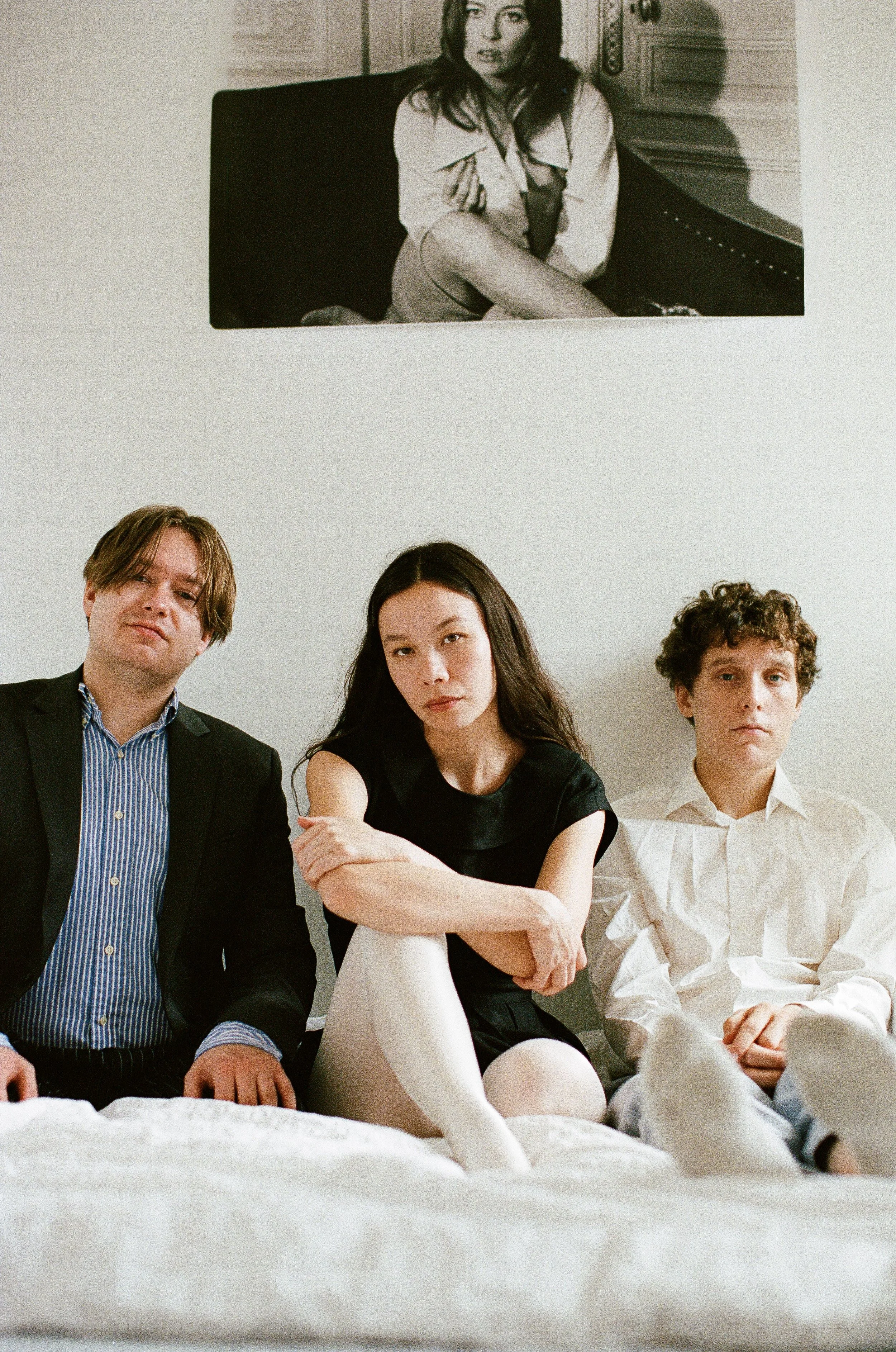
KAUFMAN: Our tastes are very different, but also all come together on certain things. We all love indie rock, as I've said before. In choosing the tracklist for the EP, there were definitely some guidelines that we were going by instead of just doing random songs. One of them was that we wanted songs from many different eras of music. So we've got '60s, '70s, 2020s and 2000s.
Another rule that we were making was that we didn't want to do any synth-pop songs because any synth-pop song we love is going to be so much better executed than any synth version we could do. Within that, it was, "This song could work. This song could work. We need this type of thing. We're still looking for this." Those are the basic constraints that we gave ourselves.
LEE: There was a period when we decided we were gonna do this and Julian was like, "Okay, guys, just send me some songs and we'll try to make it." He was working with our friend Charlie [Kilgore]. Charlie was a big part of this project as well.
I would be walking through the grocery store, and the grocery store plays music, and I’m like, "Oh, let's do that one. That's a great song." There's so much great music to pick from. It was helpful to have those guidelines because otherwise, there are so many songs we could have done that we didn't, or didn't think of, where I'm like, "Oh my god, we should have done that one."
Sometimes there were days when Julian and Charlie were working on a song, and they'd be like, "We were trying this, but that didn't work, and now we're doing this song. Emma, track this." And I'm like, "I don't know the words to that song," and we're just trying it out. Some of the songs only one of us knew, and we welcomed each other into that. Or some of the songs everybody knew, and we’d collectively decide if we wanted to or not. It was a fun, explorative process.
LUNA: I really love the EP artwork, the cover within a cover. I'm curious to hear more about the story behind that image and how it was decided to become the visual focal point of the EP.
LEE: We were on tour with WILLIS when we had the turnaround to turn everything in. Aidan was behind the wheel, Julian was in the passenger seat and I was in the back. It was brainstorm time. Over the course of three days, we were spitballing ideas and I was mocking up in the back seat. Julian had ideas, Aidan had ideas, I had ideas, and Julian had this idea of a within-the-frame [visual]. This all happened after we had decided on the name Cover Girl, so we mocked up a bunch of those ideas, and they gave me free rein to just draw this lady, and so I drew her.
One of the songs is a cover of a '60s Italian ballad [“What’s a Girl to Do”]. I started drawing this lady who nods to Mina, and that's how it came to be. When we put out "rwm," it didn't really make much sense with it being the cover. Same with "Passionfruit,” it doesn't necessarily match. I'd say it still has that dreamy energy of the song, but it felt a little bit random. Hopefully with text and with the greater context, it makes a little bit more sense.
LUNA: And I feel like if people know you, or they're starting to get to know you, that artwork feels very booyah! kids. We talked a little bit about your first-ever headline tour and opening for Parcels. You're playing for a lot of different audiences across these tours and performances. Have you learned anything from recent performances that you want to take with you on the road for upcoming tours?
KAUFMAN: I think the biggest challenge for me has been trying to zero in on what the theoretical ideal for this show and the experience of the audience is supposed to be. Emma and I spent the last four or five years working heavily on the MICHELLE show, which was the band we were in previously, and that show was supposed to be, in its ideal world, this raucous, ravenous disco, high-energy, super fun, hot, sweaty dance party. And I love that. I'm not sure that that exact idea is what the perfect booyah! kids show is going to be. So, trying to figure out what is that perfect booyah! kids show, and how do we chase that to get whatever it is at as high of a level as we know we can make it.
LEE: Yeah, and this is our first year of touring, and the first tour we did opening up for Jordana was a huge learning experience. Already, we've shifted the live show from then. Aidan was on bass, Julian was on live drums, and now Julian's playing synth bass, Aidan's on keyboard and playing acoustic, and they're both singing.
We're just learning by doing. We're all singing. How do we want to move? How do we want to look? We even carry our merch differently this tour than we did last tour. We're doing everything ourselves, but those are important moves to make. We're just trying to stay smart about it all and keep learning.
LUNA: After such a wild, busy year for you three, what are you most excited about going into the rest of 2026? Is there anything else you want to share, or anything that we haven't touched on that you want people to know?
LUDLAM: I’m excited for the live shows we have coming up. This week we're playing a sold-out show in Chicago, which is unreal, and then the following week we'll be playing a headline show in our hometown in NYC. And like we discussed earlier, going on tour with Parcels—those are going to be our biggest shows so far. It’ll be interesting to see how we translate the show into a bigger room, a bigger stage.
KAUFMAN: I think the rest of the fall is going to be a combination of promoting the heck out of this EP and then preparing for next spring. If we want to put out music in the spring, if we want to play more shows in the spring, we're gonna have to do all the grunt work for that one soon. It'll be a combination of getting back in the lab and being out in the world, and hopefully just slowly growing and getting our name out there.
