
Q&A: Erin Lecount Bares Her Heart On ‘PAREIDOLIA’
INTERVIEW
INTERVIEW
☆ BY IVONA HOMICIANU ☆
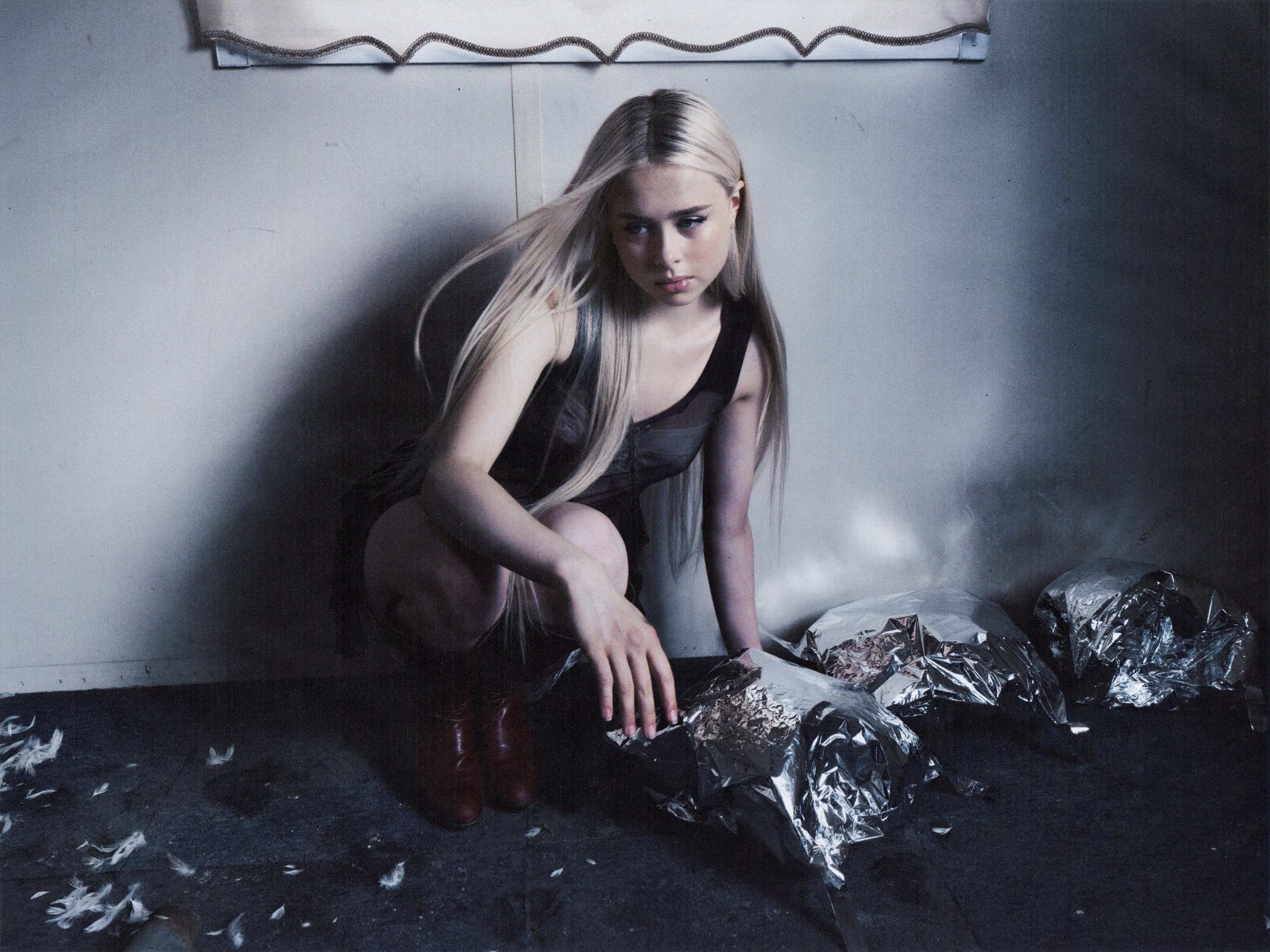
Photo by Furmaan Ahmed
PAREIDOLIA MEANS SEEING RECOGNIZABLE PATTERNS WHERE THERE ARE NONE—In other words, it is our mind’s way of attributing familiarity to new things. For Erin Lecount, that means going back to self-destructive tendencies because that is all you’ve known. Her newest EP PAREIDOLIA is a raw, authentic look into the habits that aren’t necessarily the healthiest but give comfort in the face of the unknown.
Lecount is a 22-year-old artist that originated from the UK and is now heading overseas for a sold-out North American tour. She is a self-taught artist and producer whose signature synths and electronic elements make for a versatility within the pop genre. Her music ranges from alt-pop to gothic and baroque pop, with influences such as Fiona Apple, Imogen Heap and Charli xcx.
“I BELIEVE” begins the project with a cynical perspective on the world. The lyrics search for meaning in the spiritual external sources—from religion to self help books to astrology and personality quizzes, Lecount captures the disillusionment that comes with living in a world that doesn’t make sense. Her graceful interpretation turns into a powerful one as an organ and string production turns into a rhythmic synth one in the halfway point.
Religious conflict is one of the core subjects of this project, with “808 HYMN” expressing the fear women have when walking home alone at night. She questions the existence of a higher power given all the violence done to women. The track is powerful in the adrenaline-filled production that mirrors the fear experienced during those moments, along with the lyrics that portray the loss of innocence that comes along with realizing your safety is a gamble.
Mental health is another aspect explored in detail throughout the EP. Inspired by a self-destructive spiral, she returns to rock bottom in “DON’T YOU SEE ME TRYING.” The repetition of “Everything that I love will destroy me in the end / So I break my own heart over and over again” and the accompanying electronic elements give an urgency and desperation to Lecount’s interpretation. The descent into familiar struggles continues with “MACHINE GHOST” surrounding dissociation from her own body.
The continuity thread culminates into “ALICE,” a vulnerable recount of a relationship that was damaging for both parties involved due to the shared nature of a mental illness. The artist captures the conflicting nature of the love had towards someone else versus the love needed towards one’s self. The emotion in her voice as she breaks the cycle of self-destruction creates the perfect conclusion to PAREIDOLIA.
Luna spoke to Lecount about her EP—Keep reading below.
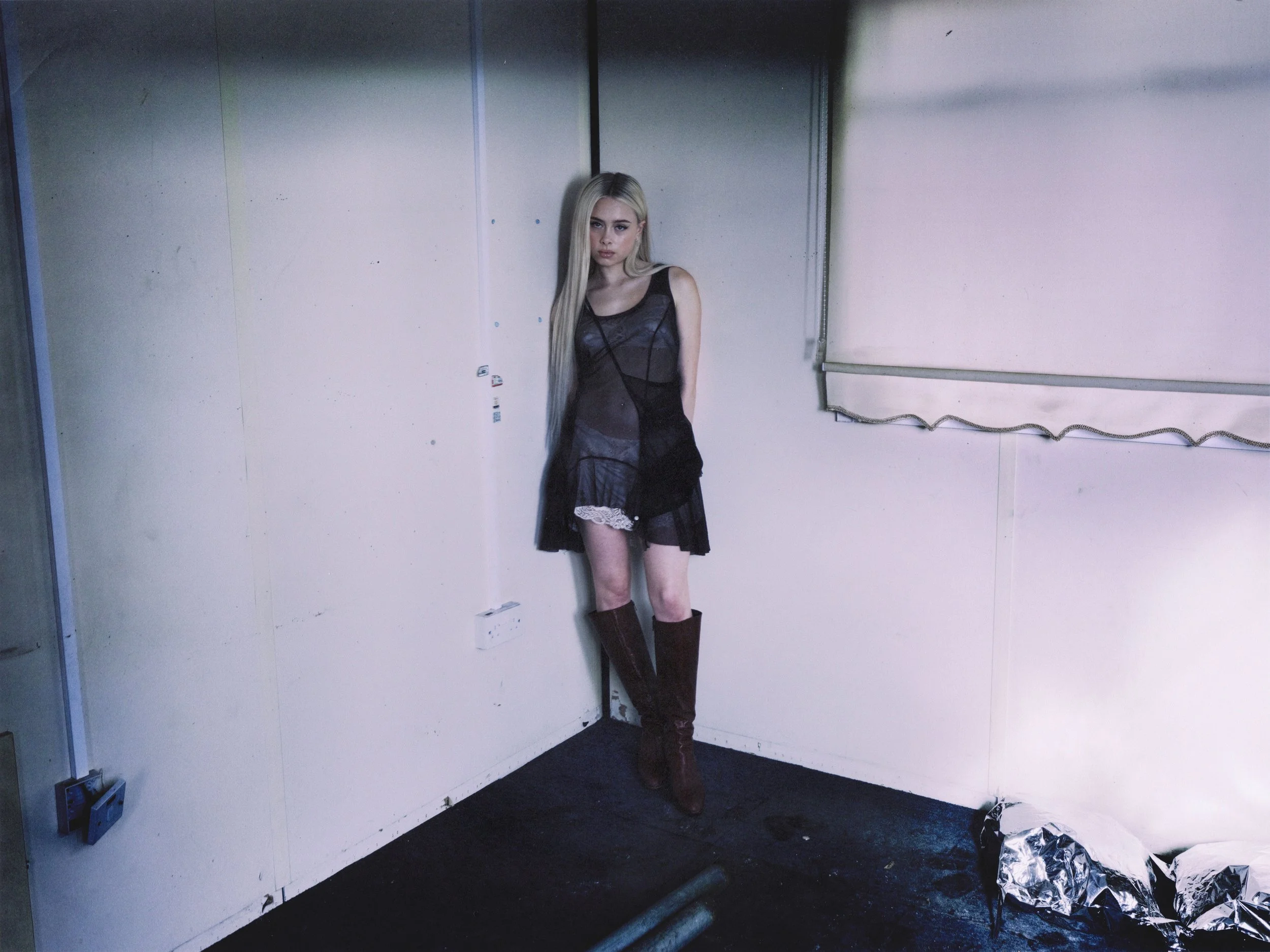
Photo by Furmaan Ahmed
LUNA: The title PAREIDOLIA means perceiving recognizable images or patterns that are not necessarily true. What does this title mean to you in relation to your project?
LECOUNT: PAREIDOLIA hit a nerve with me on that theme of being about patterns and about how our brains try to assign familiar patterns to new things that we don't understand. This EP was carefully made about a self destructive spiral. I think the root of why we self sabotage things is because it often feels safer going back to old patterns and behaviors that aren't necessarily good but feel comfortable. PAREIDOLIA had all these themes of things not being what they seem. It’s a warped view of reality and not being able to see clearly. When you are in a certain downward spiral headspace or at rock bottom, it's really, really hard to see yourself and the world and the people you love through a clear lens. It distorts every perception that you have. When I came across that word, it summed it all up for me in a completely new way.
LUNA: “I BELIEVE” is the opening track and contrary to the title, it's all about the doubt of belief and doubt that there's a higher power. What sparked the creation of this song in particular?
LECOUNT: I have a really interesting relationship to religion, the way that all relationships can be a bit conflicting. “I BELIEVE” was a song about wanting to have faith but not really knowing if you know that God's figure is someone worth having faith in. There's a lot of shame and guilt that comes historically built in with religion, and we have that shame and guilt re-emphasized to us now through tech and social media and just the surrounding culture that we're in. That in itself can sort of feel religious, celebrity culture and all belief systems that we subscribe to. I find myself hooked on astrology and I see psychics, and I have this vague, very big and very real connection to something, I just struggle to understand what that is and how it relates to my identity and my place in the world.
“I BELIEVE” was about working out all these knots and feelings about religion and about who I am and how I label myself. It explores all of that for me and it sets that first question of… I don't feel like I have a purpose or an identity. That has always triggered a bit of a spiral for me. I think one of those really big questions was the best way to start that obsessive thought.
LUNA: I love that you spoke about the guilt that comes with religion because one of my next questions is about a specific lyric in particular, “You self inflict the pain, but guilt won't make you clean again.” I was wondering if you could speak more about that one.
LECOUNT: It's been really lovely. People have really taken to that lyric within the community that I've built. That lyric seemed to have really stuck out, and it was a really special lyric to me as well. I'm a chronically guilty person, and always feel a vague sense that I've probably done something wrong. I'm always trying to compensate for that and that's the way we're taught to be. It's in purity culture, and it can come from religion, but it can also come from so many different sources of pressure on women to be “clean” in so many ways. How they dress, what they eat, there's so much policing of what makes us “clean.” There's clean as in sobriety, and clean from old addictions, so clean felt like a really big term. The umbrella of that is guilt and no amount of shame or guilt ever takes that away.
The shame that you feel is a never ending loop because you engage in whatever makes you “unclean” and the shame drives you to repeat that cycle again. You just can't shame yourself into being a better version of yourself. That line is something I need printed in front of me at all times. Writing it was a nice affirmation that no amount of suffering and making yourself suffer makes you a better person. It doesn't benefit you in any way. You unnecessarily put yourself through so much suffering thinking it's gonna improve you as a person and a lot of the time, it doesn't. It makes it so much worse.
LUNA: “808 HYMN” approaches the fear that women have walking alone at night. We hear a lot of songs about the woman’s experience, but this is a very specific topic that I don't feel it's talked about very much. Is there anything that surprised you in the way that people reacted to or received the song?
LECOUNT: Like you said, there's a lot of songs about those experiences and there's the other side of that where people write very empowering songs about overcoming that and reclaiming it. It's such a constant experience; no matter what age you are and no matter what you've been through before, everyone's got to make that walk home. I put that song in there because there's this very real fear. It's based on a true experience that I had. There's so much adrenaline in your body when you're in that situation. To sing that live and have an audience of people who are so full of adrenaline in a different way and shouting the words in this way of catharsis rather than fear is a really, really beautiful thing.
My audience is pretty heavily young women, and they're at that show in this safe space, and they're around people who are dressed like them, they're very expressive and outward they're free to be as hysterical as they wish. The reality is that they've all got to make their way back [from a] concert to a train station, and they'll probably all go together and make sure that each other gets back okay. There's a sadness to that and there's also a sense of community and in that as well, and we're allowed to acknowledge both. Singing about it is a way of alchemizing it.
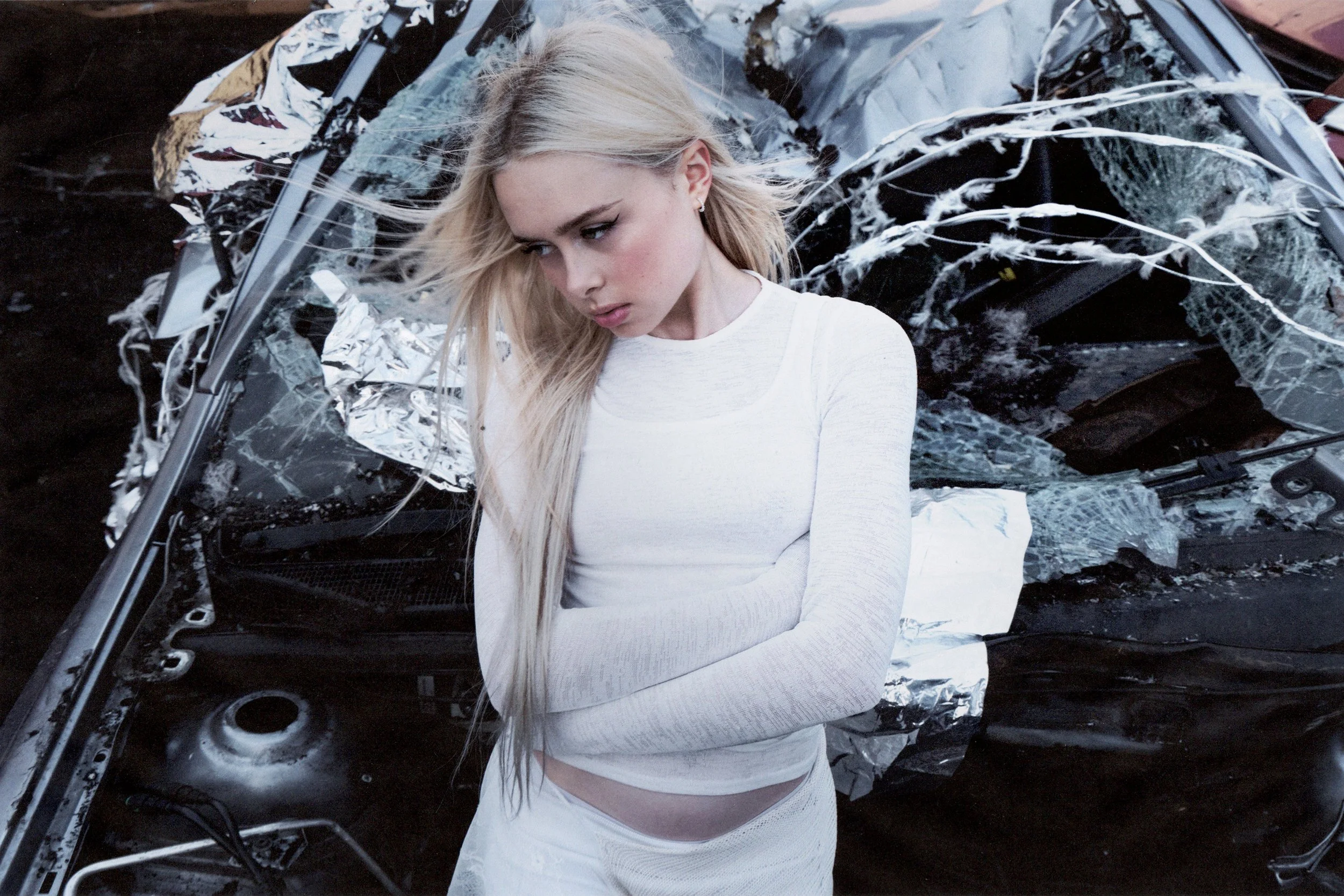
Photo by Furmaan Ahmed
LUNA: What is the emotion that inspires you most to write?
LECOUNT: I make my favorite things when I'm slightly exhausted, if that counts as an emotion. If I'm jet lagged, if I've just been through a really intense personal few weeks, I'll usually find at the end of that time period when I'm grateful for it all to be quiet, and I feel tired and emotionally pretty drained. That seems to be when things come. It's not this high inspiration burst. It's when I'm at the opposite end of it. That's when I can write the most honestly without any filter. When I'm too excited or inspired, I come in and I've got too many thoughts and ideas, I can struggle to organize them. Once that pressure on myself is eliminated, when I'm not expecting myself to make anything good or worthy, is when I seem to write the things that I love the most.
LUNA: “AMERICAN DREAM” talks of the illusion of success versus the reality of it. How do you define success for yourself nowadays?
LECOUNT: I'm definitely redefining it at the moment because of everything that's happening in my life currently. I've just been on tour, I am making music full time, this is my career. This is the only job that I'm working currently, which wasn't the case a year ago. The way my life looks on paper, this is all that I'd ever wanted. All I wanted was to make music and sing live for people and hopefully make a living from that and so I've reached every metric of success that I'd set myself. I'd set myself pretty simple metrics of success but I am an ambitious person. There's so much that I want to do goals wise and what I would like to achieve, but I think for my own sanity, I have to define success as how happy I am with what I make and how honest and proud of it I am… If I wasn't happy with the music that I was making, I don't think anything could make it feel successful to me. I have the best relationships with the creative people around me, the team of people that I'm lucky enough to work with. Success to me is, I have open amazing communication with everyone involved in world building with me. For me, that's how I know if I'm succeeding is I love what I'm making. I'm going on stage and giving the best performances with high energy and I feel happy and healthy on stage.
LUNA: In “AMERICAN DREAM” as well, you say, “I write shit in these songs that I later regret.” Have you regretted anything on this project yet?
LECOUNT: There are a few lyrics and parts that when I play for other people, I look at the floor. I've always been very open in how I write and what I write about, but this specific EP is even more unfiltered and I kept things in there that felt slightly scary to keep in there. Certain lines in “ALICE” and lines in “AMERICAN DREAM” because people I love and that I'm close to do hear them, then that does spark conversations, and potential disagreements in my personal life. My only concern is if it's fair on the people around me to put a lot of my personal grievances and relationships in the songs, but I don't know what else to do with them. That line specifically in “AMERICAN DREAM” was about the line before it, which is about not wanting kids and wondering if in 15-20 years time, having that immortalized in a song will be something that I might look back on and regret. But it's an accurate representation of how I feel right now and it will be a marker of where I'm at as a 23 year old woman who's trying to figure it out.
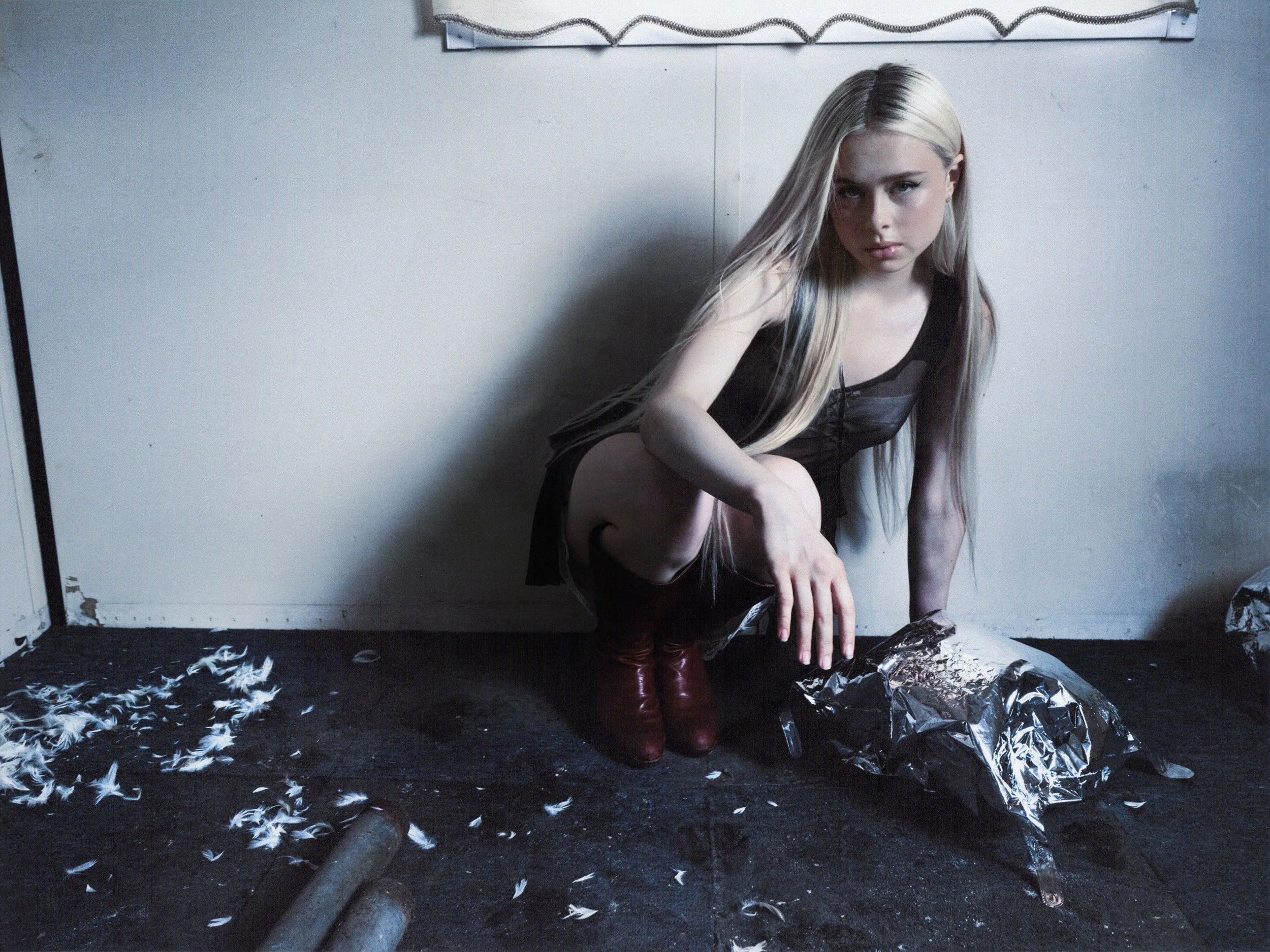
Photo by Furmaan Ahmed
LUNA: Is there a specific sound, vibe or instrument that really speaks to you in the production process?
LECOUNT: It's the first time I've been able to have physical gear to play with, like analog gear to put in songs. I've been completely in my laptop before now so I got my first synth this year. I love how an analog base cuts through in a way that the base from inside my laptop doesn't. There's something about it. Those few synths that I do have, I really preciously use and put them in everything.
LUNA: “ALICE” deals with a delicate and complex subject. I feel like it represents the question, how do you reconcile the love that you have for someone with the love that you need to have for yourself? How has this song helped you in your personal journey?
LECOUNT: It's something that I'm always thinking about, and I wouldn't say is something that I'm fully over, but it was a really helpful lesson in accepting responsibility on both parties' sides. I wrote so many different versions of “ALICE” and some of them were too vague and more about the bad habits that we shared, then some of them were too much like a love song. Some of them were too much about this person, some of them were too much about me. It was really hard to get an accurate representation of what that situation is like. I had to unpack it personally and come to terms with… I don't particularly come across as the hero in the song, and I'm not the hero in real life, and I don't have it all figured out. Alice and that character is not a villain either. It's just very complex and very human and uncomfortable.
The song's about a relationship with someone else, but it's about your relationship to yourself and what it shows you that you don't like—and it's about both of your relationships to this third party entity thing between you that seems to get in the way. I learned a lot about not making it all about me in that song. There's so many different angles and each time I listen, I hear it in a different way. And that's exactly how I feel about the situation in real life. It’s humans and it's not a neatly wrapped story because love and addiction usually isn't.
LUNA: How do you hope the music and this project reaches or stays with people?
LECOUNT: For me, making it was a way of living vicariously through the music and having all that euphoria of a downward spiral without actually going there. I hope that maybe it can offer that to someone else in terms of people who maybe are prone to self sabotaging. They can listen and find some catharsis through that rather than necessarily going there but also as a comfort to people who are still in that headspace and are trying to figure their way out of it. I do feel that EP has the ultimate bow on it of some kind of wanting to get out of it. It's like a gentle push out of it. You listen to things enough times and you learn something about yourself. Those thoughts are very universal, and I don't think I'm expressing anything particularly new, maybe not something that people realize is so universal. Once people realize that, I think some of the shame and also some of the glamor of it goes away. Linking back to the first question, self inflicted suffering is not what makes you special.
