
Q&A: Escaping ‘The Prison of Tears’: Freeman Dejongh on Heartbreak and Letting Love In
INTERVIEW
INTERVIEW
☆ BY DANY MIRELES ☆
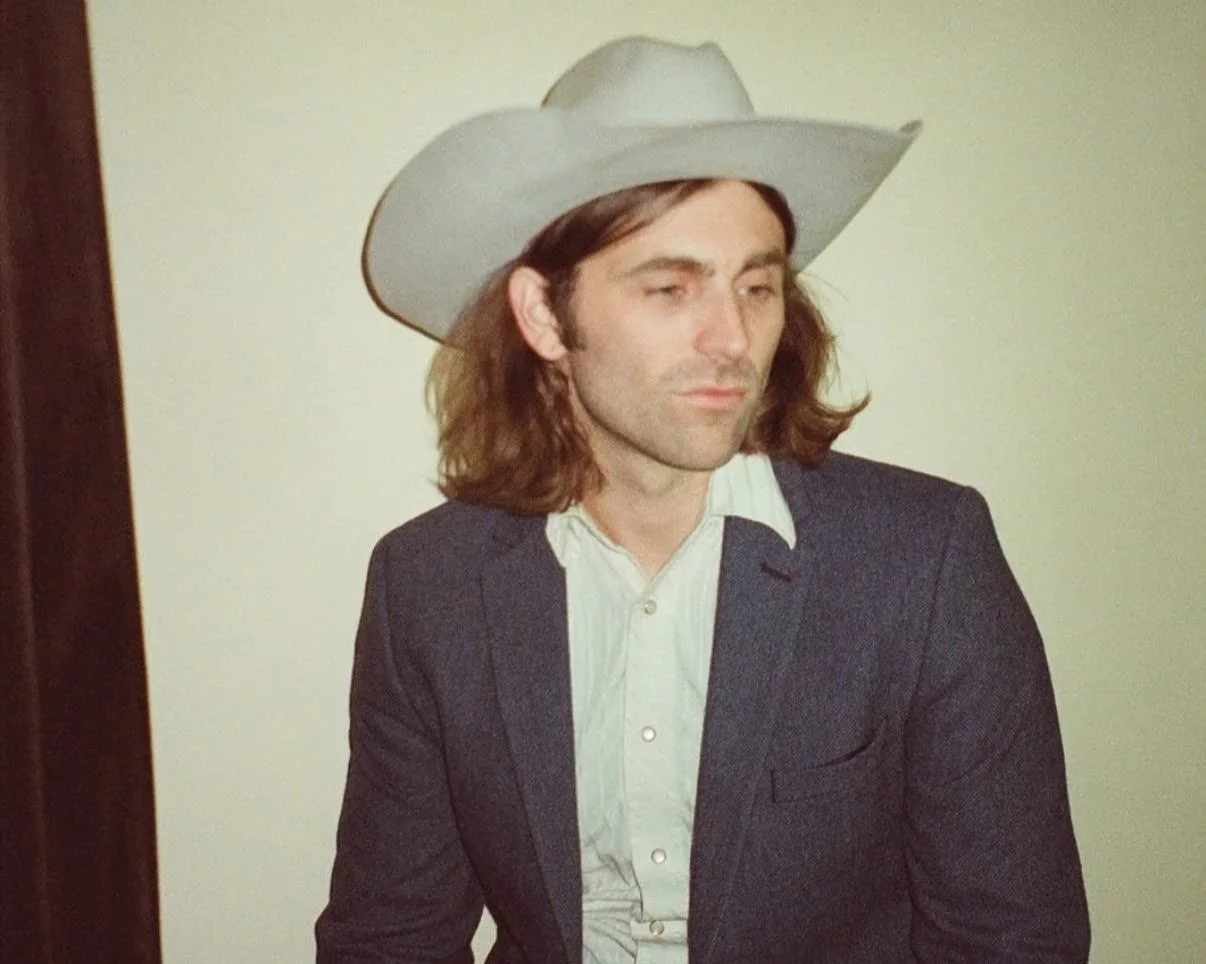
“PRISON OF TEARS” IS MUCH MORE OF A PERSONAL INTROSPECTION — In the quiet landscape of Idaho, where sagebrush stretches beneath open skies and canyon trails become spaces for reflection, Freeman DeJongh has built a world where the quiet mountains and emotions are inseparable. His music moves like the places that have shaped him—vast, deeply human and weathered. Blending folk, jazz and western influences, his songs feel cinematic and intimate. With Prison of Tears, the gaze turns inward. Beneath the desert imagery lies a record rooted in vulnerability, heartbreak, accountability and forgiveness.
At the center of this emotional journey is “Can I Live Here Tomorrow?,” a late-night confession that is born from regret and the hope that love might still survive. Written in the aftermath of personal mistakes and carried by a quiet redemption, the song captures the balance between hurting someone and trying to become better because of it.
In conversation with Luna, Freeman Dejongh reflects on landscapes that helped shape this project, the family influences behind his genre-bending sound, and how Prison of Tears became both a confession and an offering to let love in.
LUNA: You’re based in the mountains of Idaho and your music feels deeply tied to place—how does your physical environment shape the emotional landscape of your songs?
DEJONGH: There is certainly landscape desolation in much of my music, although this album, Prison Of Tears, is much more of a personal introspection. I can say that how I go about my day—waking up, walking up the canyon behind my house with my dogs, having that time to reflect and meditate in a peaceful place—is crucial to my creative process.In fact, it is the starting point of my creative practice every day. There is landscape imagery in many of my lyrics.I write when I am out walking around, and I carry a little notebook with me. Some of my favorite writers are people like Gary Snyder and Allen Ginsberg—that sort of beatnik Zen era where they would so beautifully interweave the universe and the cosmos with the human emotional spectrum. Also, Lao Tzu, the old Zen poems. I guess I really understand nature and I'm very close to it—the sagebrush, the coyotes, the mountains and the desert—it is my home so it informs everything I do,even how I process my internal struggles and how that comes out through music.
LUNA: Your sound weaves together folk, western, jazz and even psychedelic elements—how did you arrive at that blend, and what draws you to crossing those traditions?
DEJONGH: It wasn't an intentional thing; it's just who I am and what I like. I am equal parts hillbilly, mountain man, country bumpkin, but also a progressive idealist. I like psychedelics; it's a part of my culture, how I grew up, how I stay curious and evolving. My dad, uncles, my mom and my sister are all free spirits. I grew up on [The] Easy Riders and New Riders of the Purple Sage and The Grateful Dead and Willie Nelson and Traffic and Jimi Hendrix and Miles Davis and Van Morrison and Muddy Waters. I grew up around animals in the country.
We'd "Take a trip without leaving the barn." I am interested in all music—I am a very open-minded listener. I love Lana Del Rey, I love Joy Division and I love Bob Wills. If you are an asshole about music, your art is going to suffer. I'll listen to anything that has soul and vibe. For myself, I just follow the rabbit down the rabbit hole. If it excites me, I try to make something out of it.
LUNA: You’re a multi-instrumentalist working with textures like pedal steel, Stratocasters and synths—how do you decide which sounds best to carry a song’s emotional weight?
DEJONGH: I don't decide, I just listen to the song and play what feels right. Usually, it's pretty obvious to me what a song needs. I do a lot of session work too—I am discerning from an intuitive place. Most of my songs start when I'm practicing and studying or just jamming late at night, or I'll have an idea about something and just start blasting off. I try to work like a painter, long brush strokes, keep it connected—or like a chef, working with complementary flavors. I don't really try to steer the ship; more so, I just try to be the wind in the sails.
LUNA: “Can I Live Here Tomorrow” feels incredibly intimate—what headspace were you in when you first started writing it?
DEJONGH: I was sad and heartbroken. I had just hurt a person I really loved. I made some mistakes, and I was ashamed. I wanted to tell her I loved her. I wanted to tell her I was sorry in a million different ways. It was late at night, my friend Treyson had been over earlier, and he'd brought in a chord progression on the piano that we had workshopped. I was sitting at my kitchen table smoking, and I had that first line come into my head—it was a sort of plea to the universe, a way of saying, I hope she takes me back. I recorded it and sent it to Trey via voice memo. I remember singing, "Can I live here tomorrow, if the morning lets me in," and 20 minutes later, he sent me back a voice memo singing the rest of it, then we just workshopped the melody and lyrics together.
LUNA: The song began as a late-night voice memo and evolved quickly with Treyson Krasowski—what was it about that moment of synchronicity that made the track click?
DEJONGH: Trey is a person I am very close with. We've made music together for about 8 years now. We also have a country band, Prairie Blue, together. We think alike, our ideas about the world, kindness, forgiveness and the universe. We truly live by a shared set of values, so there is no weirdness between us. I have made the best music of my life with him, and I am so grateful for him. He is an incredible singer, writer, piano player and drummer. We always click, we don't try to write, it just happens—just good nature, I guess.
LUNA: There’s a sense of questioning throughout the song—about love, existence and your impact on others. Was writing this track a way of finding answers, or sitting with uncertainty?
DEJONGH: It was about asking questions—to myself mostly, sitting with pain. Saying,“Here, I am trying to be accountable for hurting you.”
LUNA: The title itself feels like a quiet plea—what does “Can I Live Here Tomorrow” mean to you on a personal level?
DEJONGH: It means, "Can we survive this? Can I live with myself and make it until tomorrow?Will I be able to make this right?" It is a quiet plea, exactly, and I made it for anyone and everyone who [has] made mistakes and strives to change for the better so they can earn forgiveness.
LUNA: You’ve cited formative memories like listening to Astral Weeks in your grandmother’s basement—how did those early listening experiences shape the emotional tone of this track and the album as a whole?
DEJONGH: Astral Weeks is an incredible piece of music. My Dad and I used to stay up late at night when I was a little kid—we'd sit there on the corduroy couch, he'd smoke cigs and we'd listen to all that music I mentioned above. That's what we'd do every night. We didn't watch TV, we listened to music. I learned how to feel music before I could play it, and that's always stuck with me—I try to make music that feels like something. This album is a feeling, a lot of feelings.
LUNA: Prison Of Tears is a powerful album title—how does this single function within the larger emotional arc of the project?
DEJONGH: The person I'm most in love with in this world named it. It's from a childhood diary of hers. She named it, not me. She's incredible, and everything she does inspires me. The title is about a struggle to overcome fear and let love in—how to escape the Prison of Tears. That's what all the songs are about:overcoming fear and letting love in. They are for her, from me.
LUNA: Your music feels like both confession and refuge—what do you hope listeners hold onto or feel when they sit with this song, especially in their own late-night moments?
DEJONGH: I hope they know they aren't alone. We all struggle. It's human to make mistakes, and it's human to be sad, and it's human to also grow, change and evolve into a better version of yourself. I hope they just feel kinship in that.
