
Q&A: Sister Duo Sarah Julia Discover Freedom on Their Debut Album ‘The Fear That This Is Real’
INTERVIEW
INTERVIEW
☆ BY SULLIVAN JORDAN ☆
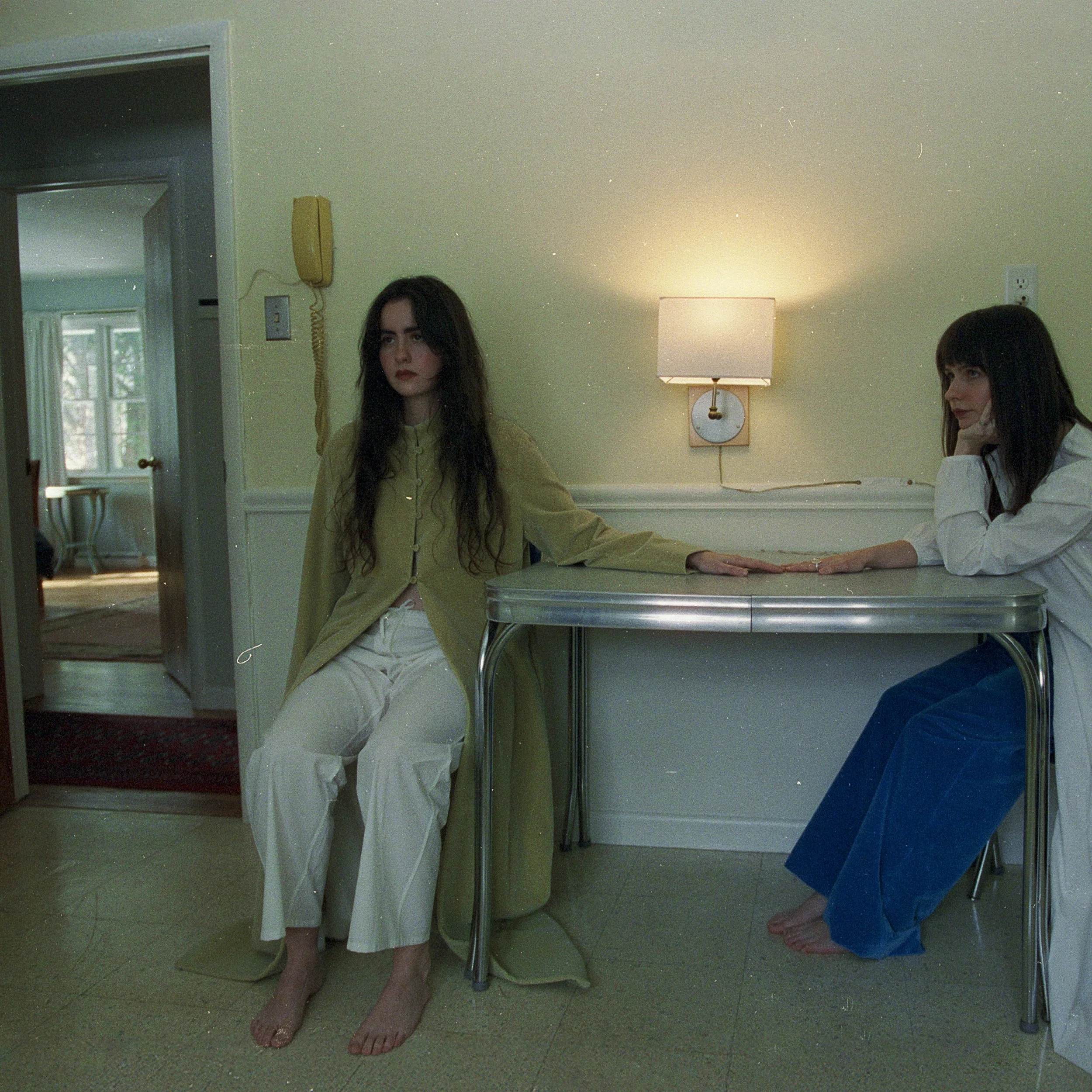
WITH A TENDER YET SOLID PULSE ON THE WORLD AND EMOTIONS SURROUNDING THEM—Sarah Julia pull from personal and universal experiences to dissect what it means to be human. Inspired by the folk and gentle rock and roll music of their childhoods, Sarah Julia pick apart anxiety, heartbreak and perspective with thoughtful lyrics, a rustic and delicate blend of earthy string instrumentals and rich vocals.
“Conversation,” “Bigger Picture” and “Whatever It Takes (Break Your Heart)” (out now), lead their forthcoming intimate debut album, The Fear That This Is Real, out October 9. The project sees the sister duo navigate the fear and shame of expressing and feeling the full range of human emotions. Their debut album flows like a river as Sarah Julia begin in a state of anxiety and uncertainty before finding peace in letting go: “Never been a fan of going with the changes/Never been a fan of going with the flow/I know the river starts, don't know where it will take us/Tell me where it ends, tell me where it goes.” Throughout the album, they become more comfortable with the idea of losing control and letting life happen as it may, allowing their emotions to rush in and out as they please.
Recorded in upstate New York with producer Phil Weinrobe (Big Thief, Adrienne Lenker, Sam Evian, Florist), the allure of the surrounding mystic forests motivated Sarah Julia to let their feelings run wild. Instead of chasing perfection, the sister duo slows down, leaning into their roots and evoking the artistic sensibility of Joni Mitchell and Simon & Garfunkel, resulting in a collection that is refreshingly human and distinctly their own.
Luna had the pleasure of sitting down with Sarah Julia for a discussion about The Fear That This Is Real, their songwriting and recording process, how sisterhood informs their artistic practice, and touring. You can catch them live on their first headline tour in Europe and the U.K. this fall, and supporting Mon Rovîa’s North American Bloodline Tour in September and October.
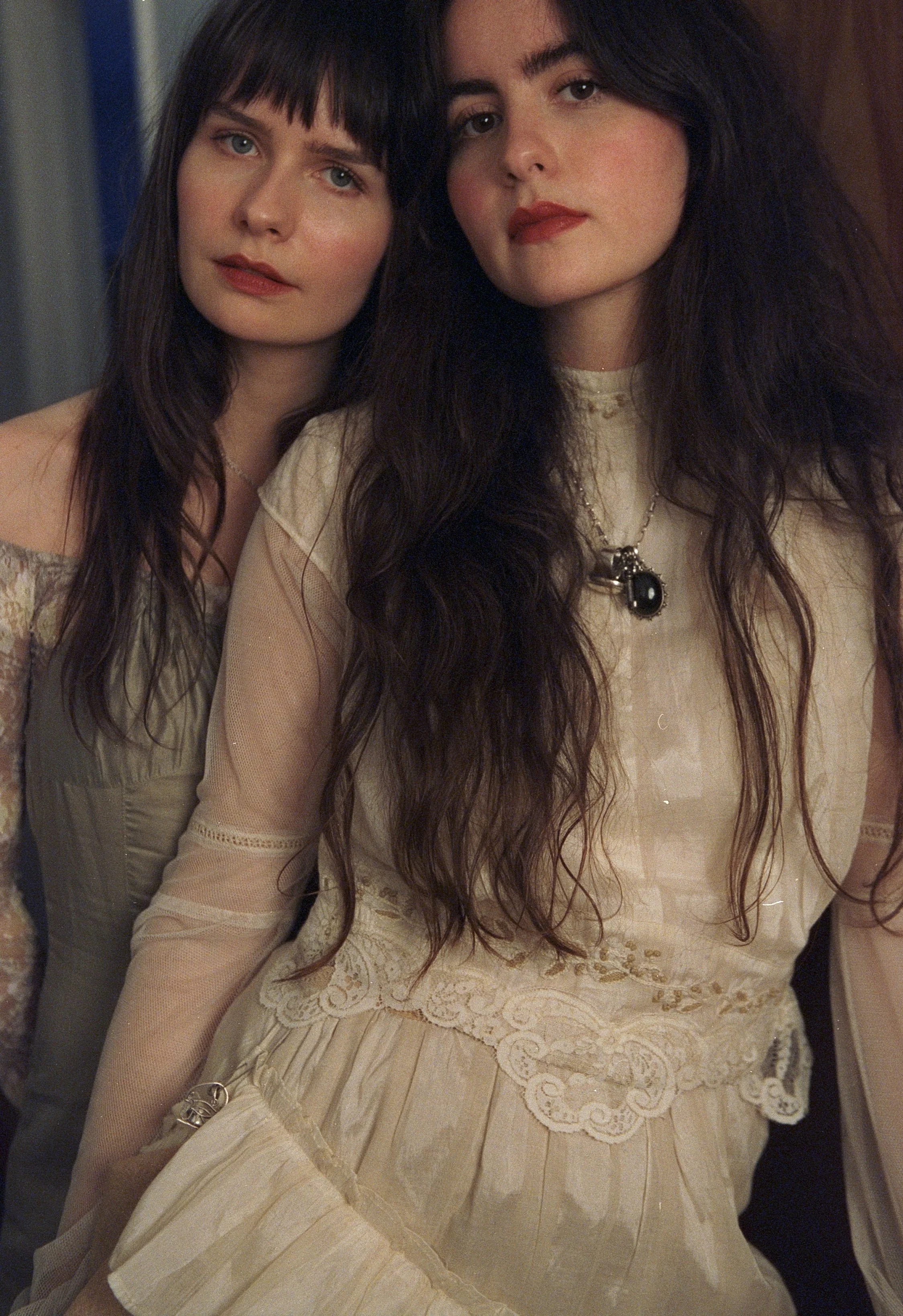
LUNA: Congratulations on your debut album! How was the process of making this album different from your other projects?
JULIA: Thank you for listening! The process has been so different from anything we've ever known. For our first EP, it took us a very long time to get four songs recorded. The producer we were working with was very busy so we were on his schedule.
SARAH: Which was great for us, because we didn't know what to expect and it was so nice to have the time to explore.
JULIA: We recorded in a studio, but then we also did lots of overdubs in this random garage box and in our own studio in Harlem. For the second EP, we only had three weeks to record five songs.
SARAH: We felt a bit like, “Oh, will this mean we won't have enough time to think about all the choices we're making in this moment? Is this the right choice? Do we need more time to overthink everything?” And with the album, it was the complete opposite. We had six days to record 12 songs.
JULIA: The process was all about being present and not overthinking everything.
SARAH: We were kind of forced to not overthink everything because we didn't have enough time to do so.
JULIA: We really wanted to do it that way because we are such perfectionists and I feel like it can really hold you back in certain moments. Recording the album gave us a lot of freedom to let go of that and be in the moment.
SARAH: We really trusted our producer (Phil Weinrope) as well—this is his philosophy and way of working. We were in upstate New York as well which was beautiful with the nature and woods around the studio.
LUNA: Weinrope’s process helped you guys, like you said, get out of that perfectionist mindset, which I can definitely relate to. I think a lot of artists, no matter what the medium is, can relate to that.
SARAH: It was also a good way to step outside of our comfort zone too and see what happens and to trust our instincts and gut. Sometimes you don't know where a feeling is coming from. There could be so many things. That was really special as well to feel everything that was happening in that moment. Because we weren't wearing headphones, we were there with the musicians. And when it felt right in that moment, you could feel it. We had to trust it being right for forever.
LUNA: There wasn't space to overthink like you guys said which I bet is scary, but also rewarding. I know you both grew up surrounded by the arts. What drew you towards music and have you always thought about working together? How did your childhoods help you and inspire you as musicians?
SARAH: We started doing theater when we were young, but that was mainly because our mom was really shy as a kid and she didn't want us to be shy, so she enrolled us in theater classes and thought, “Oh, that's probably going to solve everything.” That changed our whole life.
JULIA: I got really inspired seeing Sarah up on a stage. I feel like, as a kid, when you watch performers on TV or in live concerts, it feels very far from you and you don't really know that is something you are able to do, but when I saw Sarah on stage I was like “Oh, people I know can do this.”
SARAH: We did write some songs at home when we were younger. Silly songs in Dutch. Very silly songs.
JULIA: It was only later when we both picked up the guitar that changed a lot. You were listening to a lot of folk artists during that period and you shared those artists with me. I feel like when you grow up, you always circle back to the artists you listened to or your parents listened to.
LUNA: Who were some of those artists for you growing up?
JULIA: Our dad always listened to Cat Stevens and Jim Croce, and our mom would play a lot of Shania Twain and Atomic Kitten.
SARAH: I think the guitar was the bridge between theater and music. With the guitar, there was more freedom to start creating something ourselves. We were so used to telling other people's stories because of theater, and I didn't really think about my own story anymore because of that.
JULIA: I think it all comes back to telling stories. That has always been the drive behind our work.
LUNA: Can you guys describe your dynamic as sisters when it comes to songwriting?
JULIA: We always tell people that it is different all the time with each song, but I don't think it actually is. Our process starts with me playing something on the guitar and then we immediately start talking about what kind of feeling or color or idea it evokes that gives the sound more direction. Most of the time when I’m playing, I'm subconsciously thinking about something and then we talk about it and we find the direction and subject of the song. We have a hard time finishing ideas, so it's nice that we have our friend Will and one of our bandmates, Eugene, who are there to help. I'd say you're more into words than I am. That's more your world. Sometimes I come up with very dumb lyrics and you're very supportive about it.
LUNA: Have you guys ever run into creative differences? If so, how have you navigated those situations?
SARAH: I don't think we ever have. Knock on wood! We're very lucky.
JULIA: That’s because we grew up together and our tastes developed alongside each other.
LUNA: You both also found music at the same time in your life. You have both been evolving at the same pace, which I am sure has helped your songwriting process.
SARAH: Oh, definitely! It could have gone in a completely different direction but I'm really glad that it has all felt very natural and we've never had those moments. With this album I feel like it was our first time writing about our own stories or trying to find collective stories. For this one, we were like, “Oh, I feel like this could be more your song and then this one could be more yours.”
JULIA: It has been really nice to have room for each of our individual stories. It's also nice to have someone else, because songwriting can get very overwhelming and intense. Having someone else there is like a mirror that you can bounce ideas off of. Almost like a therapist too in a way.
SARAH: When you think you're being really honest in your lyrics, you have someone there to be like "I think you’re hiding something, or you don't really mean that.”
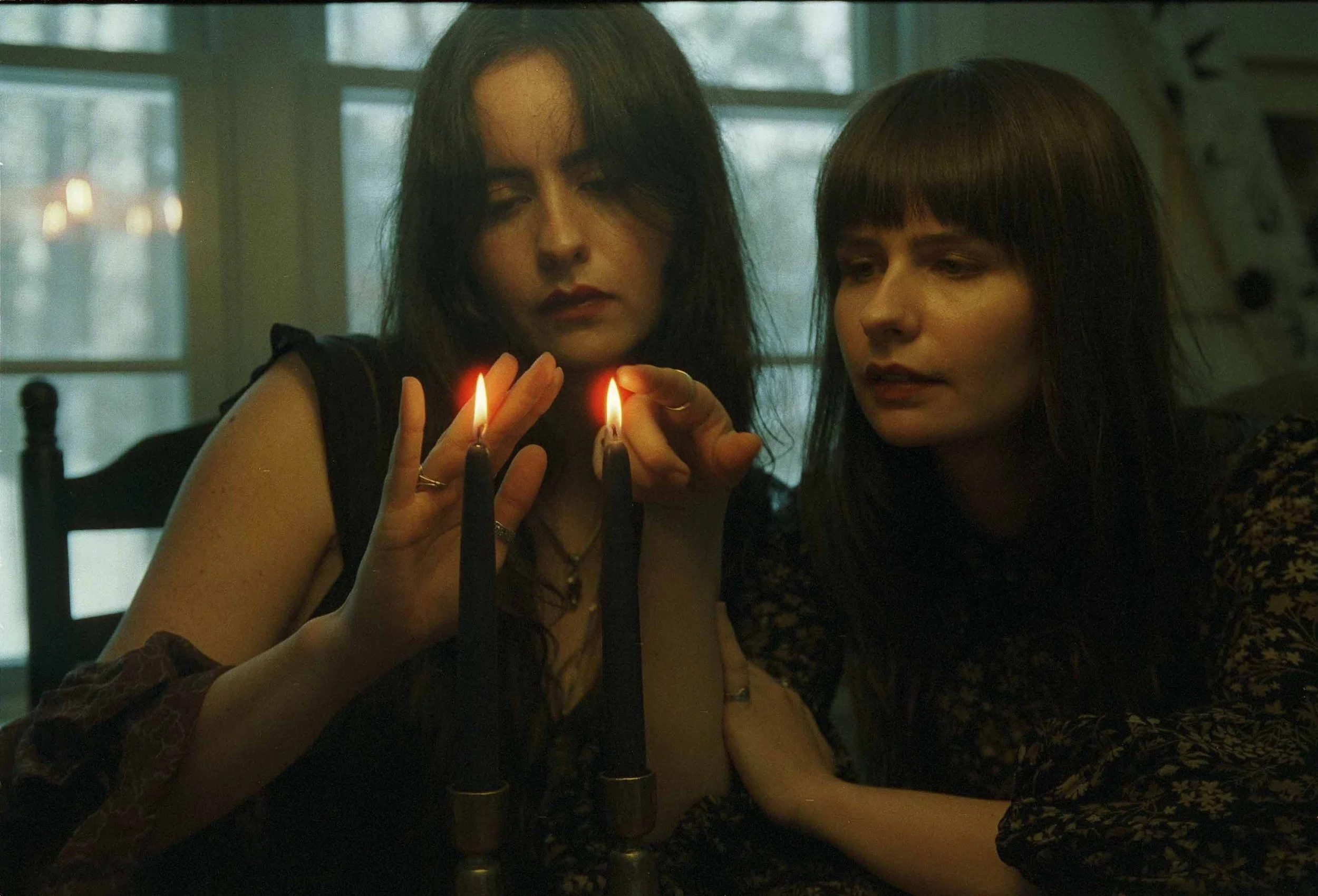
LUNA: You're going on tour in the fall, congratulations! What is your favorite thing about playing your music live?
SARAH: I think it’s seeing the songs come to life. I feel like that has been so magical, especially now that the songs are ours as well, because when we were younger, our songs were all about different stories and now it's our stories and other people can relate to them and have their own story behind the song. That is so special.
JULIA: Also, there’s a whole sort of tension between you and the audience and then each show is so different. It makes you very flexible as a person and as an artist, at least you have to try to be flexible and not really let anything get into your head while you’re performing and when you feel like there might be some sort of disconnect.
LUNA: The cool thing about, at least when I go see people live, is when artists experiment with their songs and try different notes or use different instruments. I feel like this would help you build trust within yourself and your intuition.
JULIA: It’s also the same as when we were recording, because it was live and we recorded everything together in the same room. Playing live is all about being there in the moment.
SARAH: Anything can happen!
LUNA: I would love to discuss some specific songs off of the album. I love the song “Conversation.” I think it's incredibly poignant right now, especially as the world faces a lot of division. Can you tell us about the inspiration to make this song and the process of bringing it to life?
SARAH: We wrote it quite a long time ago, I would say. But the world has been this way for way too long. Nothing really changed in that time, which is so sad and disappointing.
JULIA: It is inspired by a few people, of course but mainly a man our mom was dating. That inspired this idea of how older generations are quite stuck in their beliefs and feel like they know everything and they can tell us, the younger generation, how we’re naive.
SARAH: We didn't want to be like, “Oh, the older generations are the problem” because there are also people our age who think completely different from us and don’t have an open mind.
JULIA: We want people to live beyond their fear and be open to new perspectives and the world should be inclusive for everyone.
LUNA: I think that is a really important message, and I love that this song inspires people to embrace new ideas and challenge what the status quo has been for too long. Another song I loved is “Bigger Picture,” which is the first song off the album. In many ways I think this song captures a lot of the themes that are woven throughout the album. Was there a specific moment in your life that inspired this song?
JULIA: I think “Bigger Picture” was actually the second song we wrote for the album. It was after one of our family members passed away. Our family had to empty the house and everything went so quickly after him passing away and it all felt very frustrating actually. Just like that, you could have this whole life and then it’s over and everyone continues doing their thing and goes back to their normal life and worries about really small things.
SARAH: It's like “No, wait, this is not making any sense.” We wanted to try to make sense of life again after something like this happens and death is also the one thing that is certain in this life, but we don't talk about it that often, because everyone's scared of it.
LUNA: The song puts into perspective what really matters and what's important. I think that is really beautiful.
JULIA: I think when we wrote the song, at the beginning, it just came out so quickly. It was actually a song, when we wrote it, that didn’t feel like it was ours. Like, “this isn’t an us song.” It's not a Sarah Julia song. But I think because it was one of the first songs we wrote, we lived with it for a while. And I wouldn't be able to give that one away to anyone else.
LUNA: When it comes to the sound and instrumentals of the entire album, but specifically those two songs, “Conversation” and “Bigger Picture,” there is a folk-inspired quality. And I think that helps balance out some of the more complex and emotional lyrics. How did you find the balance between the instrumentals and the lyrics?
JULIA: I’m really into contrast and not painting red roses red. That's what we're searching for within our songs. Although we're quite blunt sometimes. Blunt is maybe not the right word, but we're quite... Dutch. We say Dutch. Quite direct. But then it's nice for the chords or the composition to be more... flowy? Flowy, yeah. Not too straightforward.
LUNA: Do you feel like the instrumentals, with the contrast to the lyrics, help you work through the more difficult emotions that you're singing about?
JULIA: With lyrics, it’s always so funny because I feel like that's the part I always keep forgetting within the songwriting process, like when you create the music and then go into the words and there's this in-between moment where it's like, “Okay, what are we going to write about? What words are we going to put here?” I feel like that part of the process, I always forget. When you go back to it, you're kind of like, “Oh, how did we decide on this?” Or, “what made me think of this?”
SARAH: I think that's also something you don't really want to think about. If it's possible, let it come naturally. That's the most ideal situation, of course, where everything is really connected. So conscious almost.
LUNA: What do you hope people take away from listening to your album and your music?
JULIA: I would love for people to feel seen and to feel heard and to let them feel something, and think about their own relationships, and just be more present and be more observant. But also feel a little hopeful and less anxious for what the future may hold for them.
