
Q&A: Freya Everest on ‘Moniqué,’ Transforming Visual Art Into Music and Giving Voice to Women’s Vulnerability
INTERVIEW
INTERVIEW
☆ BY DANY MIRELES ☆
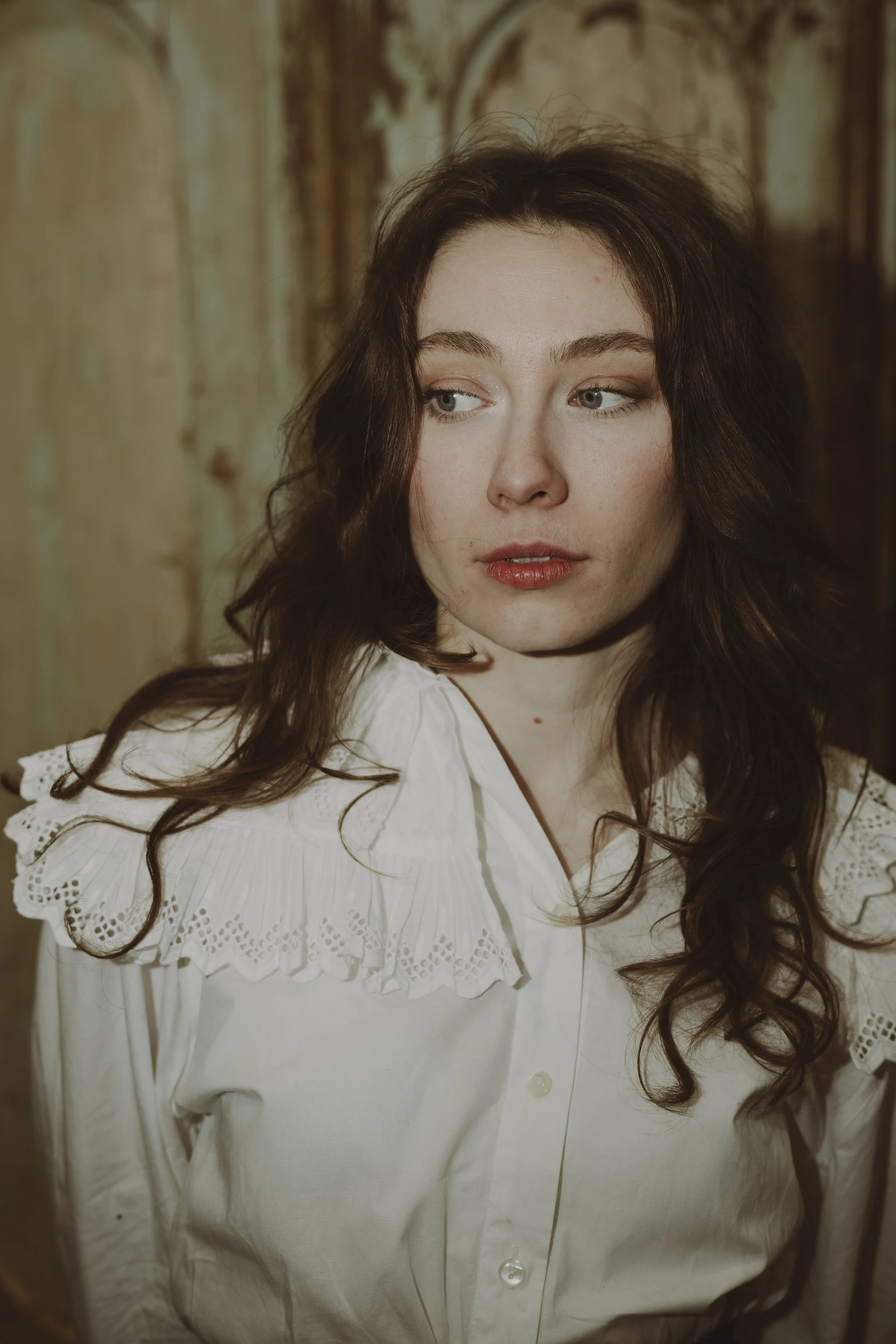
“I ENJOY THE DOMINO EFFECT OF THE CREATIVE PROCESS, HOW ONE PIECE OF ART CAN INFLUENCE THE NEXT”—For London-based artist, Freya Everest, songwriting often begins with an image. Drawing from her background in fine art and fascination with storytelling across creative mediums, Everest has built a sonic world that blends folk, jazz and art-pop. Her latest single, “Moniqué,” transforms a frozen moment in time into a deeply affecting exploration of vulnerability, objectification and the lived experiences of women.
Beneath its dreamy production, “Moniqué” examines the tension between feeling seen and feeling exposed, validation and fear. The song expands beyond its protagonist to address conversations surrounding misogyny. Through strings, textured electronic elements and lyrical reflections, the singer creates a track that is emotionally resonant and sonically captivating.
In conversation with Luna, Freya Everest discusses the origins of “Moniqué,” how visual arts blend with her songwriting process and why she hopes the song encourages more open conversations about the realities of womanhood.
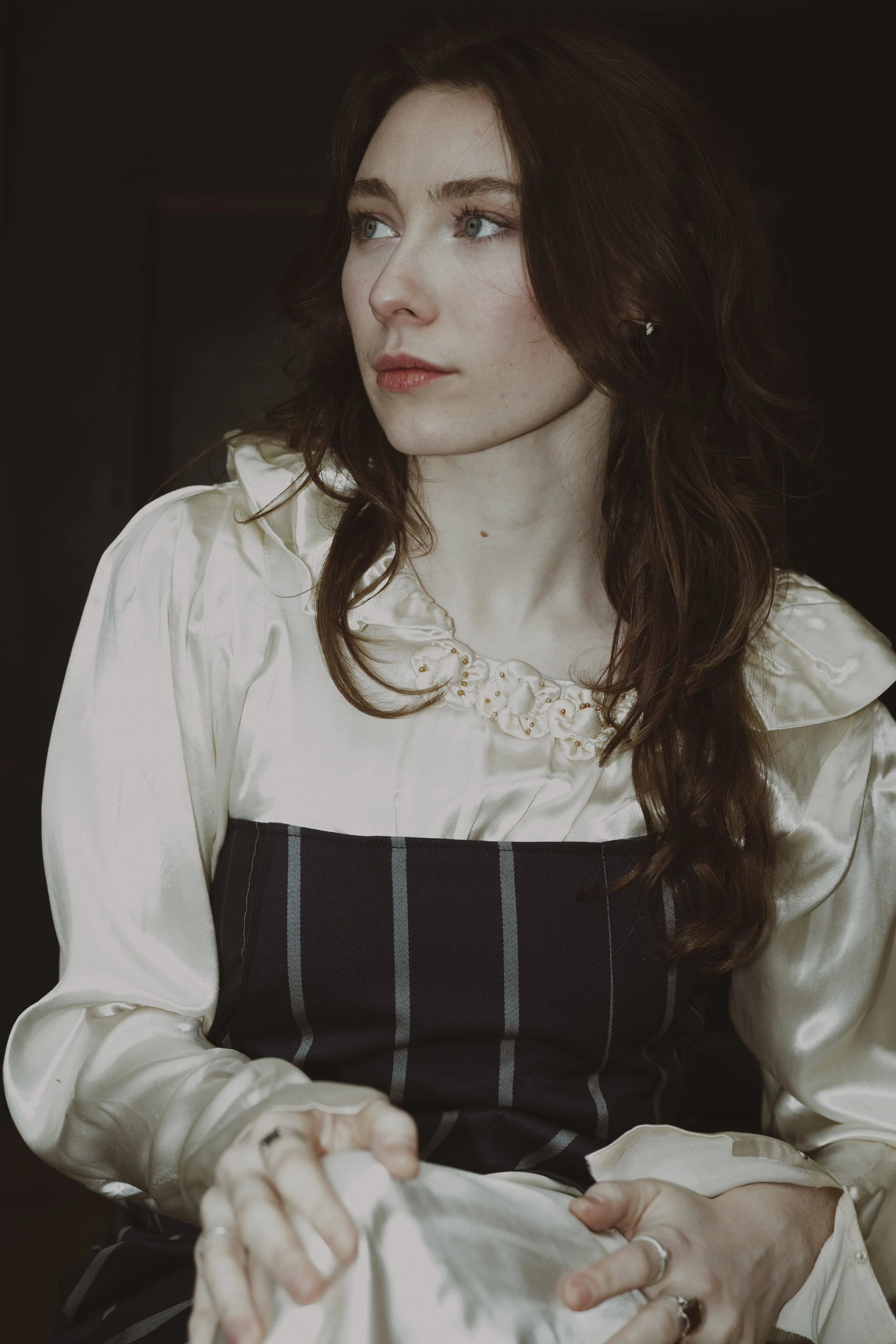
LUNA: “Moniqué” was inspired by Man Ray's Le Violon d’Ingres. What was it about that photograph that immediately sparked a story in your mind, and how did that story evolve as you wrote the song?
EVEREST: I think it was the poise of the woman, how she gestures her head tentatively to the side—I felt a sense of excitement mixed with unease. It made me think about what the real shoot with Man Ray must have been like. How did the model come to be there? What’s the back story? Was she comfortable? Did she feel totally safe at that moment? I then imagined myself in that scenario and what I might have felt. The song really revolves around a single moment, the moment that the image is captured, the sound of the shutter and the emotions this triggers in the woman photographed—the fictitious “Moniqué.” So the story itself doesn’t really evolve, but the feelings presented and who the song is really about do. The moment captured in Man Ray’s image is really just a platform to explore feelings of vulnerability and fear that I’ve experienced as a woman, especially in the presence of men. In the choruses, it became more about a wider shared experience of women generally feeling less safe in this world.
LUNA: The track explores the tension between intimacy and objectification. Was there a particular moment during the writing process when you realized how personal this narrative had become?
EVEREST: I think in the last verse beginning “Moniqué just wants to feel safe…” [is] when the narrative really hits home. It was actually some of the last lyrics I wrote for the track. It was never originally going to be in the song, but, listening through, it felt like a fourth verse was needed. I wrote it just a few weeks before recording the final vocal. It taps into the frustration I feel at not being able to move through life more freely like men can, without a subtle—but pervasive—fear of being harassed, assaulted or worse. It expresses the rage I feel knowing that as a woman, I am not totally free. Those lyrics reflect the realization that I am limited, because this world is,unfortunately,still very different for women. I don’t want to feel cautious or continually make compromises because of predatory behaviour. I, and all people, deserve to feel and be safe.
LUNA: You blend alt-folk, jazz, art-pop and electronic influences throughout your music. How did you approach balancing those different elements on “Moniqué” specifically?
EVEREST: I never really set out to emulate a particular genre. I tend to start with a musical idea and build layer by layer. I guess the resulting sound is whatever I feel works best for that particular track, which is usually influenced by my eclectic music library. With “Moniqué,” the opening arpeggiated strings were the first thing I created. They had this bouncy, whimsical quality, which I liked, and the rest of the production grew from there.
LUNA: Your upcoming project draws heavily from visual art. What is it about translating images into music that resonates so strongly with your songwriting process?
EVEREST: My undergraduate studies were in fine art, so a large chunk of my late adolescence and early twenties was spent at art school. It was here that I grew to love dissecting anecdotes and finding meaning present in visual art. I think I enjoy the domino effect of the creative process, how one piece of art can influence the next. I think things get really interesting when you cross media. I guess I have always really appreciated contemporary and visual art, so using it as a source to inspire songs came really naturally. My creative process also benefits from having parameters. Starting a song can feel quite daunting, so having something to work from relieves a little pressure, stimulates ideas and provides a framework. It’s comforting to me. A lot of visual art is also inherently narrative, and I like writing narrative songs. If a picture paints a thousand words, then half the work is done for me!
LUNA: The song carries an underlying sense of unease beneath its dreamy soundscape. How did you use production choices to reflect the emotional complexity of the story?
EVEREST: There’s quite a lot going on in the production, and I guess I have quite a lot of feelings about objectification—sometimes it strangely feels validating and other times it’s terrifying. The strings sort of emulate that rush of excitement, and then the longer pauses between vocal phrases help to build tension. That sense of unease running underneath the track reflects the background fear that a lot of women carry, one of the main emotions I’m trying to convey. The voicemail segments later in the track were another really last-minute production decision and reflect emotions that are a little more tangible and relatable in modern life. I recorded them in my bedroom after we finished the top line. It pulls you out of the soundscape a bit and adds an element of realness. I wanted it to sound like you’d called up your mate to check [if] she got back safe. Even though no one leaves voicemails anymore, it fit the narrative and the crispy spoken quality of a voice down the phone contrasted nicely with the more dreamy synths, upbeat rhythm and soft BVs [background vocals]. I suppose this sonic contrast mirrors the conflicting emotions haunting our main protagonist, “Moniqué,” and the women she represents.
LUNA: You’ve cited Joni Mitchell, Fela Kuti and Four Tet as your “holy trinity” of inspirations. Are there traces of each artist that listeners can find within “Moniqué”?
EVEREST: Truthfully, I think you might have to listen quite hard to find them, but I suppose they are there. Of the three, there’s a lot of bounciness and syncopation in the rhythm section, with a mix of both acoustic and electronic drums/percussion—this could be where Fela comes in. His music always makes me dance. I love music that can make you dance, even if it’s sad. I think you can definitely move to “Moniqué,” so perhaps that’s where his influence is most present. As for Four Tet, he’s really good at layering complementary electronic textures. I hope “Moniqué” does that too.
LUNA: As both a musician and visual artist, do you find that one discipline often leads the other, or are they constantly informing each other throughout your creative process?
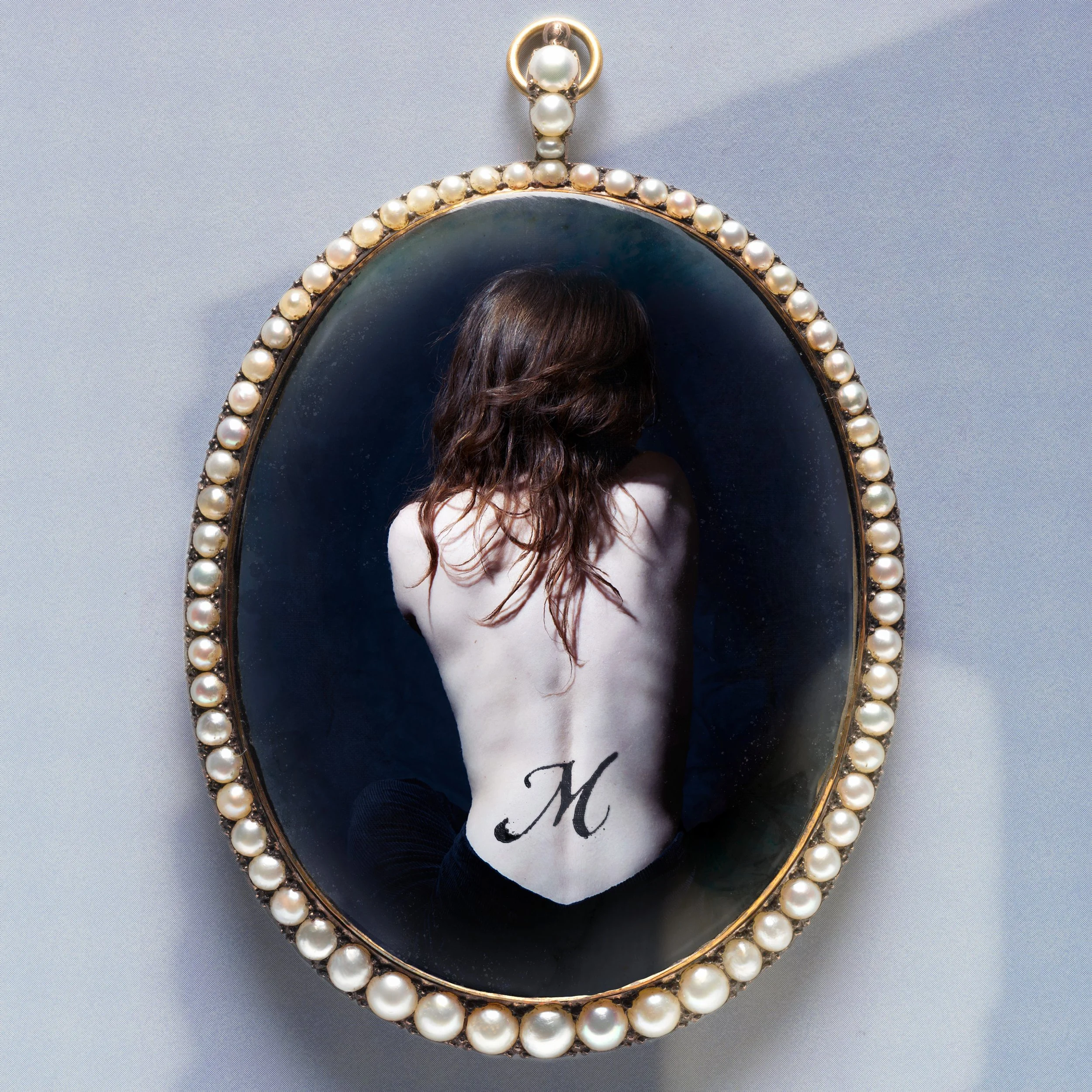
EVEREST: I think they constantly inform each other. I haven’t really been making much visual art recently since music has been the main focus and demands most of my time. I did really enjoy creating the artwork for “Moniqué,” though. It was nice to exercise those graphic muscles again. I really love designing and making music, and I’m fortunate that these two disciplines complement each other so well. It helps keep my creative output varied and interesting, which in turn keeps me motivated.
LUNA: “Moniqué” touches on themes of power, vulnerability and the exploitation of women’s bodies. What conversations do you hope the song encourages among listeners?
EVEREST: I think mostly a conversation between men and women about what moving through life as a woman actually looks like and how men can make women feel safer. I went through most of my life not really realizing how much I compromise and think about my safety in the context of men, purely because it is so ingrained in our DNA and social conditioning, but it’s actually a lot. I’ve rarely had this conversation with the men in my life. I’ve had it a lot with women, but I think it ultimately needs to be had with men. I guess the track is for women—and anyone who feels vulnerable to misogyny, including our trans sisters and non-binary folk—to feel heard and for men to listen.
LUNA: London’s cultural landscape has clearly influenced your work. How has being based in London shaped your artistic identity and the sound you’re creating today?
EVEREST: I love London’s diversity. I think that has definitely had a huge influence. Although I’ve grown up in a middle-class area with white working-class parents and my upbringing mostly stayed within those social domains, I am surrounded by differences and cultures so beautifully distinct from my own. I love the organic textures and acoustic sensitivities found in folk music, but I also love dance music and the grittiness of urban environments. I guess I’m trying to make music that captures the electric, vibrant nature of my home, whilst also satisfying my eclectic music tastes.
LUNA: Looking ahead to the larger project that “Moniqué” belongs to, what themes or stories are you most excited for audiences to discover next?
EVEREST: My favorite track on the EP is probably one titled “jODiE.” It won’t be released as a single, but it feels closest to the sort of sound I want to explore moving forward into the next project. Its lyrics are sort of nonsense, but it’s the production and vibe I’ve created that I really love. It’s probably the most electronic and dancey of the six tracks. Another track explores phone addiction and the parts of life that we lose to a world increasingly reliant on digital tech and social media. That one feels pretty current; it also features my talented friend, poet and rapper Teeps. I’m pretty excited for all of it to be honest, and to discover what tracks resonate the most with people.
