
Q&A: Glom Talks NYC Scenes, Viral Riffs and New Album ‘Below’
INTERVIEW
INTERVIEW
☆ BY HARRY SUTTON ☆
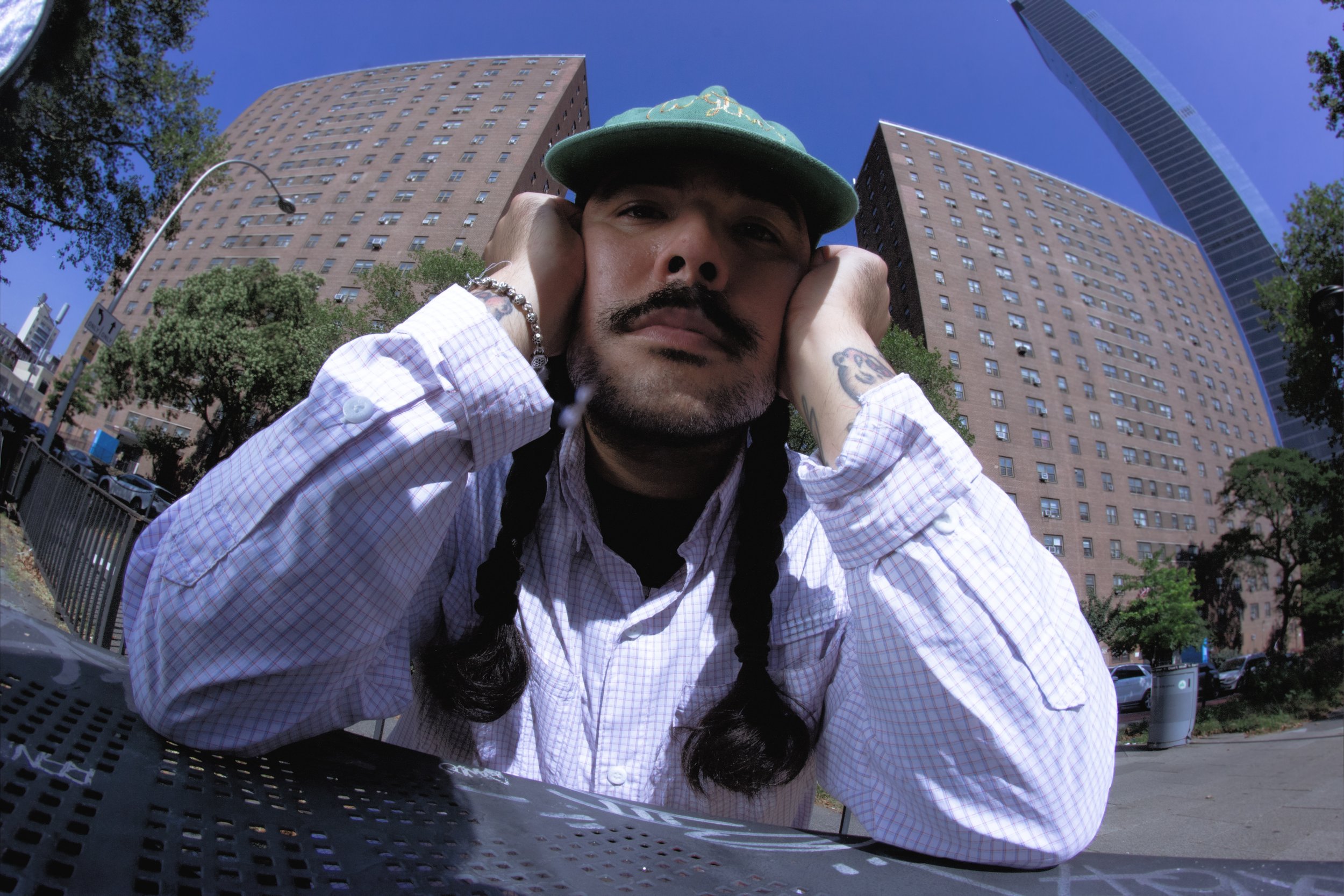
Photo by Yulissa Benitez
GLOM FRONTMAN SEAN DUNNEVANT WRITES HIS RIFFS WHILE JAMMING IN FRONT OF THE TV — but when he wrote the riff to “Glass” a few years back, he thought it was just another couch-inspired tune. After recording and mixing the songs for his new album Below, Dunnevant started teasing the tracks on the band’s social media. Overnight, “Glass” went viral and became Glom’s biggest moment since the band started eight years ago.
Millions of views across TikTok and Instagram Reels later, Below feels like a rebirth for Glom. It’s the band’s first album where Dunnevant has taken full control, as he worked with a songwriting partner on previous releases. Recorded with producer and longtime friend Sahil Ansari, it’s the first Glom project that reflects Dunnevant’s vision from top to bottom. It’s also the first time Glom have seen significant anticipation build around a release, with the virality of “Glass” making it Glom’s first song to reach 1,000,000 Spotify streams in November. This spring, Glom embarks on its first full headlining tour across the US, supported by fellow NYC acts buffchick and SNOWMEN.
Glom’s music draws inspiration from every corner of the alt-rock pantheon — Dunnevant modeled the drums on Below after Third Eye Blind’s self-titled record, he aims to emulate his favorite guitarist Johnny Marr’s jangly precision and his biggest ambition in the music industry is to have a career trajectory that resembles Sonic Youth’s.
If the influences are sprawling, the sound is strikingly cohesive. Glom sits somewhere between jangly alternative rock and synth-washed bedroom pop, anchored by Dunnevant’s penchant for riffs that lodge instantly in your head. The guitars on Below glow brightly, the kind of lines that wouldn’t be out of place on Wild Nothing’s Nocturne, while the soft synth undercurrents nod toward Porches’ glossy introspection. His vocals land with a plainspoken honesty, letting the emotion sit right on the surface. It’s melodic and guitar-led to the core, built around shimmering hooks that hit quickly and linger in your mind long after the song has ended.
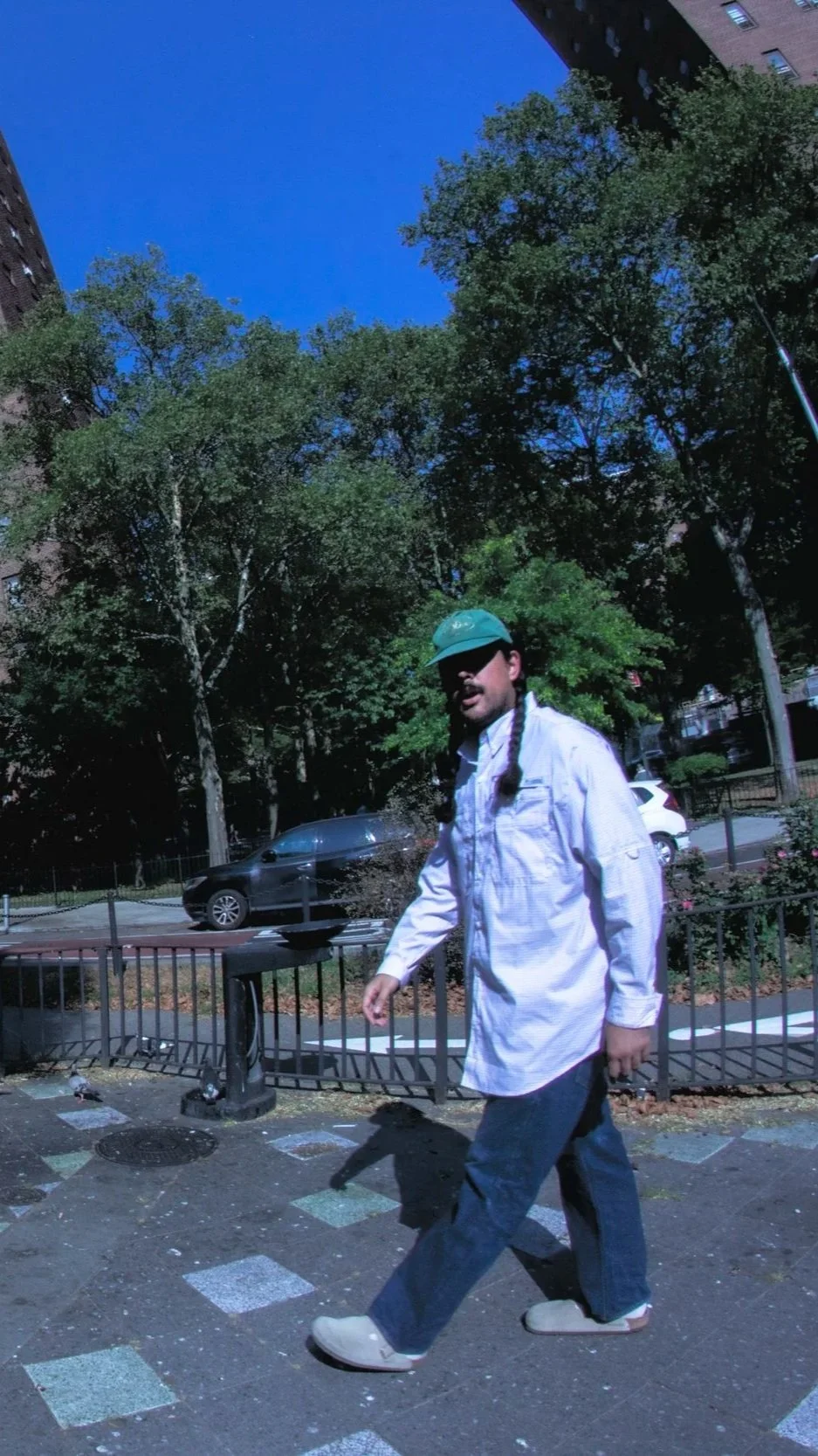
Photo by Yulissa Benitez
LUNA: This is your second album, your third project, and it seems poised to be the biggest one yet for Glom. What feels different this time around with Below?
GLOM: Realistically speaking, I’ve lost track of how many things I’ve put out. This is the only record that I’ve put out that has somewhat of a demand. There are people interested this time, as opposed to before when the band was a little bit more unknown. It kind of felt like that meme that’s like, “No one:” and then “a Glom song.” But this one, ever since the “Glass” release about a year ago, people are excited about it now, which is great. I’ve always made music for myself, music that I want to listen to. I remember when I started making recordings in high school/middle school, I would just do it so I could listen to it on my MP3 player or iPod. Now, the fact that someone actually wants to hear it is very exciting.
LUNA: Would you say that it almost feels like a debut, like a rebirth for the band?
GLOM: Definitely, definitely. The previous releases were when I had a songwriting partner, and he would sing lead vocals sometimes. He left in 2022, so now it is a rebirth because it is the fully actualized version of what I intended on doing before, even though I still wrote all the songs back then.
LUNA: When you released your last album, Merit, just about five years ago in the midst of the COVID pandemic, you had to wait a while to play those songs live. What are you most excited about in getting to tour and play the songs from Below?
GLOM: We’ve been playing these songs in a live setting for almost three years now, as this record was completed in December 2023. The exciting thing is that those songs have all been well-received live. But now, it’s exciting because when we play them live, people will know what the record sounds like. They’ll know what the actual version sounds like. So it’s not like they’re hearing it new for the first time live. There will be an opportunity for everyone to know what the studio recording sounds like and what the actual vision of it sounds like, and then see it in a live environment.
LUNA: Do you have any plans for touring the album?
GLOM: We are going on tour. We will be playing a full US tour in May. We are playing a festival called Kilby Block Party, and then we’re doing a tour around that. This is the first time we’re ever going to play the west coast. I’ve been wanting to go play the west coast for a long time now. This is the eighth year of the band. We’ve tried to do west coast things before, and it never quite worked out, especially during COVID. Pre-COVID, we were going to go on tour for Merit, but all of that got canceled. So it’s exciting now to be able to put a record out and actually do a tour, because I’ve still never done that. Last year when we toured, we only put out two or maybe three singles. Now, having the full record and having something actually to promote and put energy into is interesting and very exciting.
LUNA: You’re going to have to improvise a new lyric when you say “Actually not yet” about taking “that trip out west.”
GLOM: It’s funny because my agent, every time I see him, he’s always like, “Yeah, every time I listen to that song, that line taunts me because I’ve never booked you a show on the west coast.” But now that’s not true. So, knock on wood, we’ll finally do it, and I will hopefully change the line, or just keep it, and people probably know what it is, so it’ll be funny to play it live.
LUNA: Do you have openers booked for the tour?
GLOM: We have openers for the east coast. That’s a band called Snowmen. They’re from New York City, post-punky kind of sound. Big fan of what they do. On the west coast, we have buffchick opening. Huge fan of their vibe.
LUNA: In a 2020 interview, you mentioned Big Thief and Slow Pulp as being dream bands to tour with. Do you have a different answer now that five years have passed?
GLOM: That’s a funny one because in those five years, we have opened for a lot of bands that I considered heroes. We opened for a band called Bloc Party. I was obsessed with Bloc Party when I was a kid, and just to play with them, even though we just did one show, it was so sick. Now, my personal goals are to open for my hero heroes, not just bands that are bigger or that I look up to and respect. I want to open for Johnny Marr. I want to open for Oasis or something like that. Now that I’ve had the opportunity to open for bands like The Starting Line and The Wonder Years and all these bands that I am really influenced by, I want to set the goals higher. It would be really fun to do a tour with Johnny Marr or Incubus or Deftones, something like that. I think the Johnny Marr one makes sense because he is my favorite guitar player, and I think you can hear it in Glom’s music. With The Smiths and his solo music, there’s such an emphasis on the rock-solid groove of it all. He’s doing something pretty interesting on the guitar, but my takeaway from The Smiths and any Johnny Marr’s music specifically is that the guitar is doing interesting stuff, but behind it is the most rock-solid drum and bass music from that time period. You listen to The Smiths, and you don’t even notice the drums because they’re so locked in and heavy that you overlook it, but that makes it work better. That’s where I got that mentality for Glom; every Glom song has super pocket and aggressive grooves.
LUNA: I definitely see a little bit of that jangliness in the guitar on a lot of the songs.
GLOM: It’s funny because on this new record, the guitar work isn’t necessarily Smiths-adjacent, but the previous stuff had way more of me wanting to sound like him. It’s hard to homage that kind of guitar playing because it’s so iconic that if you try to copy it, it immediately gets called out as a Smiths rip. No band can really homage it because it’s just immediately going to be picked out. With “Glass,” it kind of has it in my eyes, but it’s not the way Johnny Marr would play it. Johnny Marr’s thing is way more single-note stuff, and “Glass” is combining that with sitar music or Sonic Youth because the entire guitar is strummed when that part is happening instead of just the lead line.
LUNA: You mentioned Sonic Youth there, who I know are a big influence. Kim Gordon has been putting out some music on her own lately. That could be a pretty fun bill.
GLOM: Opening for Kim would be super sick. I saw Kim last year in Brooklyn, and it was an amazing show. The crazy thing about it is that I just finished the Thurston Moore memoir and read the Kim memoir about 10 years ago. It’s really interesting to me, not just their influence on popular or rock music, but the fact that by the time they got actually successful, they were fairly old. That’s a huge influence and inspiration to me, considering I’m 32. I’ve been doing the band for eight years, and Sonic Youth has a trajectory that seems attainable to me, just because of the age. The music industry definitely still prioritizes youth, and I’m not afraid to say that I’m in my 30s because I feel like that’s honest. Kim playing now in her 70s is amazing. She doesn’t seem like she's in her 70s, and she’s still rocking up there. You see other rockers that are a little younger, like the [Red Hot] Chili Peppers, and they look their age, and Kim doesn’t, in my opinion. That’s the inspirational thing to me about it.
LUNA: I read that your writing process involves jamming out in front of the TV until you hear a riff you like, then recording it and building a song around it. What was the actual recording process like for this album? Did you have studio time with the whole band, or was it a lot of bits and pieces, layering and recording different parts?
GLOM: That’s a good question because I haven’t really thought about it in a while. The recording process for this record was me and Jordan [Wolff], the drummer. We worked with the producer, my good old friend Sahil [Ansari]. He has a studio in Clinton Hill, in the Navy Yard area. We started the recording in a pretty interesting way because most times when you start a recording, specifically a rock recording, you track the drums first. But with this process, Sahil wanted to keep everything closer to all the demos I made. From a technical side, I had made all the demos in Pro Tools. I made the switch over to Pro Tools, which took me a year or two to get good at. Then I sent him all the files, and we just opened them up and recreated all the parts on top of it with real amps or real instruments. I can’t really record acoustic guitars in my house because I don’t have a mic stand, so we recorded the acoustic guitars, we recorded the bass and stuff. For the first couple of weeks, we were only doing one or two days at a time, one or two days a week, every week for about six months. I feel like that’s how long the tracking took because at that point, I worked a full-time job, and we couldn’t set aside a week to do something. Also, financially, that’s very expensive.
So we did that, and for the first two or three months, we got all the basic tracking down. Then we took it to a studio in Greenpoint called The Creamery and recorded drums on top of it. I think that’s an interesting way to approach a recording because usually, in previous Glom recordings or other stuff I’ve worked on, you do the drums and bass first to have a good foundation. But Sahil likes to do things, and I agree with this now, where he records the drums after. This way, if the vocal performance has something in it that needs attention, you can record a drum part to ramp up that intensity on a certain section or something like that after the fact. That was pretty much how we did it. We started that recording in April 2023 and finished it in November, and then it got mastered.
LUNA: Would you say that it makes the drums feel more pronounced on this project?
GLOM: I think so. A lot of times, people who have heard the record—close friends and industry people—often say, “Yeah, the guitars sound great, but the drums sound really good.” I think it’s because, and one thing that’s interesting about this record that might not be easily picked out, is that every track on it has multiple drum layers. I was really inspired by one of my favorite records, the Third Eye Blind self-titled album. Every song on that record has a drum machine, another drum machine, and then real drums on top of it. I thought that was a really interesting idea. So, a song like “Glass” has three or four drum things going on. There’s the main drum loop that comes in right at the beginning, and that has a drum machine loop and also real drums layered in. Then, in the pre-chorus, there’s another one because I wanted it to sound like “All Star” by Smash Mouth. In the pre-chorus of that, it has a drum loop that's very close to “All Star.” Obviously, the melody and stuff are not close at all, but it’s just that lift that happens in the pre-chorus. We were like, “How did they do that lift? There are no extra guitars or anything like that, no heavy guitars hitting, just an extra drum loop.” A bunch of songs have that. The song “Virginia” has three drum loops going on and then real drums on top of it. I wanted it to have a really dense feel to it.
LUNA: Speaking of “Glass,” that infectious guitar riff caught a ton of traction on social media. What is it like having this viral, or at least semi-viral, boost helping out with the release?
GLOM: To be honest, it’s a little bit of a blessing and a curse. I’m not saying that from the standpoint that I don’t appreciate it, because I definitely appreciate it. I’m not taking for granted that it’s very hard to go viral on social media, and I was fortunate enough to have a streak where I knew how to do it. The following that has come from it is amazing. But the hard part about it is that anytime someone goes viral like that, it’s hard to maintain it. Most people aren’t going to like every single thing that you do. When you go viral, sometimes people are music fans in general, and they’ll catch on to whatever you're doing. And then some are just like, you just like that riff. Literally just that riff. So anything else you do, if it’s not the riff, they don’t care. That is an interesting challenge for me. But it’s also funny because at the end of the day, that doesn’t mean that people aren’t going to come to shows. If someone wants to pay their hard-earned money to come to a Glom show and all they want to hear is “Glass,” I’ll play “Glass.” We’ll play it twice, whatever.
LUNA: Did you know it was a hit when you wrote it?
GLOM: The irony of it is that I didn’t know that people were going to like that song. I feel like this happens a lot with different artists, but for Glom, “Glass” was the song that I wasn’t really actively trying to make good. That was the song that I was kind of on autopilot in the studio, and I wasn’t really paying attention, full disclosure. You could argue that that potentially was a flow state or whatever, but the other songs on the record were the ones that I was really preoccupied and fixated on making super good and paying attention to every single thing, and “Glass” was the one that I didn’t. When that video went viral, I was like, “Oh god, what does this song actually sound like?” I wasn’t paying attention to the recording. But luckily, people like it. You really never know which songs people are going to latch on to.
LUNA: Your Instagram handle is @newyorkglom; you recently shared a video with Hudson Freeman, who’s part of the New York folk scene; and I also read that your band name is derived from when you were reading a book about The Strokes. I know you’re originally from Maryland. I’d love to hear your thoughts on what New York means to you and how it’s influenced the music. You moved in 2012, 2013?
GLOM: I didn’t officially move to New York until 2019. But from 2014 to 2019, I was couch surfing. I would come up on a Wednesday, leave on a Monday. I’d spend days here every week and then go back to Maryland. New York has always been a very inspirational place to me, because the first time I ever came to New York by myself, I was just blown away. I think it is the best place to be engulfed in culture the entire time. I’m talking about the fact that you can witness every type of culture all at once just by going on the train. That goes across socio-economic lines, that goes across a lot of other pertinent subcultures. I think that’s why, to me, it’s the best place to live. First of all, you can walk a lot, and you just see reality in a way that you don’t see when you live in the suburbs or in rural areas. That’s not trying to knock those places, but I just feel inspired by seeing the truth and reality in a way that you can’t see in other places. Even going back to living in D.C. and Baltimore, that’s a different type of reality. New York is all of the realities at once, and I find that to be very helpful for my process and for my songwriting.
With the Hudson [Freeman] thing, if I didn’t live in New York, I wouldn’t have been able to meet up with him and play music with him. In other cities I’ve lived in, like Baltimore and D.C., music scenes are hyper-specific. For example, hardcore is very big in Baltimore, and other types of music aren’t as supported. In New York, there are many scenes happening simultaneously. With Hudson, what we do is different; he’s more folk, and I’m not. But New York is a melting pot where that would exist. Years ago, we used to play a lot more mixed-bill shows, like Glom with a Mac Demarco-esque band and an industrial band. Nowadays, we try to play more strategic shows.
A lot of the musicians I’ve befriended and played shows with don’t really do it anymore. It’s an interesting sign of the times because it’s expensive to live here, and it’s taxing to be a musician. Many people find it too much. A lot of the New York music scene catered their whole career and all their moves to just playing in New York. While I love New York, I don’t want to just play here. I want to play in places where people don’t have as much music, because they don’t have the same culture we’re fortunate enough to have. Another reason many bands stopped playing was that touring was hard. I’ve been touring since I was 18, so I know it’s hard. When Glom goes on tour, it’s a different mentality; sometimes there are only 40 people there, and that’s part of it. Not every show will be with all your friends at a bar in New York. I want to play for kids in Minneapolis or Alabama who love Glom and would never expect a band like ours to come to their town.
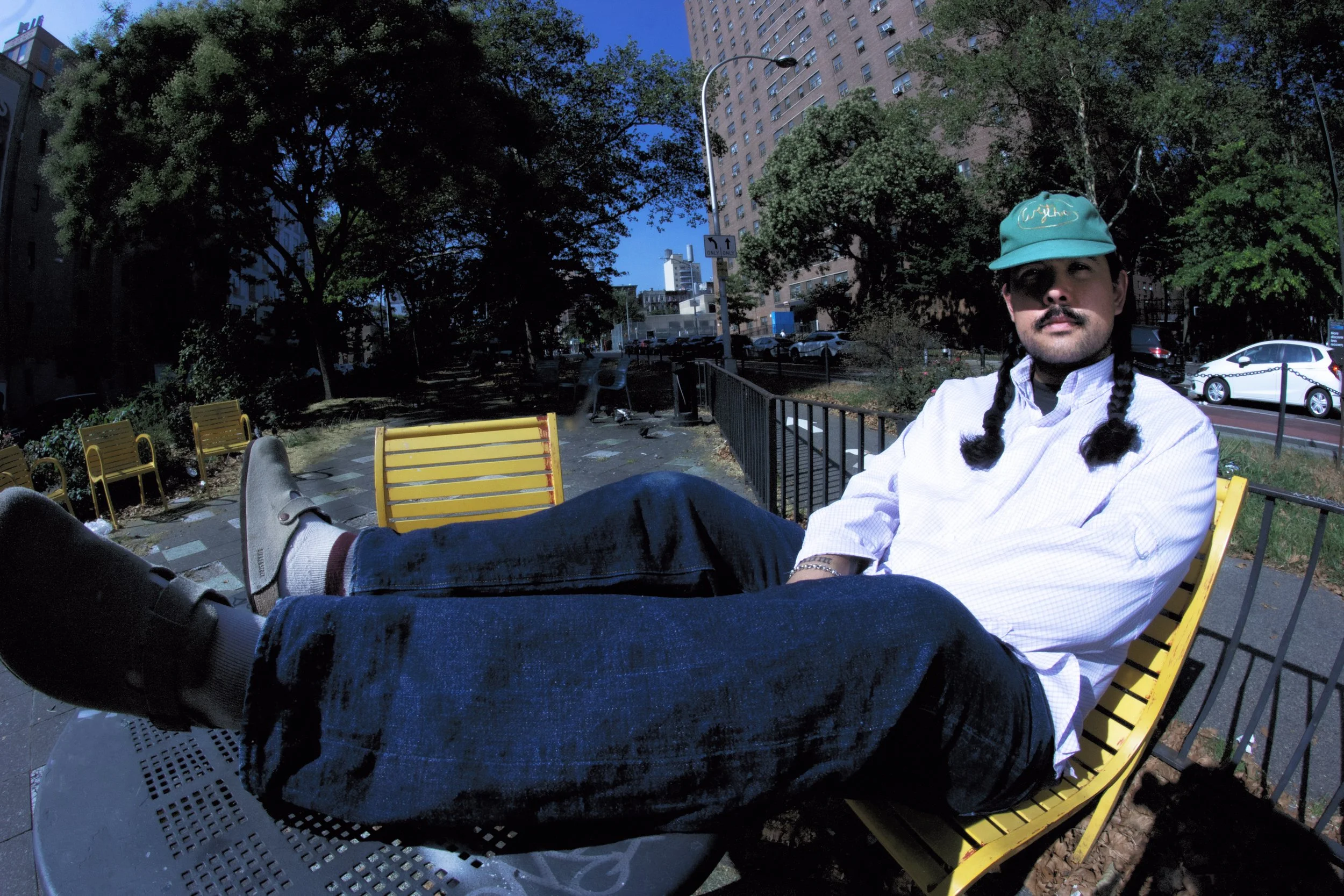
Photo by Yulissa Benitez
LUNA: Are there any New York bands that Glom belongs with in the indie rock scene, or do you consider yourself more of an outlier?
GLOM: When the band started, Glom was semi-part of a scene that revolved around a DIY venue called Dodge 112 in Gowanus, which ran from 2016 or 2017 until about 2020. All those bands either don’t play anymore or don’t live in New York. Nowadays, I don’t think Glom is a part of any scene in New York, and I like it that way because it aligns with my goals to be on my own. If you’re part of a scene, the scene gets memorialized, and if you’re lucky, you’ll get out of it. If Glom isn’t a part of a scene, there’s nowhere to try to get out of besides the city itself. Glom has never been heavy enough for the shoegaze thing in New York, nor light enough for the folk scene. I like being an outlier and making music that doesn’t fall into a TikTok trend. I like that when you listen to a Glom record, you can pick out influences but you’re not accusing me of stealing it from something else.
LUNA: I read about your influences ranging from My Bloody Valentine to Wes Anderson films, are there any surprising influences on your upcoming record?
GLOM: For this record, I was really inspired by the Third Eye Blind thing, wanting to tap into an era of rock music that is fondly looked back upon but not really expanded on. I think a lot of people took those inspirations and made it more lo-fi, and I wanted to make it more hi-fi. Non-musical influences include watching a lot of The Sopranos. I was thinking about how those shows were structured and wanted the songs to be lyrically present in a Sopranos-esque way. The song “Below” is supposed to be dream-like, and the lyrics are literally about that, which I think seeped into my subconscious from The Sopranos, where dreams are a big thematic element. I’m more influenced by non-musical media these days. I wanted the record to be timeless, not sounding like it’s from the 2020s, but rather something that could have been made in 1997 or today.
LUNA: I think a lot of people gravitate towards “Glass” not only for that incredible riff, but because of the emotive vocal delivery and heartfelt lyrics. What kind of a place do you normally like to write your lyrics from?
GLOM: Lyrics are the hardest thing for me; I don’t really think lyrically, I think melodically. I struggle to find words that will fit into the musical ideas I have. With “Glass,” for example, I wanted to be as honest as possible without any veil. In past recordings, I tried to be metaphorical and artistic, wanting listeners to wonder what I was talking about. For this record, I wanted listeners to know exactly what I’m talking about. Everything on this record is literal, with only a little metaphor. For “Glass,” all those things actually happened, except for the lyric about a plane going down, which represents my anxiety about flying. I was inspired by Leo Tolstoy’s matter-of-fact writing style, particularly from reading Anna Karenina. I like how he describes things very flatly. With “Glass” and “Mirror,” it’s just the truth. I’ve already done the poetic, abstract approach, and I wanted to be more frank because there’s already a lot going on musically. I also fixated on accessibility, wanting anyone to understand the songs without needing to be a musician or analyze anything.
LUNA: Do you have a favorite song in terms of lyrics or storytelling from “Below”?
GLOM: I like the song “Window” a lot. “Window” and “Glass” were my two favorite songs to play live on this year’s tour. I feel like those two best captured the moment and sentiment. While all the songs achieve what I want, “Window” and “Glass” really stand out as exactly what I meant to say. The song “Teeth,” which will come out eventually, also has that baseline vibe covered.
LUNA: How do you see Glom evolving? What's next for the band?
GLOM: I just want to keep making stuff. Since “Below,” I have a lot of songs ready to go, and I’m excited to get them out. I’ve been feeling the urge to go more rock, less modern indie rock. I want to pull more from the 70s now instead of the 90s. I’ve been really obsessed with The Stooges and 70s Rolling Stones. I wasn’t into The Stones before, but now I’m more into how they craft a soundscape rather than just their songs. The vibe of their 70s work spurred proto-punk bands like The Replacements, and I’m drawn to that lineage. So, maybe you’ll hear that in the music. I used to think I’d only make three albums, but now my mindset is to keep making music forever. I also have a fantasy of doing a record with no electric guitars, like the band Eiafuawn, particularly a song like “No More Like That.” At the end of the day, I just want to write a good song, and I don’t care how it’s told as long as the song is good.
