
Q&A: A Delicate Unraveling in Kiki Kramer’s “dionysus”
INTERVIEW
INTERVIEW
☆ BY ZARMEEN AKHUND ☆
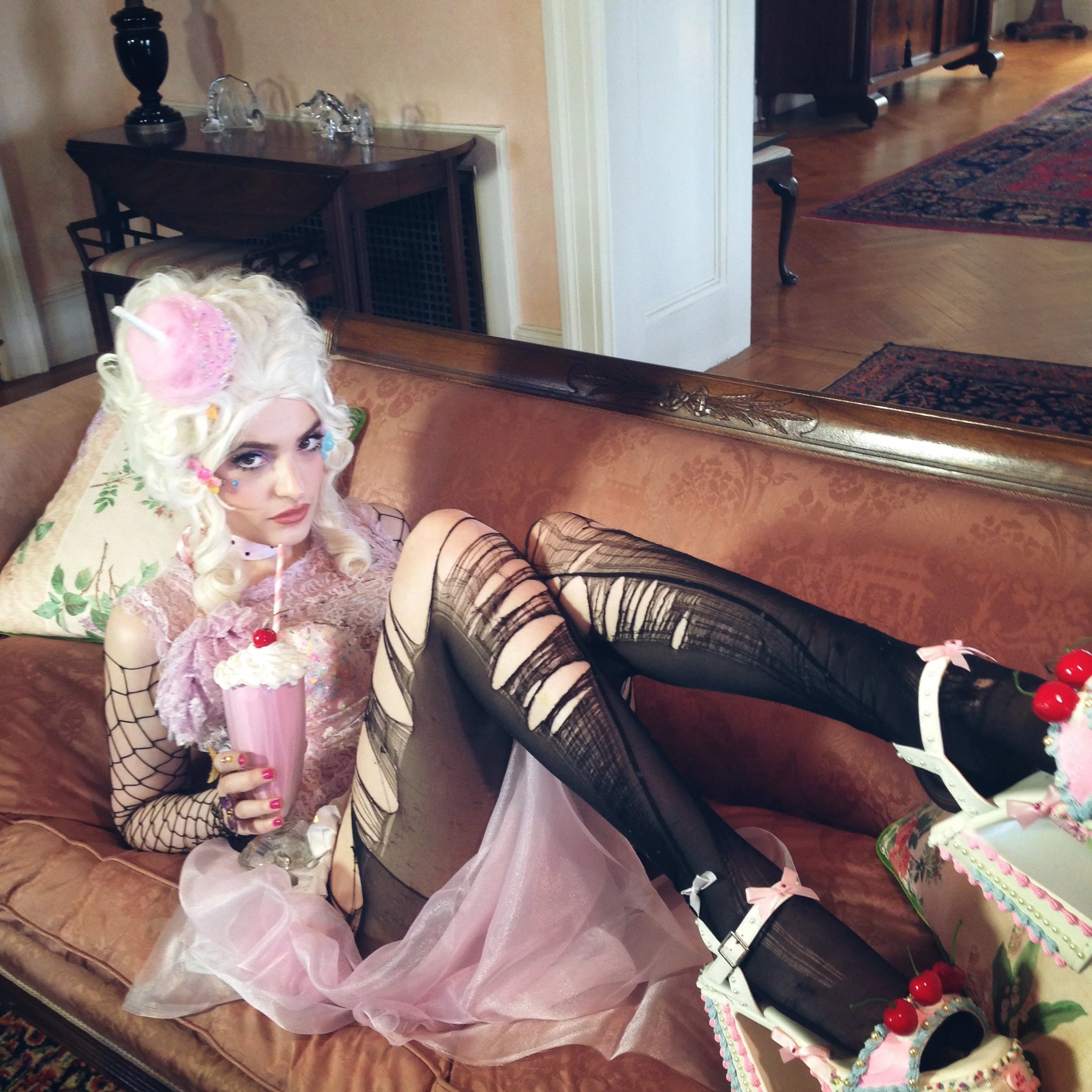
SHARP AND SWEET—NYC alt-pop artist Kiki Kramer’s latest single “dionysus” spins a web, luring us into a dark and dainty universe of its own. Through clever commentary, the song touches on groupie culture and complex feelings of envy, all while preserving the singer’s playful demeanor.
Kramer states, "'dionysus' is about a parasocial crush I once had on a rising celebrity. I compare the experience to one of my favorite Greek tragedies, The Bacchae, in which the god Dionysus possesses an entire village of women, leading them into the woods to drink, have sex, and ultimately murder the ruler of Thebes. It’s a story that eerily echoes the Manson murders."
In recent years, Kramer’s songs have landed her a surefire spot in the music scene, with her debut single reaching over 60 thousand audio and video streams combined. The cleverly titled “relevant” expresses perspectives on fame, validation and society’s ongoing preoccupation with the digital sphere. A true kid at heart, the singer emerges with an undeniably cute aesthetic, offset by crisp and pointed vocals.
In 2024, she was signed to Suretone Records, where her unique sound continues to evolve. With a loyal and fast-growing audience, Kramer carves out her own flavor of dark pop, narrating themes as grotesque as they are exquisite.
The Luna Collective sat down with Kramer to discuss facets of visual identity, internet culture and literary influence. Read our full conversation below.
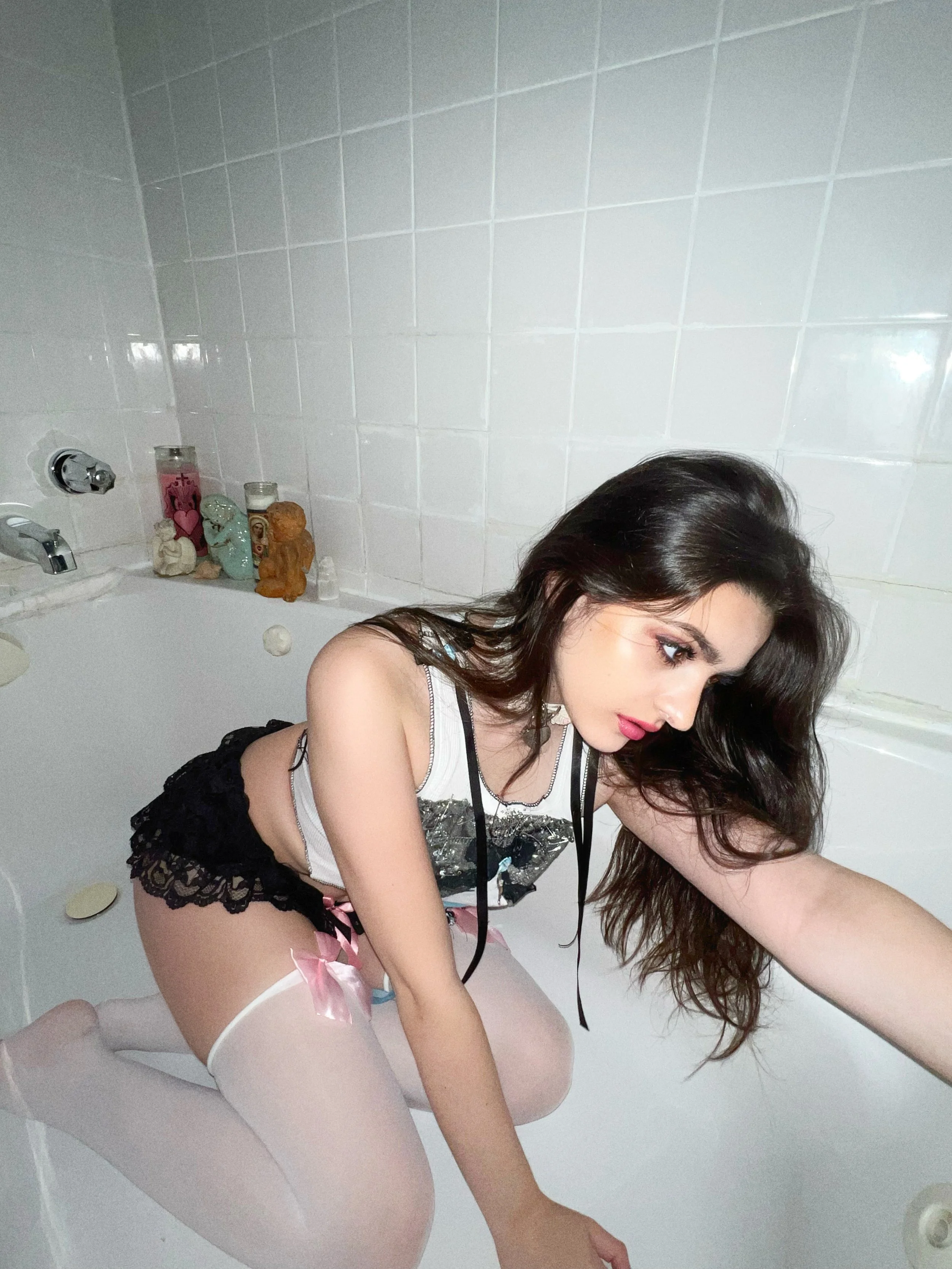
Photo by Katherine Cook
LUNA: When did you know you wanted to pursue music full time?
KRAMER: Oh gosh, it took me a minute to figure it out. I've been songwriting since I was 13, and it was always something I really loved, but it was a private thing for me up until 21. I had a couple things happen in my life, and it kind of clicked for me that the only reason I wasn't pursuing it was because I cared what other people thought. I was like “Well, that's not really a valid reason to not do something.” So I kind of convinced my dad to let me leave college- to drop out midway through my senior year and just pursue music.
LUNA: You have a background in the arts and theater– do you feel like that shows up in your current work?
KRAMER: Definitely a little bit! With my songwriting. “dionysus” is based on an ancient play that I read when I was in school. I was a big student of Greek tragedies at the time. I love Greek mythology. So it was the Anne Carson translation of The Bacchae by Euripides. And it’s just my favorite play. It's like a really perverted, messed up play. It's so freaky, but it's my favorite play ever, because of how freaky it is.
LUNA: What influences your current aesthetic?
KRAMER: A bunch of different things! Pinterest is my best friend. I mean, I was doing a lot of kink-related aesthetics, which I've kind of dulled down a bit. Like my OG stuff that's been taken down—It was like a photo of me with a ball gag in my mouth. But that was sort of a visual representation of pleasure and pain, and how people derive pleasure from pain. Typically, my songs are about the emotional pain that we seek out in relationships, because people like to be with people that hurt them. And so I like that BDSM is a literal representation of that. It’s like people that have a kink for being hurt. And then I also just think it looks cool. I was wearing harnesses back when I was a virgin. Like it wasn't sexual for me, it was purely aesthetic. And then the child-like quality. I mean, I'm just a kid at heart, which is a big thing for me. I don't want people to have this false idea that I'm trying to sexualize childlike things. I’m just a big kid at heart. As a child, I was a stuffed animal addict, and I feel like I was very sheltered and so it just inherently reflects in the way I dress. It's like a physical representation of my spirit.
I think our childhood and the media we consume as children kind of impacts the way we view love and dating. I've been delving into a lot of fairy tale aesthetics. Specifically, the cartoons I consumed as a kid and the cartoons most girls consume growing up kind of groom us or condition us to be incredibly male centered. I don't mean to beat the dead horse, because I feel like I’m not the first person to say this. The childlike fairy tale; that's an elevated aspect of the part of me that romanticizes love, and the part of me related to the media I consumed and these ideas of what love would be like through men. And then, the darker, grittier, especially the digi aesthetic, like what would a fairy tale set in the modern day world with technology and dating apps be like? So the more gritty, digi, BDSM side is kind of the reality, and so it's this weird, uncomfortable combination. I want to combine those two worlds into one, so it's like a fucked up children's fairy tale, except for, I'm not a child. I'm an adult, and it's the real world.
LUNA: You’ve previously alluded to beauty in the negative spaces. Could you expand on that?
KRAMER: For me, songwriting is an act of catharsis. I have to do it as a way to cope with negative shit in my life, and so I've never been someone that liked happy art. I don't really see a point in making music that's happy. Like, if I'm happy, I'm just going to enjoy being happy. Music is genuinely a way for me to turn something shitty into something beautiful. It’s almost like then I can say it was worth it. Like, if I if a guy hurts me, or, you know, something really fucked up happens, if I can make a really good piece of art out of it, I'm like, okay, well, it happened for a reason. I think that’s the point of art. And I think it reflects in my art. I love the creepy cute. I love something that's disgusting and inappropriate, also being sort of adorable and sweet. Because I think it can be both at the same time.
I kind of think of my work– if we’re looking at it from a spiritual lens, as shadow work. Especially with this first project—it is incredibly male centered—But I think throughout the process of writing it and producing it, I've done a really good job of decentering men. I'm not perfect. I'm still human. But compared to a lot of my girlfriends, it's insane how little I prioritize male validation in my life. Like, to an insane degree, honestly, compared to most women I know. And I hope someone could listen to this music and though it sounds very male centered, hear that it's actually commentary. It’s dark. I want people to listen to these songs when they're spiraling about a stupid guy to a point where they listen enough, and then they'll stop thinking about him.
I wrote this song “pipe dream,” which I hope will be on the EP. It’s my favorite and the oldest song. I came back and revisited and reworked some of the lyrics. The song is pathetic, like, I wrote it in a very pathetic state. I wrote it while I was literally waiting for a text back from a guy that was inevitably going to ghost me, very obviously, had led me on and was ghosting me. And I just could not stop thinking about him. And I start off the song talking about how I'm staring at my phone, like I’ve memorized his number and I'm insane, and obviously this guy's not thinking about me. It's pathetic. And yet the song, the way I sing it, and the beat drop, is sort of sexy. And so it's like, at least I can romanticize these pathetic feelings and feel sexy while being in it. And I hope that a girl, if she's crashing out about a guy, can just put the song on in her car and feel sexy while she’s in that state. Like I can still make this beautiful. I can still be sexy and beautiful while I'm like, prostrating myself to this dude that could get less than a fuck that I exist (laughs)
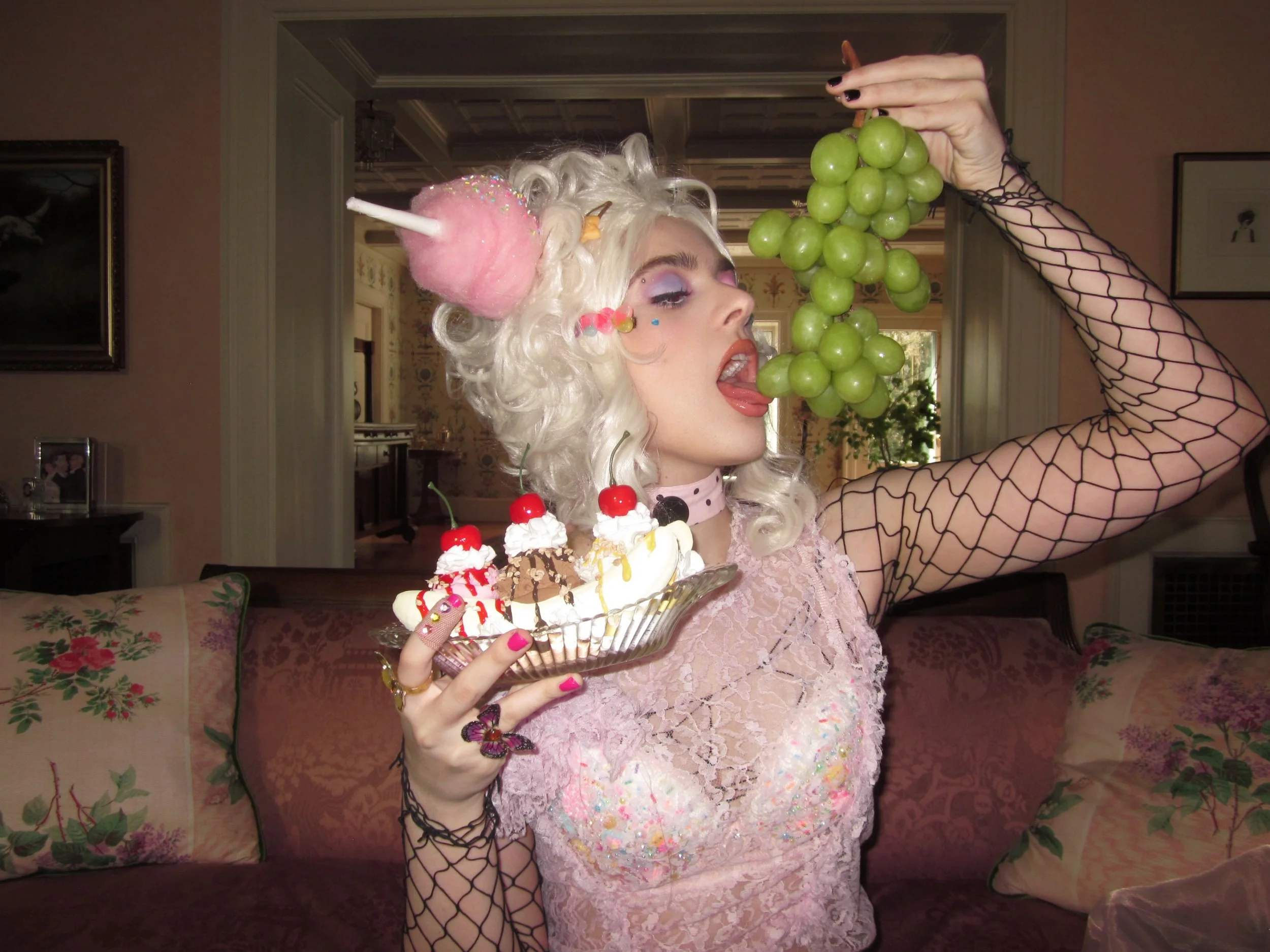
Photo by Dante Marceline
LUNA: Can you talk to me about internet culture? How does it affect your perception of visibility as an artist?
KRAMER: That’s a big theme on the album too—the EP. Originally, it was going to be an album, and I was going to call it “boys on the internet,” because it's about the male gaze. I totally think the internet plays into validation. Especially with dating. I went through an era in my life where I was just hooking up with guys on dating apps, and it left me feeling really gross. I don't do that anymore. I'm actually banned from Hinge so I couldn't even if I wanted to.
But I do think, like I know it’s so lame and everyone says this, that we live in an attention economy. It's sort of our form of money; like how many follows and likes you can get. And it's definitely something that gets to me, for sure. It's been really hard. My journey with social media and starting to allow my team to post every day, and thinking, “I’m going to care if my likes go down,” etc.
Visually too, the album’s digi aesthetic is sort of a representation of reality compared to the fantasy of love. The internet is a really perverted place, and it’s a metaphor for reality in a way. And it’s changed dating completely. I think we're in a really weird place right now where men and women don't really know what their roles are anymore, because they're not really being assigned to us in the same way as in the past. And so no one really knows what they're doing anymore. We're in an awkward stage right now. And then, I mean, dating apps make it really hard too. Paradox of choice… no one really wants to—especially in New York City—no one wants to settle for anyone. So it's definitely harder to find relationships. And I've never personally been in one.
LUNA: You mentioned earlier that “dionysus” was inspired by Greek mythology. Will that be a running theme on the EP?
KRAMER: Yeah, a little bit. That song, “pipe dream” which we're not quite sure, but I think it's going to be the sixth one on the EP. I have a line. It's one of my favorite lyrics I've ever written, and it goes, “I’d like to think after a week, Echo forgot Narcissus.” I don't know if you know the story of Echo and Narcissus, but I'd love to think that she actually did that. She didn’t, she went into a cave and died there. It’s funny that that's the story of where the term echo comes from…because she would just repeat everything he said. And she went into the cave, and so echoes are in caves, etc.
So yeah, there is definitely a through-line. It's not a heavy, heavy through line. It's kind of just those two songs that have the Greek myth imagery in them, but that’s something I'll continue to dabble in going forward. With my future songs, I'm really into fairy tale aesthetics; talking about dragons etc. That won’t be on this first EP, but more the things I'm writing about now. I've been using a lot of chess imagery in my writing. So we'll see where I go in the future. I love referencing literature and for me Greek mythology has been something I've loved since I was little and really resonated with in college. I dropped out but when I was a theater major at NYU, those were my favorite classes. I took a lot of Greek tragedy classes, and read a lot of Greek tragedies, and love the archetypes. It's really easy to play with in songwriting, obviously, because the metaphors are kind of just laid out for you in a very simple, clear way. And I think pretty much all of Western literature is based off of the archetypes that were created in these stories. So it's just something I’ll probably continue to draw on. But it's not always intentional. It’s definitely weaved in there inherently.
LUNA: What are some of your future goals?
KRAMER: We’re dropping my EP, so I'm excited for that! And then, I just want to keep writing. I want to keep world-building. I would love to eventually, one day, release a concept album. For this one, again, it's just kind of loosely myself and these songs I've been writing for the past couple years, since I moved back to New York after COVID. And about my struggles with dating and male validation, and that is something I want to try to get away from. I think everyone kind of writes about men, and I've realized through writing about men and it’s like I wrote these songs when I was so male centered. And now I'm finally in a place where I'm starting to write about other topics, like friendship or politics or body image. That’s genuinely a goal for myself: to write about other things, because I don't think enough people write about other things, to be honest. I mean, I look up to artists like Marina, especially her first project. She’s singing about so much stuff, not just love. And again, Lana Del Rey is my favorite artist of all time. And love is all she writes about. It's no hate to women that write about that, because you know, some people are very good at it. I wrote a bunch about it, but I think it's more of a challenge if I can write about weird, taboo topics, things that you don't expect in songs, but that can be turned into pop songs. And still fit that into my girly aesthetic. That is a challenge.
Songwriting for me is very mathematical…Like, you know, how some people approach math or science or puzzles, that's songwriting for me. It’s like putting puzzle pieces together, especially since I’m very phonetically obsessed. So adding that extra challenge of, okay, now you have to make it about a topic that no one sings about–which I used to do as a kid. Like, one of the first songs back in high school, I wrote about my nose job. So I am kind of revisiting that whole approach to writing.
