
Q&A: Miss Grit And Their Wiring on ‘Under My Umbrella’
INTERVIEW
INTERVIEW
☆ BY CHLOE GONZALES ☆
“I WAS TRYING TO EXPERIMENT WITH IT AND TRYING NOT TO EDIT MYSELF TOO MUCH—or try to mold it into something intentionally, so that alone was a big exercise for me,” Miss Grit, also known as Margaret Sohn (they/she), answers on the process of their latest record, Under My Umbrella. This latest record aims to merge technology with human experiences, veins turned into wires, the heart system into circuits. Vulnerability also takes front in the playing field more so than their previous record, with lyricism and melodies being less processed and filtered through others.
The Luna Collective had the pleasure to discuss more of Under My Umbrella and more in this latest interview—Keep reading for more.
LUNA: Cyberdecks are like mini computers that people are building in random shells of objects, I even saw one in a Sailor Moon pendant. What would your cyberdeck look like, especially considering your upcoming album?
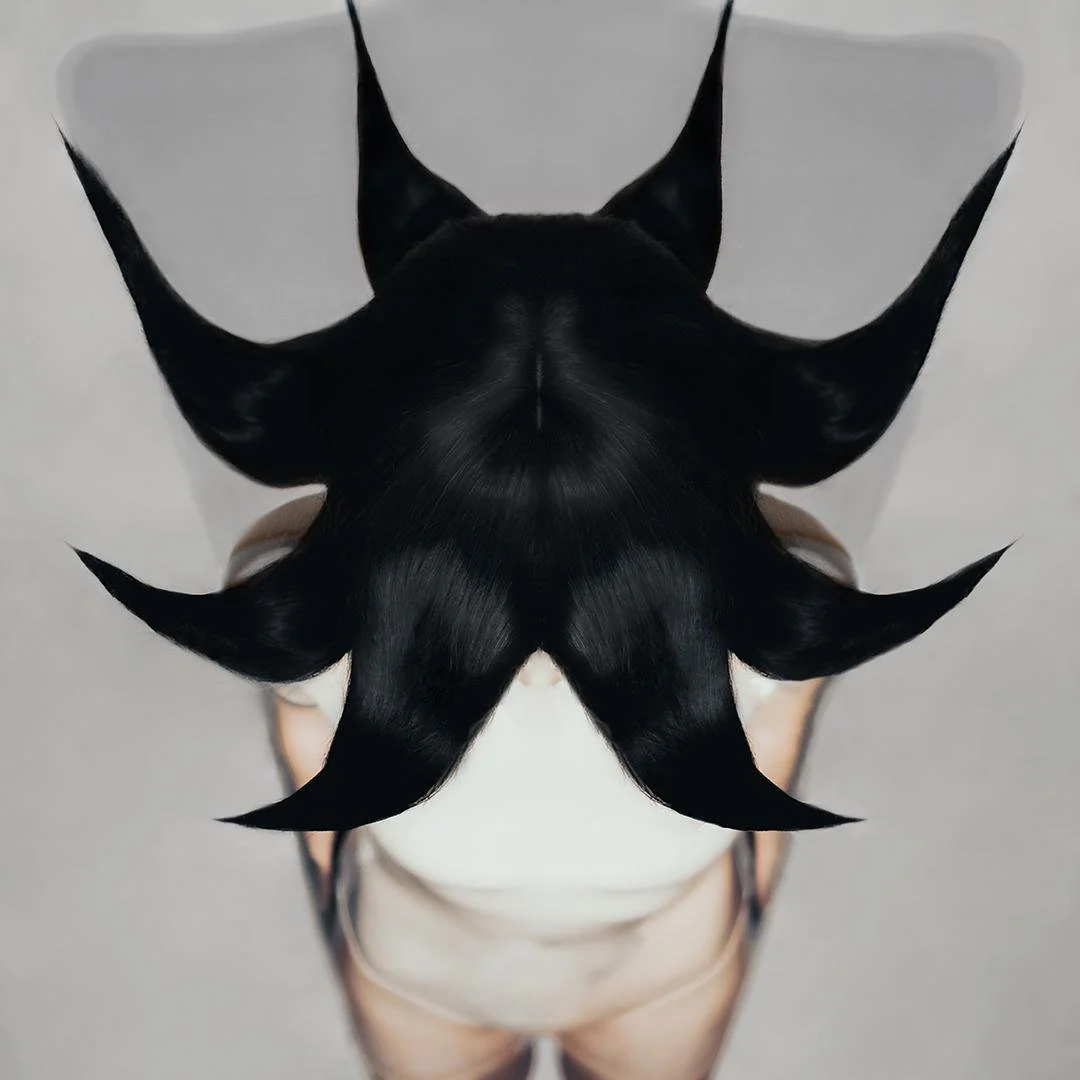
MARGARET: I don’t know why but I feel like this record is very slimy. Because there's like rain falling off an umbrella and this octopus kind of imagery on the cover. Maybe inside a synthesizer?
LUNA: Older tech devices are making a comeback as well like iPods and flip phones– what technological device would this album be?
MARGARET: I don’t know why, but a floppy disk was the first thing in my mind. But floppy discs, they’re supposed to be really unuseful and not very convenient. Did you ever have a PalmPilot? My dad had one and it’s like a touchscreen device that kind of was a planner.
LUNA: The PalmPilot sounds so cool! I also wanted to talk about your color palette, because everything you’ve released and will release seems to have a very muted palette. Is that a conscious choice or just the vibe?
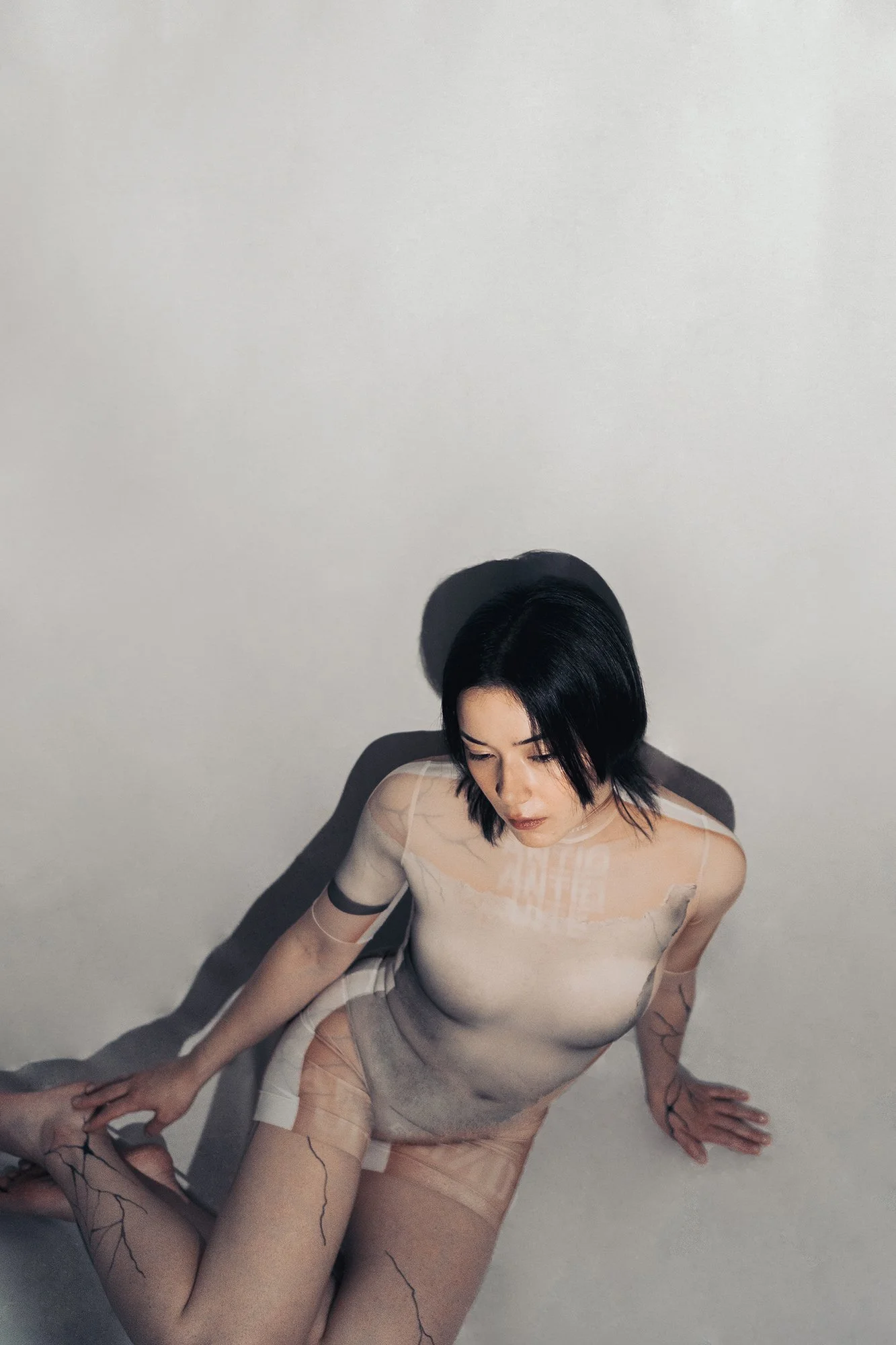
MARGARET: It’s not necessarily done on purpose, but it’s just something that I gravitate towards I guess! I think the record’s natural earth tones match a lot from the last record. The thing that appealed to me from this album cover and the last album cover was having it match my flesh tones but then having this dark, black, ominous thing present in each of them. And in this case, it’s the kind of umbrella over my head being the ominous thing in the photo. Maybe a bit intentional but I think it’d be unintentional.
LUNA: In another interview, it was mentioned that you grew up in Michigan. Did growing up in the Midwest influence this album at all?
MARGARET: Where you grew up is going to shape who you are. I feel like for me it really impacted my perspective on myself but then also the world and that’s just being like a minority in a predominantly white school. Probably a lot of people of color in the Midwest can relate to that feeling. It’s funny going from being perceived as a person of color in the Midwest, but then coming to New York or Los Angeles and it’s completely swapped. How I perceive myself is hugely impacted by that and so, if anything, that would be the influence.
A lot of the influence, though, for this record, was relationships and the relationship with myself and just trying to be more vulnerable in my lyrics and what I was trying to write about and communicate through it. Maybe trying to undo some of the Midwest trauma that was put onto me, trying to open up more and be more vulnerable.
LUNA: Vulnerability is an interesting contrast to the technological, robotic aspect of this record! You said previously that when making this record you kind of messed around with it, not tweaking it to a T. How was that process for you? Was it freeing or stressful, not knowing if something could be done better?
MARGARET: I think it was freeing, but kind of stressful in the process. I was trying to experiment with it and trying not to edit myself too much or try to mold it into something intentionally, so that alone was a big exercise for me. I think letting my unfiltered voice go through to the final track seemed really scary and I don’t think I had a lot of confidence in doing that, but I think just this process helped me build confidence in trusting my voice and myself as a musician. That was a cool thing that came out of it.
I think the collaborators really helped with that too, because I would write the first part of a song or produce it and then I would hit a wall. I would then reach out to a friend to put their little bit in to see where it would take the song. Then, I would get the song back and finish it up from there. That was also kind of my first time allowing other people into the process and working with collaborators more earlier in the song process. That was also something that really helped me keep myself in check and try to not force things too much or mold it in a specific way.
LUNA: How have you dealt with identity through this record? Has your sense of identity changed because of it?
MARGARET: [During this record I was] reflecting back on a time when I was going through a lot of hard relationships and my relationship with myself. I think the nice thing that came out of that reflection was that it turned all those negative and difficult times into something that I could turn my perspective on and be able to express them live, playing live shows and everything. That really helps, processing those specific situations for me and figuring out how I felt through writing those songs.
In a lot of the tracks, it talks about kind of losing myself in other people, being too curious about what’s on other people’s minds or what they think of me and, in that way, getting separated further and further away from myself. In terms of identity, that was something that was useful to even be aware of and just to be able to express that in a song and feel like I can relate to that part of me that has that tendency. In that way, it makes me feel more like myself somehow, that kind of acknowledgement.
LUNA: I also wanted to talk about your song “Mind Disaster.” The visualizer reminded me of mitosis, which could play back into identity. For how technological this album is, it feels very scientific as well and I feel like that’s how you place the human aspect into it.
MARGARET: That [song] specifically, is about dissociation and out of body experiences of seeing yourself. I am really intrigued by the science of the mind and everything.That’s one thing that I think really fuels my writing.
LUNA: What anime represents this album?
MARGARET: I feel like Neon Genesis Evangelion, just because of how introspective it gets in the end. Also a personal favorite, it’s not necessarily an anime, but I really love Alice in Borderlands.
LUNA: Is there anything we can expect coming up?
MARGARET: I’m going on tour in May and supporting Just Mustard! Really looking forward to playing this album live more because I really enjoyed this record live more than my other stuff.
