
Q&A: Lora Mouna Touches Upon Dissociation on Indie-Rock Release ‘The Difference’
INTERVIEW
INTERVIEW
☆ BY IVONA HOMICIANU ☆
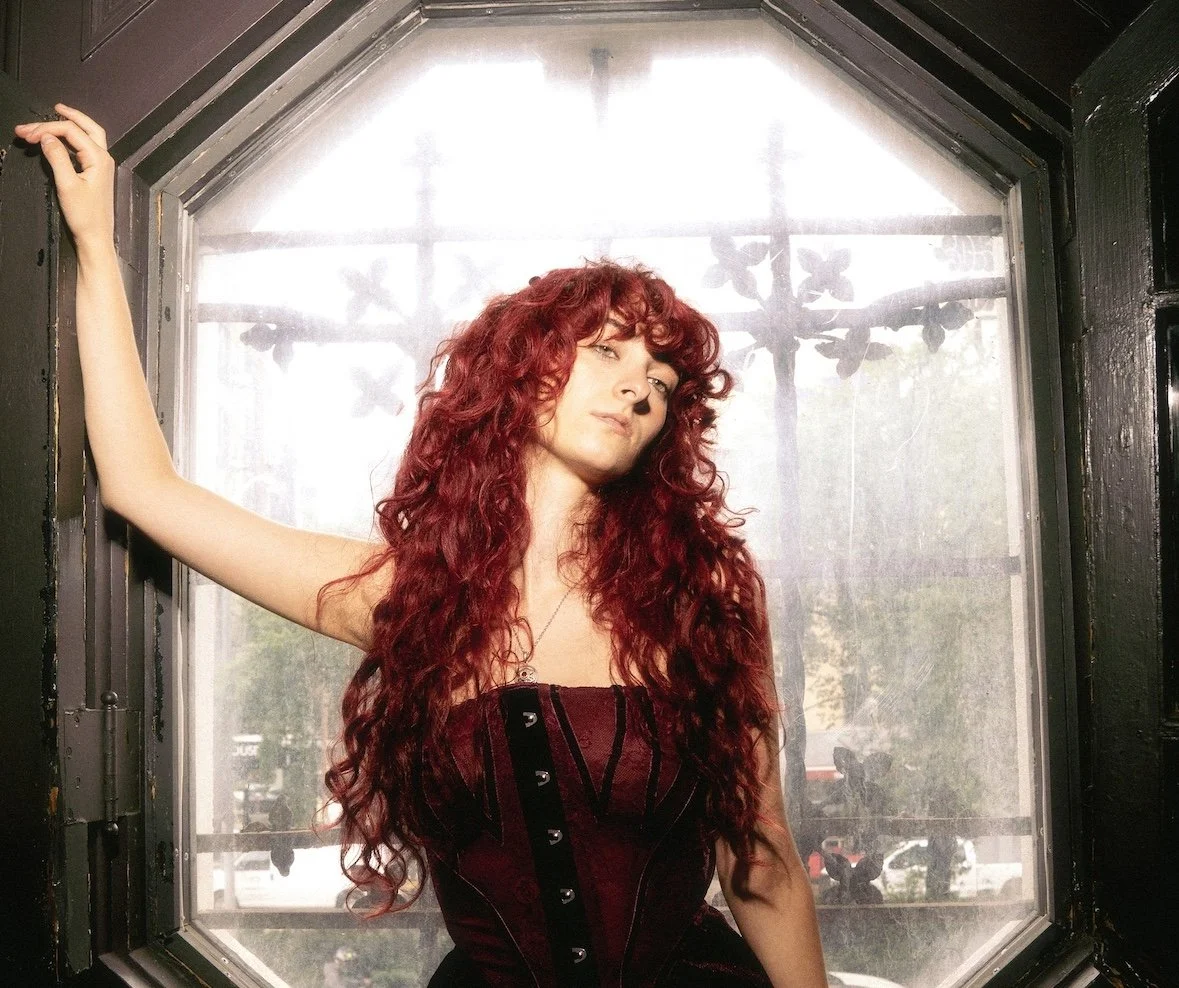
“THE DIFFERENCE” UNRAVELS A STATE OF MIND—When emotions tend to become too much, minds detach from bodies in a process that is called dissociation. Lora Mouna translated the feeling of numbness into “The Difference,” an indie-rock track that begins with repetitive guitar strings and a detached vocal interpretation, but slowly transforms into a bigger display of emotions as she reflects deeper on what is happening in her mind.
Mouna is a Brooklyn-based musician who writes about mental health and the stages we go through in life. Her sound can be described as indie-rock with touches of dream pop. She combines sonic influences from her Syrian background as well. Paired with her confessional songwriting, she builds worlds out of her strongest emotions, which was remarked on her debut EP phases of becoming. She’s now embarking on a new adventure which begins with “The Difference.”
“The Difference” sees a more experimental side of Mouna, with instruments existing in their own worlds and coming together to a cathartic resolution. Explaining dissociation through music is an endeavour that required improvisation and playfulness with her vocal processing. The lyrics stand out as she attempts to find answers to this state of mind, a repetitive behaviour that is akin to running in circles. In the end, “The Difference” doesn’t give an answer. Instead, it provides comfort and understanding for those who have experienced a greater amount of emotions.
Luna spoke to the artist about her newest release and her future plans. Read below for more.
LUNA: Can you introduce yourself for our readers?
MOUNA: My name is Lora Mouna. I'm an indie/alt-rock musician based in Brooklyn. I write my music mainly [around] my mental health, reflecting and trying to heal through that. My family is from Syria and a lot of my influences come from my Syrian background.
LUNA: “The Difference” is specifically about dissociation. What inspired you to write about this subject?
MOUNA: What inspired me was just feeling nothing. It's so scary feeling that way. I've spent a couple of years feeling that on and off with my depression. It's not something I was able to capture in music for a really long time because the emotion felt so fleeting. Whenever you're in that emotion, it's hard to create anything. It feels like a void. When I hit rock bottom, I feel like I have nothing except my music to pour into, so it gave me an opportunity to explore it and not be afraid of it.
I remember the first two verses that came out were about all the ways that I tried to get rid of the feeling. I immersed myself in the tide. I remember being at the beach, holding my breath and going underwater, just trying to feel something and that didn't work. I tried cleaning up my room and fixing things. I'm trying so hard to feel things and connect with people but things aren't working. There's such a disconnect, and the song unfolds in a way that's, ironically, like feeling so much emotion. At first I'm feeling nothing, and then it gets so frustrating that I start to feel everything. It's not because I truly feel nothing, it's because I feel so much that it becomes muted. It's a protection mechanism where I have to shut down. Writing this song was me trying to feel something again.
LUNA: Did it work?
MOUNA: That's such a good question. It goes back and forth. Listening to this song does bring me emotion. Whatever I'm holding back, whenever I'm performing it or when I'm listening to it, it all comes rushing [back] to me because the emotion feels so tangible. It feels like a time capsule to where I was and have been so many times. Making this song felt like it's real and it's not something you can run away from anymore. Every time I listen to it or play it, I get really emotional. In a way, it's helping me get past feelings of stagnancy or indifference.
LUNA: It’s good that you got something out of it because it can be so disheartening when you're in a dissociative, numb position, and nothing's happening.
MOUNA: Music and the people that I make it with, they always pull me out of that place. They pull me out of the darkness every time and it truly is a saving grace for me. I know the song itself isn't super hopeful because it ends on a question. There's so many questions that are unanswered within the song, but my hope is that listeners will hear it and not feel alone. That they’ll go through the process I went through while writing it, facing the emotion and letting it wash over them, then moving forward. The longer you run from it, the worse it gets.
LUNA: When you showed up to the studio to record the song, how did you approach the sound? Did you have any ideas that stood out, or any thoughts that you wanted to incorporate into the sound?
MOUNA: Yes. Before we recorded it, me and my band performed it a couple of times live, so we were able to figure out all the arrangements before we went into the studio. I brought the song to them acoustically and was like, “This is the song. This is what I want to do with it. Let’s improvise and see what comes out.” They're also playful in their craft, which I really love. I'm the same way. All of my music comes from improvisation so we all took it into our own realms. The way that it unfolded, especially at the end, is that we all found our own little worlds…I think sonically it showed the dissociation of the piece. It was so quick. It was an hour in rehearsal, which is so insane to think about.
We brought it to Spin Recording Studios in Long Island City. I wanted the track overall, outside of the band's elements, to feel glitchy and to feel like something wasn't quite right. One of my favorite things that we did is we took a guitar pedal. It's the Microcosm hologram guitar pedal, and whenever a guitar is running through it, it shows all these glitchy synthy patterns. I thought that it was really cool to put my vocals through it, so we experimented with that…and then finding places in the texture where it could really pop out to represent the track breaking apart.
For the spoken word section, we took each word from that sentence and put it into a keyboard, so each key had its own word. I could play it robotically to bring a monotony to what I was saying. It's this question that's constantly pounding in my mind. We also did a lot of clicks in the track where it sounds like something is trying to turn off or a cassette is being played. I wanted the effect of trying to turn something off and you just can't. The production process was so much fun. It's been really fun to experiment with everything. I've never taken my vocals through a guitar pedal before. It was a random thought I had and it was so nice how it turned out.
LUNA: How did you discover your passion for music and singing?
MOUNA: I love this question because I always bring it back to my mom. She was a really well-known pianist in Syria. When she came to America and raised me here, she always played piano and I would sing along with her. She encouraged me and my sister to write our own music. Since I was six or seven years old, I remember talking about my childhood cat, and she was like, “Why don't we make a song?” And we would sit down and write a song about it. I remember being so scared of riding my bicycle without training wheels, and she was like, “Why don't we put that fear into the song?” And so, every single time I had a strong emotion, she was like, “Well, let's turn to music.” I've been raised to think that way and wired my brain that way, so I credit everything to her.
I remember singing for hours as soon as I got home from elementary school. I’d wait for her to get off work and I'd be like, “Okay, seriously, what do you think about this song?” I'd sing a crazy Christina Aguilera song at the age of 10, which was insane. She would be so patient, listen and then she'd coach me through certain things. I never shied away from any of the negative comments because I genuinely wanted to give my all to this craft since a very young age. As I grew up, I continued to write but it was more doing it for fun. Then I started to get into Broadway, and I really wanted to do musical theater for a little bit, but the audition process felt so monotonous. Waiting for a “yes” drove me crazy because I had so much to give in my emotion and in my craft, so I was just going to direct it to my own artistry. I decided to fully commit to that, and since then it's been super fulfilling to expand my sound and see where I'm going, building this world. I've been loving every single second of it.
LUNA: You released an EP last year called phases of becoming. How would you describe that project?
MOUNA: That was the first time I really put my all into a project facing my mental health. The whole thesis of the project is that no matter how stagnant you feel, you are still moving forward. There's so many songs where I'm struggling with either my attachment style or big transformations in life or the exact fact that I feel stuck. I'm trying to tell myself it's all in my head because I'm still moving forward. So many of those songs came from the past couple of years, starting from 2022 where I hit one of the lowest moments of my life. When I reflect back on this EP, those songs came out of rock bottom.
It's crazy to think about because when I was writing those songs, I truly did not see a light at the end of the tunnel. Not to get super dark but I didn't think I would make it through that time. Thinking about those phases and how dark that was, then slowly emerging out of it and feeling stagnancy because I was struggling with grief, but also trying to believe in myself and move forward. I felt so many things were butting heads with all those energies and emotions. There's so many phases, like the phases of the moon but it always becomes whole at the end, it just takes a while to get there. I feel so lucky to be able to capture all those moments of my life. It really shows the metamorphosis that I've gone through.
LUNA: Is there a new project in the works?
MOUNA: There is. I'm not gonna say too much about it now, but it's following off of phases of becoming. It's a little bit heavier in terms of the sound. “The Difference,” [which] just came out, is a very good example about the direction of where it's going. It encapsulates the emotion and the journey that I'm still going through, and there's going to be some more indie rock/pop hits in there. I'm leaning more towards the experimental side of things because that does portray my emotion a little bit deeper than a traditional song does.
LUNA: Which artists inspire you the most when it comes to your sound?
MOUNA: I love this question. I grew up with a lot of Pierce the Veil and Paramore.
LUNA: I could feel the Paramore influence.
MOUNA: One thing I love about Paramore is that she does not shy away from her really strong vocals, and I come from an opera background, so I can't shut that down either. I have to be loud, I have to belt. At the same time, the vocals don't take away from the instrumentals. Same with Pierce the Veil—they both portray rage and these heavy topics so well. I don't stray away from anything in my music that's too heavy because of them. I'm not too afraid to go deep into my subconscious. What are we actually feeling? I'm not gonna apologize for how heavy it might be; this is actually what I went through, and it's gonna help someone at the end of the day like Pierce the Veil’s music did and like Paramore's music did. If my music can create the same effect as theirs has on other people and how it has affected me, I will be so immensely grateful.
LUNA: Where do you draw inspiration from other than music?
MOUNA: I love to free write poetry. The way I do it is I do not give myself a topic. I do not give myself any expectation of what is about to be on the page. Sometimes it's the most random words strung together, but sometimes they'll end up being a lyric that I have. It's uncovering what my subconscious is and playing in that field of downloads from the universe instead of feeling like I have to write something now. That gives me a ton of inspiration to feel playful. In the same way, I love improvising music or improvising dancing. Completely outside of music, I love doing yoga because it grounds me and keeps me present. Also being with my friends and family and loved ones always recharges my creative energy and my sense of self.
LUNA: Is there a specific goal you'd like to achieve in a few years or so?
MOUNA: I would love to make music my full time thing. I don't need to be as big as Sabrina Carpenter, but I would love to be able to tour and be able to have a fan base that's small enough, but also big enough where I get to meet everyone and have real conversations with them. I would hate for a disconnect to happen where I feel like I can't talk to the people who resonate with my music. I feel like we have a lot in common and they could be my friends. I would love to keep that connection. I feel like everyone that has listened recently and who has discovered me, we're able to have conversations about how mental health has affected us and which songs they really connect to, and what has inspired them from my music. I always want to hear about that and talk to people more about that. I used to want to be a therapist, so I feel like the types of conversations I'm having with people who listen to my music are the types of conversations I want to have. My goal is to make music a full time gig, travel and see the world with my music and meet other musicians.
