
Q&A: Melanie Herrera Heals Her Inner Child in “Whatever’s Left”
INTERVIEW
INTERVIEW
☆ BY KIMBERLY KAPELA ☆
Credit: Armaan Virani
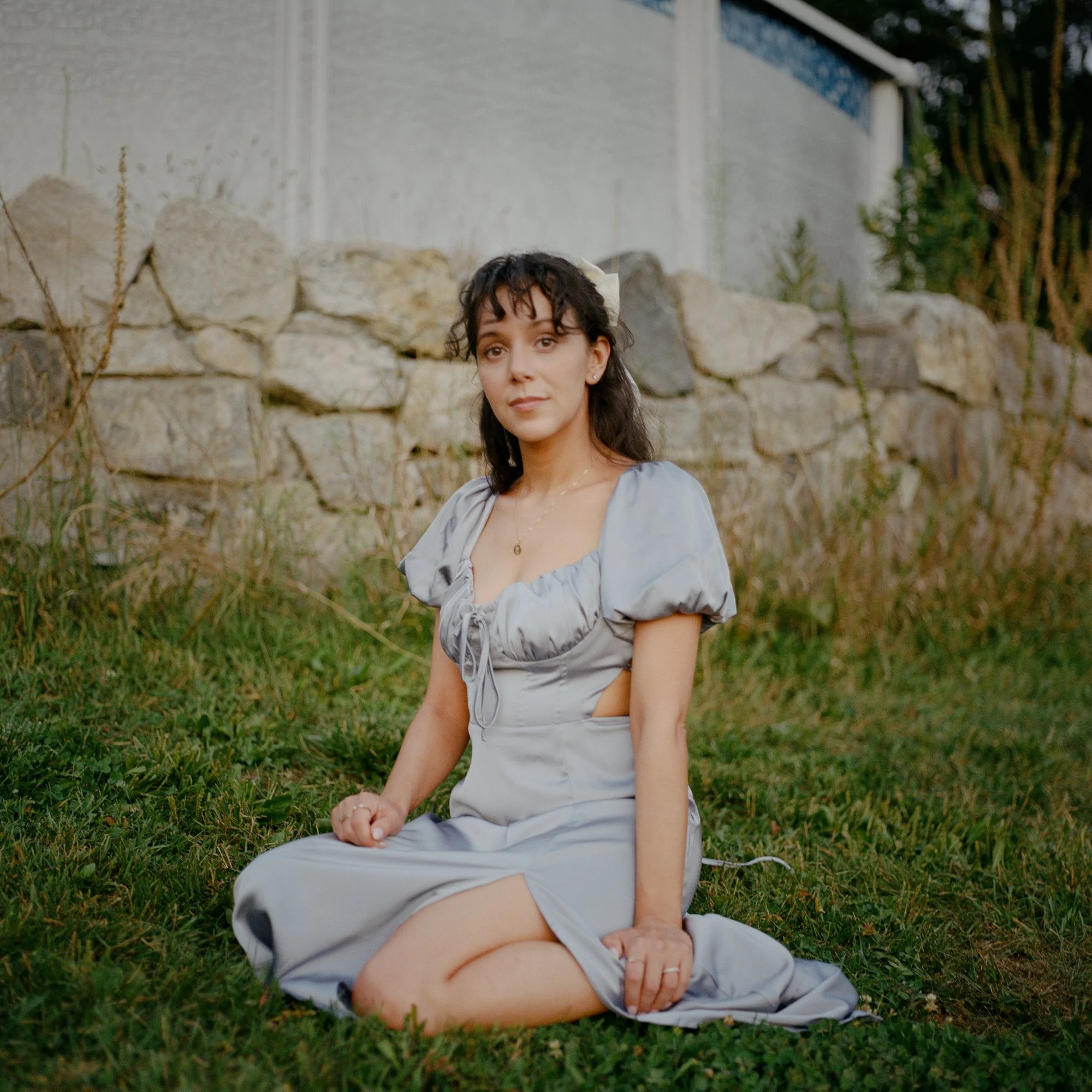
RECLAIMING THE CHILD’S VOICE — Written from the perspective of a child navigating the emotional fallout of divorce, Melanie Herrera’s new single, “Whatever’s Left,” arrives as both a reckoning and a release, one shaped by years of healing and quiet introspection. Rather than revisiting the experience from a place of immediate pain, Herrera approaches the subject with distance and care.
“Whatever’s Left” gently unpacks what it means to grow up in the midst of a family unraveling, capturing the disorientation of watching something foundational break apart when you’re too young to fully understand, yet old enough to feel its weight.
“[Divorce] was this thing that created so many ripples throughout my life, and ‘Whatever’s Left’ came to me because I've recently gone back to therapy,” Herrera says to Luna. “I'm not the only person who has been left with scars from their parents divorce and what inspired me doing this song was that I wanted people to have their story put to words, because I think that if I had some more art that was from the perspective of being a child of divorce, then maybe I could have accessed those feelings and heal them sooner.”
True to her style, Herrera approaches the subject with a poetic subtlety, allowing the meaning to reveal itself gradually. Rather than stating its theme outright, the song unfolds in a slow emotional arc, using imagery of home and foundation to mirror the fragility of childhood security. Lyrics like “What can we do when the colors bleed? / Break us in two inadvertently / And you never get a say when the foundation blows away / Clutching the pieces to my chest / I guess I’ll keep whatever’s left.”
What makes Herrera’s writing particularly striking is her ability to balance specificity with universality. While the song emerges from a deeply personal place, it resists becoming overly confessional. Instead, it invites listeners to locate their own experiences within its framework.
“Whatever’s Left” is a taste into Herrera’s upcoming full length album, A Fearful and Wondrous Thing, out later this spring.
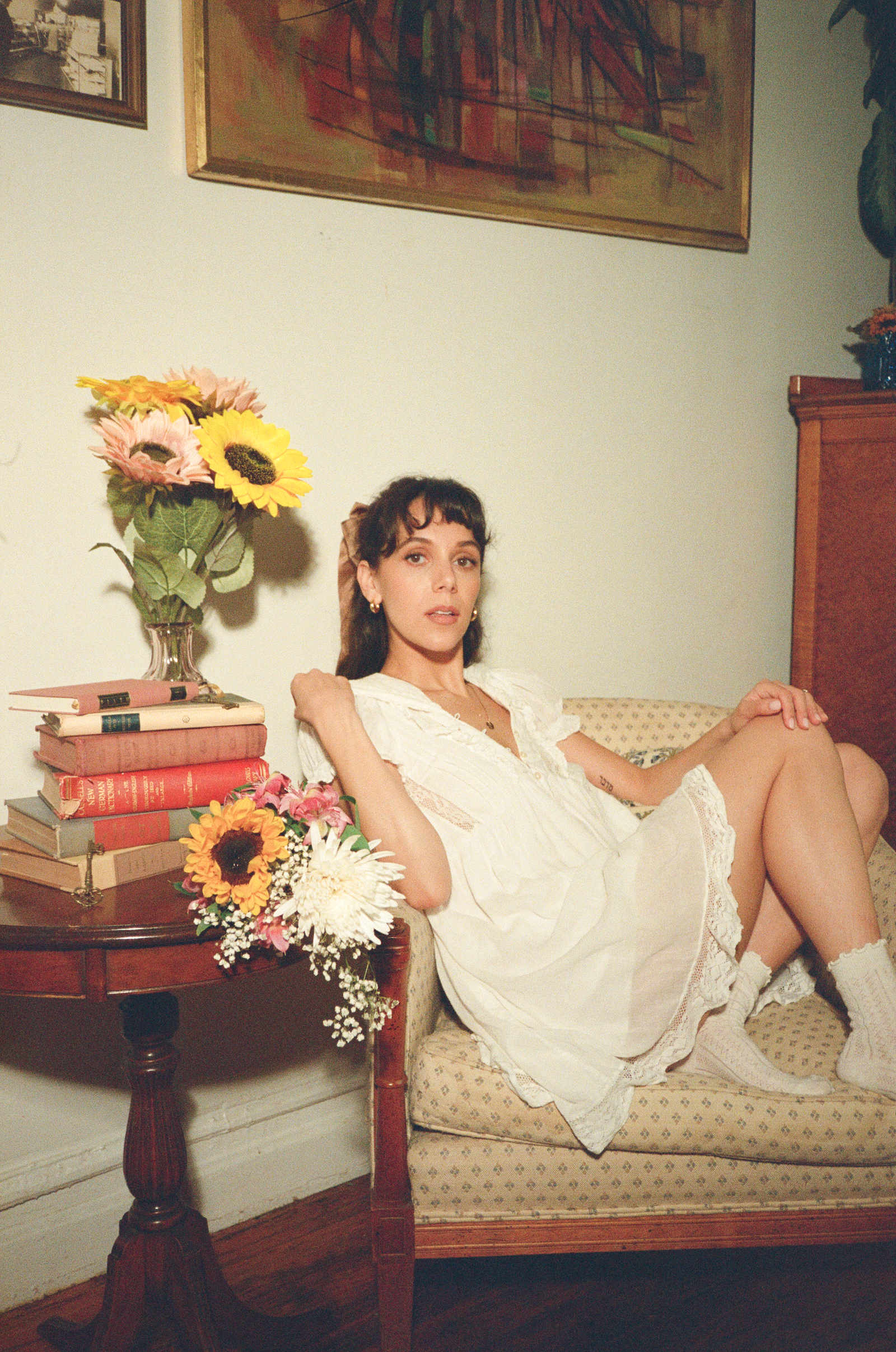
LUNA: Thank you for talking to Luna. Our readers would love to get to know you and your music more. For any readers who aren’t familiar with you yet, what inspires your artistic style and sound?
MELANIE: I affectionately call my style storybook pop, because it's a blend of a few things. Storybook pop, put in technical terms, refers to narrative-driven pop that has theatrical influence, cinematic aspects and modern pop production.
LUNA: Your newest single “Whatever’s Left” just released. What drew you to telling this story through the eyes of a child, and why did that perspective feel important to you?
MELANIE: It's hard because it really is so personal, but I think that it's an important perspective. I know that a few songs exist that I'm familiar with, at least, that are from the perspective of the child within a divorce. But I feel like when it comes to the topic of divorce, it's always coming from the perspective of people who are breaking up. But who's talking about the children? I am a child of divorce. My parents divorced when I was 10 and a half, and it had a very lasting impact on my life. It was this thing that created so many ripples throughout my life, and “Whatever's Left” came to me because I've recently gone back to therapy and one of the things that I'm trying to work through is the impact that divorce has had on my life.
I think that as an oldest daughter at the time that the divorce happened, my coping mechanism was to be like, I'm fine. I was a really precocious kid, so I completely understand why these two people aren't compatible, and I understand that they want to break up and that's what's best for them. I cognitively understood all these things, but at the same time, just because you're a precocious and a smart 10-year-old doesn't mean that you're grown up. I was still living in the body of a child, and I think that because I did that, I accidentally screwed myself through the healing portion of it, so I was left with a lot of echoes of it as I entered into adulthood.
I'm sure that I'm not the only person who has been left with scars from their parents divorce and what inspired me doing this song was that I wanted people to have their story put to words, because I think that if I had some more art that was from the perspective of being a child of divorce, then maybe I could have accessed those feelings and heal them sooner. My hope is that it helps to give people who've had a similar experience to mine, a voice, not as some anti-divorce thing, but truly to give them a voice. I think when we're children, it's very hard to understand what you're feeling, especially, too, as an oldest child, you want to be the strong one for your younger siblings. A lot of times, there's so much pain, massive amounts of pain that comes with being a child of divorce and of your nuclear family going away, that it can go unvisited and unexpressed. You don't have a life's worth of emotional tools to help walk you through this great loss, and you're instead living through it, and it's very hard, and so I wanted to put words to that for people who might need them.
LUNA: I would love to touch more on the creative process behind “Whatever’s Left.” How did the song evolve from its initial idea to the final version?
MELANIE: Because I've been doing EMDR and thinking a lot into the mind of a child, and thinking what I really felt and didn't admit to myself for a long time, was that my family felt like a painting. It felt like a work of art that had this beautiful permanence like a family has. It's supposed to be very solid and foundational and the thing that's never going to break. I kept having this image of my family being like a work of art that was left in the rain, and then it got destroyed. This thing that was supposed to be a finished work, and then all the colors started to bleed, and it's never going to be the same, and all you have is what is left of what was once there. That's where the lyric, “What can we do when the colors bleed?” came from.
I had this idea of when people pass away, it's like the coffee still brews black. It's like the day still goes on. I tried to write that song too once, and it just wasn't working. Then sometimes you just leave them alone. Maybe it will come back eventually. I sat on it for a while, and after living with the existence of that metaphor and that idea, I wrote a poem about it. I tried to tease out this idea, and then one day, I just sat at the piano and started playing the beginning chords of it. It wouldn't have happened unless I did all those other little things.
LUNA: How do you protect your own emotional well-being when writing about such personal or sensitive topics?
MELANIE: I have certain boundaries emotionally, with certain things that I write about, which maybe other people don't do. I think that if something is distressing me to the point of where I'm deeply not okay, then I probably just won't touch it for the time being until I can process whatever's going on with me appropriately in therapy and approach it safely. But that said that almost never happens to me, because I view music as a processing device, which I think a lot of artists do. For me, a lot of times, writing the song helps me realize how I'm thinking about something, and the process of that is healing in itself.
Credit: Armaan Virani
LUNA: When you feel a creative spark coming on, what do you need in your space to nurture it? Are there any rituals, objects, or energies you always return to?
MELANIE: It's really funny, because I always say my muse is like a cat. It loves to sleep, just absolutely loves sleeping. Sometimes it needs to be prodded awake, and then other times creativity strikes me in the most random places. My favorite version of something coming into my brain is that it will come into my brain and I just run over to the piano and let it fall out. I have a very hyper-organized songwriting bookkeeping system, and I always start in my Notes app, where I'm allowed to be messy, and then once it's done, I put it in a Notion file. I always have this methodical way of approaching it. I always started my Notes app, and that affirms me that I'm allowed to be messy and it's a safe space. I used to handwrite everything, but I'm neurodivergent, and that has been a disastrous system, because there's just paper everywhere. I feel that I must always write music facing a window. I don't know why that is, but I am open to the spiritual element of songwriting. God can reach me through the window.
LUNA: What’s fueling your creative fire right now?
MELANIE: Age. I got started really late. If you don't know my story, I went to a BFA program and went through eight years of self doubt and not knowing who I was as an artist, and dealing with likely having ADHD. I went for a long time without knowing who I was as an artist, but always having the identity of a performer since I was three years old. I never wanted to be anything else. It wasn't until the pandemic when I revisited what I wanted to do with my life? I felt like I was a person who couldn't go after things and achieve them, and that was the identity that I'd given myself. I was sick of it. I kept seeing all these kids who were 20 going on Tiktok and blowing up. I've been training for this my entire life, and I'm seeing people who are 10 years younger than me with no fear and that inspired me. It was such an age where life was really happening through the internet, because nothing was going on. I was so sick of myself, I'm either going to be nobody, or I'm going to die trying, because I'm so sick of this. I hired a life coach. I ended up getting into therapy. All of those things made me recommit to my life as an artist.
I launched my artist project in 2021 and I felt like I got started late. I got started later than everyone else, and I have spent the last four years, building, building, building, and trying to release a single every seven weeks, and trying to get my socials off the ground. I feel like in the past year and a half, the wheel has started turning faster and faster with the growth of my socials and mine and my husband’s series, and the way that it's allowed me to reach more people and branch out and gather this amazing community. I want to put out a full length project, which I will be doing at the end of May, and that's what I'm ramping up to. I’ve been in this mindset of I am not stopping since I started. There's no time for breaks. I'm late to the party, and I have been literally non-stop. I've changed my entire life to be able to support this entire endeavor of being an entertainer fueled by my songwriting.
LUNA: How do you hope listeners — especially your femme audience — can connect with or find power in this new era of music from you? What emotions or messages do you want to leave with them?
MELANIE: I think that this era of music and the upcoming full length that I'm putting out — which is called A Fearful and Wondrous Thing — it's 12 tracks, and because before I recommitted myself to my music and my artist project, I feel like I was living this dulled version of my life. The truth about life is that you have to live inside of the fearful and wonderful aspects of it, and it is this spooky, other worldly, magical, crazy thing that we live in as we exist. I feel that in recommitting to my artist project, I acknowledged that and stepped into that. The cover of this project is a woman stepping out of a painting, and it's this idea that I was frozen and then became unfrozen.
What I would love more than anything is for women, especially women who are neurodivergent or former gifted children, you feel like a really late bloomer. I want them to know that it's not too late. I also want them to know that they are capable of more than they think. I would have never in a million years thought that I would be putting out an album. I want people to believe in themselves and know that there is a way to become who you want to be and that we need more women in the industry. I worked with all women on every single song on my album that was created by women from start to finish. They have not been touched by a man. Can everyone please be as excited as I am that the songs are all written, produced, mixed and mastered by women.
I feel really passionate about that, and I love working with women. I think women are the best. All my visuals are directed by a woman as well, and I want women who are like me to feel empowered. Women who are a little bit of a weirdo or a little who are a little late, who are a little zany, whose brains work a little bit differently. I want them to know that if they have something to say or a purpose that they want to reach, that it is within reach.
LUNA: How are you feeling in this current era of your career and what does the rest of the year look like that you would like to share with Luna?
MELANIE: I'm feeling good. I'm feeling nervous, but I'm always feeling nervous. I feel excited. I think that for the first time in the past year and a half, I feel like all the work and the waiting and everything, the wheel has finally started to move. I want to seize it. I feel excited. I feel driven. I feel determined, but I also feel scared, because I don't want to squander the moment, and I don't want to squander the opportunity that I've been given. I'm really blessed that things have been going as they've been going.
Credit: Armaan Virani
