
Q&A: MIIA’s ‘Huldra’ Is an Ode to Radical Self-Love
INTERVIEW
INTERVIEW
☆ BY DANIELLE HOLIAN☆
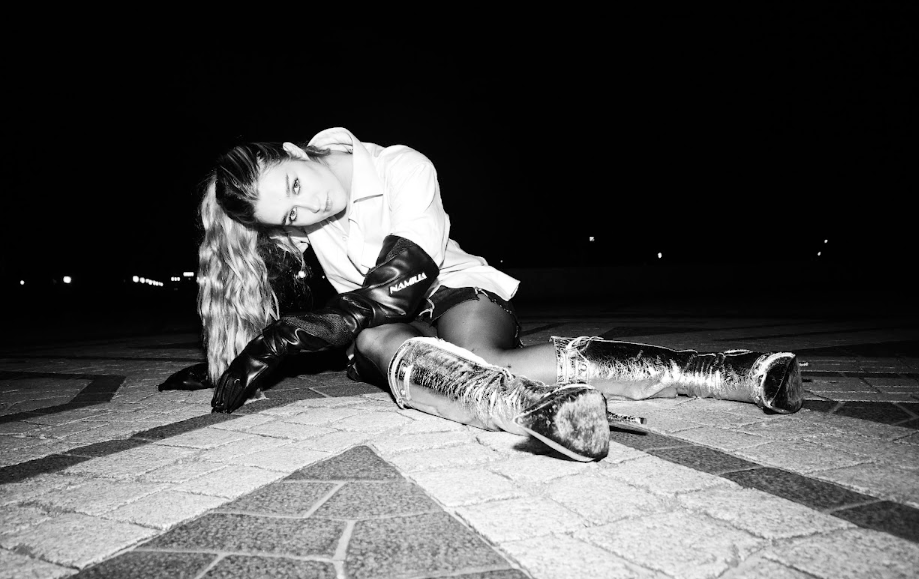
THERE IS SOMETHING BEAUTIFULLY UNTAMED ABOUT MIIA’S WORLD.—Since the release of her breakout 2015 single “Dynasty,” the Norwegian artist has carved out a space where heartbreak can feel cinematic, vulnerability can sound euphoric and pop music can hold both softness and shadow.
With millions of streams and a growing global audience, MIIA established herself through an atmospheric sound that has always felt bigger than its genre. Now, nearly a decade into her career, she is stepping deeper into that emotional wilderness with Huldra, her most personal and expansive body of work yet.
Named for the mysterious female figure of Scandinavian folklore, Huldra is more than a nod to MIIA’s Norwegian roots. Across the album, the mythological creature becomes a mirror for the parts of ourselves we are often taught to conceal.
Beautiful and dangerous, powerful and vulnerable, sensual and untamed, the huldra exists outside the boundaries of what society expects a woman to be. For MIIA, she represents the freedom to stop shrinking, to embrace both light and darkness and to finally exist without apology.
That idea of liberation is woven through every corner of Huldra. The record moves through love, grief, desire, guilt, healing, self-acceptance and the complicated spaces that exist between them. Its emotional center arrived while writing “Anything but a Heartbreak,” a song born from the collision of a long relationship, a new love and the difficult realization that finding yourself can sometimes require letting go of the life you once knew.
Rather than searching for clean answers, MIIA allows contradiction to remain contradiction.She writes from the place where heartbreak and euphoria can coexist, where grief can live beside freedom and where becoming more honest with yourself can mean confronting the parts of your story you once carried with shame.
Sonically, Huldra inhabits a similarly expansive landscape. Dream pop, dark pop, cinematic electronics and subtle Nordic influences converge beneath MIIA’s soaring vocals, creating a world that feels both otherworldly and deeply intimate. Although she and producers Benjamin Dan Ravn Fahre and Joachim JR Rygg never set out to create a distinctly Nordic record, the atmosphere of the landscapes MIIA grew up around naturally finds its way into the music. Raised in Kragerø, surrounded by islands, forests, saltwater and mountains, nature has long been part of her emotional vocabulary.
At its heart, Huldra is an invitation to come home to yourself. It asks what might happen when we stop treating our imperfections as something to hide and instead allow them to become part of the story. For MIIA, the answer has been simple but profound: real is good.
Through brutally honest songwriting, a deeply personal mythology and a community of “Beautiful Creatures” who have grown alongside her, she has created a record about shedding shame and choosing freedom. In conversation with LUNA, MIIA opens up about the woman behind the mythology, the wildness within us all and what it means to finally let yourself be seen.
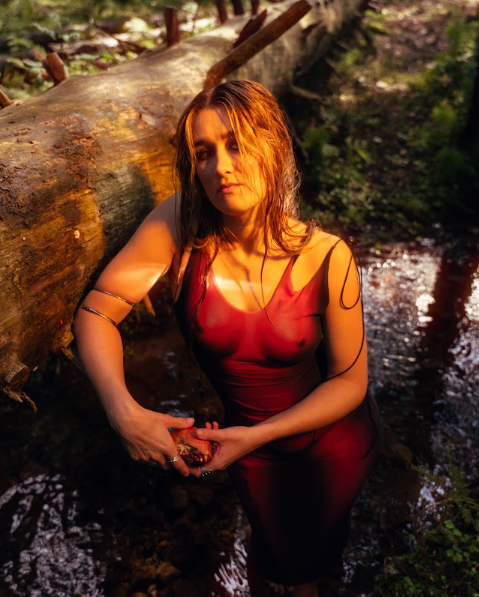
LUNA: You describe Huldra as an emotional journey through love, grief, desire, healing, and self-acceptance. Was there a specific moment during the writing process when everything clicked together and the album revealed what it was really about?
MIIA: I think it would have had to be when we wrote "Anything but a Heartbreak." I’ll try to make a long story short: I was in a relationship for almost 13 years and obviously I was highly intertwined with this person. We were best friends and truly happy together. Still, there were other things in my life that weren’t so good. I didn’t love myself, and I carried a lot of shame. Fast forward to Autumn ‘24 (after years of healing), I found that I finally loved myself—maybe even for the first time in my life. I had forgiven myself for the bad choices I had made along the way, and found myself wanting change. Then, I fell in love with someone new. "Anything but a Heartbreak" tells this story. To me, the sound of this song is quite catchy, chill, even euphoric, and combined with the fun lyrics the song mirrors the state of denial I was in. Underneath the drums and the "dancy" feel, the lyrics reveal the situation I was in. I am basically singing that I can take "anything but a heartbreak,” meaning, I do not have the courage to neither break his heart, nor my own. In the end, that was, however, exactly what I ended up doing. I needed to shed many layers to find my truth. And that is what the album is about—finding truth—and love. I think I have always wanted to be true. Ever since I was a little girl. To love. To be honest, and to be myself, without feeling scared or ashamed. As humans we are often taught to feel ashamed, and to shrink ourselves [according] to other people’s expectations. To hide our flaws, and to strive for perfection. I will never be perfect, and neither will you, so why keep on trying?
LUNA: The figure of the huldra has traditionally been portrayed as both beautiful and dangerous, desired yet feared. What do you think that duality says about how society has historically viewed powerful women, and why do you think that mythology still resonates today?
MIIA: I think huldra embodies historical tensions that still exist today. As a woman living outside the rules of society and outside male authority, huldra would, in many premodern (but also in several modern) societies, be viewed with suspicion or not even be "allowed" to live like that at all. A woman economically or sexually independent was (is) a challenge to certain expected social structures.
Moreover, huldra is rarely a passive object of desire in the stories about her, but rather the frequently "active chooser," as she is known to seduce, bargain, test or punish. It seems folklore sometimes treats that reversal of expected gender roles as dangerous. In Scandi folklore, the wilderness (huldra's home) was a place of both opportunity and risk. Huldra personifies that uncertainty: beautiful enough to draw people in, unpredictable enough to remind them they don't control nature (or her). But this isn't the only way to understand her. Huldra could be malicious, lonely, generous or even capable of becoming part of human society under certain conditions. Her complexity makes her different from a simple "femme fatale." Many cultures have admired qualities like beauty, wisdom, and independence, while also fearing what those qualities might mean if they existed outside "accepted norms." Mythological women often become the canvas onto which those conflicting feelings are projected.
Maybe the reason huldra still resonates today is that those tensions haven't entirely disappeared. It's worth mentioning though, that more contemporary retellings tend to reinterpret huldra in a more positive light. Instead of seeing her as just "a warning against temptation," she’s also been presented as someone marginalized by human society, or as a guardian of the natural world. Also, huldra's cow’s tail and hollow back shows how her beauty is never portrayed as "complete.” Symbolically, it might suggest that appearances alone never tell the whole story. I think people still resonate with huldra because many women long to allow themselves to be like her—a woman who is everything—powerful, vulnerable, strong, beautiful, ugly, sexual (on her own terms), courageous, a fierce and kind protector of nature—but also not always just "a nice girl.”
LUNA: Your album Huldra takes its name from a powerful figure in Scandinavian folklore. What does the Huldra symbolize to you personally, and how does she connect to the themes of the album?
MIIA: To me personally, huldra has become a symbol of someone who refuses to shrink [according] to other people’s expectations. Huldra is someone who exists, unapologetically, not only accepting, but embracing her light (or powers) and her darkness. That is what I have done myself throughout this album process. I have written my most vulnerable, honest lyrics ever, saying things out loud I thought I’d never tell anyone. The shame I used to carry for so long I do not hold any longer. I found that real is good. It is better to be open about your darkness, rather than keeping it all bottled up inside. And what I found on the other side was love. Love is always the answer. Also, I have learned to celebrate my light and powers. Which is so so important I think. I hope these songs—and the creature huldra herself—can inspire people to dare to face their own shadow sides, while also celebrating their powers.
LUNA: Rather than simply using forests and landscapes as imagery, you describe nature as something capable of tenderness and destruction at the same time. Do you think modern pop music has become disconnected from nature as a source of inspiration, and what does the Scandinavian landscape allow you to express that another setting couldn’t?
MIIA: I don't necessarily think pop music has become disconnected from nature, but I think a lot of humans have. However, it seems like more and more people are seeking "back to nature" or "back to the roots" for inspiration, which I think is both needed and inspiring. Our Mother holds more wisdom and truth than any of us. "My" nature, the Norwegian landscape I’ve grown up in, is so many things—just like huldra. Here in Norway, we have the most beautiful coast, from north to south (where I’m from). My home town, Kragerø, is home to 11,000 people, but outside of the city there are almost 500 islands. I have been fortunate to have spent a lot of my childhood on these islands that we call our Skjærgård—directly translated it means “reef yard,” swimming in saltwater, running around in the forests and skiing or hiking up in the mountains at my grandparents’ cabin. I’m very lucky to have had such a close-to-nature and safe upbringing, and to have been born in Norway at all.
LUNA: You’ve described Huldra as an exploration of self-love, freedom and shedding shame. What have you learned about yourself during the process of making this record?
MIIA: I’ve learned that I truly want to live my life my own way more than I perhaps understood before. And I’ve learned that I’m capable of so much more than I used to tell myself. I used to think I would die if I lost him, if I couldn’t be with him. It might be that some part or version of me did die, but I’m still here. I’m just changed. And change isn’t as scary as I thought.
LUNA: Sonically, the album sits somewhere between dream pop, dark pop, cinematic electronic music and Nordic folk influences without fully belonging to any one genre. When you and producers Benjamin Dan Ravn Fahre and Joachim JR Rygg began shaping these songs, were you consciously trying to create a distinctly "Nordic" sound, or did that atmosphere emerge naturally because it's part of who you are?
MIIA: We actually never aimed for a Nordic sound. My uncle Joachim, who was also the producer behind my song “Dynasty,” has been working from the U.S. for over 15 years and developed a very international sound. Benji too, I think, has his own sound that feels super unique and far from connected to just one part of the world. Personally, I think the album sounds more international than Nordic, but I agree that some elements, like for example the intro/sample in "I Can Tell a Lie," feel very Nordic (or like huldra herself). However, I do agree there’s a Nordic atmosphere and/or feeling of Nordic nature in the music. Actually, the majority of people who have contributed to the record are from the Nordic—Benjamin, Joachim, myself, American-Norwegian Brandon Colbein (both his parents being Norwegian), Icelandic songwriter Alma Goodman and Norwegian songwriters/artists Iris Caltwait, Vaarin, Alida and Mörmaid.
LUNA: Looking at the tracklist, songs like "I Can Tell a Lie," "Necessary Evil" and "Real Is Good" suggest that you're fascinated by morally grey areas rather than simple right and wrong. Do you think pop music sometimes encourages emotional certainty when real life is actually much more contradictory? Were you intentionally writing from places where there aren't easy answers?
MIIA: I’d rather say I crave truth. To quote a lyric from "I Can Tell a Lie,""I believe in forgiveness." Every human being makes one, two or many bad choices throughout their lives. What matters then is what we do about those choices, or how we deal with consequences that follow. I absolutely think pop music, or the industry, encourages emotional certainty, or that you do not go too deep into taboo themes (speaking from a female perspective).
What I want to achieve with writing brutally honest lyrics is to help more people see that we all have our faults and darkness[es]—but that doesn’t mean it’s all that we are. Real life can be contradictory. The things I was going through while writing this album is the most contradictory situation I have ever found myself in. On one end I was heartbroken by breaking his heart, and the feeling that I had forever changed his life. The guilt I was feeling…and a deep sorrow like I had never felt for losing him, and mourning the life that had been. I still feel sad about it. Maybe I will always feel sad about it all.
On the other end,I was in love with someone new. And this was intense in a totally different—I would say euphoric—way. I also felt, within myself, the best I had ever felt. I felt free in myself. So, I was the saddest, yet the happiest, I had ever been, all at the same time. It might sound stupid or weird or not easy to understand, but that was how I felt. I wasn’t intentionally writing from places where there weren’t easy answers—I was only writing from the real, authentic place I found myself in.
LUNA: Across your career you've consistently spoken about climate action, gender equality and human rights, but your music rarely feels preachy. How do you balance creating meaningful art without turning songs into manifestos? Do you think emotional storytelling can sometimes create more lasting change than direct political messaging?
MIIA: Thank you! I do truly care about our Earth, gender equality, and both human and animal rights. However, I haven’t really put too much of that into my music yet—it is something I plan to do more in the future. But there is more of it in my new album Huldra than in my previous music, and especially in one song: "Be the Light," written with my dear friends Becca Kreuger and David Burris, the very first day I met them.
It was the day after the election, and Trump had won again. The energy was particularly off that day, wherever I went really. It seemed like people felt very defeated—"What will happen now?" In the car on my way to meet Becca and Dave, the first thing I noticed was the driver’s tattoo on his neck which said “Be the light.” This is something I often talk about—that we all have our own unique light inside of us. I think the point of us being here on earth is to shine that light as bright as we can. To be a light of love, and to give back. Meeting Becca and Dave, I immediately felt a strong light from both of them. They are two very kind souls. We connected so fast, it felt like we had known each other for years! We started talking about the election and how weird of a day it was. I told them about the tattoo and how I’ve always wanted to write about these more serious matters, like politics, but that I find it difficult because the lyrics can easily get "preachy" or feel stupid even when you attempt to write about these matters. But this day, we managed to write about it, and "Be the Light" is one of my favorite songs ever because it doesn’t necessarily have to be about politics to the listener—it could be about anything!
The point of the song however, is that no matter how defeated or down you are feeling, you can not let the apathy bring you down. You have to rise back up, use the fire inside and be a light. Keep on shining, yes? So I think the key to balancing is to write something universal. With images that people can recognize themselves in, and with language that’s easy to understand/conversational. I absolutely think emotional storytelling can create more lasting change!
LUNA: Your fans, whom you call your "beautiful creatures," have become a deeply connected community. How has that relationship influenced your songwriting and creative decisions?
MIIA: Yes, I feel so lucky to have them with me. I feel seen by them, and I know they feel seen by me. Together we have created a space where people can be themselves and feel safe being who they are. Huldra has definitely been influenced by my beautiful creatures. I might not have dared to write it without the love and support I’ve felt from them.
LUNA: We’re living in a culture that constantly encourages people to "be themselves," yet social media often rewards performance over honesty. How has your own relationship with authenticity evolved since you first entered the industry at sixteen?
MIIA: I feel like I've only become more authentic. Real is good (the best, really).
LUNA: Finally, if someone listens to Huldra from beginning to end without knowing anything about the mythology, your career or even who MIIA is, what do you hope they're carrying with them after the final moments of "Huldrarave" fade away?
MIIA: Well of course I hope they are curious to learn more about huldra's lore, or other female creatures similar to her (which there are so many of across cultures). But, most of all, I hope they feel healed and strengthened in some way from listening to the music and lyrics, or from diving into the visual world I have created for Huldra. My album is a journey toward self-love, freedom and the death of shame. I hope my openness can inspire the people listening to my music to be more open themselves because I truly believe that being open and honest, even about the darkest parts of our stories, makes us more forgiving and loving towards ourselves and each other.
