
Q&A: Mimi Barks Walks the Space Between Heaven and Hell in “Dreamstate of Fear” EP
INTERVIEW
INTERVIEW
☆ BY KIMBERLY KAPELA ☆
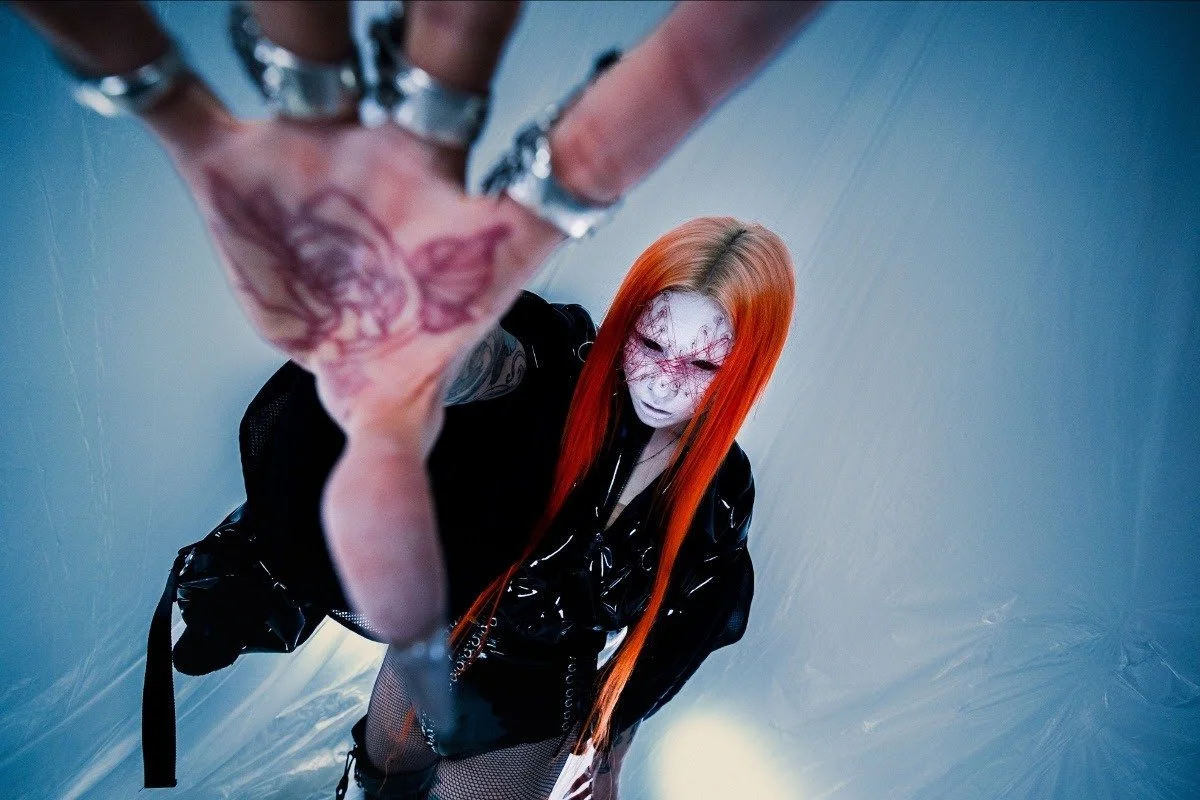
HEAVEN IS A STATE OF MIND — Heaven and hell, for Mimi Barks, are not metaphysical endpoints but competing states of consciousness. That idea anchors her new EP, Dreamstate of Fear. Rather than treating fear as something external to overcome, Barks frames it as something internally generated and repeatedly reinforced through unconscious patterns. The “dreamstate” becomes less escapist than entrapping.
“For me, heaven and hell are merely states of mind and at any given moment we have the ability to choose between the two,” Barks tells Luna. “The problem is that most people live unconsciously and believe that life happens to them and that unconsciousness pulls us back into darkness, fear and self-destruction time and time again.”
That framework gives shape to the EP’s title, which collapses two opposing conditions, dreamstate and fear, into a single psychological loop. Barks positions fear as something self-generated and self-reinforced, a pattern that becomes indistinguishable from real life.
“So many of us move through life trapped in patterns, stories and fears that we mistake for reality,” she says. “What looks like collapse is often just the dissolution of something that no longer serves us. There’s no real enemy unless you choose to become one to yourself. This is probably the most focused record I’ve made because it’s the first time I’m taking full responsibility for my own state of mind.”
Sonically, that internal focus translates into Barks’ self-defined “Doom Trap,” built from metal abrasion, industrial pressure and trap’s low-end architecture. The sound is informed by the stark, mechanical atmosphere often associated with Berlin’s industrial.
Ahead of the EP, Barks has released the singles “Jericho” and “Dreamstate of Hell,” both of which extend her “Doom Trap” approach into sharper focus. Dreamstate of Fear marks a more concentrated approach — less about expanding the sound and more about interrogating its emotional and psychological core.
Fear is not an external condition, but a recurring internal state. The difference in this chapter for Barks’ is control. Recognizing the loop and choosing whether to remain inside it.
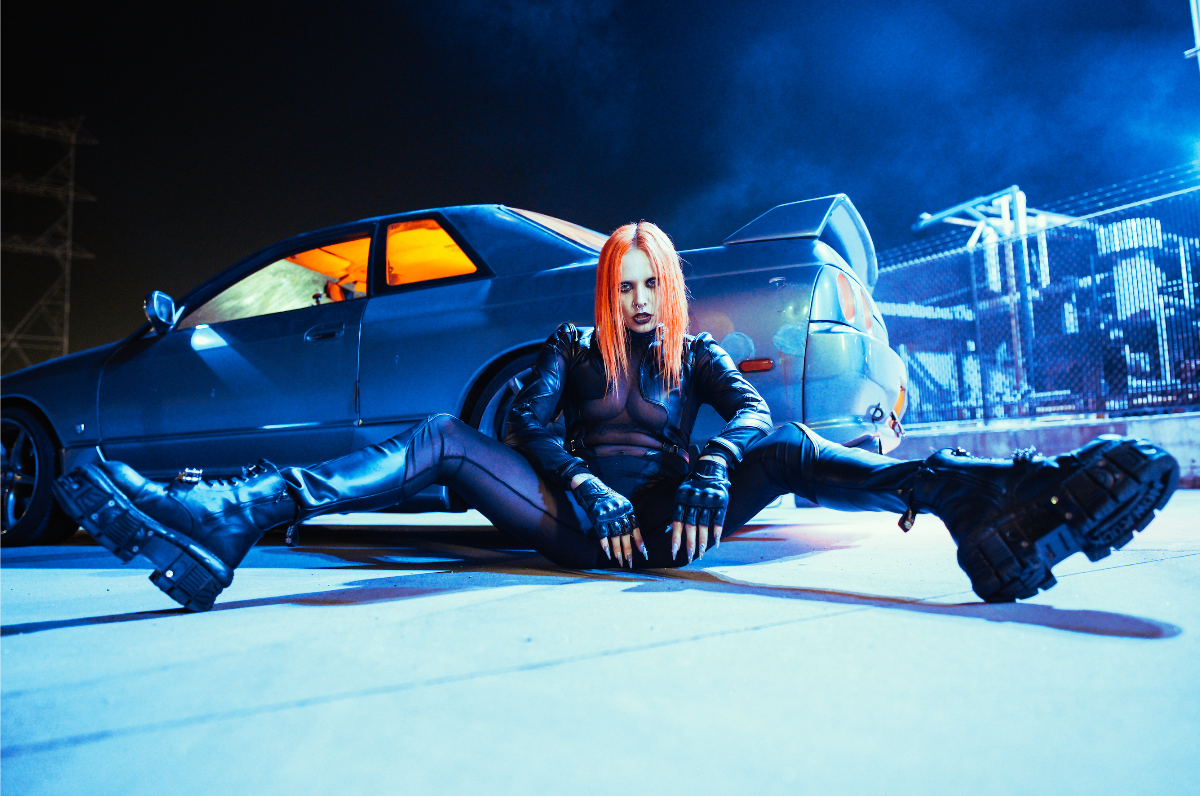
LUNA: Thank you for talking to Luna. Our readers would love to get to know you and your music more. For any readers who aren’t familiar with you yet, what inspires your artistic style and sound?
MIMI: Chaos, destruction, impending doom and childhood trauma.
LUNA: Your sound blends metal, industrial, trap, punk and techno into something you call “Doom Trap.” At what point did you realize you weren’t interested in fitting into one scene or genre anymore?
MIMI: I don’t think there was ever a moment where I consciously decided not to fit into a scene, I just never did. Even early on, nobody in the music industry seemed to know where to place me. I was either too electronic for the metal world, too heavy for the electronic world, too dark for rap and too unconventional for everything else. I stopped trying to make it make sense for myself or other people and just followed my instinct. Doom Trap became the easiest way to describe it, but even that feels limiting at times. I’ve always been more interested in creating a world than fitting into a genre. Genres are useful for record stores and streaming platforms, but creativity happens when you stop worrying about where something belongs and focus on whether it feels honest.
LUNA: Berlin’s underground culture clearly shaped your artistic identity. What parts of the city’s energy or music scene still live inside your work today?
MIMI: Working in clubs, the unforgiving coldness and the anonymity of the city definitely shaped me. Berlin has a way of making you feel completely free and completely alone at the same time and that duality still lives in my music. My collaborations with Berlin-based techno producers like DJ Rebekah might seem far removed from my sound on the surface, but at their core they're not that different. The hardness is the same. Music that is destructive, piercing, almost painful at times, yet somehow hypnotic. Whether it's techno or Doom Trap, I'm drawn to sounds that push people into a physical and emotional response rather than just passively entertaining them. Berlin also reinforced my belief that genres are largely irrelevant.
LUNA: You’ve described this new era as heavier, darker and more focused. What pushed you creatively toward that intensity on Dreamstate of Fear? What did you feel drawn to exploring this time around?
MIMI: On this record, I explore the ever present choice between heaven and hell. Not so much in a religious sense, but as a matter of consciousness and inner work. To me, heaven and hell are merely states of mind and at any given moment we have the ability to choose between the two. The problem is that most people live unconsciously and believe that life happens to them and that unconsciousness pulls us back into darkness, fear and self destruction time and time again.
The title Dreamstate of Fear comes from that idea. So many of us move through life trapped in patterns, stories and fears that we mistake for reality. What looks like collapse is often just the dissolution of something that no longer serves us. There’s no real enemy unless you choose to become one to yourself. This is probably the most focused record I’ve made because it’s the first time I’m taking full responsibility for my own state of mind. Instead of letting pain consume me, I’m using it as a creative tool. The intensity comes from confronting those darker parts of myself and making the conscious decision, over and over again, to choose heaven over hell.
LUNA: Do you have a personal favorite song on Dreamstate of Fear — one that feels closest to your heart or most revealing of who Mimi Barks is right now?
MIMI: “Dreamstate of Hell”represents that duality more than any other track. It’s the perfect balance between melody, rap and heavy breakdowns. But honestly, it’s the EP as a whole that makes this record a journey of self discovery. The songs are all connected, one couldn’t exist without the others.
LUNA: Starting your own imprint, DEATHKISS Records, feels like an important move. What made this the right time to release music independently?
MIMI: To be honest, not much has changed creatively. I’ve always been the puppeteer behind Mimi Barks, and I’ve always had full creative control over the music and visual output. People often hear “independent” and assume there was some major label machinery involved before, but that was never really the case. Everything you see has always been built through a DIY approach and largely self-funded. DEATHKISS Records is simply a new home for the music. The label on the packaging may have changed, but the vision, the input and the workload have always come from me.
LUNA: What did that autonomy unlock for you creatively that might not have happened otherwise?
MIMI: Nothing, really. I’ve always had full creative control. The autonomy was already there. What changed was the name on the paperwork, not the vision behind the art.
LUNA: How do you hope listeners — especially your femme audience — can connect with or find power in this new era of music from you? What emotions or messages do you want to leave with them?
MIMI: I want people to realize that they don't have to remain who they were yesterday. The past doesn't have to define what comes next. You can destroy every limitation, every stereotype, every belief about who you're supposed to be and build something entirely new. If this record leaves people with anything, I hope it's the understanding that the power they've been searching for outside themselves was there all along.
LUNA: What is fueling your fire right now that’s pushing you into this new era of your career?
MIMI: The same thing that's always fueled me: uncertainty and the refusal to stay stagnant. Most of my best work comes from periods of discomfort, transition and questioning everything. The fire isn't necessarily ambition, it's the need to transform whatever I'm experiencing into something meaningful.
LUNA: How are you feeling in this current era of your career and what does the rest of the year look like that you would like to share with Luna?
MIMI: Right now, I’m on tour across Europe. The rest of the year is focused around the release of Dreamstate of Fear, which drops on July 24, followed by my UK headline tour in September. I’m excited to finally bring this new era to life on stage and see how people connect with the record in real time.
