
Q&A: RAEGAN Celebrates the Art of Being “Too Much”
INTERVIEW
INTERVIEW
☆ BY SHEVON GREENE ☆
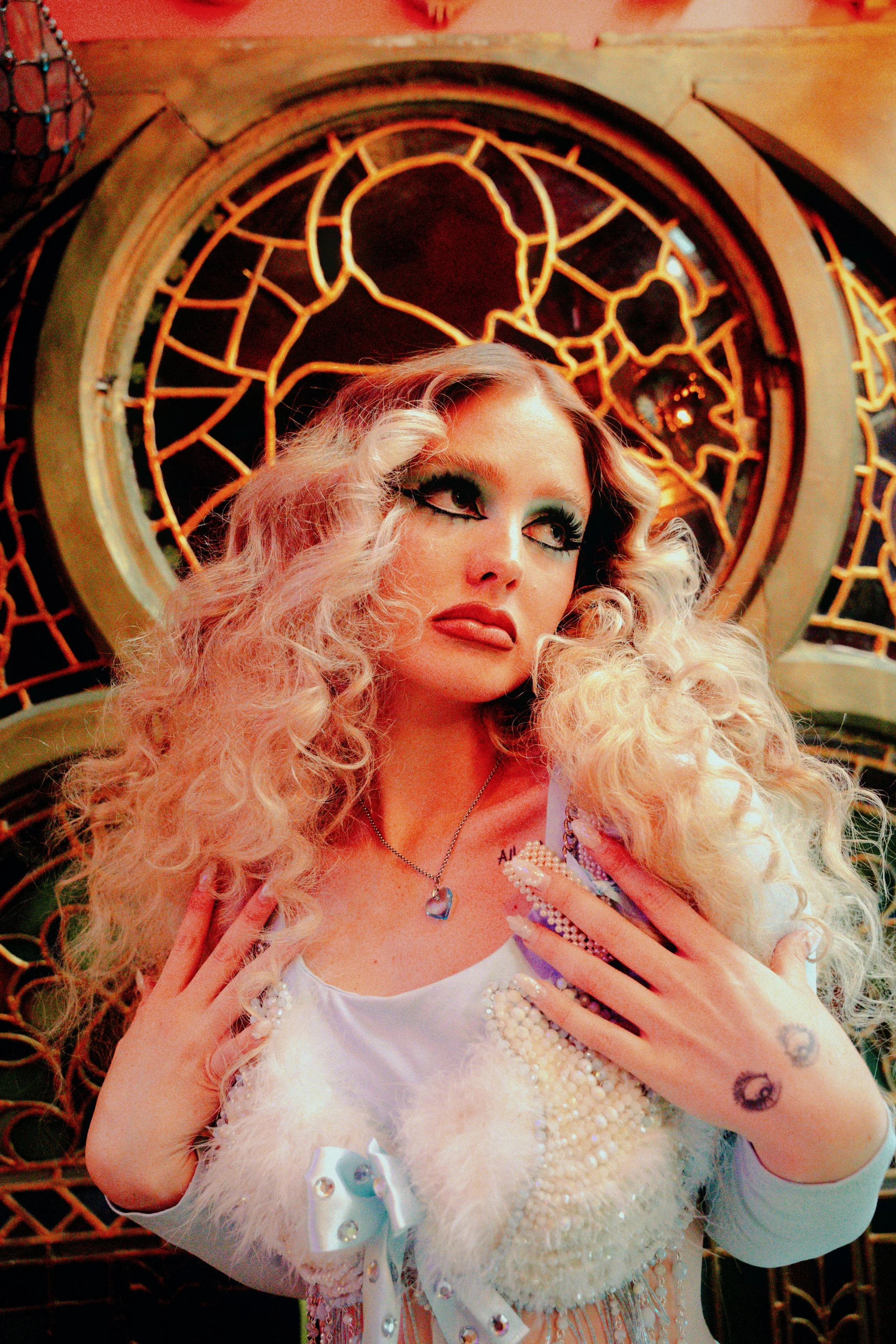
Photo by Annalese Nicole for The Luna Collective
FOR AS LONG AS SHE CAN REMEMBER—RAEGAN has always been told to “tone it down.” Instead of confining herself to typical pop stereotypes, she’s fully embraced who she is as an artist with a universe of Broadway drama, pop spectacle and unapologetic camp. Her single, “CRYING IS A GIRL’S BEST FRIEND,” out today, is just a glimpse into that universe, with her upcoming EP RAEGAN CORE arriving in the fall.
The 23-year-old artist has spent the last several years building what she calls “theater pop,” a genre-blurring world where fashion, storytelling and over-the-top dramatics come into play. Instead of each song being a standalone release, they’re almost like a scene pulled from a larger production.
On “CRYING IS A GIRL’S BEST FRIEND,” RAEGAN transforms loneliness into a surprising sense of comfort. The track is beautifully wrapped in cinematic strings, burlesque glamour and Disney-princess-level drama and touches on one theme: the idea that when everything else falls away, you’re still left with yourself. Underneath all the theatricality is a vulnerable message of self-comfort, resilience and emotional honesty.
What makes the world of RAEGAN CORE compelling isn’t just her over-the-top theatricality, but the confidence behind it. In a music landscape that often leans towards fitting neatly into categories, RAEGAN is more interested in creating her own world where she doesn’t have to choose.
We caught up with RAEGAN to talk about theater pop, hyperfemininity, worldbuilding and why being “too much” might actually be a superpower. Read below for more.
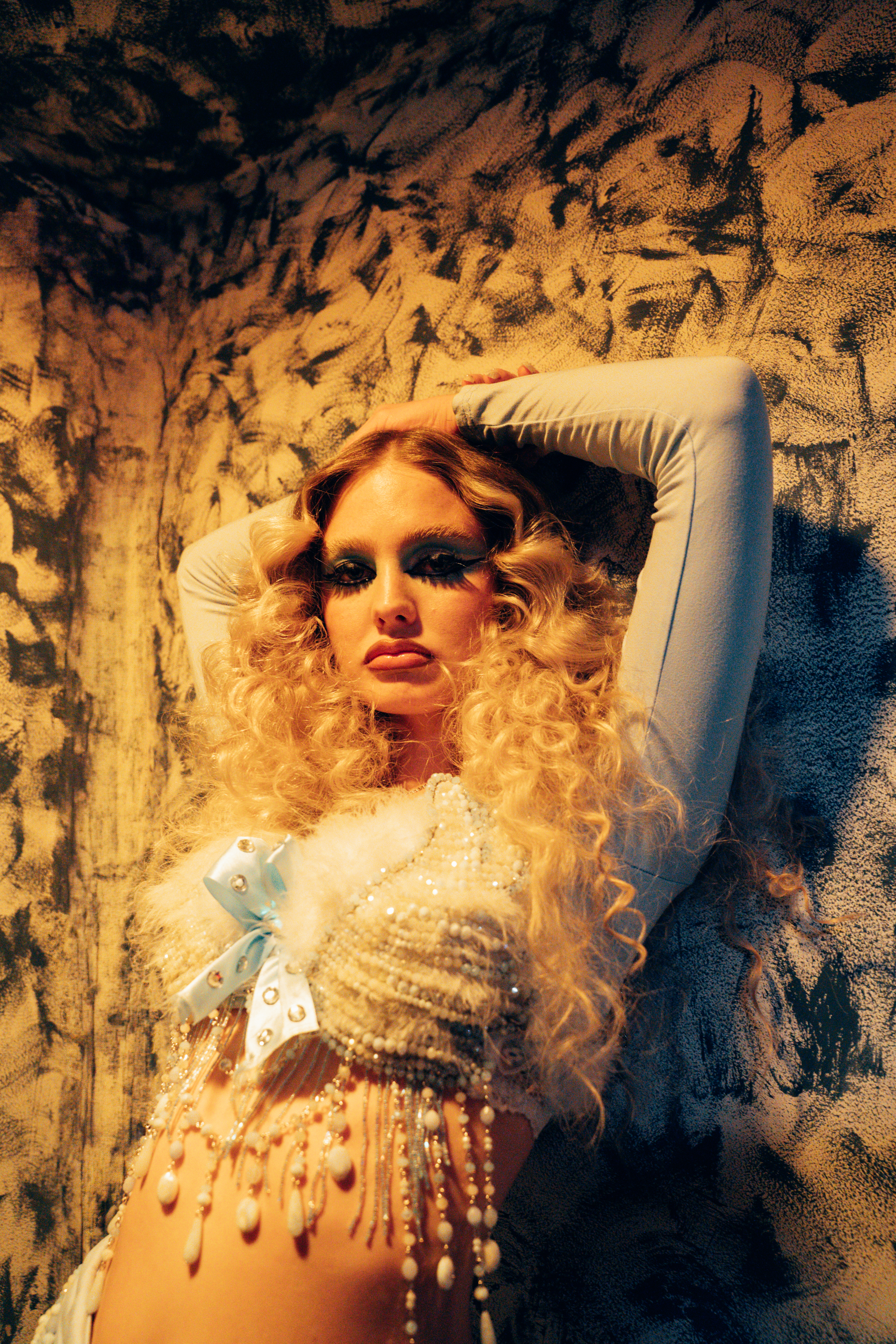
Photo by Annalese Nicole for The Luna Collective
LUNA: Your music is super theatrical, campy, dramatic, but also very sincere too. How did you decide that you wanted to combine all those themes and not separate them creatively? Or did it kind of just come naturally?
RAEGAN: Blending those specific themes definitely came naturally because my music is really just my brain and myself in sonic form. All of those things are what I am, so it's kind of unavoidable when I'm making music. It's constantly over-the-top, dramatic, campy, all of that.
LUNA: I love seeing artists fully be themselves in their music and bring all these different parts of who they are into it. It makes it feel so much more authentic and uniquely yourself. You describe your music as theater pop, which obviously feels like a lot more than just a genre label. It feels fully immersive. What do you think theater pop allows you to express emotionally that maybe traditional pop songwriting wouldn't?
RAEGAN: I'm able to express all parts of myself authentically. I don't feel confined into a specific box or have to color between the lines. I get to be that dramatic, campy, over-the-top version of myself, and I think that translates through the show tune aspect and the theatricality of it all. Bringing those performances to life and keeping everything immersive gives me the freedom to express myself authentically.
LUNA: I'd love to hear more about how you ended up going down that theater route. Has that always been a part of your life? Did you have that background growing up?
RAEGAN: Yes, I did. I grew up in musical theater, went to high school for acting and danced my whole life. All of that goes hand in hand with my personality in general. Musically, I never wanted to pick just one thing. It all coexists, and it all feels like my purpose. Being able to do all of that at the same time is the ultimate goal, and it's been so rewarding because I don't have to choose between my passions. I get to do it all together.
LUNA: When you're songwriting and coming up with concepts, are you usually thinking visually and cinematically right away? Do you hear something and immediately think about how it might look visually?
RAEGAN: I think it all coexists. It's different every time. Sometimes I come in with an emotion and something I want to express, and that's the starting point. Other times it starts somewhere else. But no matter what, it's always complete world-building. It's never, "I'm going to make the song and figure out the music video later." As I'm making it, I'm creating a character who lives within a world, and all the different elements of how that character can exist.
LUNA: Are you somebody who has Pinterest boards or vision boards? How do you build those worlds?
RAEGAN: I do. I love Pinterest. I use it a lot for makeup looks and hair looks and things like that. But I mostly try to create worlds based on who I am aesthetically and how I want to express myself through fashion and world-building. It's always going to be whimsical, pastel, theatrical and things like that because that's genuinely who I am. Even when I'm at home alone in pajamas, it's pink ruffles and a pink sparkly eye mask. Inspiration is everywhere. If you're constantly looking for it, you'll always find it.
LUNA: I loved listening to "CRYING IS A GIRL’S BEST FRIEND." The title feels very pouty and glamorous, but when you actually listen to it, it's emotionally raw too. I'd love to hear more about how the track came to life and what inspired it.
RAEGAN: Going into the writing session, I really had a blank slate. I wanted to see what would happen. In the back of my mind, I thought maybe we'd make a super pop, sexy kind of moment, but that's just not where my emotions were at. The story behind the song is really that you're not alone in sadness or loneliness. You're always comforted by yourself. We kind of personify crying in that way. When the show is over, the audience leaves, the party ends and you're standing alone in front of the mirror [and] still have something within yourself that can comfort you. Of course, we had to add the burlesque glamour and play off the Marilyn Monroe reference, but that was really the intention. I went in saying, "I want my Disney princess moment," and I think we got that.
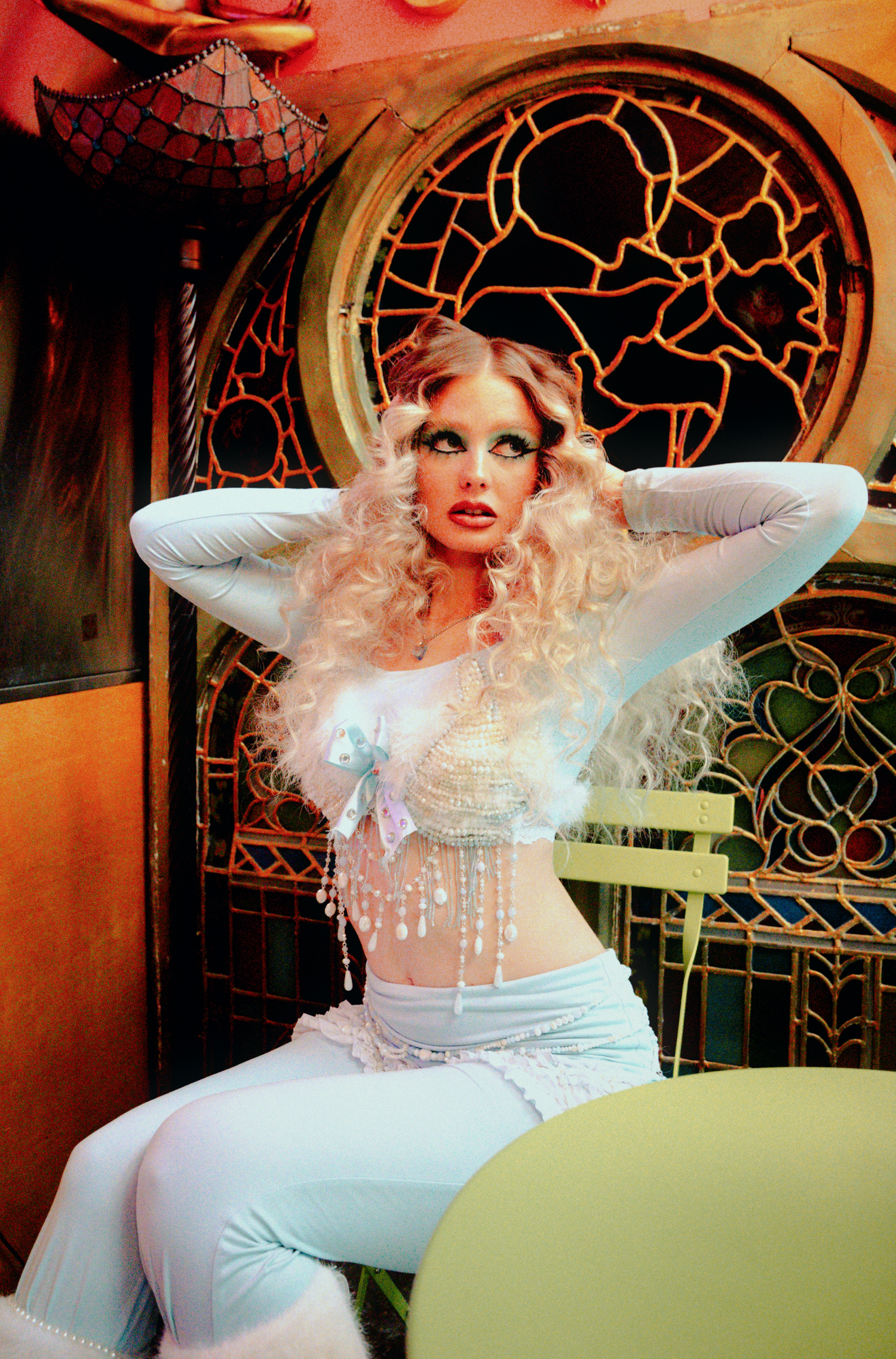
Photo by Annalese Nicole for The Luna Collective
LUNA: I love that you went in wanting your Disney princess moment and actually got it. And it's such a good reminder too, that at the end of the day you have yourself and that source of comfort. I also really loved the cinematic strings and horns throughout the track. It feels like the emotional climax of a musical, like that Disney princess moment you mentioned. Did you have that in mind from the start?
RAEGAN: The production was actually the thing that evolved the most. Going into the session, it was really about getting the story out and making sure the lyrics and melodies spoke for themselves. The production came afterward when I brought it to my best friend Miu [Sato], who's the biggest Disney girl ever. I explained my intentions, and she immediately understood it. She arranged the strings and trumpet, and what I love about show tunes and Disney princess songs is that, if you strip away the lyrics and even the singer's melody, the instrumental alone can bring you to tears. It can still make you feel that climax and that beautiful sorrow. Once the songwriting was finished and I felt confident in it, I wanted to create instrumentally exactly what we had already created lyrically, so they could be equally powerful.
LUNA: I think that comes through so well. The instrumentals are so strong on their own, but then the lyrics are equally powerful. Together they create something really beautiful. One thing I really love about your work is that it never feels afraid of being "too much." It feels like you're fully going for it, which, like you said, is just you being authentically yourself. Was there ever a point where you felt pressure to tone down the theatricality or campiness to fit more traditional pop expectations? Or have you always been very sure of that direction?
RAEGAN: I think it's a constant process. Growing up, I was definitely told to tone it down and things like that. But I always made the choice—or honestly, I don't think I even had a choice. I couldn't tone it down if I wanted to.
When it came to this project, I heard from multiple industry people that it was too theatrical for pop and too pop for theater. They were like, "It's not going to get playlisted. There's no real place for it." At first I was kind of like, dang, you know? At the end of the day, you want your work to be recognized. You want people to hear it.
So I definitely felt that pressure, but I released it pretty quickly because I was like, “Literally, who cares?” This is what I want to be making. If I did anything else, it wouldn't be what I wanted, and it wouldn't be a reflection of my brain.
I completely ignored that and kept going down the path I wanted. Now I'm at the point where I literally don't care. I think the differences in it, and the fact that it doesn't fit neatly into one place, are the strengths of the upcoming project. I think it's boring to be the same as everything else. I've always wanted to stand out. This project really allows me to do that. I would never choose to do less.
LUNA: There are so many artists who find success by creating something uniquely theirs instead of fitting into existing boxes. You might as well create something that feels authentic.
RAEGAN: Exactly. That's what makes art so special. Creating something new, different and fresh is what makes it exciting.
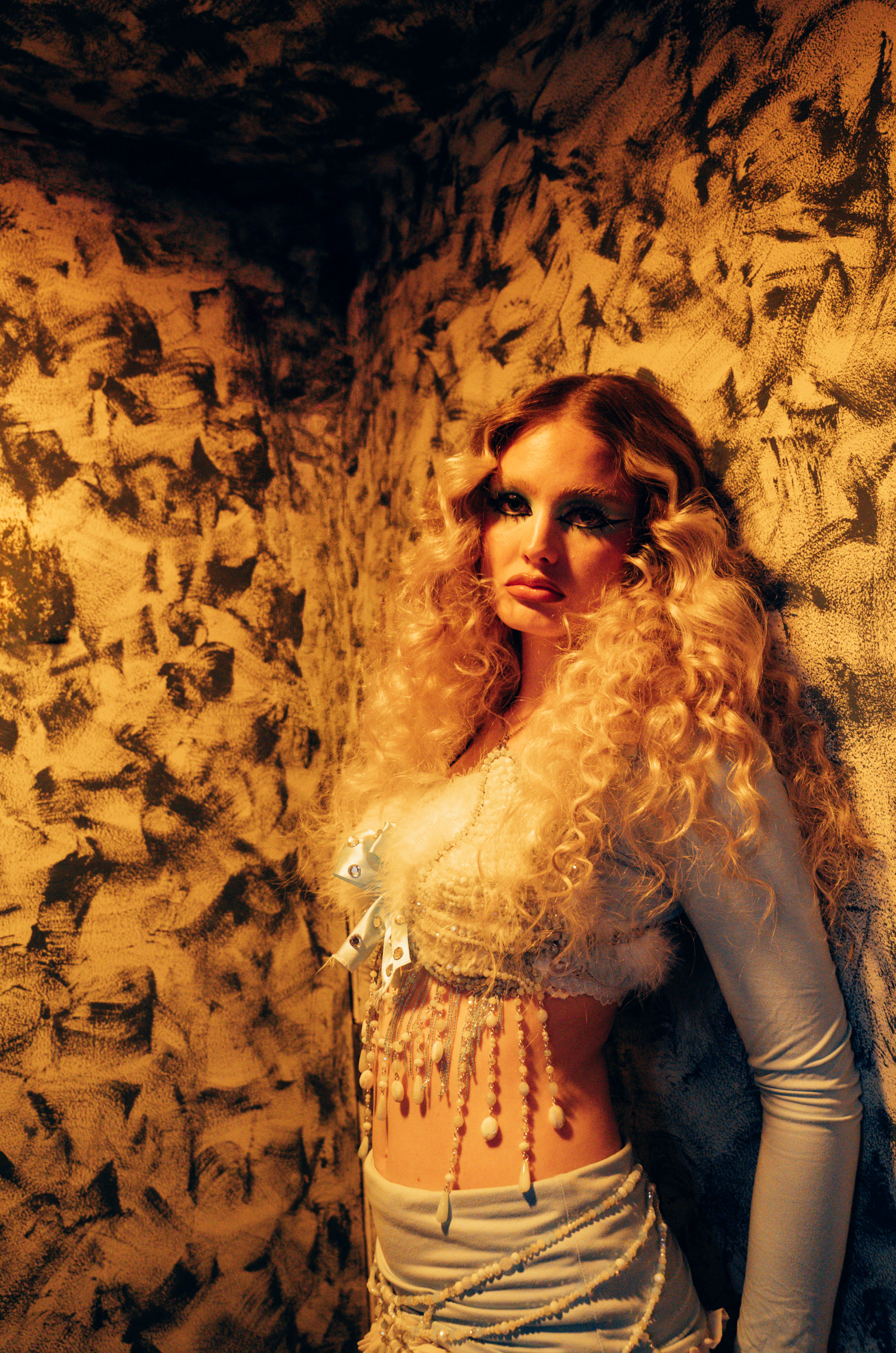
Photo by Annalese Nicole for The Luna Collective
LUNA: You've talked about your upcoming project, RAEGAN CORE, being a love letter to outsiders and theater kids. Do you think a younger version of yourself would've needed an artist like RAEGAN growing up?
RAEGAN: Yes, absolutely. I had my own versions of that. Marina and the Diamonds definitely raised me. I think she brought so much experimental theatricality into pop music, and seeing that made me realize, "Wait, you can do whatever you want. There are people who will connect with it." So yes, I definitely would've loved listening to my own music growing up. Just having someone tell you that being a crybaby is cool, being dramatic is awesome, being queer and being gay is amazing—that it's actually your biggest superpower. As much as I can inspire people while also being inspired by the community we're building, that's really the goal.
LUNA: I wanted to ask more about the humor and camp side of your work. Do you think humor and camp make it easier to access heavier emotions creatively? Or do they just complement them?
RAEGAN: It's kind of all of the above. I'm generally not a super serious person, and I try to find optimism wherever I can. Even when I'm dealing with sadness or heavier emotions, I try to find confidence within them and bring out the power.
For example, with "BALLAD OF A PRESCHOOL DROPOUT," I'm talking about insecurities I had growing up. I never felt like the sharpest knife in the drawer. But the song is also saying, "Look at my strengths, though." Put me in a theater class and watch me thrive. That's what makes it therapeutic. You're not suppressing those insecurities. You're acknowledging them while also recognizing the strengths that outweigh them. And honestly, why not be funny and have a good time when you can?
LUNA: I know fashion is a huge part of your artistry too, especially with New York Fashion Week and your collaborations with designers. Does fashion help you step into the emotional world of a song or character more fully?
RAEGAN: Yeah, absolutely. My fashion always has a throughline aesthetically, no matter which character or song I'm exploring. I've always been very experimental with fashion my entire life. I've always wanted to express myself through what I wear. I never wanted to be boring. When people look at me, I want them to see a reflection of how I feel on the inside. I'm constantly asking myself, "What does this song feel like, and how can I visually communicate that?" Or even just, "How do I feel today?" A lot of mornings I'll wake up and think, "Okay, what's the vibe today?" If I'm going into meetings, I'm like, "Let me give businesswoman on her way to work." I'm constantly trying to express myself through fashion. It's just another storytelling tool for me.
LUNA: That's such a good way of thinking about it. It's like giving people a little glimpse into your mood or energy for the day. We touched on inspirations earlier, but were there any specific performers, films or stage productions that you kept coming back to while building RAEGAN CORE?
RAEGAN: I think my biggest inspirations are the movie musicals that raised me. This project is really about reconnecting with my inner child and the theater kid version of myself who would've loved seeing older me doing this. I had to go back to my roots. Things like Burlesque, Chicago and all of those theater worlds that made me feel something. Then there's Glinda, of course, and Elle Woods from Legally Blonde. A lot of it comes back to finding power in hyperfemininity because that's something I identify with really strongly. So yeah, I think all of those influences found their way into the project.
LUNA: What are your upcoming plans after “CRYING IS A GIRL’S BEST FRIEND?”
RAEGAN: The full EP will be coming out in the fall, and everyone will get the full RAEGAN CORE experience soon. You'll also get to experience RAEGAN CORE live because I'm doing a small headline run in New York, Chicago and Los Angeles, and potentially Europe and the UK. We'll see. That'll be happening around the end of September and early October. I'm really excited because people will finally get to see this world come to life on stage.
