
INTERVIEW
INTERVIEW
☆ BY SAMANTHA SORIA ☆
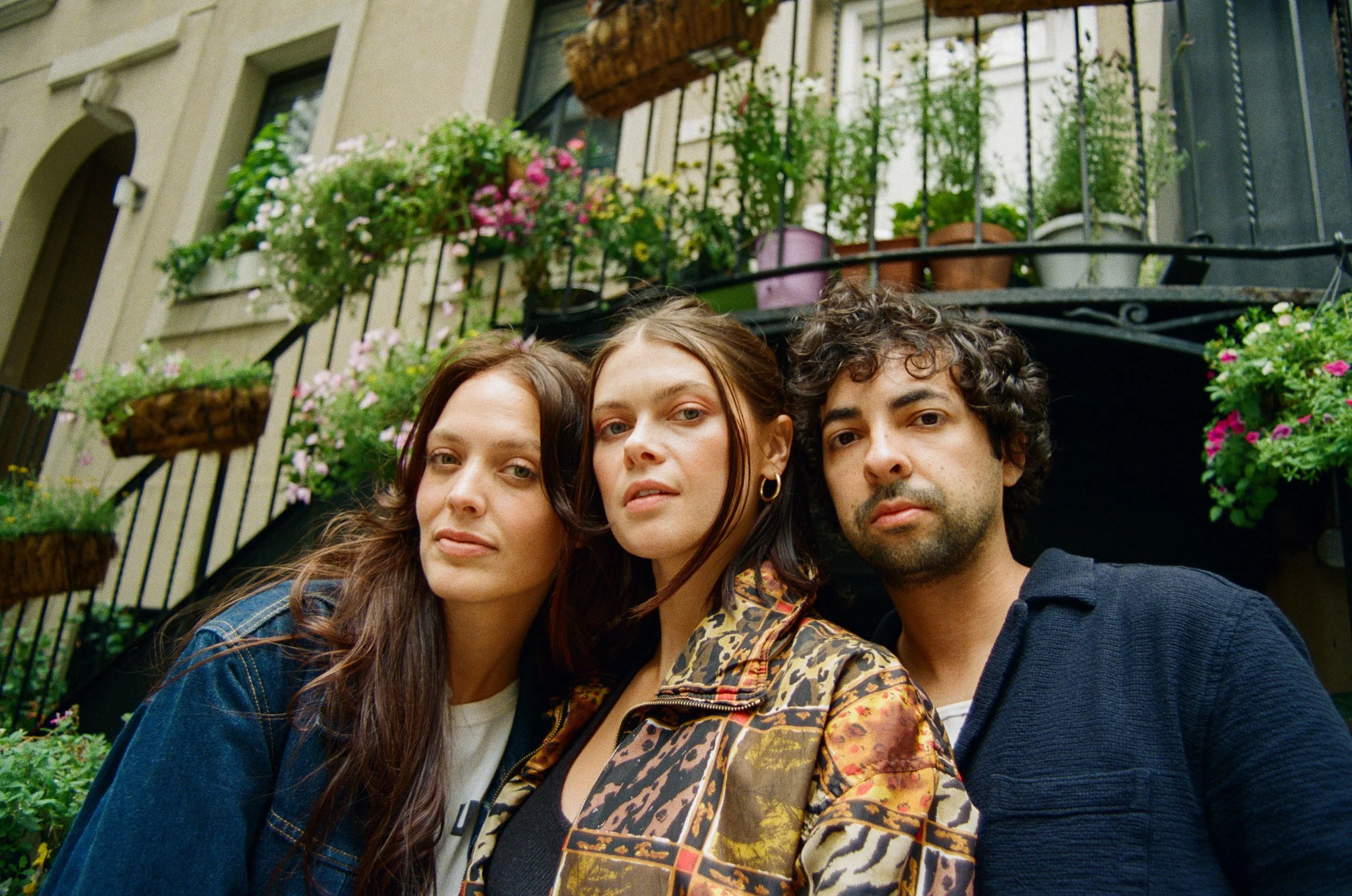
Photo by Dylan Vanessa for The Luna Collective
MOODY JOODY WELCOMES YOU TO THEIR WORLD—When I meet up with Moody Joody over Zoom to discuss their upcoming debut album, Plain Jane, the Nashville-based trio instantly greets me with smiles as they all take seats on a couch and settle in. They look comfortable, ready to talk about their album. I, on the other hand, feel the need to apologize to the band before diving into questions for my set up—I’m tucked in the corner of my local library, speaking at a low volume so as to not disturb anyone near me. But any worry I have as to the band not hearing me clearly is immediately settled as they tell me that they hear me perfectly.
For Moody Joody, Plain Jane was an exciting project that felt inevitable. The band first wrote a few songs for Plain Jane around 2020–2021, and it was after signing a record deal with Photo Finish that they began releasing more songs and eventually moved into the world where they created their 2024 EP, Dream Girl. But as Kayla Hall, singer and keyboardist for Moody Joody, explains, during the process of creating their EP, though they weren’t necessarily working on Plain Jane, the concept and title for their debut album was one they always had in the back of their minds.
“We wanted to create a full world and give it as much time and energy as we could,” Hall said. “So it made sense to work on it when we started.”
From beginning to end, Plain Jane is a detailed, colorful tapestry. Throughout the album, there are characters sprinkled throughout and, if you pay close attention, you can follow each of their arcs. It’s a special detail that is done well without being too on the nose and is also one that Moody Joody takes pride in.
In conversation with Luna, Moody Joody talks through the process of creating Plain Jane, the songs that hold a special place in their heart, how creating this album helped create a space for discovery and healing and so much more.
Photo by Dylan Vanessa for The Luna Collective
LUNA: There are so many topics that Plain Jane hits right on the head—self-acceptance, nostalgia, reflection, chasing big dreams—and all of this culminates into this almost late-stage-coming-of-age feel. Was this something you were all set out to create when drawing up the album concept, or was that something that naturally unfolded over time?
KAYLA HALL: We're all very cinematic people, and because we were working knowing that this was a thematic, conceptual album, we always had that as a north star. At the same time, [for] certain songs we would write, we would just have a title, and then we knew it was going on there. So in that way, yes. But also, there were some songs that were surprises that came later that fit into the overarching concept of Plain Jane.
ANDREW PACHECO: Yeah, I feel like Plain Jane as a concept definitely evolved over the years as we wrote songs and came up with new ideas. It started as this title and this direction, and then just fully formed over the last year and a half as we wrote the rest of the song.
HALL: The track listing too. We were wanting to tell a full story, so we love that you listened to it from top to bottom because there's definitely an evolution there—lyrically there’s some callbacks or some little Easter eggs and songs that end up later.
LUNA: Kayla, you once described that, "Part of our ethos as a band is embracing our humanness and everything that entails, but we also love to just write about going out and having a crazy time. We're definitely not afraid to admit that sometimes we're a little messy." As a listener, your music really captures both of these sides. How do you find that right balance, though, between vulnerability and playfulness?
HALL: I think when we're writing music, the three of us are drawing from our own experiences. Some of those are the more mundane or going out with your friends, which is like “OOPS!” because that's still part of it. I think “OOPS!” came at a time where it was post-breakup, like wildness, and that was a real part of life. But then there are songs like “Suburbia” that are more emotional or deeper that are drawing from those other places.
I think as women too, being able to capture all of those sides and show up fully and be like, “We can be a little messy, but we can also be deep. We can be this and that.” That's who Plain Jane is, it’s burning it all down to the ground, her past life, and she gets to decide which parts come with her messiness and just owning her messiness and not being afraid to show up and say, “This is who I am.”
Andrew always talks about how we have Moody songs versus Joody songs. So when we release, we intentionally think, "Is this a more Moody song or is this a Joody song?” Because the Moody songs are like “Suburbia” and the Joody songs are more shaking your ass with your friends like “OOPS!” so we just always want to embody that full human experience in that way.
LUNA: Katie, you once explained that “It was scary to write these songs, the ones on Plain Jane, obviously, and be so honest about where I'm at right now. But ultimately, I think it was the best way to become more comfortable with myself.” When it comes to vulnerability, how has your comfort in that evolved after this album?
KAITIE FORBES: Yeah, so I grew up very religious, and I feel like a part of that is just really caring about how I'm being perceived and being extremely afraid of other people's judgment and opinions. I really spent the majority of my life making decisions for other people to not disappoint people or live up to expectations, and my first step out of that was moving to Nashville. But it still took me, and is still taking me, so much time to deconstruct that and I feel this album was a perfect opportunity for me to just practice that. There are a couple songs on the album that really lean into our sexuality and our femininity, and growing up in purity culture that was so off limits for me. We have one song in particular, “Heart Shaped Bed,” that is very flirtatious and a little naughty and I remember after writing that I was like, “How am I gonna put this out?” I was so deeply ingrained in purity culture and have really had to overcome how people perceive me, and being worthy of people's love. This album has just given me the opportunity to be honest and talk about who I am and how I am.
“Suburbia” is another one that was a little scary for me to put out because if you really pay attention to it, for me, “Suburbia” is the religious culture I grew up in, and leaving that behind. So long story short, I feel this has been really good practice for me to say the things I want to say and show up how I want to without having to say it directly to people. It's in my art and it is very direct and it's me coming out as me in a way (laughs). It's like, “Okay, this is my announcement of who I am now!” and it feels really freeing and I'm sure I'll have moments of panic, when my family and people listen to some certain songs. I’ll be like, “Sorry, mom and dad!” But, ultimately, it's just been really healing.
Photo by Dylan Vanessa for The Luna Collective
LUNA: “Geraldine” also feels like it was another vulnerable track to write. What’s the story behind this song if you don’t mind me asking?
HALL: We haven't actually talked about this one…Sorry, I'm notorious for crying because I don’t avoid talking about this song but my grandmother passed from Alzheimer's and the chorus I wrote as a lullaby before she passed. If you've been through that experience, noticing them forgetting you…we built the song around this lullaby, and then Katie's grandmother who's still with us, she got to sing a little part over it, and then the end has a home video with audio from my mother and my grandma and my sister. It's this Easter video that I sent Andrew, and I was like, “Just take something from it! Like I have to dissociate because I'm gonna start crying!” But that's how that started, and then evolved [to] being dedicated to our grandmothers.
LUNA: Though Moody Joody experiments with alt and synth pop, are there parts of your music that are very Nashville-inspired?
FORBES: Yeah, for sure. Even if it's in the writing, like Nashville and country music is very [into] storytelling.
HALL: Katie and I had some country music artistry arcs (laughs).
FORBES: Yeah, we did have some lore. If you do a deep dive on the internet (which please don't!) there’s some stuff (laughs). I think [the writing style] just naturally happens, but also, we love Shania Twain. Katie loves Rascal Flatts. My first concert was Reba McEntire!
PACHECO: I think there's just a lot of different influences in our music that we never really thought too hard about. We never really tried to put ourselves in a box. Our first song ever, “The Heat,” had this synthy, anthemic, nostalgic, almost '80s vibe. It became our flag in the ground, like, “This is Moody Joody,” but we never forced ourselves to stick to that sound. We just did our thing. So naturally, all these influences peek out in different moments and we follow whatever we're inspired by at any given moment, and [don’t] think too hard about it. Somehow, it always just sounds like a Moody Joody song for whatever reason, but we all have those different influences inside us and living here [Nashville], subconsciously, has influenced a lot of our writing and styles.
Photo by Dylan Vanessa for The Luna Collective
LUNA: You guys worked with Scott Harris on this album for tracks “Suburbia,” “Little Blue House” and “Loretta’s Last Call." What was that like for each of you?
PACHECO: We've written almost half the album with him. But the first time we wrote with him was our songs "Velvet Connection" and "Ground Control.” We wrote those in two days with him. The first time we met him—
FORBES: It was like three years ago.
PACHECO: Yeah, that was a while back now. He's always been really good at letting us be us and not straying us away from the Moody Joody thing or what makes us uniquely us, but he's really good at pushing us a little further to expand on things or try something different or—
HALL: Think outside of the box.
PACHECO: Yeah, keeping things fresh! We'll be two hours into a song and then be like, “What if we slowed the whole thing down or sped the whole thing up and changed the key and made this a chorus?” And then we're like, “Let's try it!” It’s stuff like that that he's really good at, having us try new things and pushing us a little.
FORBES: I feel like he's really good at finding each of our strengths and then bringing that out of us even more—just encouraging us to dig deeper.
LUNA: It’s great that you guys have that collaboration and space to hear each other out and give advice and be like, “Let’s try this!”
HALL: It’s pretty organic. We write so well together because we have really good chemistry, and it's always felt like that with Scott. There's never been a day in the studio where we couldn't find a song. Everything felt very easy. In the ways that Andrew talked about, working with him [Scott] feels challenging, but it’s also seamless, organic. There’s a chemistry there that has always been there.
LUNA: He’s like the secret fourth member.
FORBES: Yeah, truly (laughs)!
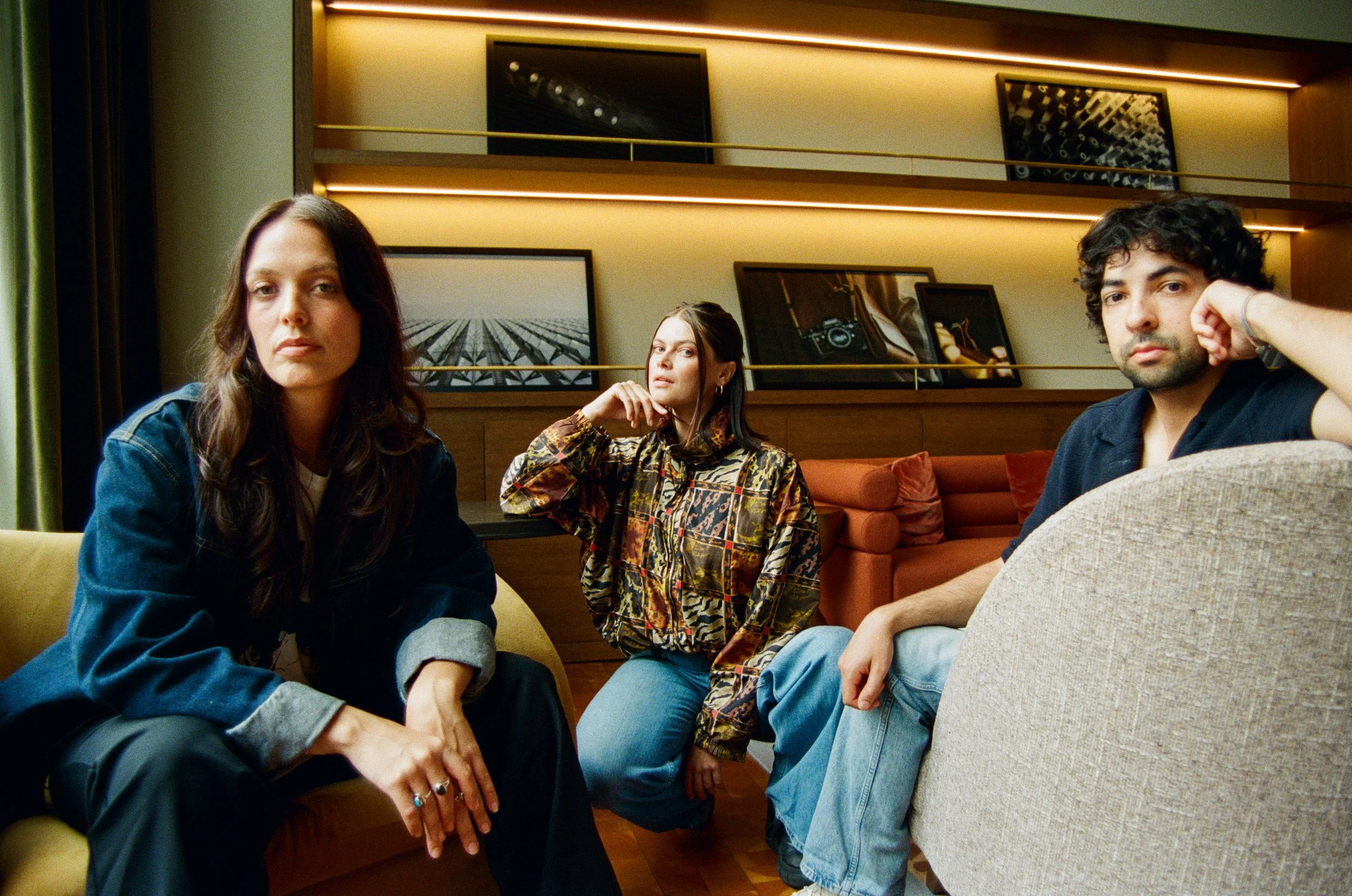
Photo by Dylan Vanessa for The Luna Collective
LUNA: Andrew, this question’s specifically for you. I didn’t forget about you! You worked with someone else that was really special. I was scrolling through TikTok and saw that your mom has a feature on “Fantasyland.” How did that come about?
PACHECO: Plain Jane was this moment for all of us, where it's our first record and we've waited so long for this, it's become this personal and fun thing. We've made it our world.
My dad does this signature whistle. It’s one of the most piercing sounds you’ll ever hear in your life, but ever since I was a kid, he's always been saying, "When do you need a whistle on a song?” So there was a certain moment on the record where I was like, “You know what, this could probably have a whistle on it.” My parents were visiting me in Nashville, and one night we just got my dad on the mic. So there's portions of that whistle in “Little Blue House” and “Sweet Surrender.” My mom was there, too, and I was like, "You want to hop on the mic? I got a part for you!” With “Fantasyland” I always heard that guitar line having some sort of group vocal on it, but I didn't want it to sound like us and my mom—she just crushed it.
LUNA: If you had to pick your top three songs off this album, which would they be?
FORBES: This is such a hard question because I just dropped four on Instagram. I would choose three for three different points of the album. You know what I mean?
PACHECO: I have a definitive two that I feel strongly about in our broader catalog. “Suburbia” and “Loretta's Last Call” are two that, when we wrote them, they became the centerpiece of the album. They always struck me as, “This feels really good for us.” Third song, if I had to pick one, honestly, maybe “Geraldine.” It’s different for us, and it felt really like a little special thing.
HALL: I'm a Gemini, and this answer's changed like eight times. I always joke whichever one is coming out next is my favorite because you're so focused on it, listening to it over and over, making content, and you're like, “Wow, this song is so good!” But the four I put on the story were “Loretta's Last Call,” “Rosie's Party,” “Average Joe” and “Geraldine.”
LUNA: Now this could be a difficult question, but I feel like there's only one right answer. Is there such a thing as too much synth?
PACHECO: I'll leave it at one of my favorite quotes that I see on Instagram once in a while, at least on my feed.
HALL: What are you about to say? (laughs)
PACHECO: Forgive me father, for I have synthed.
