INTERVIEW
INTERVIEW
☆ BY SHEVON GREENE ☆
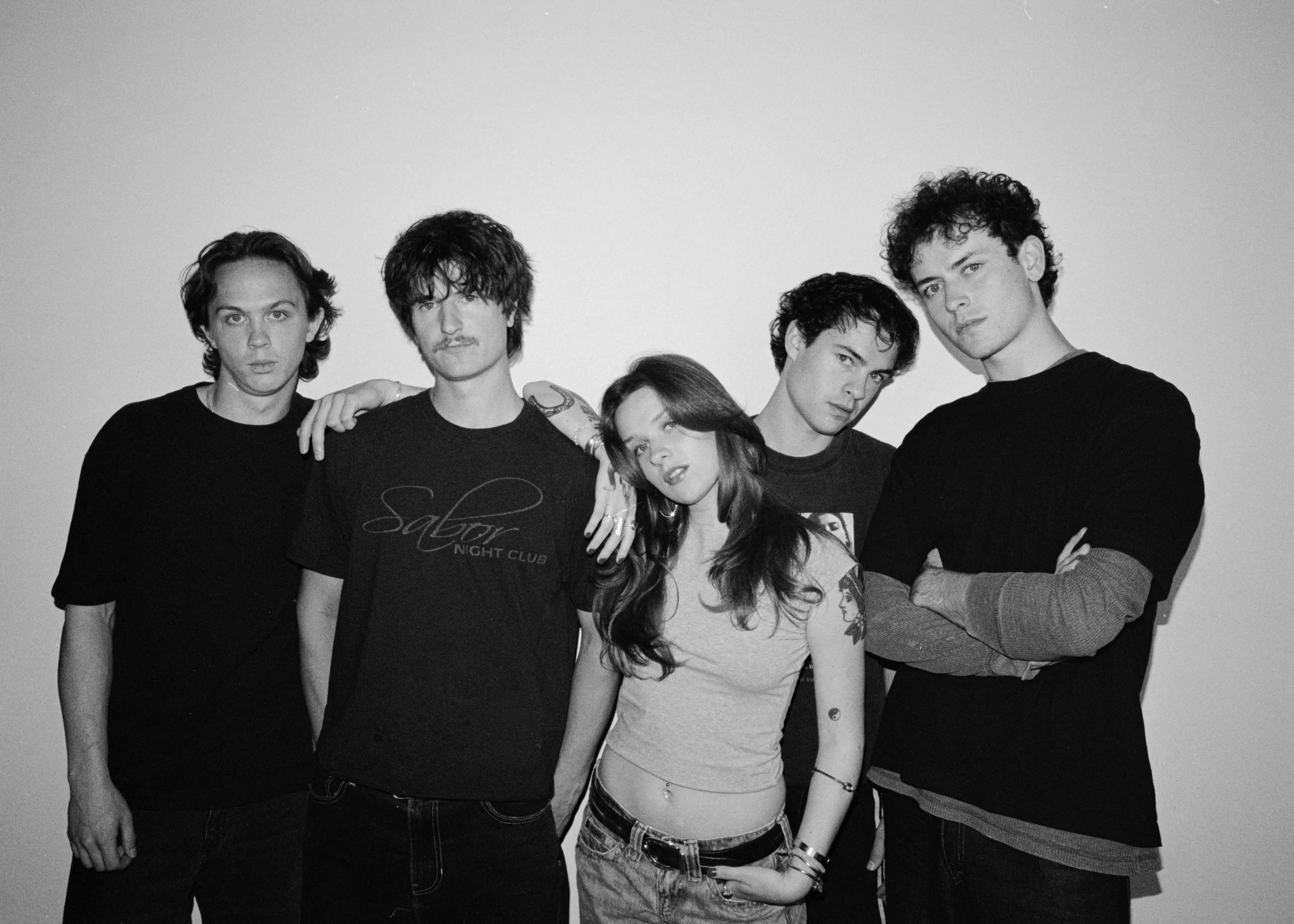
Photo by Sawyer Brice
PORCH LIGHT MIGHT NOT HAVE THEIR STAR ON FIRST AVENUE’S WALL JUST YET—but if there’s one thing I’ve learned from talking to the Minneapolis rock band over the past couple of years, it’s that they’re not afraid to aim high.
Throughout different eras and phases of their career over the past two years, it’s never been a more exciting time to become a Porch Light fan if you haven’t been introduced to them yet. Their debut album Hush, released on September 18 via Mom + Pop, captures both the band’s heavier rock sound and even its more vulnerable side. The explosive vocals of “Paranoia” contrast perfectly with the tenderness of love songs like “James” or “Living Room Blues.” Jackie Uhas’ vocals and the guitar-heavy arrangements from Kyle Siemon and Zac Fogarty are two standout highlights of the project and are more apparent and in-your-face than ever.
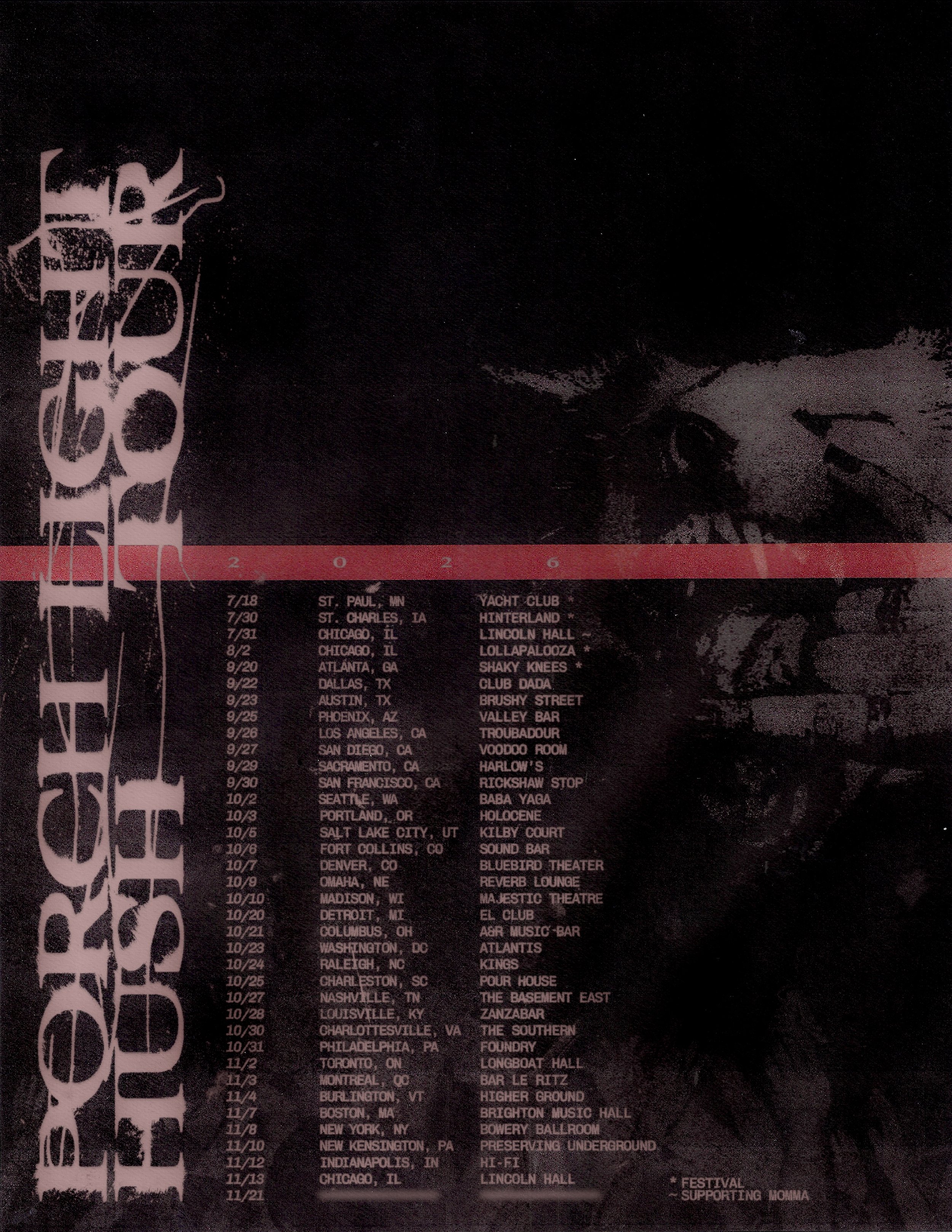
Luna caught up with members Jackie Uhas (vocals), Zac Fogarty (guitar), Henry Hughes (bass), Kyle Siemon (guitar) and Tony O’Keefe (drums) about everything from finding their footing as songwriters to the songs taking on their new lives on tour. And, of course, whether that First Avenue star might be in their future. Read below for more.
LUNA: Nice to talk with you guys again! Last time we talked at Hinterland, you were getting ready to release the album and head out on tour. Now that the album's been out for a little over a month and you've gotten to play these songs for people, how's everything been feeling? Is there anything that's surprised you about the response to the album so far?
UHAS: It's been incredible. Truthfully, I don't think any of us were ready. Obviously, when it comes to albums, a lot of times there are a few songs that stand out more than others that people tend to gravitate towards. But we've been very fortunate that I've seen at least 75 percent of the crowd singing every song, which has been incredible and really rewarding.
FOGARTY: It's cool. We released the album right before we went on tour, so the longer we go on tour, it's cool to see what songs people really resonate with live from city to city.
LUNA: Has there been any standout songs going through different cities where it seems like people really resonate with? Is there one that's stuck out to you so far?
FOGARTY: Not too much, honestly. Each city has their own one where they'll sing a song really loud. Honestly, one that has surprised us a lot was "Mary's Got a Gun." People seem to like it, so that's good.
LUNA: "Mary's Got a Gun" is probably one of my favorites too. You guys spent some time up at a cabin writing a lot of the songs from Hush before heading to the studio to record them, and I really love that you were able to step away from everything and just focus on making music together. When you look back at that, was there a defining moment or something that you took with you that changed the way you approach songwriting as a band?
UHAS: All in all, every single song and every project we've done together, I've figured out how I like to write and understood what writing is a little bit more. This time around, obviously, we have a very clear range of arrangements and sounds and tones and things going across the board of the whole album, which was really cool that we got to experiment and really serve these songs to be what they are now.
For me, it was just figuring out that there are really no rules to songwriting. There can be if you want there to be, but for the most part, there's a lot of freedom involved in it, and these guys make it really easy.
LUNA: Was there a particular song on Hush where someone's idea completely changed the direction of what you originally had in mind?
FOGARTY: Yeah, there were a couple. The most notable one was "Crossfire," which completely shifted into what you hear now. It was a totally different song before that.
SIEMON: And "Baggage" too.
FOGARTY: "Baggage" was also a pretty different song with a different feel to it. Those two, we just sat with and were able to feel where we wanted to take them more. Then with help from our producer, Caleb Wright, he guided us in a way where he thought he could see the songs going. It was cool to see those come together. The same goes for "Mary's Got a Gun," too.
UHAS: We didn't really know what to do with "Mary's [Got a Gun]" because it was just verse, chorus, and then Zac started playing, followed up by the pre-chorus, and it really became a whole song. I think that was a lot of Zac making that into what it is. But our producer is super great. He knows what we want to do and who we are, so when he does guide us, it always feels very organic.
LUNA: Speaking of “Mary’s Got a Gun,” I really like Mary. She seems like a very interesting character. I read that you originally wrote it as a fictional story. What inspired you to create her? Did you have a particular person or personality in mind? I almost thought of a manic pixie dream girl, but 10 times more intense.
UHAS: Exactly! I'm so glad you noticed that. It is loosely based. It was inspired by this friend I have who's the most infectious person ever. You meet her, and you want to be her friend immediately. She's just so in your face, "I don't give a fuck." She beat up some dude at fucking Jersey Mike's because he said something to her friend that was mean. She's super in your face and honestly controversial, but you can't help it. She just has this energy where you're like, "I just want to talk to you." But if you're too close to her, you're gonna get burned. Something bad's gonna happen because she's this entity, this otherworldly human.
So it's kind of based around that, and the gun is her head and her heart. If she's pointing it at you, you should be careful because you don't know what's gonna happen.
LUNA: Jackie, your vocals have always been one of my favorite parts of Porch Light's music, and I feel like you really pushed yourself on this album. It seems like you tried some different things. "Paranoia" especially stood out to me, particularly during the bridge when your vocals get really intense. I also read that you recorded the vocals in one take during pre-production, which is crazy, but so cool! What was that experience like, and was there anything you learned about your voice specifically while making this record?
UHAS: After the record, I figured out I've been breathing wrong. I did two vocal coach lessons, and [the coach] was like, "Yeah, so you've been just straining, and your range is actually a little bit bigger than you think it is," which is a little bizarre to hear.
In the studio, I'm really new to recording; we all are. But with Caleb, we've gotten into the habit of when we want there to be big moments in songs, or when a song is calling for something and it's an empty space, he'll just play the part over and over again, and I'll sit in the booth and we'll do multiple takes of me just belting random shit over it. So a lot of the belts you hear are not really written. They're just very organic. There was one in "Baggage" from pre-production that I think was the highest note I've ever hit in Porch Light history. We ended up taking it out because it didn't serve the song. It was extra as hell.
Being free to yell and be as loud as I want and take up space, especially as a woman in rock, is sometimes a little daunting. But at the other end of the spectrum, there's also a world where it's okay to be soft and a little bit more fluid and not put myself in a box. These guys are great about letting me do that.
LUNA: Maybe you can save that super high note for a future album or something.
UHAS: For sure, yeah (laughs).
LUNA: Another question for you, Jackie. One of my favorite things about Hush is that it goes from really heavy, aggressive songs to some more vulnerable tracks as well, like "James" and "Living Room Blues." Those feel pretty different from the more painful experiences you've written about in the past. Was it a different experience writing those?
UHAS: Those two that you specifically highlighted are about the same person, and it's really funny that you noticed that. I was wondering if anybody would notice that those are love songs, and the other ones are heartbreak or anxiety-ridden tracks. It was interesting because I had never fully written a song that wasn't sad. When I write, it's just based on whatever I'm feeling in a given time or moment, so it just happened to play out that way, and it was really cool.
It is harder for me to write love songs than it is to write painful ones. But with the range of these songs, it’s just about where we were in time. It's a timestamp, and the guys have said it too as well. It marks where we were at in our lives, and the range is a very good way of presenting that as well.
We're still a relatively new band, and it's our first album, and we wanted to make a statement of, "This is what we can do. We can do pretty much anything." I think it turned out really cool to display that range.
LUNA: Zac and Kyle, I really love the solos and how much the guitar work adds personality to the songs. Are there any parts or solos on Hush that you get really excited about performing live, or ones that really stick out to you? Any ones that took a little more experimenting to get right?
SIEMON: For me, it was "Shut Out" for sure. That was the first one for me that I had an actual solo on. Performing it live every night, I love it. It's so much fun. That one came together fairly quickly. It’s the last song we wrote and the one I love the most, to be honest.
FOGARTY: Yeah, that's a special one for all of us. When [Kyle] was tracking the solo in the studio, he was doing this crazy Eric Johnson-style bend thing that you can hear in the track. Caleb turns him up, and he's like, "How'd you do that? Do that again." He was so proud of it.
For me, "Crossfire" has one of my solos, and it's pretty fun to play. It's ripping a little bit, and I also love the "Living Room Blues" guitar stuff.
UHAS: The "Living Room Blues" guitars are insane.
FOGARTY: "With You" is also one of my favorite songs to play because the song starts so soft and kind of weird, and then just turns into this big, open, flowy thing that honestly just happened. It was like Jackie's "Paranoia" situation. It just happened naturally in one take. Most of that song is just the scratch recording. It was cool to see it happen. It was just a result of the four of us really locking in together. That's what made it sweet.
UHAS: Yeah, those guitars get me going, man.
LUNA: I'm super excited for your show at First Avenue in November, especially knowing how much that venue and the Minneapolis music scene in general have meant to you guys since the beginning. You've gone from playing house shows around the Twin Cities to headlining the Mainroom and all these amazing venues. What does that homecoming show mean to you? Is there anything special you plan to do for it?
FOGARTY: It's just going to be a really special night for all of us. It's the spot to play in Minnesota, for any musician. It's really cool that we get our chance to have our night there.
SIEMON: It'll be two years since we sold out our first show at 7th St. Entry, and now we're playing the Mainroom. It's unreal and crazy.
UHAS: Two years ago we did 7th St. Entry, a year ago we did Fine Line, and now we're doing First Ave. It's incredible.
LUNA: That's so cool to see that growth too, being able to go from venue to venue, and now First Ave.
UHAS: It's a testament to the scene. The local community really shows up for you and supports you. The people of Minnesota really love music, and they're just great.
LUNA: I also have to ask this. I don't know how getting your star on the building goes. Are you guys gonna have a star on the building?
SIEMON: Hopefully someday (laughs).
FOGARTY: We don't know how it works. We're hoping to God that they ask us.
LUNA: Maybe last minute!
UHAS: I think there are certain thresholds you have to pass before you get a star, which is fine. We're gonna put in the work, and we're gonna get the damn star at some point.
LUNA: Now that your debut album is out and you're headlining your tour, if you could name one thing, what's something you're most proud of accomplishing together, and what's something you still really want to do next?
UHAS: Making an album and then touring the hell out of it and selling out a lot of venues two years into our career is incredible. Just being able to freely make the art that we want and be able to do this is a blessing itself. But truthfully, selling out First Ave two months before the show is quite literally the craziest thing that's ever happened to me.
LUNA: Anything else you want to add for your fans?
UHAS: We love you. Thank you for showing up at our shows and going nuts. We've been very fortunate that our fans are the best people ever. They've been so wonderful to our openers as well, and so supportive. We actually have the greatest fans ever.
FOGARTY: We love it when people dance and mosh a little bit. That's awesome.