
Q&A: Nia Perez’s Debut EP Is Confessions From Bedroom Letters to Indie Pop Anthems
INTERVIEW
INTERVIEW
☆ BY DANIELLE HOLIAN ☆

Photo By Melody Berkery
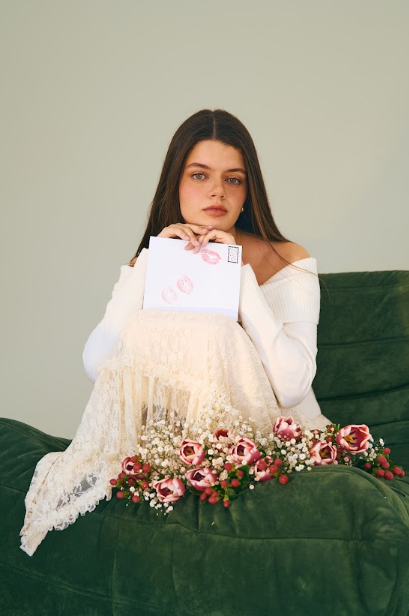
NIA PEREZ WRITES THE KIND OF SONGS THAT FEEL LIKE THEY WERE NEVER MEANT TO BE SHARED—softly spoken confessions, half-healed memories and truths that usually stay tucked away in the quiet corners of the mind. The Venezuelan singer-songwriter quickly carved out a space for herself in the indie pop landscape by doing the opposite of what most rising artists feel pressured to do: instead of masking vulnerability, she leads with it. Her debut EP, Things I Wish I Said, is a testament to that instinct. Built around the concept of unsent letters, pieces of emotional history written but never delivered, the project unfolds like a private archive suddenly illuminated. The result is a body of work that feels both startlingly intimate and universally resonant.
Perez’s music lives at the intersection of bedroom pop tenderness and polished indie production, a blend that mirrors the duality of her writing: raw and unfiltered, yet carefully held together. Tracks like “Shapeshifting” and “Not Her” showcase her ability to transform deeply personal stories into melodies that linger long after they end. There’s a softness to her voice, but it’s the kind that carries weight; every lyric feels deliberate, every moment emotionally considered. And while her songs often explore heartbreak, self-discovery and the ache of growing up, they never wallow. Instead, Perez treats her experiences as something to be sifted through, understood, and ultimately healed.
What makes her perspective especially compelling is the literary quality woven through her songwriting. By writing from the framework of letters never sent, Perez brings a narrative intimacy to her music, one that turns listeners into confidants. It’s a format rooted in her real-life practice of writing letters for closure, a habit that quietly evolved into the emotional architecture of Things I Wish I Said. In each track, there’s a sense of witnessing someone finally speak the words they carried for years, even if the intended recipient will never hear them.
Despite the personal nature of her work, Perez isn’t creating in isolation. Her growing presence on TikTok and her ability to connect with listeners, often through short clips of her singing to her bedroom camera, have created an audience that feels deeply aligned with her emotional world. Listeners don’t just consume her music; they confide in it. Many reach out to share their own stories of heartbreak and self-realization, reinforcing the idea that her vulnerability doesn’t expose her, it bridges her to others.
As Things I Wish I Said continues to find its audience, Perez is already stepping into what comes next with clarity and intention. LUNA caught up with Perez to revisit the project that started it all: the unsent letters, the moments that shaped her and the quiet bravery behind choosing to share them.Read our conversation with Nia Perez below.
LUNA: Things I Wish I Said unfolds like a series of unsent letters. When did you first realize that this concept could be the foundation of a full EP?
PEREZ: Honestly, I didn’t start writing the EP with that concept at all. It even had a totally different name in the beginning. But as I kept writing, I found myself saying, “There are just so many things I wish I said back then,” and it really stuck with me. I also remembered how I used to write letters to get closure from people who hurt me. That’s when it clicked; it made perfect sense to turn those two things into the heart of the EP. It became a collection of unsent letters full of the things I never said, but always felt.
LUNA: The EP blends bedroom pop intimacy with a polished indie pop sound. What production choices were most important in capturing that balance?
PEREZ: I’ve been lucky enough to work with Latin Grammy–winning producer Camilo Velandia, who immediately understood my vision. I knew I wanted the songs to have layered indie elements like synths and harmonies. We were really intentional about avoiding overproduction. The goal was for each song to feel honest and personal, like you’re sitting with me while I’m writing these letters.
LUNA: This is a very personal record. Was there a particular moment in your life when you decided you were ready to share these private stories publicly?
PEREZ: While these things I talk about in the EP were happening, I felt very lonely. I didn’t have anyone I could really talk to, and I never want anyone else to feel that way. So for me, it wasn’t one big moment where I suddenly decided, “Okay, I’m ready to share this.” It just slowly started to feel right, like maybe these stories could help someone who’s going through something similar. I’ve always wanted my music to make people feel less alone, so even though these songs are personal, sharing them felt like the right way to turn something painful into something meaningful.
LUNA: How did writing this EP change your relationship with the experiences you’re singing about?
PEREZ: It honestly changed them completely. Once the songs were finished, it felt like a weight had finally lifted off my shoulders. Writing everything out gave me the closure I’d been looking for, and it helped me move forward. I still think about those experiences sometimes, but not in the same way. It’s less heavy now. I see them from a more mature place, almost like I’m looking back as a different version of myself. It feels a lot healthier.
LUNA: "Shapeshifting" is a powerful emotional opener. When did you first become aware that you were reshaping your identity within that relationship, and how did that realization influence the writing?
PEREZ: I actually realized it during a conversation with my therapist. I was telling her about the people who had hurt me, and she asked, “Have you noticed that you change yourself depending on who you’re with?” and I fully panicked. Deep down, I think I knew it was true, but I just didn’t want to admit it. Writing “Shapeshifting” was my way of finally facing that part of myself. It’s such an introspective song, and it felt like the right place to start the EP; almost like opening the door to everything I had been avoiding. It sets the tone for the honesty that comes after.
LUNA: For "Not Her," did you expect it to resonate so strongly and become your most streamed track, or did that surprise you?
PEREZ: I never go into writing a song thinking, “This is the one,” because you honestly never know what people will connect with. So yes, it definitely surprised me in the best way. At the same time, I always believed in that song; it felt strong and honest from the very beginning. I’m just really happy other people felt the same way and connected to it!
LUNA: "Oh Sweet July" captures heartbreak on your 17th birthday. Was it difficult to return to such a painful memory, or did the writing feel cathartic?
PEREZ: “Oh Sweet July” was actually the first song I wrote for the EP, and it was insanely cathartic. I’d always wanted to talk about that experience because, as painful as it was, I really think it shaped who I am today. Going back to that memory wasn’t easy, but writing the song felt like the closure I deserved from something that felt so heavy when I was 17.
LUNA: "Cognitive Dissonance" explores the psychology of toxic relationships. What research, reflection, or personal insight shaped the lyrical direction of that song?
PEREZ: I actually learned the term “Cognitive Dissonance” in one of my college psychology classes, and the second I heard it, I wrote the idea for the song in my phone. It perfectly described that never-ending cycle you fall into in toxic relationships: going back to someone even though you know you shouldn’t. That was something I found myself doing way too often. I kept convincing myself that if I just tried harder, the person would change, and of course, they never did. The song really reflects that loop, especially in the second verse, where that inner conflict and denial are the strongest.
LUNA: "Little Old Flame" closes the EP with a sense of resolution. At what point did you feel that chapter was truly over, both creatively and emotionally?
PEREZ: “Little Old Flame” is actually connected to “Shapeshifting” in a really full-circle way. Both songs deal with that question of identity: “Who am I?” The difference is that in “Little Old Flame,” the question flips back onto the other person: “Who are you now that you’re all alone?” It’s me finally breaking the cycle and showing them they can’t take anything else from me. Putting it at the end of the EP felt really important because it represents that moment where I finally let go. Creatively and emotionally, that song was the point where I knew the chapter was truly over. It felt like closing a door I kept reopening, and choosing not to go back to the places where I was hurt.
LUNA: Many listeners find the EP profoundly relatable. Why do you think private heartbreak translates so universally in music?
PEREZ: For better or for worse, heartbreak is a universal feeling. Almost everyone has gone through it or will at some point. It’s kind of inevitable. I think that’s why people connect to it so deeply. We do so much for love, we give so much of ourselves, and a lot of the time, we end up getting hurt in the process. When you put those feelings into music, people see their own stories in it, even if the details are different. It reminds them they’re not the only ones who’ve felt that way.
LUNA: How do you walk the line between honesty and vulnerability without feeling too exposed, or is that part of the artistic risk you embrace?
PEREZ: I spent so much of my life trying to care less; to be less sensitive, less emotional, less vulnerable. But eventually I realized those are the parts of me I actually love the most. I love that I feel things deeply, and I want my music to reflect that. For me, honesty and vulnerability define exactly what I want to achieve with my musical world. They’re a part of who I am at my core, and I refuse to change that again. Yes, it can feel exposing at times, but that’s the artistic risk I’m willing to take, because this is who I am.
LUNA: Did storytelling come naturally to you or has it been something you’ve had to learn to shape and refine through songwriting?
PEREZ: I’ve always loved reading and even writing my own little stories, so I guess storytelling has always come naturally to me. My favorite songs are the ones that take you on an emotional journey and really let you into the world they’re creating. That’s the kind of writing I’ve always gravitated toward. I think my songwriting is definitely evolving, but the storytelling part is something I always want to hold onto. It’s what I love most and what feels the most “me.”
LUNA: Your TikTok presence has created a strong emotional connection with fans. What have been some of the most meaningful reactions you’ve received so far?
PEREZ: A girl found a TikTok of me singing “Shapeshifting” and sent me a DM thanking me for writing it because she was going through a breakup and felt like no one understood what she was feeling. I cried after reading that. That’s exactly why I do this. If even one person feels seen or understood because of something I wrote, then I’ve done my job. I get messages from people thanking me for my songs, but what they don’t realize is how grateful I am that they took the time to listen in the first place.
LUNA: On Spotify and YouTube, you’ve already reached tens of thousands of listeners. How does it feel knowing these deeply personal songs are now out in the world being interpreted by others?
PEREZ: I still can’t believe it, honestly; even more so because this is my first project ever. It feels surreal knowing these deeply personal songs are out in the world and that people are actually listening to them, singing them, and interpreting them in their own way. Hearing someone hum one of my songs still shocks me. My little 10 year old self, the one who always dreamed of having her own songs, would be so proud and excited. This is all I’ve ever wanted to do: share my music with the world. I’m just really grateful for how it’s being received.
LUNA: You created an anonymous space online for people to write unsent letters of their own. What have you learned from offering that outlet to others?
PEREZ: I love having that space for people to say things they’ve been holding in for a long time. Some of the letters I’ve read have been so emotional; people saying goodbye to estranged family members, confessing love to someone in their life, or mourning someone they’ve lost. It’s a reminder of how many different types of “unsent letters” we all carry around. I really believe that sometimes writing things down is the best way to understand what you’re feeling. It gives you clarity. And I think people need that space; a place where they can be honest without fear or judgment. It’s been really meaningful to see how much it helps others.
LUNA: Now that Things I Wish I Said is out, do you feel the “next chapter” is starting, and if so, what new creative territory are you excited to explore?
PEREZ: Things I Wish I Said will always hold a special place in my heart, but now that it’s out, I'm excited for the next chapter to start. I want to keep pushing myself creatively, to grow, to experiment, and to share new sides of myself that I wasn’t ready to share before. This is just the beginning. I’m stepping into this next era with so much clarity and intention. And trust me, you’re going to be seeing a lot more of me.
