
Q&A: Playing Fuck, Marry, Kill with People I’ve Met
INTERVIEW
INTERVIEW
☆ BY LUCY BULLINGTON ☆
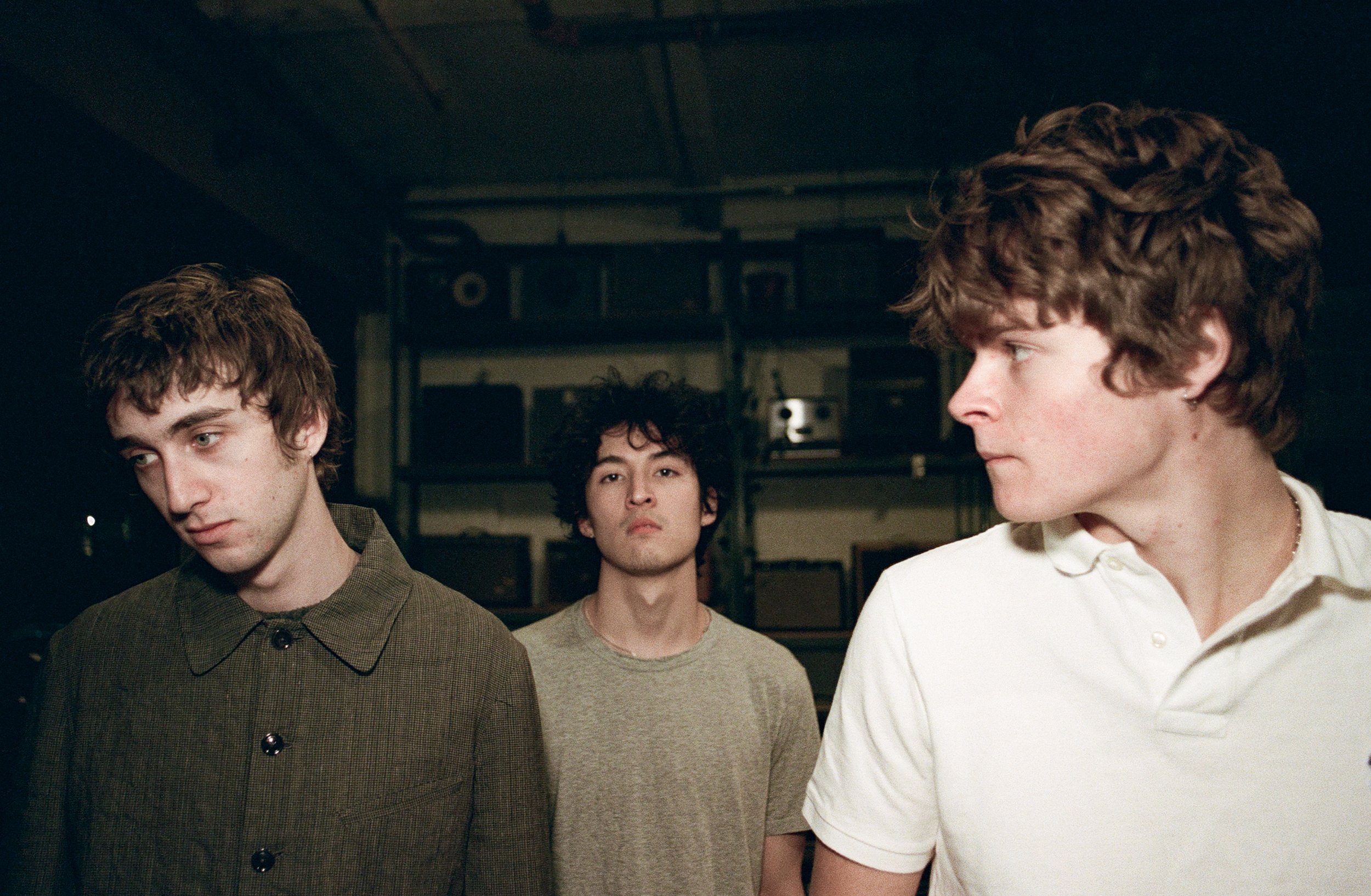
Photo by Lucy Bullington
IF YOU LIVE IN LOWER MANHATTAN YOU’VE PROBABLY HEARD OF PEOPLE I’VE MET—or at least seen their name. “People I’ve Met” along with their former name, “Dancer,” is spray painted across sidewalks and street corners downtown. It’s a guerilla style marketing tactic that’s built curiosity around their name and drawn in large crowds at their shows around the city.
The band, composed of Moses Martin, Orlando Wiltshire and Andy Suster, started playing together in high school in their own town of Los Angeles. After the trio all moved to the East Coast for college, their manager, Mason Dilullo, started booking them at local venues around the city. Within months, People I’ve Met was selling out venues like Mercury Lounge and Irving Plaza. This summer, the band expanded that reach even further, joining Australian indie rock duo Royel Otis as support on their North American tour.
As a friend and photographer of the band, I’ve had the pleasure of watching them evolve and improve show after show. What began as a group of friends figuring things out in real time has steadily sharpened into a band with a clear sense of presence and purpose onstage.
“Our intention has become more intentional,” Orlando explains. “With the first show it was very much like, alright, let’s play these songs. This is what we’ve got right now. Some random-ass gear. But now we think about the order of everything, what kind of story we want to tell, how each song should sound, and how they connect with each other.”
The group has resisted the urge to rush their releases and online presence. For a band with a reputation built on live energy, the lack of official releases has almost become part of the allure.
“I think it’s slightly intentional,” Moses explains. “Not to give away too much. Leave some things to be discovered and encourage people to come see us live if they want to know more.”
The band recently released their first EP, Bunny. We sat down with People I’ve Met before their show at Main Drag in Brooklyn to talk about the making of the EP, group dynamics, and their next steps as a band. Read the full interview below.
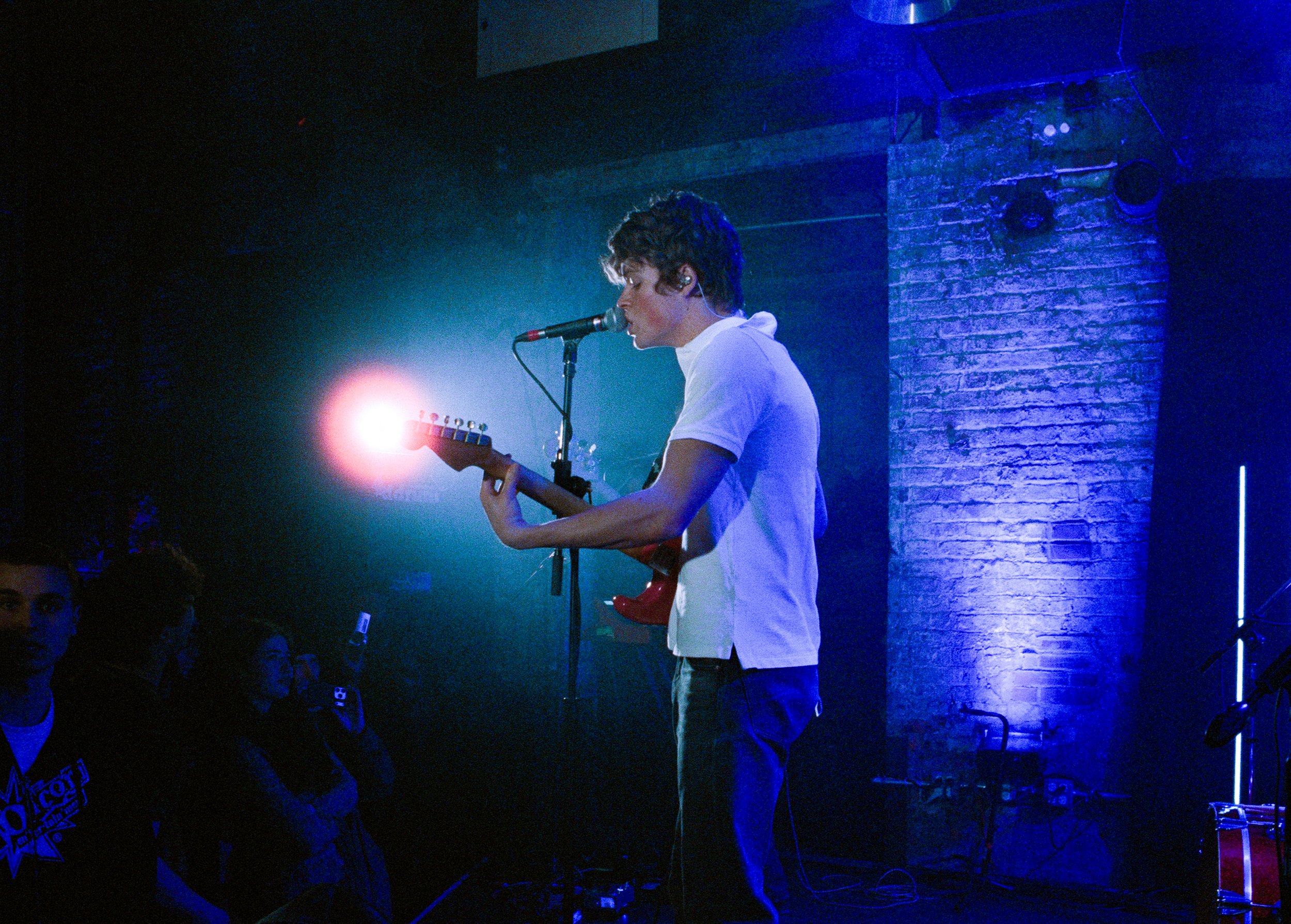
Photo by Lucy Bullington
LUNA: I remember photographing your first show in New York at Nublu Classic. What do you guys think is the biggest difference then versus now?
MARTIN: I mean, in a lot of ways, we’re much more comfortable with each other live, which has just made the shows a lot better and have more energy. We’ve gotten a lot more dialed in with how we approach them and rehearse them, which has just overall upped the quality. And then I’d say musically the quality has just been increased as well.
WILTSHIRE: I feel like our intention has become more intentional. With the first show it was very much like, alright, let’s play these songs. This is what we’ve got right now. Some random-ass gear. But now we think about the order of everything, what kind of story we want to tell, how each song should sound, and how they connect with each other.
LUNA: I feel like what’s interesting about you guys compared to other bands is that you’ve built such a scene in the live sphere, but you have a pretty minimal footprint in terms of publicity and releasing music. Why is that?
MARTIN: It’s intentional. As to not give away too much, and leave some stuff to be discovered. It also encourages people to come see us live if they want to know more about us.
SUSTER: I also feel like we never finished anything until a few months ago for the first time, which is crazy. But we never valued that over creating and getting better until recently. We’ve always just tried to be as great as possible.
LUNA: You guys recently released “For Hire.” What’s each of your favorite things that the other two band members contributed to the song?
SUSTER: I love that question. Rhythmically it’s a very complex layering of a lot of different things at once. I really like what Moses added. There’s a part where he’s adding a bunch of rhythmic layers at once, which makes it really complex but still feels like a straightforward song that’s easy to listen to.
And with Orlando, it’s like these little tic-tac rhythmic things which add to the song so much. He brought a lot of feel to the song.
MARTIN: Orland brought a lot of rhythmic intricacies to the song. It only really started as a pretty shit demo of just guitar and bad drums. But when I brought it to the guys and we did it in the studio, both of them really made it come alive and gave it life and complexity and great bass parts and fills.
SUSTER: But I love that we had almost a north star with the guitar riff. There was never any doubt. That was the riff from the start, and everything built from that.
WILTSHIRE: On the demo Moses brought, the thing that sticks with me is the energy. It’s this kind of fun energy that I hadn’t heard before. There are fun songs, but this was like a driven fun. That helped lead the song and gave it this really positive feeling.
And for Andy, you added tons of little colors and moments throughout the song. When you have all those small things layered in, it creates this extra depth.
LUNA: What’s the song about?
MARTIN: It’s essentially about the process of getting over someone. Realizing all the tricks they’d do to make you like them again. But mainly realizing the idea that you can’t just have me when you want me.
LUNA: So you wrote it?
MARTIN: Yes.
LUNA: What’s your favorite lyric?
MARTIN: I really like, “Give me those eyes, get me back on your side.”
SUSTER: What does that mean?
MARTIN: It's like when you’re angry at someone, and they can give you a certain look, like puppy eyes, and you like them again.
LUNA: Have you ever slipped in a lyric that only one other person would understand?
MARTIN: Yes. I do it all the time. Even the chorus lyric only really makes sense if you think about “us” as the royal “we,” like in England when people say “give us a kiss” even though they’re talking about themselves. So “you’re not getting us for hire” is like “work for hire.” A lot of things don’t really make sense to anyone except me.
WILTSHIRE: Every sentence is basically an analogy.
LUNA: What were you guys consuming while making the single?
MARTIN: When I first did the guitar riff, I was listening to “Healing, Pt. 1” by Todd Rundgren. And I wanted to write a riff that’s sort of bouncy in a similar way. Also Iggy Pop and The Stooges. There’s a song they have with claps and I wanted claps like that.
SUSTER: When we first took it into the studio, we were also listening to a lot of Joy Division and New Order.
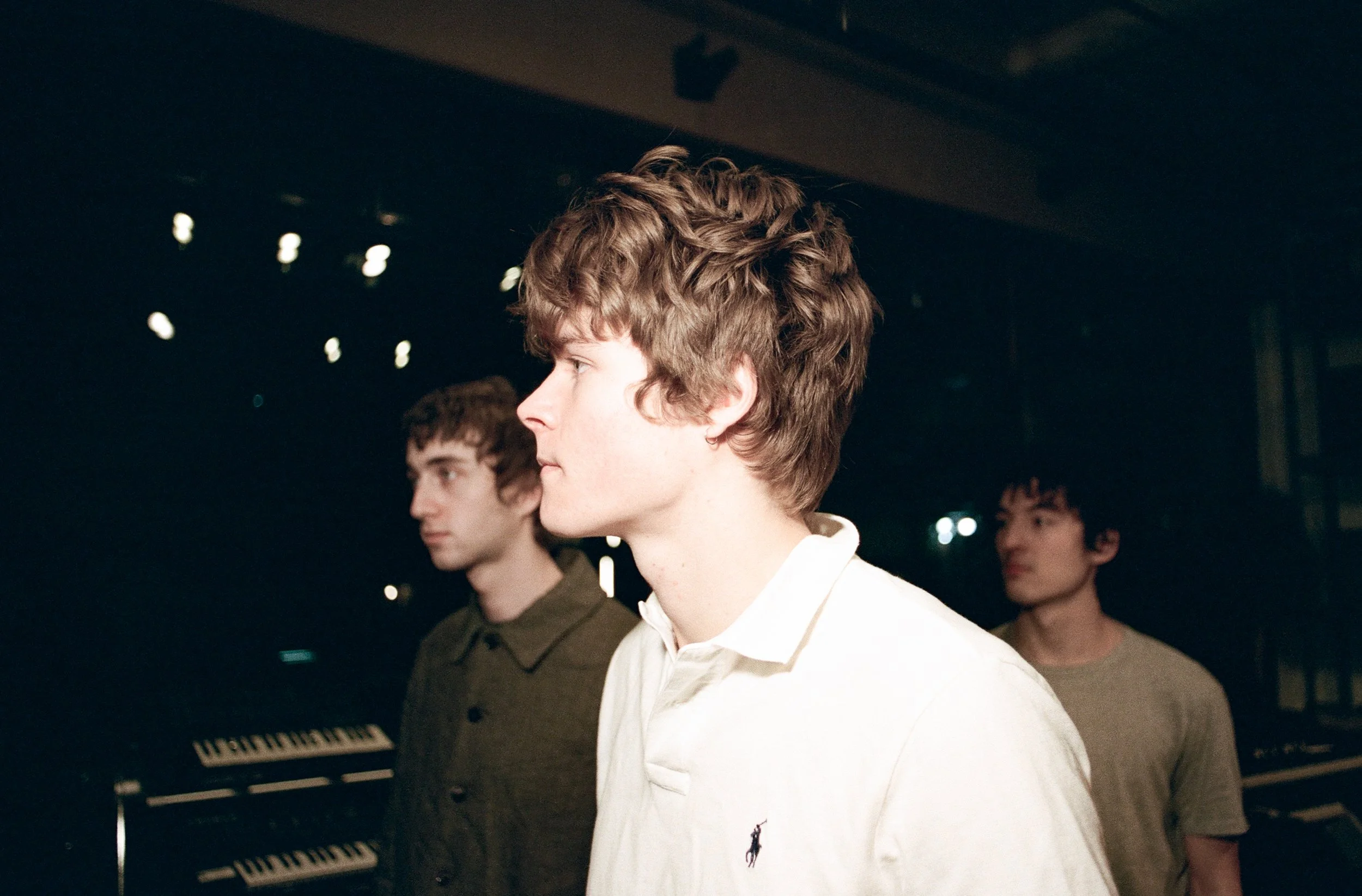
Photo by Lucy Bullington
LUNA: When did you guys first realize, like, wait we’re kind of good at this?
MARTIN: Still waiting. But I can tell you when I realized how good they were, which pretty much instantly.
WILTSHIRE: It still doesn’t feel serious.
MARTIN: But pretty straight away we took it seriously. Andy had a big part in that. He was like, guys, we should make this a weekly thing.
WILTSHIRE: You were the mom, Andy.
SUSTER: Yeah. It was never like, “Should we try to do this?” We just started meeting every week and kept doing it. We never questioned if it was good enough, we just kept going.
MARTIN: I think it also felt really serious once they got to New York and I got to school on the East Coast.
WILTSHIRE: Once I started having fun, which was pretty quick, I was like, I wouldn’t not do this forever.
SUSTER: Writing a great song and producing is such an addictive feeling.. You just keep chasing it.
LUNA: What’s your guys’ fuck, marry, kill: writing, recording, and playing live?
MARTIN: I’m gonna marry writing. Fuck recording. Kill live.
WILTSHIRE: I’m gonna fuck live. Marry recording. Kill writing.
SUSTER: I’d fuck live. I’d marry writing. Kill recording.
LUNA: How was touring with Royal Otis?
WILTSHIRE: It was awesome.
LUNA: What did you guys learn from them?
WILTSHIRE: They were very grounded. I was running around like, oh my god, we have to play, there’s going to be so many people. And they were just like, “Hey, how’s it going?” It showed me that everything is chill.
SUSTER: It was this balance of seriousness and unseriousness. They were serious on stage and really intentional. But off stage they were relaxed, like if something went wrong it wasn’t the end of the world.
LUNA: What’s next for you guys?
MARTIN: More songs.
SUSTER: More live shows.
WILTSHIRE: More music in every way.
