
Q&A: Entering Ransom’s World With ‘Wallflower’
INTERVIEW
INTERVIEW
☆ BY GIGI KANG ☆
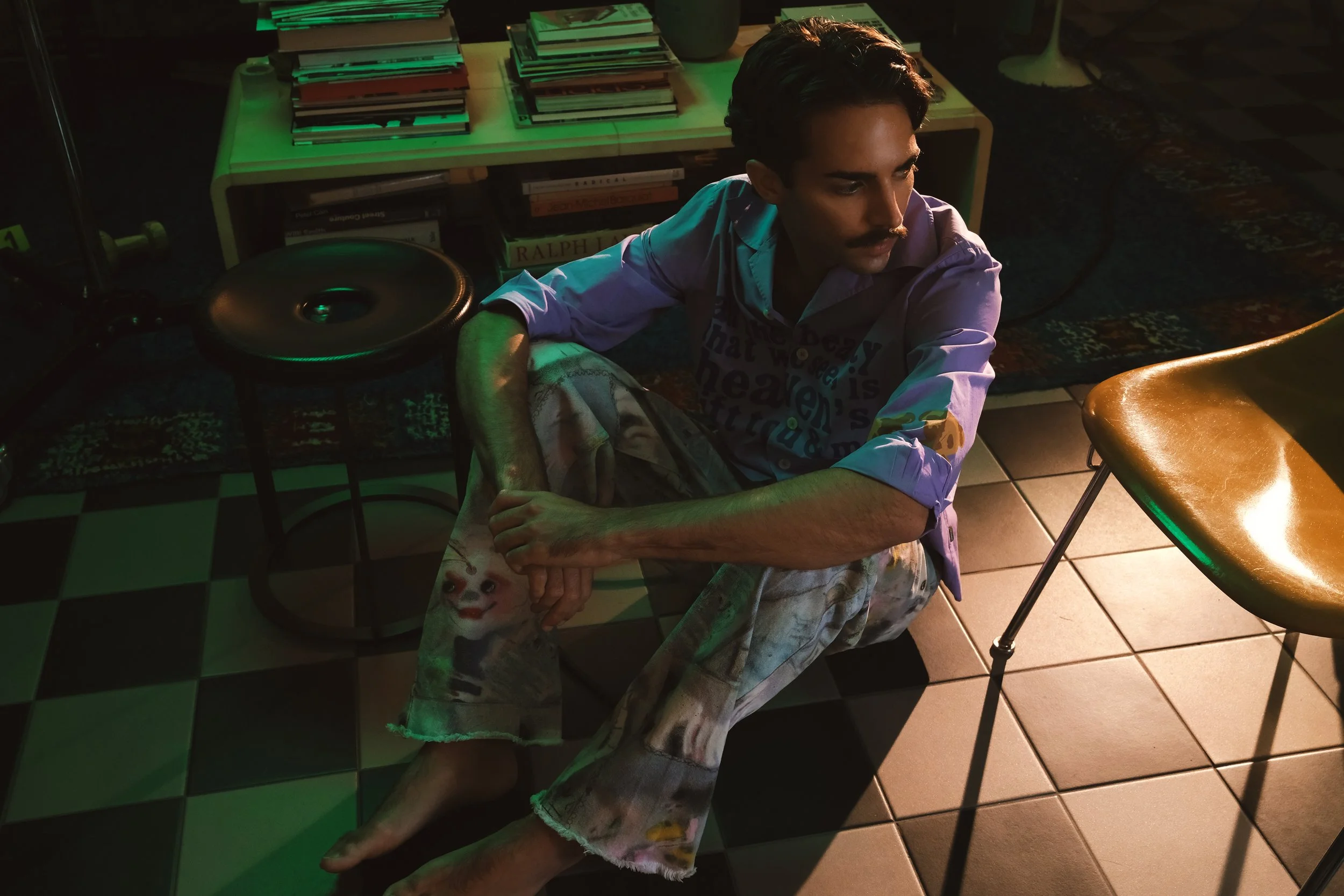
Photo by Ransom Ashley
ARTISTS THAT YOU CAN SEE YOURSELF IN—are often the result of continuous acts of bravery. They examine themselves, the good, the bad and the in-between, which isn’t near easy. Then, they present their discoveries in hopes of finding understanding and offering it, too. With such a level of honesty, it’s inevitable to meet the people in this world that will know you best—because you’re just like them.
Austin-based Ransom is in a similar season of confrontation. He’s looking back at all the things that ever hurt, only to find beauty in them.
“I’m shedding this skin that I have worn for so long in order to survive, even when I didn’t think I was,” Ransom reflects.
His debut single “Wallflower,” produced by Dibs and mixed by Travis Ference, is your invitation to join the journey. A confession of all that Ransom has been carrying, the track is really a poem in the form of an art-pop song. Like a poem, “Wallflower” is packed with vivid metaphors, such as “How many irons in a fire can I juggle, can I cool, before I get burned?”
Ransom is a poet, after all. He’s also a photographer, an actor, the Creative Director of Son of Rand and MAISEUM and a designer. He showcased his unique blend of skills through an interesting approach to releasing “Wallflower”—publishing a fictional town he designed to go along with the music. Every song yet to be released is a location on the map, and “Wallflower” is the entrance.
Having grown up in a religious environment in Louisiana and discovering differences between himself and his peers at a young age, the queer multidisciplinary artist is no stranger to feeling a lack of belonging. It’s beautiful to see Ransom use his own hands to create a place where his truest stories can live, and where like-minded people can find their own corners that feel like home.
“That’s really the heart of everything that I’ve done,” Ransom reflects. “How do I take something hurtful and transform it into something that gives me everything that I felt so deprived of?”
Make sure to check out “Wallflower” and read our full conversation with Ransom below.
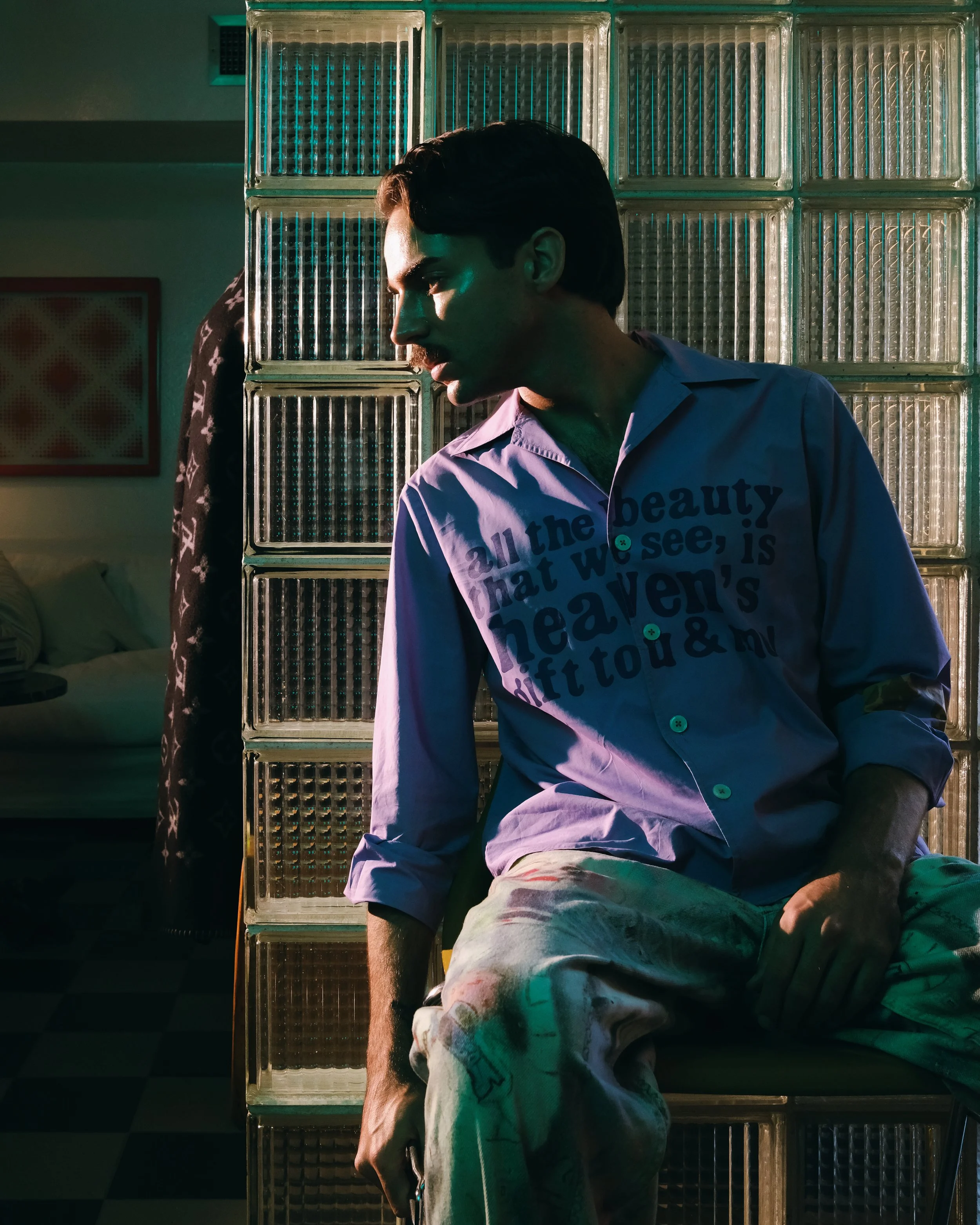
Photo by Ransom Ashley
LUNA: Apart from music, you’re a photographer, actor, Creative Director, poet and designer. When you were younger, what was your experience of discovering these different parts of you? How did it all begin?
RANSOM: I grew up in Louisiana. My dad was very active in the church. I ended up going to middle school at the same place that we went to church. I think that was a seismic shift in my life because I started awakening to the differences between me and my peers. I didn’t have a vehicle or space to express those feelings. I didn’t have a great sense of belonging anywhere. It’s not because of a lack of love, but I think I was just different. At school, I started waking up to that and I experienced bullying that required me to miss months of school at a time. Throughout all of that pain, I discovered film and music as an outlet for me to escape into and to process the emotions I was feeling.
It was through [that school experience] and feeling misunderstood in those spaces that prompted me to find the belonging that I wasn’t getting in my immediate sphere. I started getting involved with choir and drama in middle school. I started understanding that this was a place where, especially in a school like that, the outsiders would migrate and define some sense of belonging through self-expression. In early high school, I got involved with a community theater program and started to understand the catharsis of putting my feelings and experiences into characters. There was also the community aspect that I didn’t have elsewhere which showed me that I could carve out a space for myself. I could use my pain to facilitate community and connection with other people. That’s really the heart of everything that I’ve done—how do I take something hurtful and transform it into something that gives me everything that I felt so deprived of?
LUNA: My favorite artists are those who are candid about what they went through and use it to try to heal somebody else. It’s the hardest thing in the world to put yourself out there because it’s usually too much for even ourselves to carry. Putting it somewhere else is an immense task, but it’s a brave thing to do. I think that’s beautiful.
RANSOM: Thank you for saying that. There are so many facets that have felt so complex to wrap my head around because I feel like I’m shedding this skin that I have worn for so long in order to survive, even when I didn’t think I was. Throughout the process of making this music, the most rewarding part has been to intuitively allow myself to transmit. There has been so much crying in front of the microphone at what’s coming out that’s even surprised me. It has put me in the position of wanting to honor the stories that are coming because they’re authentic and true. To turn my back on them or to say no would feel like doing the same thing to that inner child again. I think that’s where so much of it is coming from. I’m showing up in service of it. It’s requiring me to unravel the things that I’ve tried so long to hold together.
LUNA: With revisiting the things that once hurt, you’re redefining them based on who you are now. Leaving them in the past is totally fine, but you’re reworking the story.
RANSOM: This record is really the forensics of my life. Looking at my pain, at everything that has kept me from inhabiting this space and from existing in my fullness. It’s a healing journey that can be born only from me revisiting my past and everything that I buried. It’s strange because I feel more in touch with those memories than I did even while I was living them. It’s basically what you just said: to be alive, to tend to the wounds of my past, and to repurpose that pain into something that can bring me the connection and love that I was so desperate for back then—that, to me, is one of the great gifts of life, music and art.
LUNA: We see it in the beautiful lyric video for “Wallflower” in which, perhaps, the flowers blooming are a metaphor for your own current state of blooming.
RANSOM: Absolutely. It has been beautiful to see the response to “Wallflower,” especially among the people that I’m close to. I’ve always felt like a bit of an enigma, and it’s beautiful now to be seen. That’s the beauty of art—it’s a vessel for creating belonging.
LUNA: It sounds like this chapter is different from the other art forms you’ve engaged with in the past. What do you think it is about music that allows you to feel connected in this way as opposed to other art forms?
RANSOM: Growing up, writing was the best way that I could make sense of my feelings. It was where I was most comfortable, in that inner world. Writing communicates only what writing can convey, then there are visual components because I’m a visual artist. My eye developed through a cinematic lens; my references were different films and how film uses so many mediums to create a broader emotional experience for people. Music, like film, felt like a space where I could do that in a way that felt the most personal. It’s my voice and my soul. [With acting,] I didn’t have to overidentify with the experience; I got to hide the truth of my experience through performances.
I started recording melodies and spoken word [ideas], so I feel like there were little moments that made me believe that music was the place that I should put all of this energy. It was the thing that terrified me the most which, in this season of my life, I think that’s the thing that I need to do. I’ve recognized there are many things that are so alive in a way that only music can hold, like sitting in front of the microphone and just seeing what comes up.
It feels expansive because I’m able to bring in collaborators to take it to areas that I’m not capable of technically. I’m able to put all these pieces in place to honor the story in a totally different way than I was able to do as a photographer or writer, for example. Perhaps they could hold less of me, while music requires me to surrender in an entirely different way. Because of that, the work feels more authentic and true to who I am.
LUNA: The music is certainly showing more of who you are, especially through your approach of designing a town to uncover more of the story.
RANSOM: I wanted to bring people into the world. I started seeing this carnival as the holder of broken promises from childhood—something so exciting and seemingly beautiful from afar. Then you get a little closer and are sometimes disappointed. It was to bring people into the emotional tone and how I’m thinking of things conceptually.
Whenever I’m creating the songs, visuals are always coming to me. It has really helped me organize it in my mind as this journey, this odyssey, of where I’m at in my life right now. It feels like a great awakening on a subconscious level. Only in giving myself permission to explore this have I realized everything I’ve been holding away out of fear. So, it’s the mental map of a journey that I can bring people along with to revisit the places and experiences that have informed me as a person.
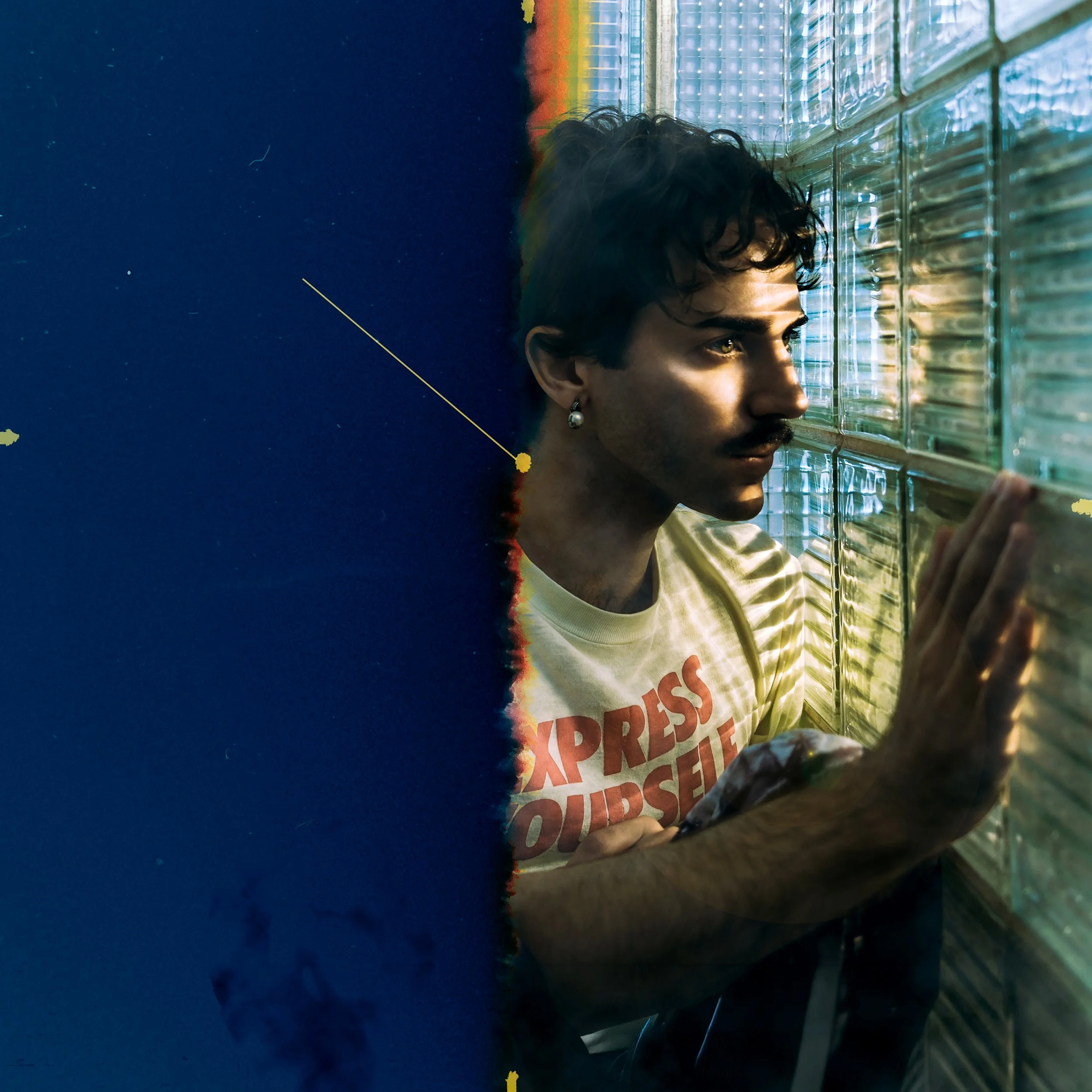
Photo by Ransom Ashley
LUNA: You said that as you’re writing, you have images running through your mind. I picked up on that in the lyrics of “Wallflower” because there are so many metaphors and images, like the police tape. Does the music start with these images, then you shape it further?
RANSOM: I’m realizing that I’m someone who wants to craft meticulously. I’m finding that this is requiring something different from me. I have to step back and stop trying to control this preconceived idea I have of what something should be. So many of those lyrics were like a 3 a.m. transmission. I think the clearest at night. All these things come to me and I’m typing on my phone. I lay my head back down, then something else comes up. I feel like I’m just trying to keep up with it. “Wallflower” started as an entry in my Notes app, then I came into the office, sat in front of the microphone and allowed myself to fill it. I think a lot of it comes from me being brutally honest.
The song is a forensic look at where I’m at now and where I was when I wrote it. All these obstacles, one after another, inside and out—it really feels like there should be crime scene tape around the last decade. Something happened here. Part of that is the world: awful leaders, corruption, COVID. But the bigger part is my own life; this project is me standing inside my own tape trying to reconstruct it. Where was I? What did I lose track of? These things that sound poetic feel very literal to me. At this point, I’m not indicting anything, I’m trying to find out what happened.
LUNA: I think it’s a beautiful approach to reflect on not only yourself but also the world and how you connect to it all. Spoken like a true psychology student.
RANSOM: Yes (laughs).
LUNA: Did you have any major takeaways from your time as a student that stayed with you?
RANSOM: There’s this quote that one of my professors said which was, “The fallacy of intuition is that what you see is all there is.” That really stayed with me and caused me to question my own experiences—not in the sense of invalidating them, but to be curious.
My interest in psychology started with a similar forensic questioning of why I am the way that I am. How do I make sense of my experience in this world? I’m gay. I was in a Baptist middle and high school. From middle school, especially, I was met with a brutal lesson that I’m unique in certain ways. Now, I’m surrounded by wonderful creative people, but it was much more of a monolithic space that I was inhabiting at that time. My interest in psychology was a desire to understand and, on some level, heal the experiences that were detrimental in my life.
It helped me make sense of many things, like self-serving biases that I could see in my immediate environment and upbringing which felt like “Aha!” moments. The fact that I was in a space where these things were being encouraged to be discussed felt so fruitful. I felt like a rebel because nobody talks about these things, especially as I’ve always felt the safest in deep places. That’s where I find belonging. Then, it was my work in musical theater and film, with being able to understand characters and different human experiences, that enriched me as a person. I think that deepened my experience on this planet as a person, and in turn deepened my relationship with my work and the power of it.
