
Q&A: Rivkah Reyes Roughs Up Pageant Perfection on “Miss Congeniality”
INTERVIEW
INTERVIEW
☆ BY SHEVON GREENE ☆
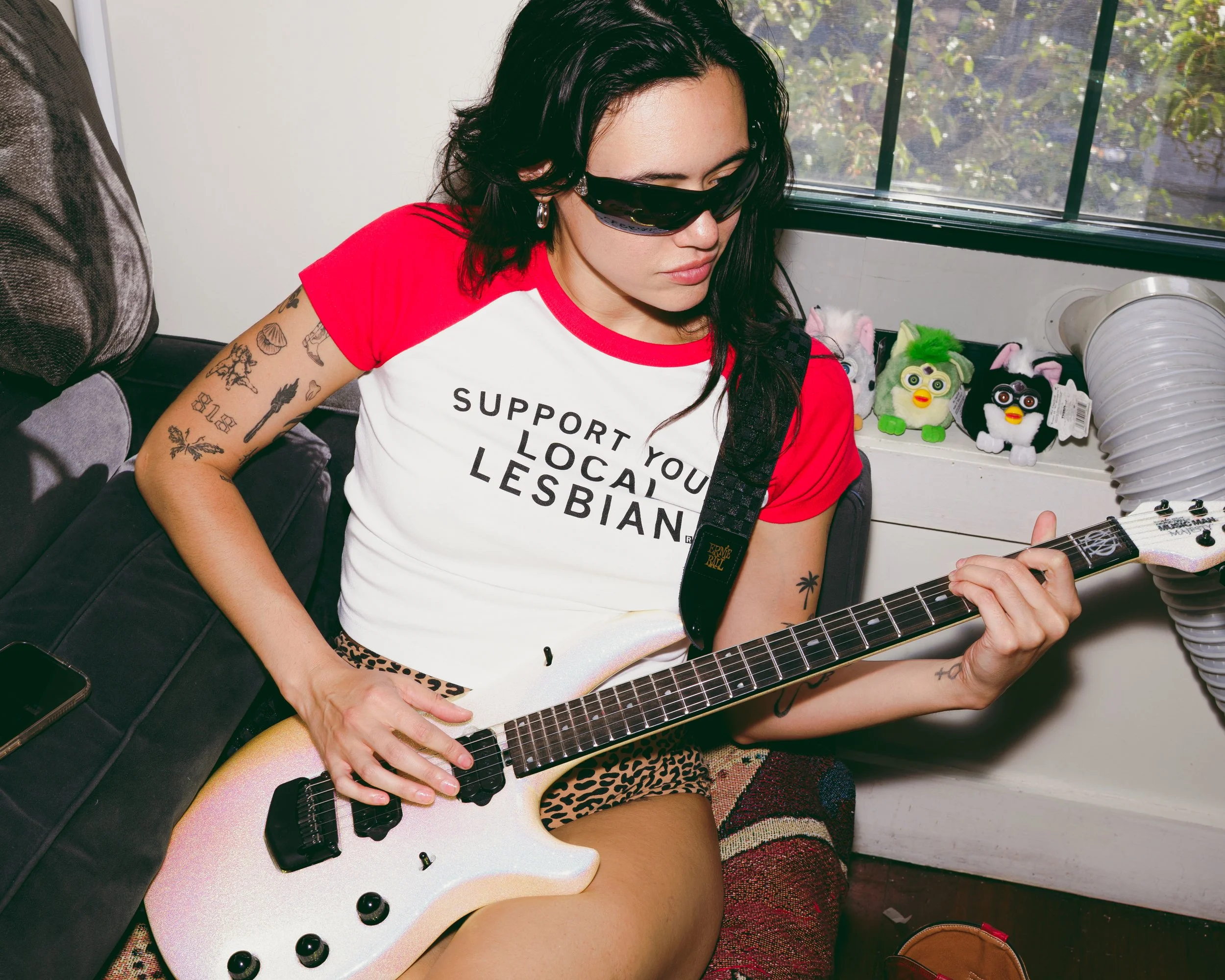
Photo by Jon Del Real
UNDERNEATH THE PAGEANT CROWNS AND GLOSSY AESTHETICS—of “Miss Congeniality” is a messier and more unraveled version of queer-pop artist Rivkah Reyes. The single is out today, where she turns the theme of heartbreak into something a little more bratty, theatrical and mesmerizing.
Blending crunchy guitars and indie-sleaze inspired production, Reyes jokingly describes this as just one of her “sapphic doomcore situationship bangers” up her sleeve. While the song feels playful on the surface upon first listen, the core theme is the realization that constantly performing for other people still doesn’t guarantee you’ll be chosen. It’s the perfect combination of confidence and emotional collapse, and it plays out beautifully across the track.
Although many still recognize Reyes as Katie from the critically acclaimed film “School of Rock,” she’s stepped into a much more self-aware artistic identity. During our conversation, she laughed through stories about “humiliationships” and trying to seem nonchalant while internally spiraling. Even while joking about these said “deluluships,” there’s clearly still an ache underneath the song. That tension between comedy and pain became the most evident theme throughout our conversation.
We caught up with Reyes to talk about “Miss Congeniality,” queer line dancing, emotional performance and learning how to stop shapeshifting for other people. Keep reading for more.
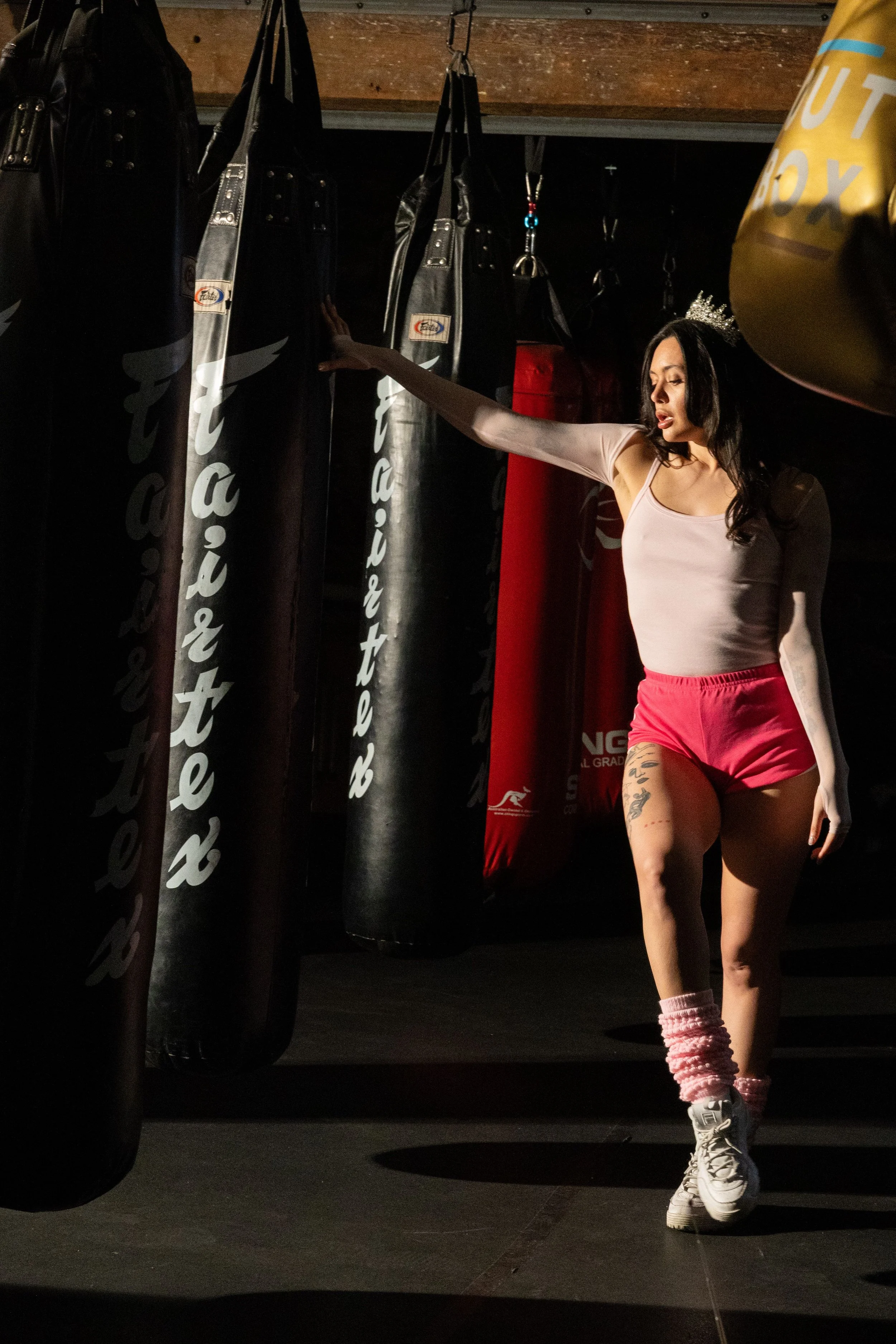
Photo by Shelly Guidera
LUNA: Congrats on your new single, Rivkah!
REYES: Thank you! I was just finishing up the music video credits for YouTube, and they look really cute. Everything is really coming together.
LUNA: I really love that you describe your music as “sapphic doomcore situationship bangers.” When did you decide you wanted to go down that route with your music? Did it kind of happen naturally, or did you have a vision in your mind of what you wanted it to be?
REYES: Well, I write what I know (laughs). I think a lot of lesbian and queer music is very [much] yearning and comes from this desperate place. While that might be how I’m feeling inside sometimes, I wanted to transmute it into something more feral; leaning into the doomcore, heavy on the doom, without it being like, “I’m so pathetic for this person.”
I grew up listening to Hole and grunge and Soundgarden. I just did one of those Spotify algorithm things where it tells you your number one most listened-to song of all time, and mine was “Black Hole Sun” by Soundgarden. I grew up with those influences, and even when I was a young musician, I knew I loved pop—I loved Britney Spears and Christina Aguilera and all those early 2000s pop girls—but I was a guitarist too. I was like, “Why don’t any of these girls play guitar?” I wanted one of them to have a guitar in their hand. Then Avril Lavigne and Paramore came out, and I felt seen for the first time. And now we’re seeing so many pop girls crossing into that emo space—Demi Lovato, Olivia Rodrigo. I was like, “I want to be next.”
LUNA: It’s honestly the perfect time for it, too.
REYES: Yeah. For a long time, a lot of the gay girls with guitars were doing folk music and that kind of thing. Even recently with Phoebe Bridgers and stuff—it’s almost like modern Indigo Girls, which doesn’t totally feel like me. I wondered, “Where do I fit into this?” Because I’m such a girly pop person. My most listened-to artist last year was Charli xcx. But I also love keeping that grunge influence because I played in grunge and punk bands from when I was 13.
LUNA: Yeah, that combination translates perfectly. One thing I noticed while listening to the track is that there’s this balance of humor, while it’s also clear there’s pain underneath. Was that always the intention when you were writing it? Did you want to balance both, or lean into one more than the other?
REYES: I think I’m always going to have a little bit of a “fuck you” attitude when I’m wronged by one of my lovers. There’s always going to be a middle finger in your face element to it. And of course that’s coming from deep pain and this performance of “I don’t really give a fuck,” when actually I give every single fuck on the planet (laughs).
I also love comedy and was a comedian for a long time. I trained at The Second City and was on track to do comedy professionally. It was my dream to do “Saturday Night Live.” When that didn’t shake out after years of trying and working toward it, I pivoted more into acting and writing and left the improv and sketch world, partly because there’s no money in it and partly because in Chicago, you kind of hit a ceiling with it.
Then I started writing comedy music. I have a single and music video out called “Forgot Your Name,” which is kind of like Lonely Island-style comedy music. I was in the alt-comedy scenes in New York, Chicago and LA, and eventually I got tired of it because I felt like I was self-deprecating myself in a way that didn’t actually feel authentic to who I was.
Now I feel like I can weave humor into my lyrics with a little wink and theatricality while also acknowledging the deep pain underneath it all. That’s the whole thing with comedy—there’s truth in comedy, and often there’s pain in truth.
LUNA: And I feel like now you’ve kind of found that balance after exploring all those different directions creatively. I wanted to ask about being an actor, musician, comedian—all these different forms of performance. Do you think performing in so many different ways has changed how you think about performance in your personal life too? Especially with this song talking about performing for other people?
REYES: Absolutely. The relationship—or humiliation-ship, or delulu-ship—that inspired this song came from this place where someone fell for me without me having to perform or audition for their love. It felt so good. Then they still didn’t choose me anyway. There’s that whole “right person, wrong time” thing, but ultimately, if it’s the wrong time, it’s the wrong person. Even if they come back in 20 years, right now they’re the wrong person. So my lyric “hope that you get what you need, even if it isn’t me” is both a little “fuck you” but also genuinely wishing the best for this person even though they broke my fucking heart (laughs).
We were in a situationship from Halloween until literally this week, so this is very fresh. A lot of the new work is coming from really recent drama and crash-outs following the sudden passing of my mother last year, which kind of spawned this insane bender of bad relationships one after another. But hey, good lore makes good material.
LUNA: I wanted to ask about the music video because I love how you combine the tiara and pageant imagery with the boxing gym setting. What inspired that combination?
REYES: My favorite part of the film “Miss Congeniality” is one of the first scenes where Sandra Bullock gets home after botching the mission and she’s slamming the microwave and punching the punching bag. She’s so aggressive with it. I was like, “What a metaphor for what it feels like to be a girl.”
I really saw myself in her because she didn’t naturally want to perform femininity, but she had to for work. She’s undercover, wearing dresses, performing this hyper-femme drag version of herself. But underneath it all she’s this tough bitch with a fighter background.
I also love that she almost wins the pageant because she’s authentically herself. Yes, she’s pretending to be this sweet pageant girl from Jersey, but underneath it all she’s real and tough. I love that duality.
LUNA: That really is girlhood, having that rage underneath everything. I love that you brought that into the video.
REYES: I love movies. I was kind of thrown into acting by chance because “School of Rock” was my first audition ever. Once I got on set, I was like, “This is so cool. I want to do this forever.” Another huge influence for me is “Jennifer’s Body.” The opening line is “Hell is a teenage girl,” and honestly, hell is being a girl in general.
LUNA: How did you think about the sonics and production while trying to get across that “polished on the surface but unraveling underneath” feeling?
REYES: My producer and collaborator Blonder sent me a few instrumental starter tracks before we started working on the songs. The one that became “Miss Congeniality” had this Joan Jett, “Crimson and Clover”-type guitar thing happening. Underneath it, though, the drums were really chaotic.
There was this pulse to it that perfectly captured how my nervous system feels waiting for a text back while crafting a Notes app draft and then turning it into a voice memo so it sounds spontaneous when really I planned everything out. Trying to be nonchalant while internally spiraling. I got off the plane, went right into the studio, and was like, “I have the song. It’s gonna be this.”
LUNA: I love seeing the queer line dancing community you’re part of. How did you become part of it, and what keeps people coming back beyond just dancing itself?
REYES: I started going in 2023 during the SAG and WGA strikes because I was bored, and my gay guy friends had started going and when I went for the first time, I was hooked. Partly because it wasn’t just country; they were dancing to Britney, Beyoncé, Blur, all kinds of stuff. Also, everybody was so hot. I was like, “Oh, this is where the hot people in LA are.” I spent that whole summer learning dances from YouTube and on the dance floor. I used to do musical theater too, so I had some dance background already. I’d also read that picking up a hobby you’re bad at is good for preventing brain fog and dementia, which runs in my family, so I was like, “I need hobbies.”
Then after a huge breakup I moved to New York, and one of the girls from line dancing in LA got approached by Desert Five Spot in Williamsburg to start programming there. We ended up becoming this dynamic duo of tattooed hot girls running line dancing nights. Now we teach multiple classes a week, do branded events, opened for Shaboozey, choreographed dances for Sabrina Carpenter and other artists; it’s grown so much.
I think people keep coming back because a lot of us found it during difficult periods in our lives. Breakups, grief, losing jobs. And for queer people who grew up around country culture tied to homophobia, racism or transphobia, it gives them a safe place to reconnect with those roots without the trauma attached.
LUNA: That’s beautiful and so cool that it started from just trying something new and turned into this whole community.
REYES: I actually get sad thinking about having to leave it eventually for tours or acting jobs. Like, where am I gonna line dance?
LUNA: You’re gonna have to map out all the best line dancing spots on tour.
REYES: The good thing is it’s spreading everywhere now; London, Oslo, Australia. There’s line dancing communities all over.
LUNA: What excites you the most about this new era creatively? Does it feel different from previous releases?
REYES: Definitely. With songs like “sick,” “another vice” and "big league chew,” I was still figuring things out. I was fresh out of a breakup, fresh out of playing in a band with all guys, trying to figure out what it meant to be a frontwoman. I was throwing spaghetti at the wall with visuals, promotion, producers, everything. With this project, I wanted it to sound fucking huge. There’s still pain in the songs, but there’s also this brightness and bubbliness that I think will bring people joy.
LUNA: What else is coming up for you after the single?
REYES: If you’re in New York, maybe keep an eye out for a queer pageant situation happening. Definitely more live shows supporting some of my New York band friends. And honestly, I’m just excited to keep making music videos. The music is fun, and I think this is my best work yet, but the videos are going to be so fun to make.
