
Q&A: Savannah Pope shares vulnerability with ‘Panopticon’
INTERVIEW
INTERVIEW
☆ BY KIERRA WHITE ☆
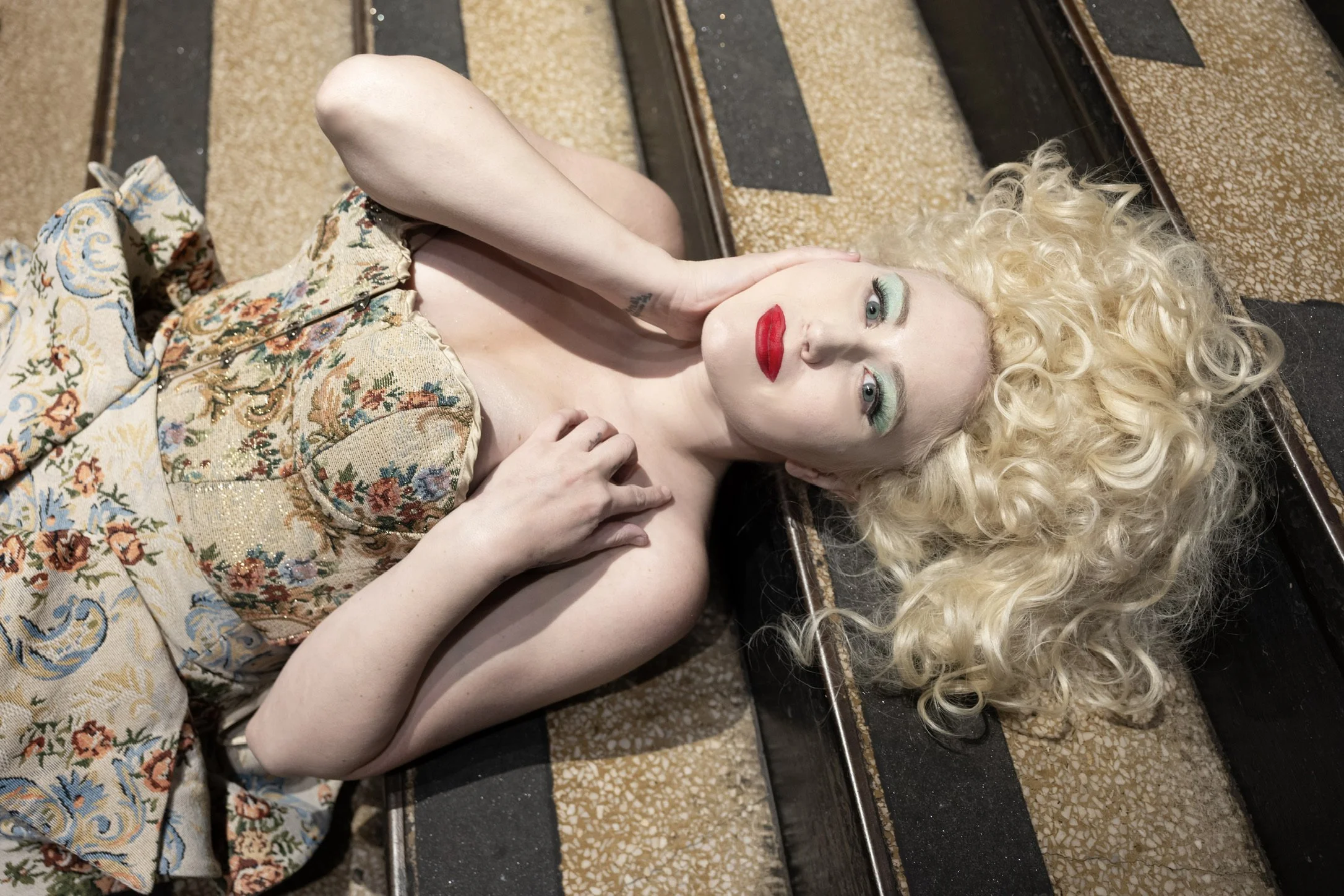
Photo by Sean Stairs
THERE'S A BEAUTY IN CREATING A BODY OF WORK THAT CAN RESONATE WITH PEOPLE NO MATTER THEIR BACKGROUND—and Savannah Pope manages to do just that with her latest release, Panopticon. The singer-songwriter has an ability to blend different sounds, from pop to cabaret, with operatic vocals that put her in a different category from the rest. Behind her creative ways, there’s a visually driven piece that feels like stepping into a film with both your eyes and ears that you never want to turn away from.
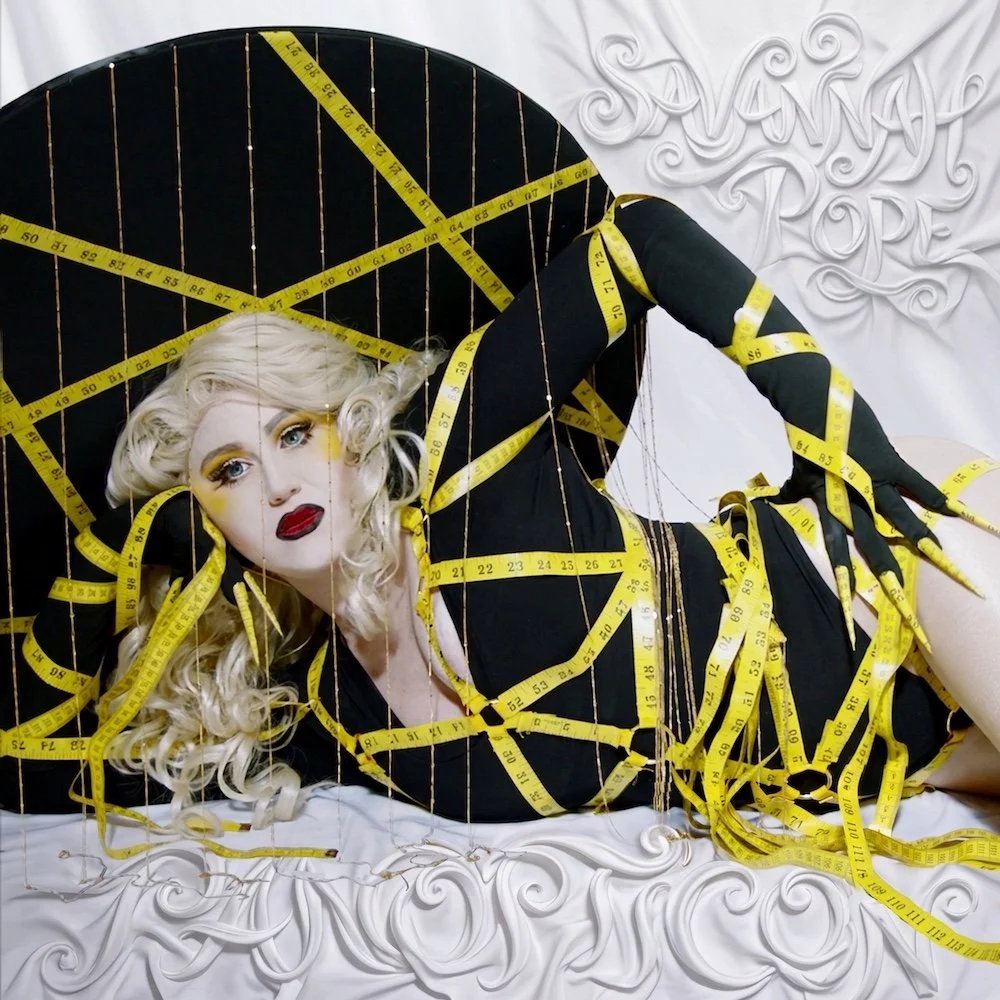
Panopticon dives into the aftermath of what comes with traumatic experiences and how they can shape us long after they're over. Inspired by Pope's own experiences with body images and sexual trauma, the song explores the feeling of being watched and measured by your peers. Rather than stuffing these emotions into a small corner of her mind, Pope transforms them on a grand scale; turning it into something deeply personal while also having deeply meaningful lyrics.
This release serves not only as a preview into Pope’s latest EP, but as a reminder that overcoming fear and trauma can be possible. Accompanying this single is a music video that expands on these themes, creating a strikingly complex world inspired by the Rococo era (or as Pope also likes to call it, “Rococo drag”). The result of these visual pieces combined with Pope's meaningful lyrics gives her audience a way to see the real her in a light they might not have been able to before.
Below, Pope dives deeper into her thoughts of Panopticon and what it means to be an artist in today's world.
LUNA: What’s something some people might misunderstand about artists who do theatrical or high visual work that you would like to clear up?
POPE: There’s a tendency to assume that the more theatrical or visually elaborate an artist is, the more "gimmicky" they must be. I heartily reject that idea. Yeah, I can kill it in a room with an acoustic guitar, jeans and wet hair. I’ve done it. But pared down does not automatically mean more authentic.
I make things in a way that feels genuine to me—as a woman, as a weirdo, as a queer person, as a disruptor. I spent a lot of my early performing years internalizing the idea that I needed to make myself smaller, and I'm very interested in unlearning that now.
I’m a singer, a songwriter, a painter, a director, a costume designer...so many more things. All of those roles are part of how I see the world, so they’re going to show up in the work. My maximalism isn't a way to hide the truth; it’s how I tell the whole story instead of editing myself down into something more comfortable for other people.
LUNA: You’ve performed at the Fonda recently supporting Andy Bell. Does playing with a crowd that large change the way you approach performing, or do you try to create the same type of intimate experience regardless of the size?
POPE: That was the end of a three-month tour with Andy Bell of Erasure—40 nights across the U.S. and Canada, many in 2,000-3,000 capacity rooms. And I fucking loved it. It felt like coming home for the first time.
Audience size isn't the most important thing to me. I'm a climb-in-laps, hang-from-rafters kind of performer no matter the room. What matters above all is whether the audience gets it. That said, If you can have scale and genuine connection at the same time... that's fucking heaven.
About five shows in, we played Durham, N.C., less than an hour from a place where I was held by the troubled teen industry for two years. Trauma city. I was meant to keep the set fast and fun, but I physically couldn't do that show without reclaiming some piece of that. I told some of the story and sang "Live Your Strange," a slow-burning song for people who've been pushed aside by society.
That was when the tour really opened up. People came to the merch table wanting to connect because they felt seen. I love Durham now.
"Panopticon" comes from that same place—vulnerable, theatrical, brutal and beautiful all at once. Talking about ED and body image in a song was really scary. But it's real, and that's what people need.
LUNA: With this release, you’re essentially turning experiences of being judged into something where you take complete ownership over every detail of what the audience sees and hears. Which part was the most liberating to create?
POPE: Oh wow, that's a great way to phrase it. It was a pretty wild experience creating Panopticon. I had moments in the studio where I was like, "Am I actually doing this? I'm gonna be sick." But there's something empowering about saying these dark truths out loud, over and over. Especially when you can surround them with beauty. I wouldn't hesitate to share this song with anyone now. I think that means some of those ideas have lost their power.
The video brought up a different version of that for me. I almost fainted in that red Victorian corset, for one thing. But when I saw the footage, I had the immediate thought that the rib bones made my waist look too big and wanted to pinch it in post. I had to really sit with that impulse and let go of the idea that I needed to control how my body looked.
Now I look at the video and think, "Wow, that looks incredible." The costumes, sets, makeup—everything was created with so much care. I'm really glad I didn't edit my body to match the distortion in my own head. I can watch it now and know that I was beautiful exactly as I was.
LUNA: There’s something particularly upsetting about the world we live in today with being “measured” or judged about our appearances. Did writing this song change the way you think about your own relationship with yourself?
POPE: So true. Yeah, absolutely. I think it's a constantly moving thing. Kinda funny, after years of being shamed for my body, seeing the conversation shift towards total body positivity was actually kind of jarring. It's a beautiful concept, and I'm so glad it's helped so many people. But for me, it introduced another flavor of shame—the idea that I was failing if I didn't love myself completely. Honestly, I don't know if that's possible for me. If you've figured it out, I salute ya, babe.
What this experience has given me is the permission to let recovery be messy. I don't have to love every part of myself every day to be at peace with myself. I can love my imperfections imperfectly.
LUNA: You’ve talked about in the past how you’re a visual artist as well as a musician. Do you ever find yourself writing music with visuals already playing in your head?
POPE: All the time! When that happens, the song plays in my head like a movie. I can see the characters, the colors, the sets, all of it. That's a big part of why I love making videos so much. I get to take what's happening in my head and actually build the world.
LUNA: When your fans finish listening to Panopticon, what do you hope they’re left feeling?
POPE: I hope they feel seen. That was the biggest thing I learned from that "Live Your Strange" moment on tour. When you put something vulnerable out there, sometimes people don't need to be fixed. They just need to know someone else understands.
There's so much shame around this particular struggle. It's not exactly a chic trauma to talk about. I have some really great war stories from other struggles in my life, but it's less sexy to say, "I ate a whole pizza, threw it up, and cried." That's exactly why I wanted to make Panopticon beautiful. There can be beauty and even glamour in being honest about the ugly stuff. I hope people leave it feeling a little less ashamed of their own mess.
