
Q&A: Inside Secret Sister Studio, The studio Keeping Music Human
INTERVIEW
INTERVIEW
☆ BY INDI TEJEDA ☆
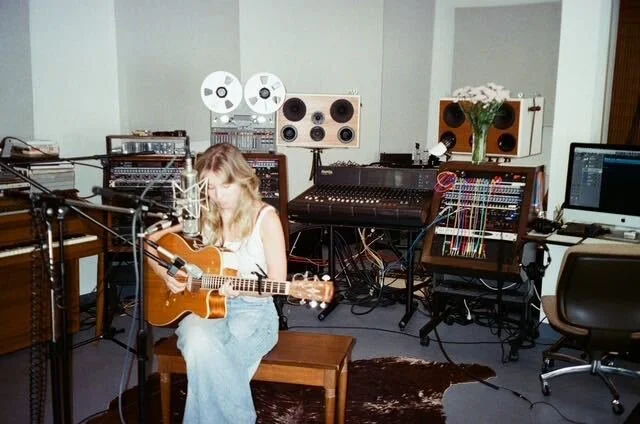
MUSIC HAS ALWAYS BEEN A COMMUNAL ART FORM—Before algorithms could generate a vocal, before a song could be built entirely inside a laptop, there was a room, a group of people and the unpredictable chemistry that happened when they played together.
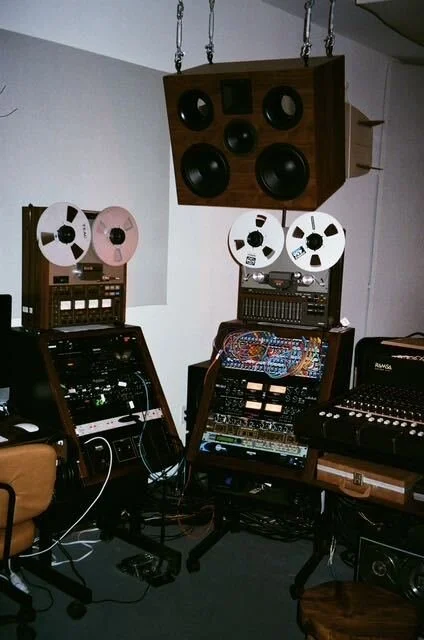
That feeling is at the center of Secret Sister Studio, an independent recording studio in Los Angeles built around live tracking, analog recording, collaboration and a belief that music should still feel like something people do together. Its philosophy wasn't born as a reaction to artificial intelligence. For Secret Sister Studio, preserving the human side of music isn't about rejecting technology for nostalgia. It's about protecting the parts of making music that can't be replicated by convenience: the imperfect take, the unexpected idea, the relationship between musicians and the feeling of hearing something happen for the first time.
Luna spoke with the studio's founder Sean Graves about building an analog space in Los Angeles, why perfection can get in the way of emotion, the realities of creating an ethical business in the music industry and why the future of independent music may belong to artists willing to sound unmistakably human.
LUNA: Secret Sister Studio has been vocal about preserving human artistry in an era of AI-generated music. What inspired that mission? When did you realize it needed to become a defining part of the studio’s identity?
SECRET SISTER STUDIO: It wasn't really a strategic endeavor to be anti-AI. It started with wanting a live-tracking studio that focused on recording to tape and being in the same room together. I'm social. I love people and bringing people together, and I was seeing that dwindle in society. I had this big room and thought, this is a cool way to do something that I would love, that other people would love, and that is needed.
Then, right as I got the ball rolling with my studio, all this AI stuff started going crazy. Suno dropped, people started using it a ton… I realized that it was already bad enough how we’re becoming so detached socially, then this whole new element smacked everyone in the face: AI music.
It made me realize that the mission I was already on was more important than I realized because humanity is so quickly getting ripped out of one of the most special art forms. I care a lot about the artist's journey and their relationship with music. I want to give people an outlet to make music that's as far from that as possible and help them realize that it's way more fun. The music ends up being better, it gives you a better relationship with your art form, and it has more longevity. I want to use my studio to demonstrate that reality, so people don't get lost in the race of consumerism and music and trying to use AI to get ahead or cut corners.
LUNA: Your recording process embraces live performances and analog techniques over heavy digital editing. What do artists discover when they're encouraged to capture a real moment instead of chasing perfection?
SECRET SISTER STUDIO: I think people have subconsciously associated some level of perfectionism with quality because of the way recording has evolved. It used to be that the “best sounding” record was an indicator of quality and success/money being behind a record. But technology has made great sounding records attainable by anyone. People are slow to realize this, but now that AI “burst the bubble” of technology in making a record “sound good” we’re back to the basics; quality coming from creativity and emotion.
If you over-sterilize a recording, it doesn't sound that special. When you listen to a recording that has emotion in it and it's not perfectly tuned and edited, you hear something expressive. Anything that's too polished sounds like a robot. We want to hear something expressive and emotional.
A lot of the time, an artist's first experience recording raw like that is with me. I'll have someone record to the tape machine, with no AutoTune or major edits and they’re surprised at how much they love it and how much more special it feels.
There’s of course some old habits for people to work through, namely hearing themselves un-tuned, but I think people realize they can take more liberty to not over-sterilize their music.
The real sauce is in the emotion, not in getting it right. It's in doing something emotionally expressive and genuine. That alone is going to shortcut you to a record that sounds amazing and translates.
That's why I push people to send me a lot of voice memos, too. You put an iPhone mic up in a good spot and just sing the song. Very often, the iPhone recording is the one that translates because it's real. You're in your living room, you don't have an audience, you're just expressing the song. It's the most direct view into the artist's reality.
LUNA: Building an independent analog recording studio in Los Angeles isn't the easiest path. What have been the biggest challenges, and the most rewarding moments, of creating a space that stays true to your values?
SECRET SISTER STUDIO: The most challenging thing is that art for the sake of art is kind of the antithesis of business. They're polar opposites.
Putting myself in a position where I own a recording studio and I'm trying to keep it afloat, while genuinely preaching to artists to keep money out of what they're doing, is very challenging. I'm telling people, "Don't worry about streams. Don't worry about money. Try to get it out of your mind as much as possible because that's how you have a healthy journey as an artist." At the same time, I'm trying to have a business model that's self-sustaining.
I'm really passionate about artist development, which means you're working with people who are very green. They don't have big money, big deals or a viral song. There's a huge gap between the average person who's just trying to get by and the artists who have a crazy amount of money behind them. Figuring out a strategy that works for both is tricky.
I'm hoping that some of the artists I work with now start doing well. I'm also trying to think outside the box as a business owner and not make it about extracting money from artists, but seeing what other value I could bring to the LA market. Maybe there's something in events and online communities that can subsidize the studio.
The rewarding part comes from those same ideas. I'm doing events, recorded jam sessions, and things like that. Those are very rewarding moments for me. I don't make a cent from any of that. I just invite a bunch of people, give them beer, and say, "Let's hang out and make a record."
That makes me really happy. Being in person with another human being who comes up and shakes your hand and says, "I've never been here before. Thanks for doing this." They meet someone, and suddenly they're going to start a band together. Or someone records live for the first time.
Seeing the impact directly, especially with a lot of people in the room, is really rewarding. Seeing on someone's face that what I'm doing really mattered to them in a deep way, those are the most special moments.
LUNA: Beyond recording music, Secret Sister Studio has built a community centered around collaboration, fair treatment of artists, and ethical royalty practices. Why were those principles just as important to establish as the studio itself?
SECRET SISTER STUDIO: I consider myself an artist, but not in the capitalist, modern music industry way. I think we all are artists to some degree. Some people tell themselves that they aren't or can't be, but I love making art. I like music, recording, drawing, tattooing. I do all these things because I love it.
I've been an artist and released music my whole life. When I was younger, I wanted to be famous and play big shows, and eventually I realized that wasn't really for me. I've gone on this whole journey of being an artist and learning how to write songs, promote yourself, use social media, produce, play different instruments, and think philosophically about what art is.
I've stumbled through almost every aspect of it, and I think I've learned what ruins people's relationship with their art and what stops people from continuing. Now I'm in a place where I can use those lessons to help other artists avoid some of the mistakes I made and keep a better relationship with their art.
That also connects to the royalty side of things. I've always been fascinated by how streaming works, so I went down a lot of rabbit holes learning about it and realizing how messed up the systems are. I've spent years thinking about what a solution could look like.
Right now, consumers have a lot of control and artists are extremely limited in what they can release, take down, change, or even how their music sounds once it enters these platforms. What I'm passionate about is giving rights back to artists so they have more control over their music, who listens to it, how much they get paid for it or whether they want to be paid for it.
That means a lot to me as an artist and as someone who wants to help new artists navigate this crazy world. If I could dedicate my time to creating something that genuinely changes the landscape for streaming and gives artists control, that would be one of the highest-impact things I could do.
LUNA: As AI and technology continue to reshape the music industry, what role do you hope Secret Sister Studio plays in preserving the human side of music, and what gives you hope for the future of independent artists?
SECRET SISTER STUDIO: My little catchline that I've been telling myself is that with the studio, I'm trying to maintain and continue the tradition of humans making music.
I don't think there's a lot of easy avenues for people to really see that through and have a fully human experience. I want to give people an opportunity to maintain that tradition of saying, "We're all in the room together. We got here at noon. We're going to have a lunch break. We're going to keep getting takes until we get that live, special take that we're all excited about."
Then we get a good mix of it and release it. That's a really special experience that not a lot of people have anymore.
An important part of that is finding a way to make it affordable for artists. With the events I'm doing, sometimes it's as simple as saying, "Just pull up, get some free beer, hang out and record whatever you want." We can all jam and make a record without someone having to save up thousands of dollars just to have that experience.
I think there's a lot of hope for independent artists. I'm Mr. Rose-Colored-Glasses sometimes, but we all know the way AI works. It's completely derivative. It's based on what has already been done. I feel like AI is the bubble popping. Music culture started off raw and live, and as computer technology progressed, the indicator for higher quality became synonymous with perfection.Everything was perfectly timed, the drums were on the grid, everything was tuned better and better.
Now we've gotten as perfect as we can get. Technology has ingested itself into music as much as possible, and literally anyone can press a button and have a record that sounds “perfect”.
I'm excited that the bubble has popped because perfectionism in records isn't cool. It's this weird side quest of technology and recording. The records we idolize are still Aretha Franklin and Elvis and those old-school records that were so full of emotion.
That's what makes me excited for independent artists. If you really have it, you're going to stand out easily. Nobody can just prompt Suno and release something and stand out. There are billions of songs like that now. It's not special.
But if you have an incredible song, an incredible voice, you know how to play an instrument, and you set up your iPhone in a decent spot in your living room and get a good take of that song, that is immediately way more valuable than anything you could prompt with AI.
There is a certain irony to a conversation about the future of music ending somewhere so familiar: a room full of people, instruments in front of them, waiting for the take that feels different from the others. That is ultimately what Secret Sister Studio seems most interested in protecting. Not a particular piece of recording equipment or a refusal to move forward, but the experience of making something with other people and knowing that it could not have happened in quite the same way twice.
In that sense, Secret Sister Studio's most radical idea may also be its simplest. Give artists a room. Give them time. Let them play. And see what happens when the music belongs to the people making it again.
