Q&A: Inside Semiratruth’s Otherworldly Electronic Universe, ‘S!M’
INTERVIEW
INTERVIEW
☆ BY KIMBERLY KAPELA ☆
A UNIVERSE OF THEIR OWN — For Semiratruth, S!M was never meant to follow a straight line. Built through instinct, improvisation, and experimentation, the 22-track album captures an artist embracing the freedom to let each idea take its own shape. On their forthcoming album, S!M, due September 25, Semiratruth brings that instinct to the forefront.
Written, recorded, produced, and mixed entirely by Semira, S!M is a 22-track electronic odyssey that expands the boundaries of their self-produced work. Rather than treating production as a supporting element, the album makes sound design its own form of expression. Acid, juke, and baile funk rhythms provide the record’s heart, colliding with industrial textures and atmospheric soundscapes before opening into melodic improvisations that recall the exploratory spirit of 1970s cosmic synth and spiritual jazz.
S!M doesn't settle comfortably into one genre or mood; instead, each track seems to open a new portal.
“S!M is a project that constantly shifts,” Semira says. “None of the songs were created by force. They all spilled out of me through improvisation. It's deep, it's fun, it's outrageous, it's gorgeous, it's clever, and then some. I've never felt more like me, unapologetically.”
Semira allowed the music to emerge organically through experimentation and improvisation. The process gave S!M an unusually fluid quality, where moments of rhythmic minimalism can suddenly give way to expansive melodic passages or densely textured electronic environments.
The album's 22 tracks consequently feel less like isolated compositions and more like individual universes within a larger cosmos. Some are built for movement, their rhythms pulling listeners toward the dancefloor, while others invite a more solitary experience.
Semira introduces that world with “Tudo Bem!,” the album's lead single. Translating from Portuguese to “everything's good,” the track captures the emotional and sonic duality that defines S!M. Its rhythmic pulse feels grounded in the body, while its expansive production reaches toward something cosmic, creating a track that can move seamlessly from the dancefloor into deep space.
“The track feels like the turning point in my life,” Semiratruth says. “Shifting into an unfamiliar timeline where 'everything is good,' even when things say otherwise in the present. This song makes me feel good and makes me move freely.”
The accompanying music video, directed by Atlas*Morgan extends its transportive quality into a visual world of its own, complementing the track's movement between earthly rhythm and celestial atmosphere.
S!M reveals a different dimension of Semiratruth's artistry. There is no single destination on S!M, only a series of movements through genres, emotions, physical spaces, and imagined ones, encouraging listeners to move with it.
“I also am interested in the people who may not like it at first, but then dare to revisit it and sit with it and take it as a meal, almost like something to digest,” Semiratruth says. “Honestly, I imagine people working out to it, getting into fights to it, having a calm smoke on their balcony. I want people to live their lives to it, honestly, and hopefully, it soundtracks someone's special moments.”
LUNA: Thank you for talking to Luna. Our readers would love to get to know you and your music more. For any readers who aren’t familiar with you yet, what inspires your artistic style and sound?
SEMIRATRUTH: I've been talking a lot about this recently, but I don't know if I can fully pinpoint one artist or one thing, but the childlike play of creation inspires me a lot and just letting myself be as free as possible when making art. Honestly, all the people whose costumes are weird. A lot of the bands from the 70s or 60s who had group bands and their costumes were very elaborate and stage design was very elaborate. Anyone who dared to be free and was an artist, and also children who are free and play around as they go.
LUNA: S!M feels like a major expansion of your artistic language, putting sound design and instrumental composition at the forefront. What inspired you to shift the spotlight toward this side of your artistry?
SEMIRATRUTH: I've always made my own beats and productions when I was primarily a rapper MC, but this time, I noticed myself making a lot of productions that had its own story to tell without my vocals needing to be on it. I would make a lot of the songs that I did improvisationally. So before I knew it, I looked up and I had over 22 because I had to cut down the album, but over 22 songs where it just had a similar angst to it. I noticed there's a story here and I didn't need to use my vocals to tell it, and I thought that was really beautiful as a natural pivot point for me.
LUNA: You wrote, recorded, produced and mixed S!M entirely yourself. What did having complete creative control unlock for you that you hadn’t been able to explore before?
SEMIRATRUTH: I feel like I've always been a little bit of a control freak, for lack of a better term, about my work. A lot of the record was made by accident. I was intentional when I sat down to make songs, but I didn't realize that I was making a record. I thought I was just having fun with it, so it felt good and natural, and felt like I've always created it that way anyway. I have my own home studio, and it's not extravagant at all. It's my laptop. I have a mic. I have an interface, and I have all my gear that I have my synths. I've always worked that way, but this felt really like I'm playing around. It felt good. It felt natural. Nothing too different than before.
LUNA: What did making this album teach you about yourself as a producer and sound designer?
SEMIRATRUTH: I feel like on this one I let myself get really weird. I keep saying it, but just throwing everything to the wall and just seeing how the painting comes out, I felt like I've learned that I've always been a free artist, but I think on this one I was really letting myself play. When I was younger, I used to watch my brother play PlayStation Two, and I also would also play it, and I noticed how much that listening to the music of those games influenced this project, or how much of that was locked in myself.
LUNA: You describe each track as its own universe. If you could invite someone to enter just one of those universes first, which one would you want them to experience?
SEMIRATRUTH: The first song “Portal” does a good job of prepping everyone for where we're going. “Portal” is the introduction, and then “Bite” comes right after it. It feels like a good step into this project isn't a club vibe. Some songs you can feel like you're in a club, but if anyone has been to a club or a show or something where you first walk in and the lights are super low, maybe the fog machine is on max, and you don't know what you're about to step into, I feel like instead of maybe a one singular world, I would want to guide folks first into that feeling of like, where the fuck are we at right now? What's about to happen? What is going on? I think that's the zone at least where I want people to go first.
LUNA: You describe the songs as having “spilled out” through improvisation rather than being created by force. What did your improvisational and creative processes look like for this record?
SEMIRATRUTH: I remember one night it was midnight. I had my laptop that could fold, so I literally was on my back, laptop in hand, scrunched neck. I was letting myself truly put things together as good as they sounded to my midnight ears. I've had hard times before in boredom — scrolling on my phone or overthinking some shit. I'm bored in the middle of the night. I can't sleep. Let me go to my laptop and see what I can make and what comes out of me based on what I'm feeling right now. I sent a risky text. I'm waiting for a text, and instead of just sitting around waiting for a response, it inspired me to make some songs. So that's how a lot of them came about.
LUNA: Do you have a personal favorite song on S!M — one that feels closest to your heart or most revealing of who Semiratruth is right now?
SEMIRATRUTH: I really love “Atitlán” because I named it after I visited Guatemala last year September, and I didn't make the song there, but the essence of Lake Atitlan in Guatemala is so gorgeous. If anyone's ever gone, it's these beautiful inactive volcanoes, and the water is its own thing. It's just miraculous. I've never seen anything like that in my life. “Atitlán” also was my first attempt at making a song like that. I've never made a song where it was ambient or taking straight from the inspiration from Alice Coltrane's ambient vibe of things. “Atitlán” is one of my favorites because it's named after a miraculous place.
“Running from me” with my friend Kambaba Jasper is also my favorite because I was going to sing it myself first, but my friend Kambaba is so amazing, and I love the sound of the beat too. It sounds like something is coming and you're running from yourself or running from something. When I heard Kambaba sing it, I was like, “No, you have to do it.” So that's one of my favorites. I love the whole thing, honestly.
I love “MEOW!” because it's just an ambient track I was making, and I put the word pussy over it, and being a queer person, being a non-binary person, the ballroom scene and just the word of pussy. I just love that song.
LUNA: What inspired this new era in terms of visuals and aesthetics?
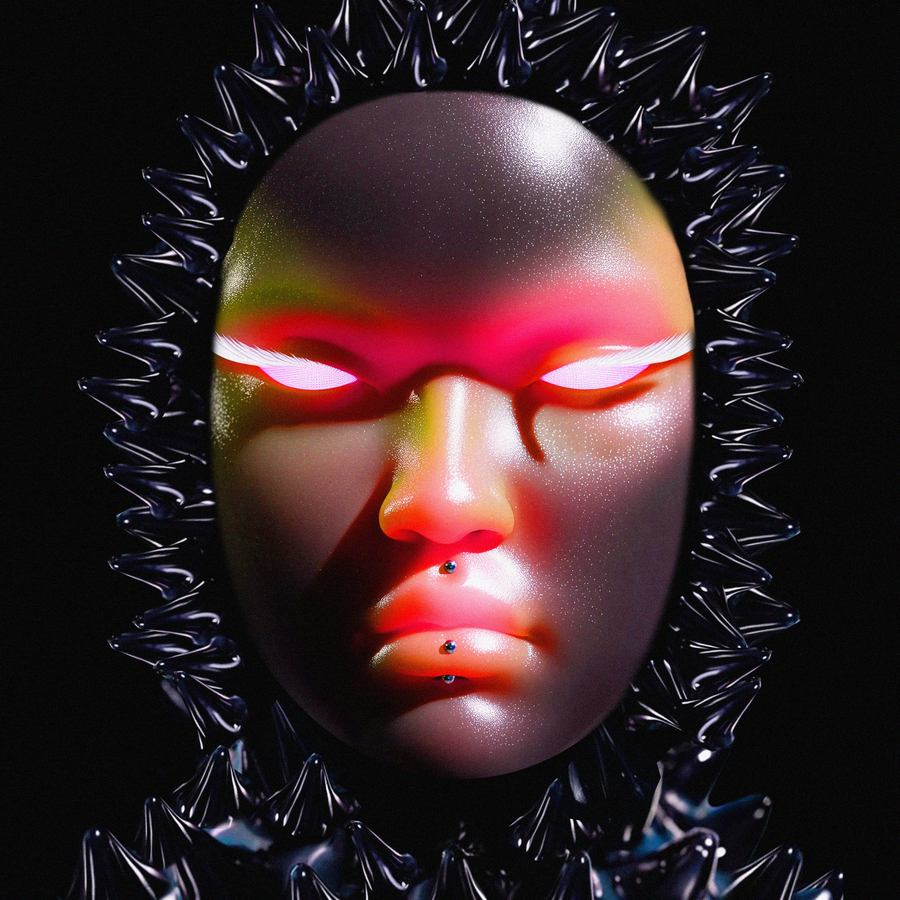
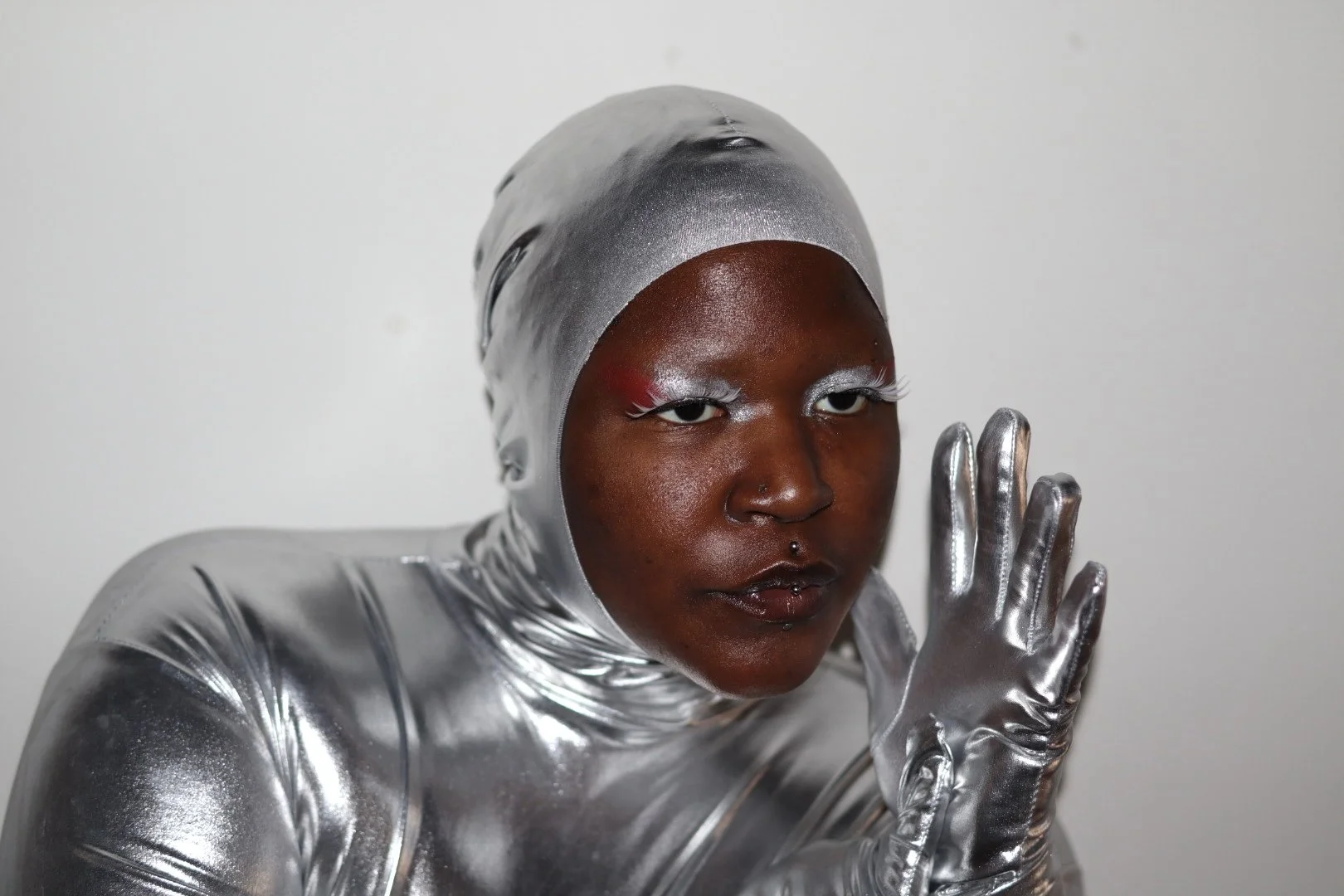
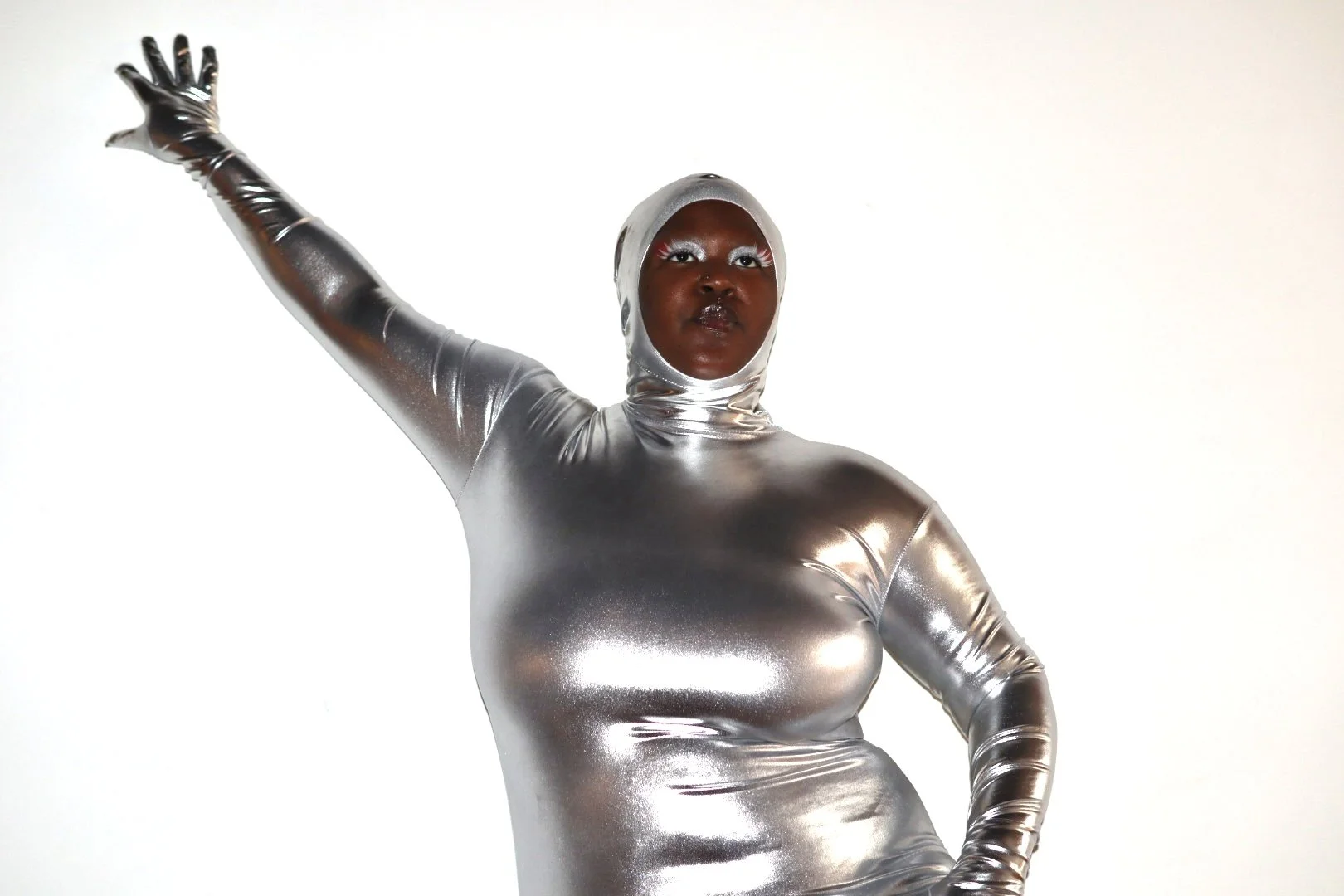
SEMIRATRUTH: For the cover art, I've thought about simulations and characters and how a lot of times in our lives we are shifting in between who we are, how we dress and what we look like. The cover art felt like different characters of myself. What would they look like? Not even the humanness of it, but the emotion, the feelings. I was wearing a metallic silver suit. It feels like I'm a time bender. I'm really big into manifestation and shifting where you are at any time, so that is the manifestation of that — wearing a silver suit or this weird alien-like character on the cover. It's just characters, honestly. That's the inspiration.
LUNA: How do you hope listeners can connect with or find power in this new era of music from you? What emotions or messages do you want to leave with them?
SEMIRATRUTH: I wanted to connect with those who connect with it off rip. I also am interested in the people who may not like it at first, but then dare to revisit it and sit with it and take it as a meal, almost like something to digest. I want people to want listeners, new and old, to be reflective of it and just live their lives to it. Honestly, I imagine people working out to it, getting into fights to it, having a calm smoke on their balcony. I want people to live their lives to it, honestly, and hopefully, it soundtracks someone's special moments.
LUNA: How are you feeling in this current era of your career and what does the rest of the year look like that you would like to share with Luna?
SEMIRATRUTH: I feel good. I'm excited. I'm such an anxious person a lot of the time. I'm getting used to talking about my work more and being more present and forward. When I was younger, I would hide myself away. Maybe until it was time to perform, then I would pop out. I want to show people more of my everyday or just talk candidly. Anxious right now, but in a good way. The rest of the year, I'm hoping to be traveling. I have some things in the ether, in the air right now, but I'm hoping to be traveling, and I'm excited for the record to drop late next month.