
Q&A: Siichaq on the Chaotic World of ‘The Righteous Sword’
INTERVIEW
INTERVIEW
☆ BY ALEAH ANTONIO ☆
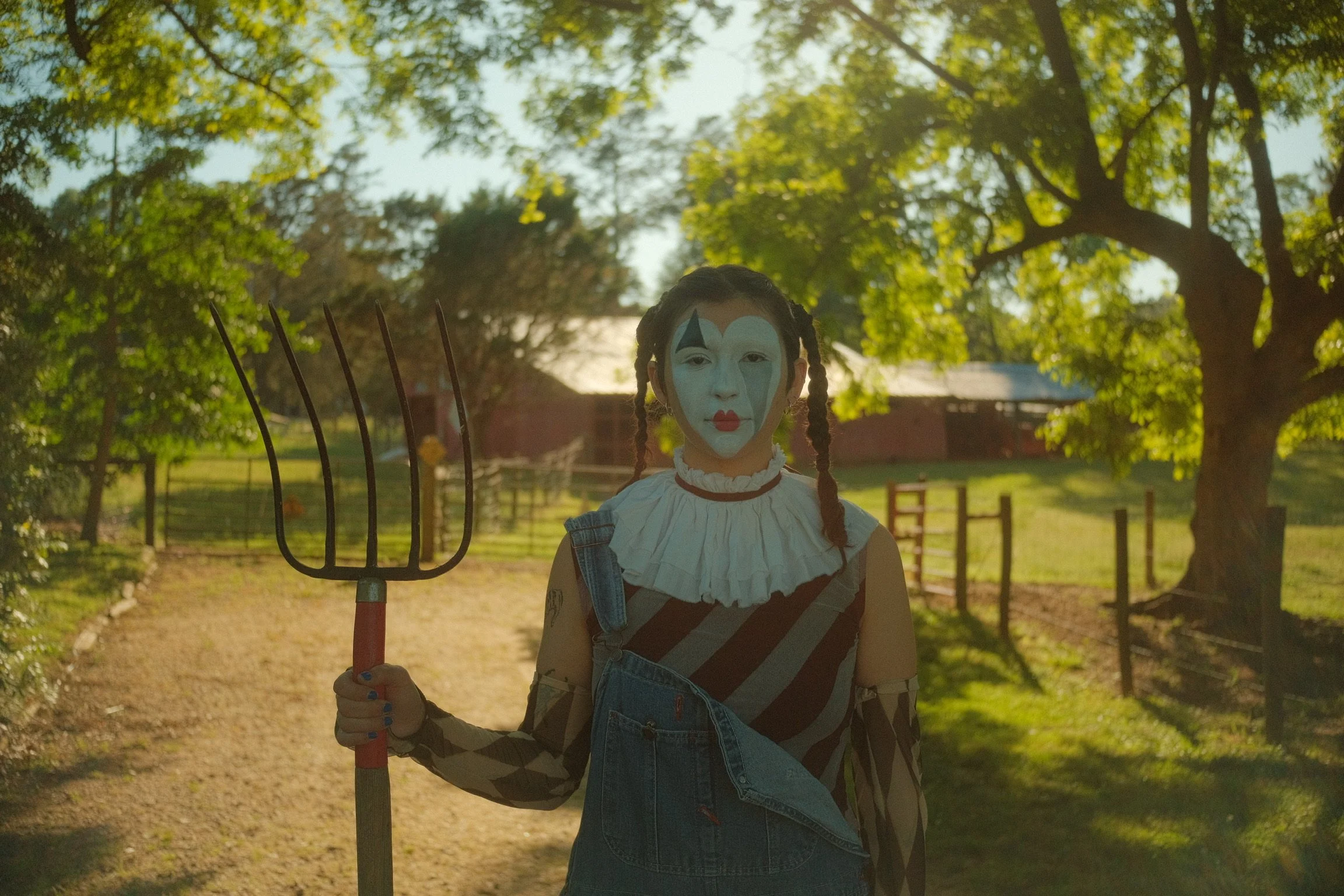
Photo by Will Karim
“I’LL PRETEND THE WORLD'S NOT ENDING AND I’LL LISTEN TO YOUR BAND”—This is the opening line to “Nothing if Not,” the fourth track on Siichaq’s newest record, The Righteous Sword, out today. Siichaq is Kennie Mason—she uses her Inuit name as her moniker for her project. From her artist name to her lyrics, Mason constantly wades through the political and the personal. To her, the two aren’t mutually exclusive. They couldn’t be more connected, actually.
She’s explored these themes on her past two records, 2024’s My Dog Ate My Patriotism and last year’s Catcher. Topics like feminism, political frustration, nostalgia, identity, love—these aren’t things to hit once or twice in a song. These make up Mason’s life. She grew up in Jacksonville, Florida with a jazz musician for a father. She was the only Native person in her hometown when she grew up. She lived on the internet, which can be a good or bad thing depending on who you ask. After struggling with her mental health, Mason was sent to a wilderness therapy program, then to a therapeutic boarding school, all before the age of 15.
Mason came back and writing music became her main outlet. It’s also her strength and talent: My Dog is a 20-minute album where every single song rips. Siichaq floats through a shoegaze, indie, folk and punk space, making it impossible to pin her down. Catcher does the same, exploring a newer, raw side of Siichaq with songs like “Horse & the Heretic” and the bass-driven “Cannibal.” The Righteous Sword makes a new multi-hyphanete altogether with the help of Ben Wulkan (Lunar Vacation) and Evan Dangerfield (Finn Wolfhard). There’s the griminess in album opener “MTSWCB,” the electronic coercion of “Cattle Driver,” the beats and hisses in “Idle” and even the folky charm of “The Fear.”
Not only is Mason cuttingly honest with her words, but she turns them into a new shape with her sound. She spoke with Luna about her roots in Florida, details on songs from The Righteous Sword and how much the government sucks. Keep reading below.
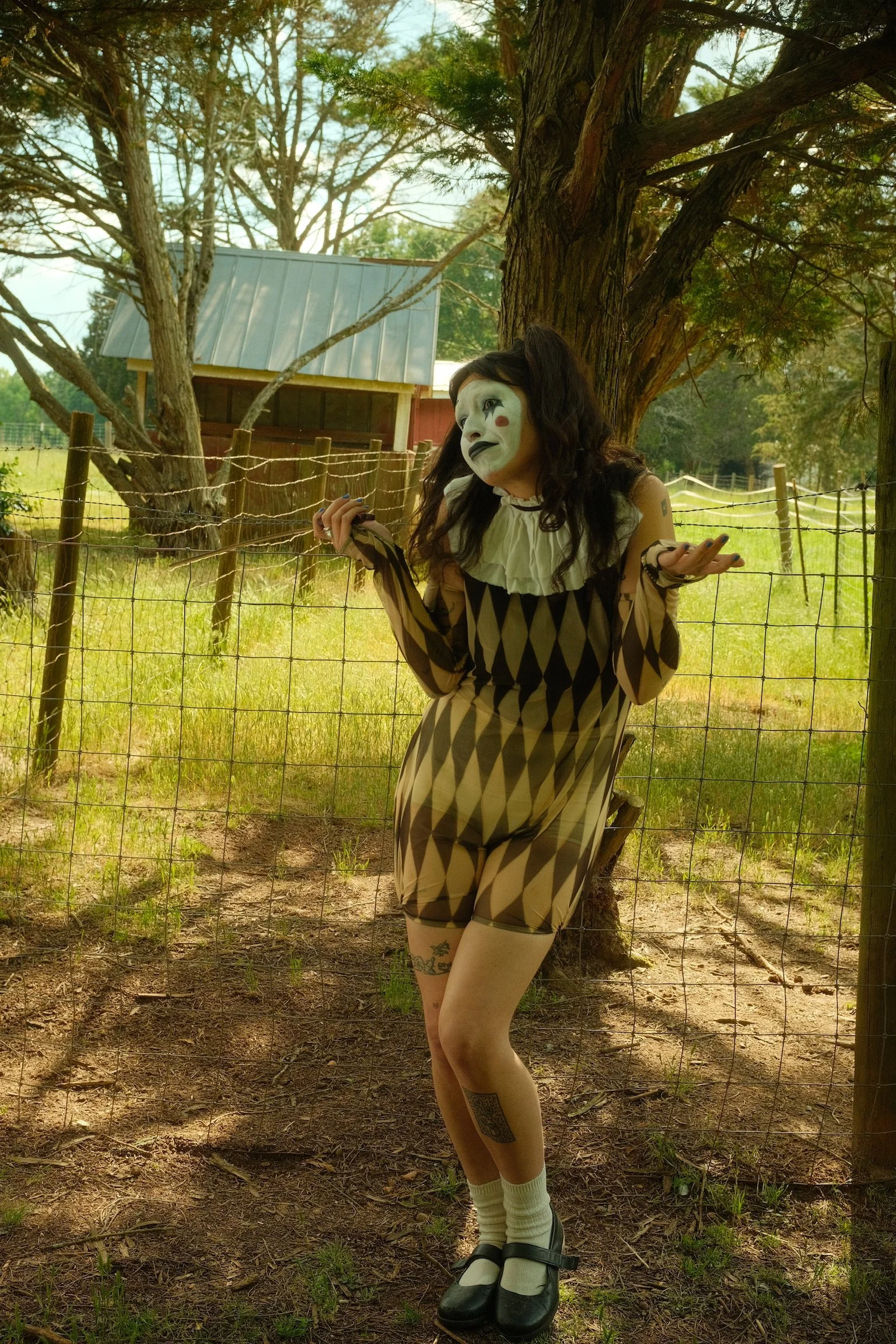
Photo by Will Karim
LUNA: Not too much time has passed in between your last few albums, but I've read that it can take you a long time to finish a record. What does your songwriting process look like versus finishing a project?
SIICHAQ: The crazy thing is, this record has been finished and ready to go for a very long time. We tracked it almost immediately after finishing Catcher, the last album I put out in August 2025. The hang up with the first two records came down to scheduling difficulties and just having big chunks of time in between sessions. When we were recording Catcher, I was living in Florida but working out of a studio in Atlanta (shoutout Ben and Evan at Hummingbird Recordings), and I was staying with my cousin for days and days at a time. Overstaying, probably…sorry, Laney.
Anyway, the back and forth was a lot. Ben and Evan are busy guys so there were these gaps, sometimes a month or two long, when I’d come back to Florida and bide my time until I could get back in the studio. In the midst of all that I thought, “Fuck it, I’m gonna move to Atlanta, I’m sick of the back and forth, and Florida sucks anyway, so why not?” Plus I had to fill my time doing something.
By the time we wrapped up Catcher, we were ready to roll right into The Righteous Sword, and we got that done basically in one go—I think in 10 or 11 days. I’m impatient [when it comes to] pretty much all things, so when I start a song I almost always finish it and when I go into the studio, I want to get it all done within an uninterrupted block of days. I’m glad that’s not how Catcher went, ‘cause that album would’ve suffered if it had been any other way, but I’m also glad The Righteous Sword panned out the way it did for the same reason.
LUNA: You’re from Jacksonville, FL and played that scene’s circuit for a while. What was that like? When did you relocate to Atlanta? How is the music scene there?
SIICHAQ: The scene in Jacksonville was surprisingly awesome all through my high school years, when I was playing in a band called Hensley. There was a thriving DIY scene, and it was a pretty tight-knit community. We went to house shows a lot, to play or to watch, and we’d know almost everyone there, which was even more special than I realized at the time. I met some incredible people/bands, played some kick-ass shows and made some of my most cherished memories during this era. There really were so many talented artists there who took me under their wings and made sure I felt at home in the scene—I’ll always reflect on that time fondly.
The pandemic kinda fucked everything up and Hensley was winding down anyway, which was difficult for me to come to terms with. When life started to get back to…well, normalcy isn’t the right word, but back to…whatever is going on now, I felt like it was time to get out of Florida and try out some other cities. I moved to Atlanta two years [ago], and the scene here is absolutely wonderful. Everyone is beyond welcoming, talented and community-oriented. Some of the best live bands I’ve ever seen have been local Atlanta bands. I’ve thoroughly enjoyed getting to know the other musicians here and integrating into the scene.
LUNA: A big note in your life pre-Siichaq is the wilderness therapy program you were in when you were 12. What were you like as a kid? Was that part of your life influential to why, or how, you make music now?
SIICHAQ: It’s hard to say what I was like as a kid, ‘cause I haven’t got the most reliable memory. What I do know is that I was pretty “normal” for a while, at least normal-passing; and then around nine or 10, I was suddenly wholly un-normal. My mental health dropped off a ledge after my parents split up, which was also around the time I started going on the internet. I stopped making friends, started playing a video game called Skyrim (outing myself as a dork right now, still love this game though), completely altered my style/self-expression, started listening to Nirvana, spent every spare second on the computer and developed some less than desirable self-destructive behaviors. This was also when I became hyper-obsessive and really, really struggled to connect with others because I was consumed by my interior world and interests, which nobody in my real life shared. That’s probably why I loved the internet, because I could engage with others who had a common fixation. The wilderness program was sort of a last-ditch effort, because regular ‘ole therapy and meds weren’t working so well and I was barreling headfirst down a scary path.
The “troubled teen” industry is a racket at best and a breeding ground for abuse at worst; I have nothing pleasant to say about it. But my life didn’t end prematurely, so that’s good. When I got out of that program and the awful boarding school they coerced my parents to send me to after, I started writing music. I was traumatized and scared shitless. I bottled up everything, and the only time I released a little bit of the mounting pressure was when I wrote a song. It was safer to dump my insides into that, where I could disguise it under literary devices and brush off prying questions by chalking it up to theatrics. Music was, and is, the greatest source of expression for me, and as traumatic as wilderness was, who knows if I would’ve come to find songwriting the way I did without it.
LUNA: Why was “The Righteous Sword” the right choice for the title?
SIICHAQ: We toyed with a few different names, but it didn’t feel like any of them captured the drama of the music quite like The Righteous Sword. The titular song is a dense, 90 percent instrumental wall of chaos, and was probably most responsible for shaping the visual aesthetic that accompanies this album. It’s also an explicitly political song, and I wanted to pick an album title that calls those political themes to the forefront of listeners’ minds. Not every song on the record is an overt commentary on the state of the world, but there is a lot of that across the entire project, so I thought maybe by choosing The Righteous Sword as the title, listeners might be more attuned to those undercurrents.
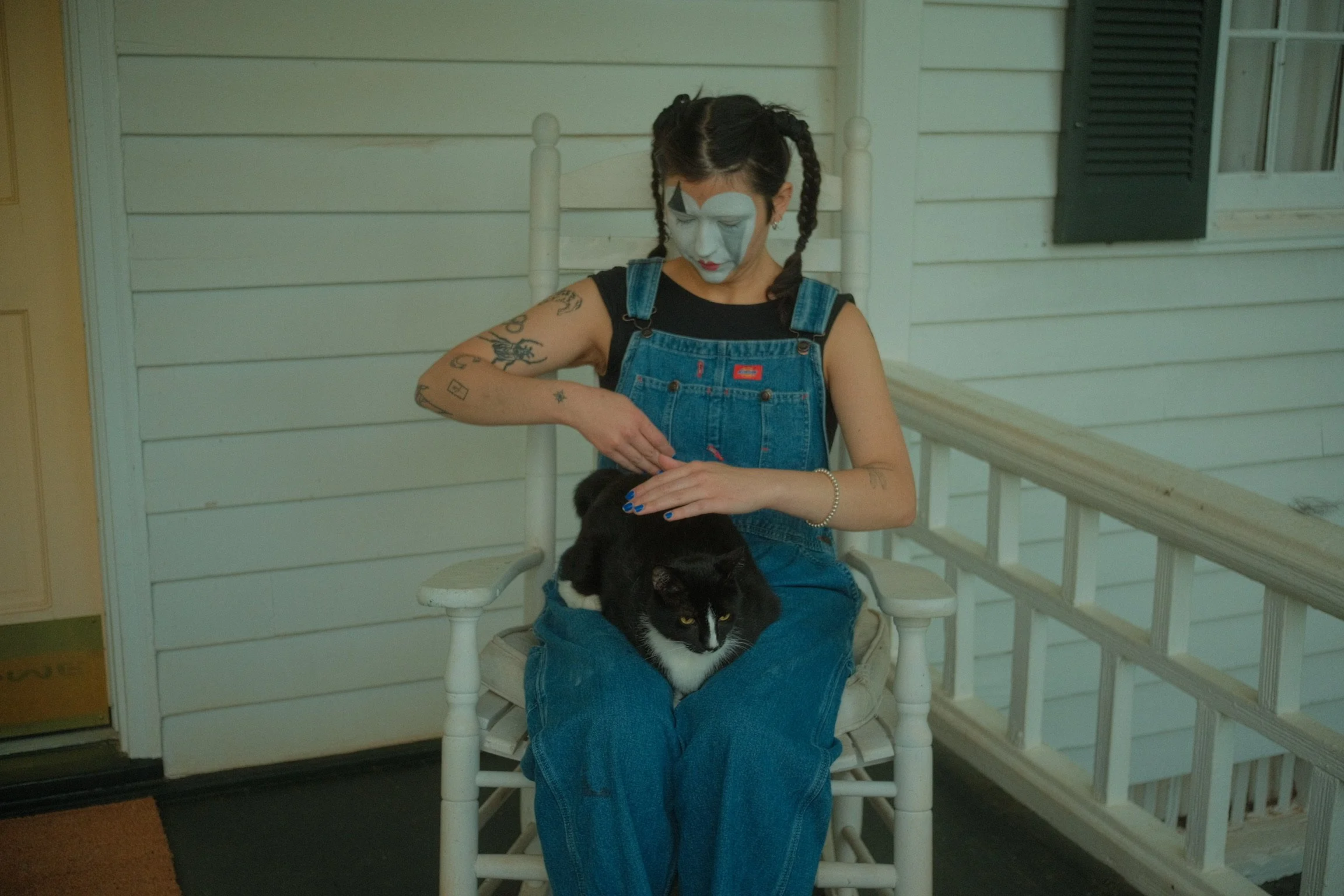
Photo by Will Karim
LUNA: The titular song is one of my favorites on the record. On each album, you have a song that has little or no lyrics, and they’re often the heaviest and most experimental ones. Where do these tracks come from for you?
SIICHAQ: I feel like these tracks come from my love of the game, so to speak. It’s just pure fun and a place for me to try out whatever wacky ideas I have regarding instrumentation. Plus, Ben and Evan are both talented beyond words, so it’s a real joy to watch them unleash their genius both on the performance and production sides. There is always an element of restraint when it comes to the production of a song, because sometimes less truly is more, but on this track, more is actually more, and I didn’t have to restrain myself at all. That’s why they’re so fun: pure indulgence.
LUNA: There are lots of noisier elements in this record. Did anything specific inspire you to create these songs in this way?
SIICHAQ: Me, personally—I love noise. My music taste is anything loud, laden with feedback and saturation and/or totally blown out. There’s a surprising amount of noise across Catcher too, but this time we pushed it further—made it impossible to ignore. It’s still a very well-engineered project, and Ben and Evan did a great job steering the ship, making sure it was always tastefully and thoughtfully executed.
My taste and writing style has definitely been trending in this direction for some time now, and while I do still write softer, folkier songs, I enjoy leaning into this abrasive, sometimes agitating production, because that’s what I seek out in the music I consume. It wasn’t anything specific that pushed me this direction, I think it’s ultimately just the culmination of over a decade’s worth of listening to gritty, heavy artists that finally got me.
LUNA: In “Cattle Driver,” you critique the soulless content-ification of art, and in “Nothing If Not” you have the lyric, “If I had to pick between having you and saving everything / I would choose you.” While the two aren’t totally related, I love the dichotomy that they both present. Is it hard to balance what to worry about in life, politics versus people? The big picture and what’s immediately around you?
SIICHAQ: You know, I’ve somehow found a way to worry about absolutely everything all at once. An enviable skill, I know, I know! More seriously though, “Nothing if Not” is meant to be ironic; it’s not a total reversal of the truth but it’s certainly heavily exaggerated. The point is more to capture the sensation of the cognitive dissonance I, and almost everyone else, feel while trying to live a normal life yet simultaneously carrying around the knowledge that atrocities are being carried out across the globe.
“Cattle Driver” and “Nothing if Not” are both intended to criticize the systems of power which govern our lives while acknowledging the very real, very personal toll it takes to live under those systems. I think it’s impossible to worry about politics and to not worry about people, because the big picture has a direct impact on me and my immediate community. I worry about politics because people I love are at risk of or have had their rights taken away, and because people in Gaza are STILL facing a genocide, and because the mechanics of our country are designed to exploit absolutely everybody, save for the thousand or so billionaires living here. To me, there’s no separation, you know?
I’m sorry for the soliloquy, I always have some shit to say when politics come up, I hope I don’t sound too melodramatic or like I’m angry at the people reading this. I’m only mad at the government, I promise.
LUNA: You talk about intimacy and being perceived on “Fish Tank.” What inspired the lyric, “the closer you come, the further I stray?”
SIICHAQ: When I wrote this song, I was in a period of intense isolation—self-imposed, mostly. I realized that there were very few people whom I felt comfortable being vulnerable around. I realized I hadn’t felt like I was “being myself” around anyone in a long time. I didn’t know how to remedy that, and I didn’t know if it was caused by something wrong in me or the friendships. I isolated myself for a few months to try and work that all out, and I wrote “Fish Tank” to cope with the loneliness of feeling unknowable.
LUNA: How do you feel about these songs being out in the world? Do you have any plans after the release, any shows or tours?
SIICHAQ: I am so freaking excited to get these songs out finally. I mean, I have been sitting on them for SO LONG, it’s crazy. Obviously, I’m scared too, because some of the tracks deal with things that are so personal I can’t even really talk about them publicly—which is nuts ‘cause I talk about everything everywhere all the time. But it’ll feel really good to let this album breathe some fresh air, I feel ready to let them out of the ‘ole vault and into the daylight. We’re planning a New York show and possibly a Philly show for October, and we’ve got some Atlanta shows in the books too. Who knows, maybe another batch of songs won’t be too far behind…
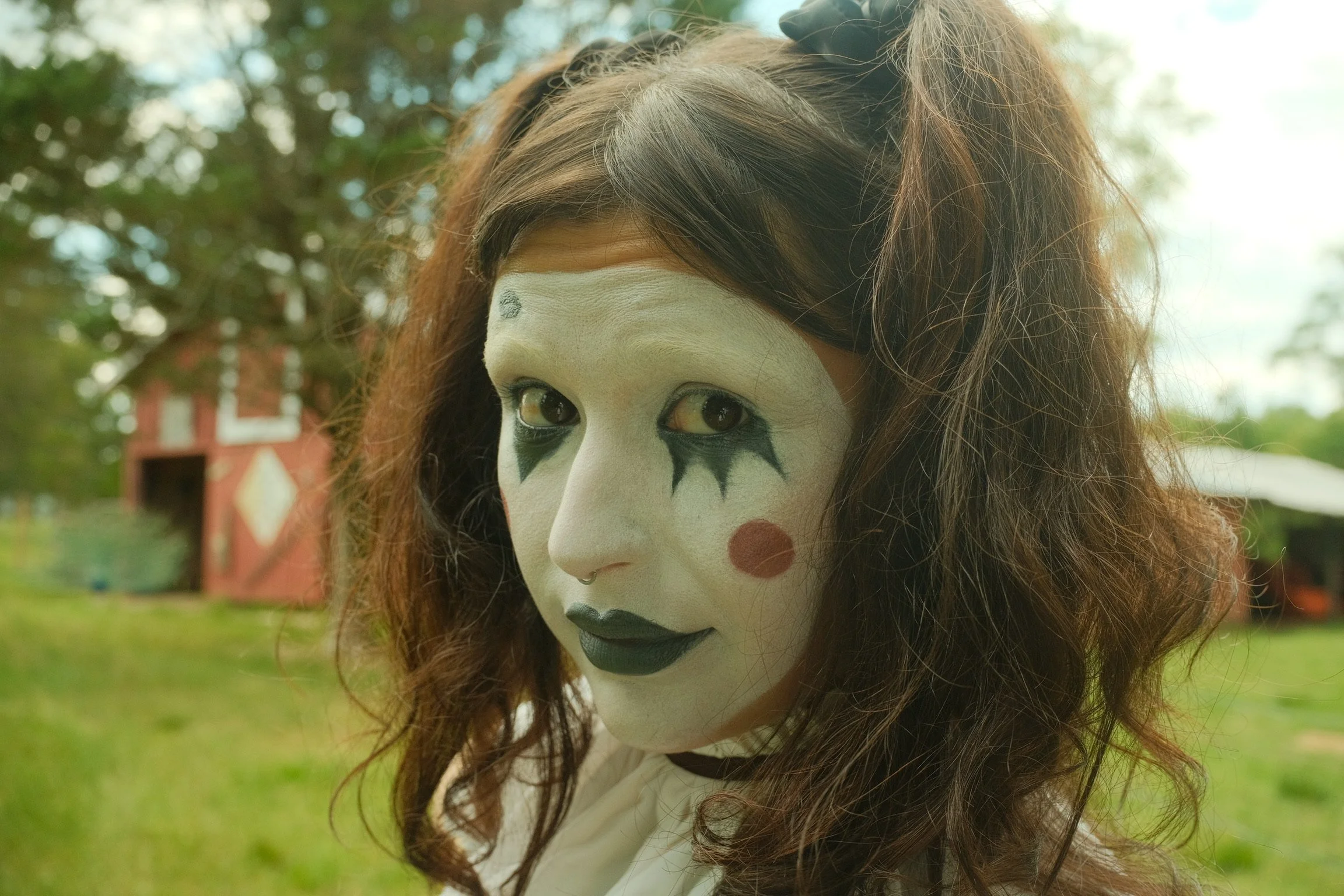
Photo by Will Karim
