
Q&A: The Secret Plan Refuses to Shut Up and Take It on “Word Weapons”
INTERVIEW
INTERVIEW
☆ BY KIMBERLY KAPELA ☆
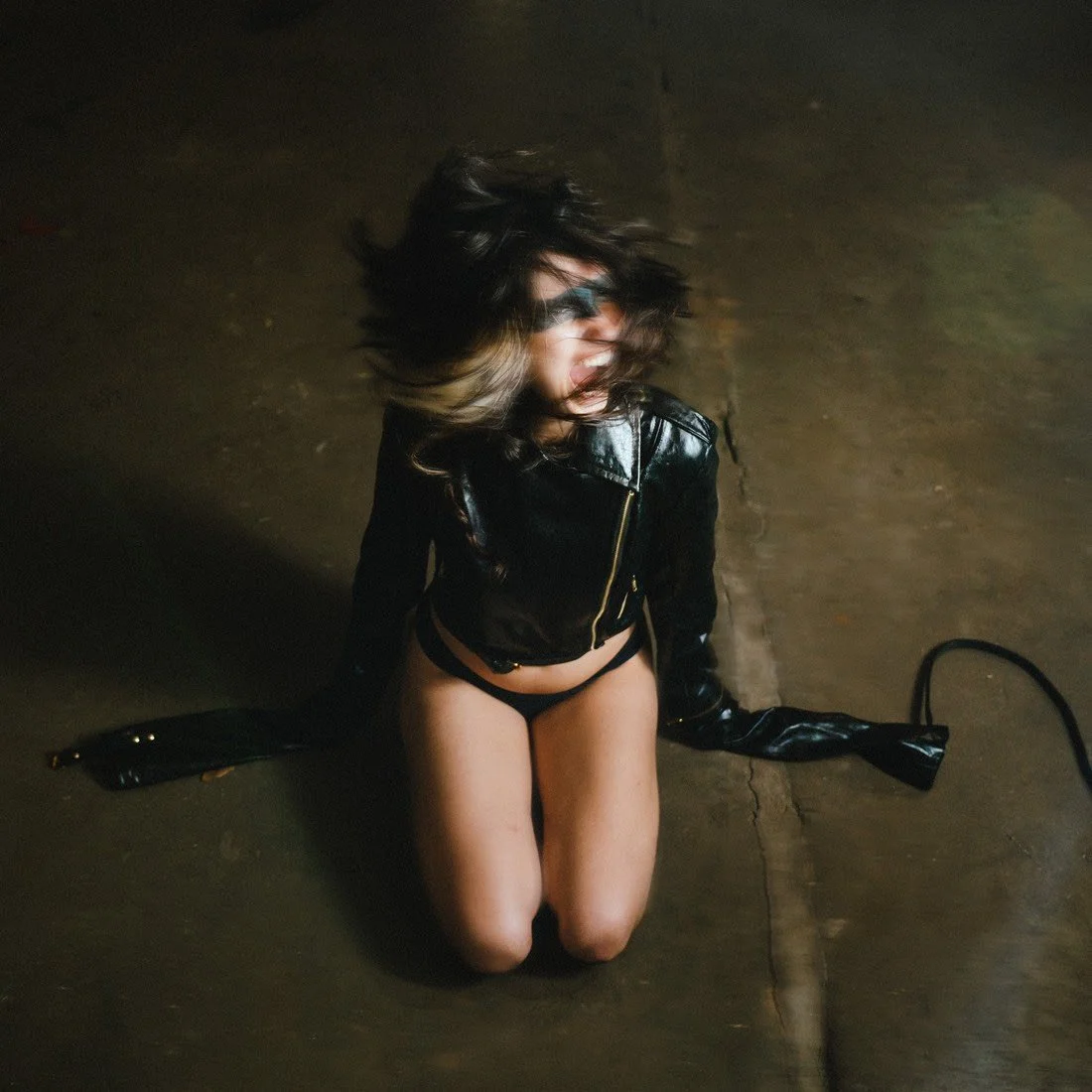
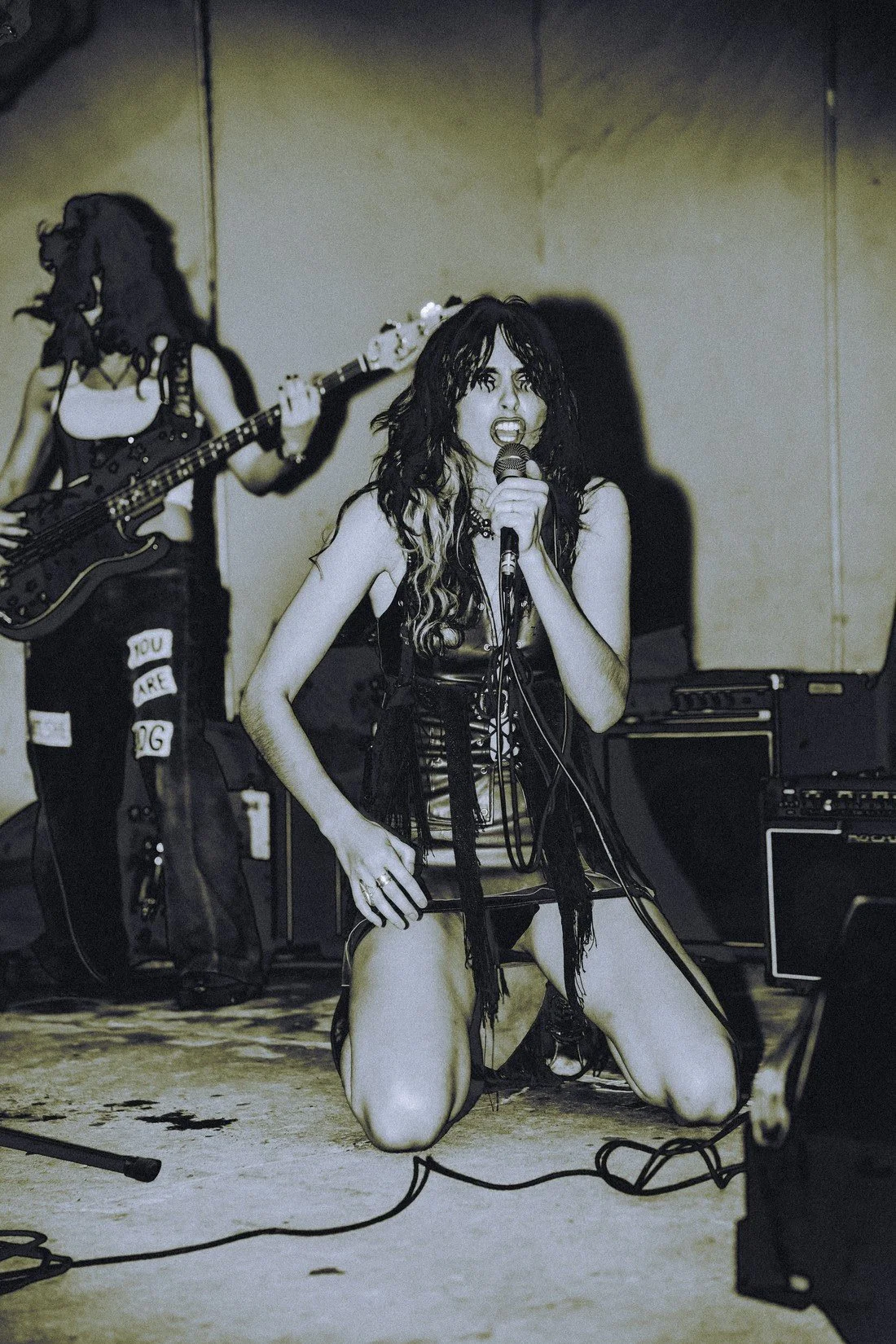
“MORE WOMEN ON PUNK STAGES” — exclaims frontwoman Elena Karaytcheva of Houston-based punk band The Secret Plan. Originally rooted in a more psychedelic direction, The Secret Plan has since evolved into something harsher, faster and considerably more unpredictable. In Houston’s underground music scene, the band has developed a reputation for performances that are cathartic and steeped in protest, translating the tension of its songs into a collective release.
That volatility carries into Word Weapons, an EP born from frustration and sharpened by defiance. Inspired by hard rock bands, boundary-pushing poets and activists, and even a magical Texas bayou, the record reflects the many influences that have shaped The Secret Plan while pushing the band further toward an abrasive and confrontational sound.
The Secret Plan turns its attention toward the country’s political systems and social conditions that have fueled its anger, confronting poverty, misogyny, anti-immigrant sentiment, bigotry and the normalization of ignorance with the same intensity it brings to the stage. The band combines punk, garage rock, and psychedelic noise into something confrontational and impossible to ignore. Hailing from a country whose government could care less about the poor, does not respect women nor the lives of immigrants, and encourages ignorance and bigotry with hostile aggression, The Secret Plan wrote Word Weapons as a refusal to shut up and take it.
On “I Am She / U Are Dog,” Karaytcheva takes aim at the patriarchy with snarling sarcasm, weaponizing humor and confrontation against systems that have historically demanded women remain quiet. “Moderndaze” moves between lament and resistance, acknowledging the damage already inflicted while refusing to accept it as inevitable.
Throughout Word Weapons, frustration, anger, and resentment remain front and center. But beneath those emotions is the reclamation of agency and personhood.
The refusal to shut up and take it is the heart of the EP.
“The refusal to shut up and take it comes from this comedian I really love named Jacqueline Novak,” Karaytcheva says to Luna. “She does a special called ‘Get on Your Knees,’ and it's about getting on your knees and blowing life, blowing people and blowing the universe. I don't want to be on my knees and taking it from the government. I don't want to be on my knees and taking it from my boss… and I refused to comply.”
For Secret Plan, that refusal is personal, political and embedded in its DIY ethos. The Secret Plan isn't asking permission to take up space. With Word Weapons, they're taking it.
Sarah Buchsbaum
LUNA: Thank you for talking to Luna. Our readers would love to get to know you and your music more. For any readers who aren’t familiar with you yet, what inspires your artistic style and sound?
ELENA: The band was born out of the desert, and we have visions, and we sing about visions. We look towards visionaries too.
PEBBLES: I would say, musically, I take a lot of my inspiration for the guitar parts from bands like The Stooges and Black Sabbath, and some hardcore bands as well like Poison Idea. Like Elena was saying, visionaries like Crass or Genesis P-Orridge.
ELENA: We love a poet too like Alejandra Pizarnik. We try to weave very hard realness in with this very visionary desert energy.
PEBBLES: In the album, we have references to activists and poets like Arthur Rimbaud and Cecilia Vicuña.
LUNA: You guys are part of Houston’s punk and DIY circuits, and for any readers who aren’t familiar with Houston’s music scene, how has the scene and its community inspired or impacted your sound?
ELENA: We really did start getting into the heavier things here in Houston. There's a bayou nearby, it runs through the city, and I think there's a swampy slowness that you can see in rock n’ roll too in some of the grungier stuff. Musically, some of the hardest people that come from the hardest neighborhoods in Houston really contribute to the punk scene and help make it what it is, and they're extremely welcoming. We've got White Swan, a venue down the road here. On the front, it says “Groceries, Milk, Cigarettes.” Inside, it's a pool bar, and they host a lot of punk DIY nights, cash only, as it should be, to benefit from the small businesses and the bands. Houston is very DIY.
PEBBLES: It's an experimental city. This place where if you have an idea, a vision, a project you want to try, there's a place to do it.
ELENA: I would hope that everyone would have this experience, but I just mean the way that Houston makes it special. There’s something about that bayou energy. It really charges the place, and I think people from Houston and from the South in general would understand what I meant by that.
LUNA: You just released your newest EP Word Weapons and a huge congratulations is in order! What emotions or inspirations did you feel compelled to explore this time around?
PEBBLES: A lot of it came out of a sense of frustration with different aspects of both our lives, but just a sense of the question that was driving me for a lot of the writing was what the fuck are we doing here? What are we doing with our lives?
ELENA: What's the point? How do I move? How do I carry on? There were some things going on at the time. I had gotten out of a really bad relationship. You were moving around. You had finally moved back into the city with me. There were a lot of transitions going on, and I think we just felt really angry at what we were seeing on our phones and on TV, and we just felt really helpless. And the way we both knew how to contribute felt like this record.
LUNA: You describe Word Weapons as a refusal to “shut up and take it.” What does that refusal mean to you, and why was this EP the right vehicle for expressing it?
ELENA: Oh hell yeah! The refusal to shut up and take it comes from this comedian I really love named Jacqueline Novak. She does a special called “Get on Your Knees,” and it's about getting on your knees and blowing life, blowing people and blowing the universe. That's what I was thinking about when I was going through this. I don't want to be on my knees and taking it from the government. I don't want to be on my knees and taking it from my boss. And there were so many people who were pissing me off at that time in my life, and I refused to comply. The buck stops here, because it impacts your mental health, your physical health and your relationships with other people. It erodes your life. It was my Hail Mary, saving grace towards reclaiming my personhood.
LUNA: Can you walk us through the creative process behind Word Weapons? How did the songs evolve from the initial idea to its final version?
PEBBLES: We write together. I like to think of it as we're vultures of our minds in a way. We pick through the garbage of our heads. Sometimes we pick through the cultural detritus that's around us, whether it's books on a shelf or anything that speaks to us. It's like the William S. Burroughs, Brian Geiston cut up method where you take reality, take things that are found, and you cut it up and splice it together, and you make new meanings. We do that a lot, and then we shift it into something that's meaningful to us that says what we want to say, and often it has an imagistic quality that I think is unique. It's our own. It's ours.
ELENA: We pick our brains apart. It doesn't always start out as a rock n’ roll or a punk song. It will span genres a little bit and not really judge it and then sort of convert it into the genre we're feeling most attached to. Sometimes we disagree with each other. That definitely can be a habit sometimes, but we've been friends for six years now, so we've seen each other through a lot of different things, and we've been writing for so long that it just feels pretty natural.
PEBBLES: There’s trust and mutual respect and admiration, and so that's a foundation that small disagreements can't really fuck with.
LUNA: Do you have a personal favorite song on Word Weapons — one that feels closest to your heart or most revealing of who Secret Plan is right now?
ELENA: Mine changes. I actually checked the Spotify numbers, and it was the lowest steamed one, but it's my favorite. It's called “Different Masochism.” It's a different masochism, misshapen memory. No one ever said it was a made-up story.
PEBBLES: I would agree with you. To me, it was written about this moment, particularly the political moment, and what's going on in Texas, what's going on in the country and in the world. It's our way of speaking to that.
ELENA: Absolutely. Another motivator for this album really was the fact that we're located in Texas, and we felt insane about it. It was breaking our hearts what was going on. A lot of that rage went into the album, and just the disappointment in the way things were being run and the decisions that were being made and the people that are still in power. It broke our hearts. Not to veil on it too hard, but being in Texas was a huge thing for us.
LUNA: How do you hope listeners — especially your femme audience — can connect with or find power in this new era of music from you? What emotions or messages do you want to leave with them?
ELENA: Catharsis and reclaiming personhood and feeling really, really, really so angry to where you almost can't scream loud enough. Especially with our live shows, we have so many. We really have so many girls moshing at our shows. It's so beautiful and I want more girl pits. The refusal to shut up and take it was really the way it felt. Men can listen to this too, even though I talk about how stupid they are on it. Women, I hope can feel like through the words and through the energy and through the feeling, a bit of catharsis, a bit of help with dispersing the energy.
LUNA: What is fueling your fire right now that’s pushing you into this new era of your career?
PEBBLES: I feel like life is short. Your body is your own. Your time is your own, reclaim it, make it worth living, make your life worth living. It feels so imperative to speak out like we were saying, not shut up and take it. The idea of self-censorship radiates throughout society, like Genesis P-Orridge says, “Control is fear.” I want to just overcome fear and inspire people to take control of their own lives, make it the best life they can. It feels like now's the time.
ELENA: I'm listening to a lot of Janis Joplin and screaming, probably damaging my vocal cords, but screaming in the car with her. Reading her lyrics has just been so beautiful. I'm paying a lot of attention to my relationships right now too. I'm trying to tend to them, because we spend so much time in the creative tank that now I want to come out and say hey to everybody.
LUNA: How are you feeling in this current era of your career and what does the rest of the year look like that you would like to share with Luna?
ELENA: Feeling good. We're feeling so excited about the rest of the year. We're playing our first few festivals, and we are getting out of Houston and trying to go into other places in Texas. Explore a little bit, hop in the van with all this stuff, and go see some people, play some shows and write new songs. We want to put some singles out soon because they're ready and we're excited. It felt like we were sitting with this album for so long, now it's out, and we've known it for this long, but this is everyone's first time experiencing it. We're ready for some more songs.
LUNA: Is there anything that I didn't ask that you would like to add?
ELENA: More women on punk stages.
