
Q&A: Tenroc on Turning Personal Grief Into Purposeful Pop
INTERVIEW
INTERVIEW
☆ BY SHEVON GREENE ☆
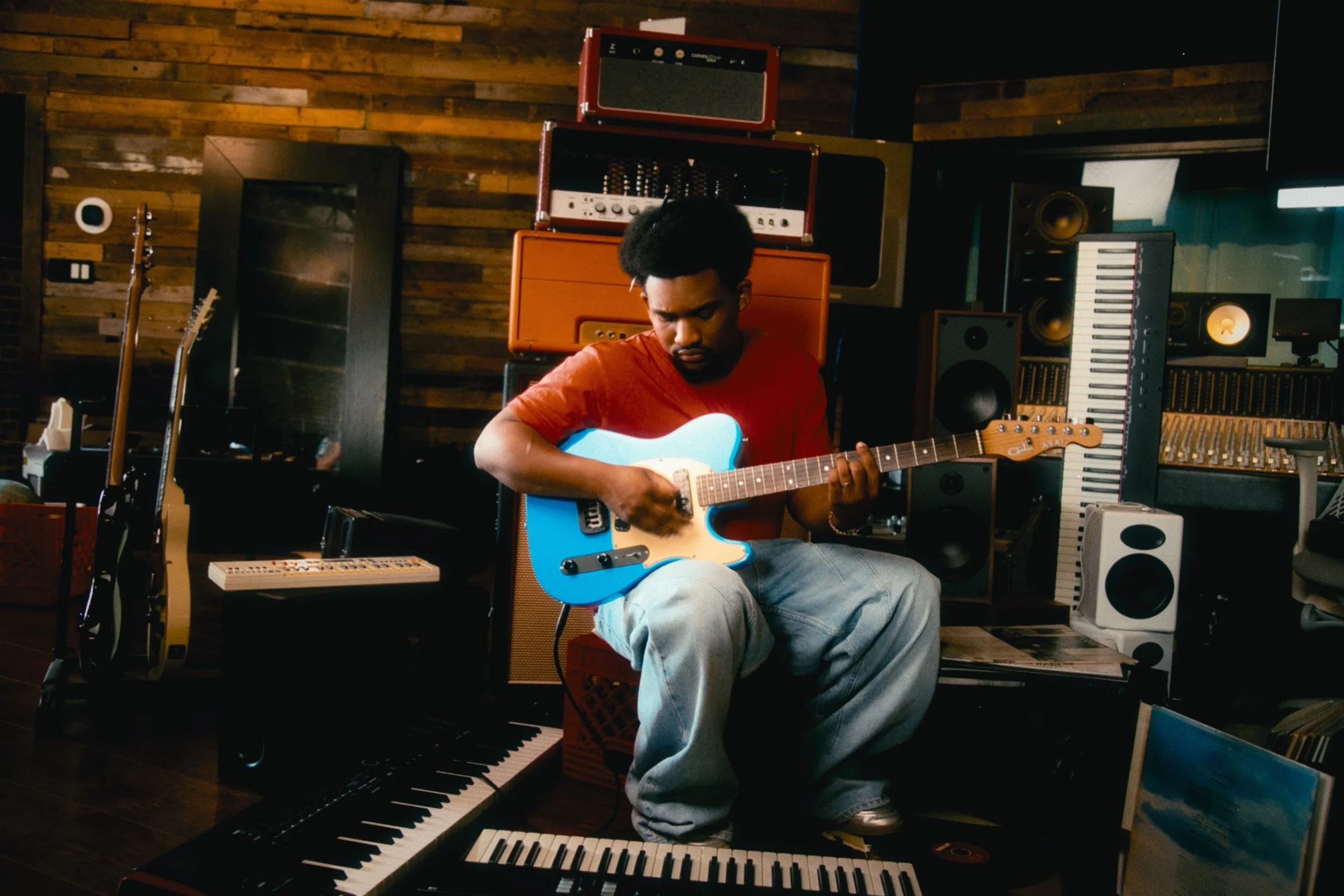
WHAT IF THE SONG THAT GETS STUCK IN YOUR HEAD—is also the one that pulls you out of your lowest moment? With “mourning 2 dancing,” Tenroc manages to do exactly that, building a track that emphasizes movement while carrying something heavier beneath the surface.
The New York City native certainly isn’t new to hitmaking. Before stepping into his own spotlight, Tenroc helped shape genre-crossing records for artists like Rihanna, the Jonas Brothers, Julia Michaels and Jon Bellion, earning Grammy nominations and amassing billions of streams in the process. But with his upcoming album God Is a Person, due May 29, he’s shifting from a behind-the-scenes role to being his own storyteller.
Featuring Tori Kelly and Jon Keith, “mourning 2 dancing” flips despair into hope with an undeniable melodic catchiness. It’s a dance-ready anthem that comes from real-life grief, faith and the belief that joy can follow even the hardest losses. It’s purposeful pop with a spiritual undercurrent, made to be played out loud and danced to.
We sat down with Tenroc to talk about turning grief into groove, redefining faith-driven music and why he believes God isn’t distant, but personal. Keep reading to step inside the world behind God Is a Person.

LUNA: “mourning 2 dancing” feels like a journey from despair to joy. How did that narrative come together for you, both lyrically and sonically?
TENROC: Usually when I’m making a song, it starts with the sonics. Sonically, I wanted to make something really fun and catchy melodically. Something people could listen to anywhere: at the gym, on their way to work, something they’d want to sing back. As far as the lyrical content, I wanted to make something inspiring and uplifting that pointed people to God in moments where they weren’t feeling good, like feeling depressed or sad. That’s the goal.
LUNA: It’s definitely one of those songs where everyone can bop their head to it, but when you listen to the lyrics, it’s got that direction that really sends it home. At what moment did you realize you had a song that truly flipped mourning into dancing?
TENROC: It’s interesting because when I created the song, I didn’t relate to it as much as I do now. Maybe two or three weeks ago, our family tragically lost my father-in-law. It was sudden and unexpected. Around the same time, my wife and I found out we’re having our first child, which we had been waiting on for five years. Life has those bittersweet moments; something tragic happens, but something good comes out of it. With my faith, I see it as God always finding a way to turn our mourning into dancing somehow.
LUNA: That’s something everyone can relate to; those moments where something hard happens and then something amazing follows. The track brings together hope and movement, not just emotionally but physically; something you want to dance to. Was that intentional?
TENROC: It was very purposeful. I wanted the album to have at least two or three records that were intentionally catchy and fun. I want people to sing along to the melodies. I want the songs stuck in people’s minds.
LUNA: Let’s talk about the features with Tori Kelly and Jon Keith. How did each of them shape the song differently?
TENROC: With Tori, it was organic because we’d already worked together. When I made the demo, I had my voice on it and ran it through a plugin with a Mariah Carey-type voice because I wanted that R&B pop diva tone. My wife suggested Tori, and she was right. Tori was willing to send vocals and went insane on it. She brings authenticity; she doesn’t have to try to sing that way. That’s just who she is. With Jon Keith, I was looking for someone to do the second verse and was stumped. My wife suggested Jon, and again, it felt authentic. Nothing feels forced on the record; it feels natural.
LUNA: There’s definitely a strong spiritual undercurrent in the song. How do you communicate hope and faith in a way that still feels universal?
TENROC: I try to give people sonics that are pleasing right off the bat. No matter what I’m talking about, you want to listen because the production is strong and the melodies are fun. My philosophy is to bring music that’s catchy and enjoyable while talking about my experience with Christ. If people are moved and want to learn more, that’s incredible. But the goal is to package it in something sonically pleasing.
LUNA: You grew up learning piano, drums, and guitar at a young age. How do those early experiences show up in your songwriting?
TENROC: I started playing piano at three and was self-taught. I’d play by ear and experiment. A lot of my production is still that: sitting down, trying things, process of elimination. I’ll try chords and decide what works until I have a full song.
LUNA: You’ve written for artists across pop, rock and R&B. How does writing your own project feel different?
TENROC: It’s very different. When I write for someone else, the goal is to convey their emotions. Once that’s done, my job is done. They’re the vehicle for the song. With my project, I’m the vehicle. That’s new for me. The best part is I think less. It’s just my thoughts; does this convey how I feel? A lot of the album is me saying how I feel about Jesus.
LUNA: Does stepping into your own voice feel like a different kind of responsibility?
TENROC: I don’t feel as much pressure as maybe I should because my goal is simple: provide music about God that’s fun to listen to. There are amazing Christian artists out there, but not a lot of records that are intentionally catchy and danceable. I realized the songs stuck in my head were usually secular. I wanted to create records about Christ that are ridiculously catchy on purpose. As long as I accomplish that, I’m happy.
LUNA: The album title God Is a Person is intriguing. What does that phrase mean to you?
TENROC: It doesn’t mean we are God. It means God isn’t a distant force or just academic—He’s a person. Biblically, God has a will, emotions, and desires for us. The album seeks to convey that. It also pushes back against the idea that God is just “the universe.” He created the universe, but He’s His own being. Through the records, I try to display the personhood of God—showing how He’s there in times of need or expressing gratitude for what He’s done for me.
LUNA: What emotional range can listeners expect from the rest of the album?
TENROC: The ones out now are the dancey ones. There are others that are more yacht rock-inspired, me talking directly to God. There’s a song called “New Best Friend” about how God found me broken and now we’re best friends. There’s one called “Jose’s Song” that’s probably the deepest emotionally. Even when songs start in a hard place, they end with God coming to the rescue. They all end on a high note.
LUNA: Were there songs that surprised you in how they developed?
TENROC: The last song, “GIAP (God Is a Person),” started as a ballad. I was going to do it alone, but I brought Tiffany Hudson on it. It turned into this alt-rock, Coldplay-ish thing. It’s one of my favorites.
