Q&A: Ten Albums Later, The Maine Still Surprise in ‘Joy Next Door’
INTERVIEW
INTERVIEW
☆ BY KIMBERLY KAPELA ☆
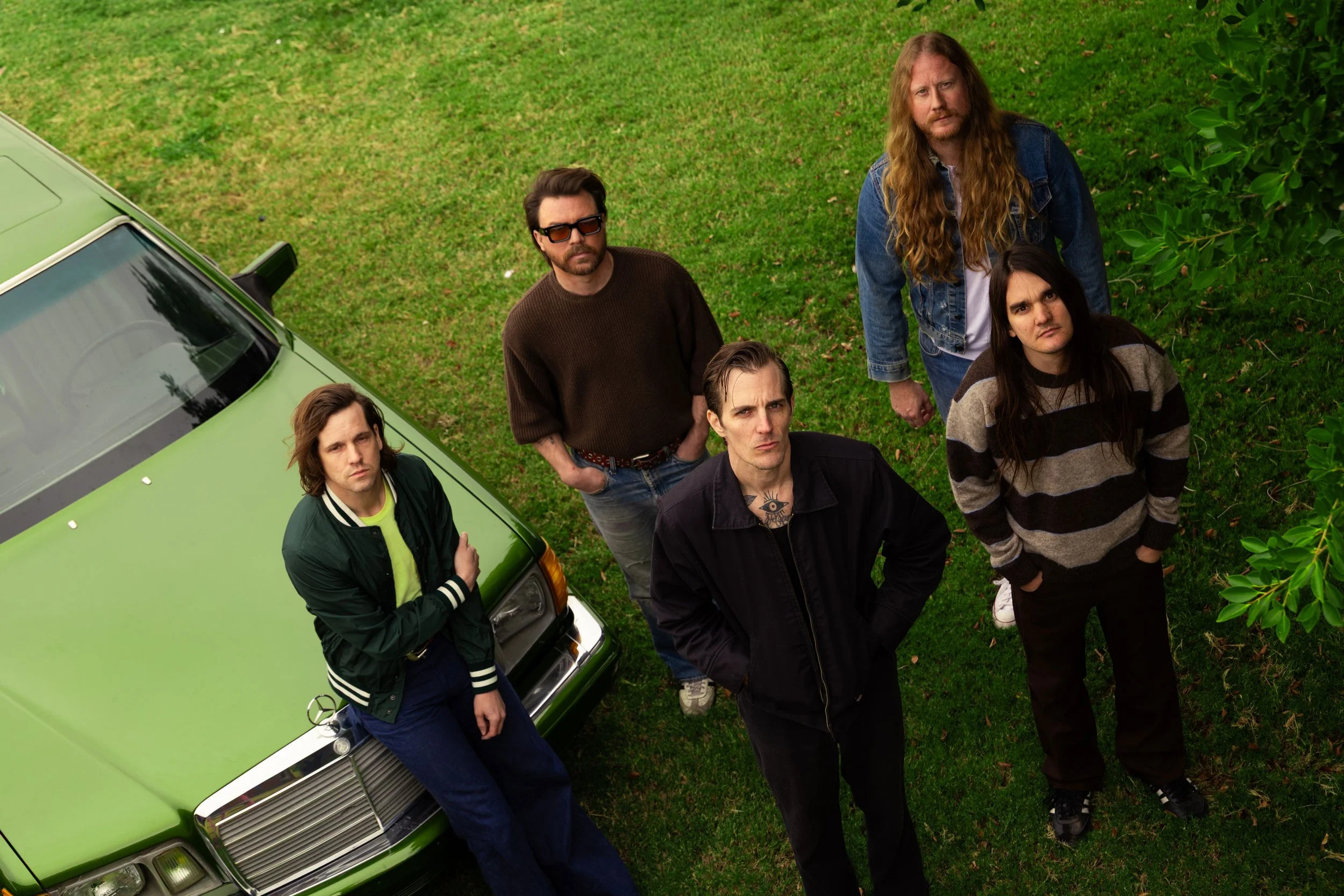
TEN ALBUMS IN, THE MAINE ARE NO LONGER CHASING LONGEVITY — they’re embodying it. After nearly two decades of evolving from Arizona upstarts to arena-ready mainstays, the five-piece — John O’Callaghan, Kennedy Brock, Jared Monaco, Garrett Nickelsen and Pat Kirch — have unveiled the first taste of their tenth studio album, Joy Next Door, set for release April 10.
“I suppose it’s only fitting that our tenth album has been one of the toughest to make to date,” O’Callaghan says. “Most of the personal friction I’ve felt during the making of this record has derived from having to face my own struggle with feeling like I have everything I could have ever dreamed of, yet I can’t seem to allow myself to be fully present and appreciate the weight of a very fortunate life.”
Arriving at what many would call the height of their career, Joy Next Door may be the band’s most essential release yet. Not because it reinvents The Maine, but because it refines them. Where earlier records wrestled with youth, heartbreak, and ambition, this album confronts midlife and fulfillment after reaching longevity as musicians. What happens when you get everything you asked for? Why can joy feel just out of reach?
“[Joy Next Door] starts in the unknown and the weirdness of life, and then it starts a little existential and then dips down into sadness, and then by the end, we're hoping that it brings you out of it, and you can find joy in whatever's happening in your life,” Nickelsen says to Luna. “Even if you don't know the answer to what you're feeling, at least, you can realize that there's a way out of being sad.”
True to their longstanding reverence for the album as an art form, the band wrote and recorded Joy Next Door sequentially, allowing the narrative to unfold in real time. That decision lends the record a cinematic cohesion with each track a chapter building upon the last.
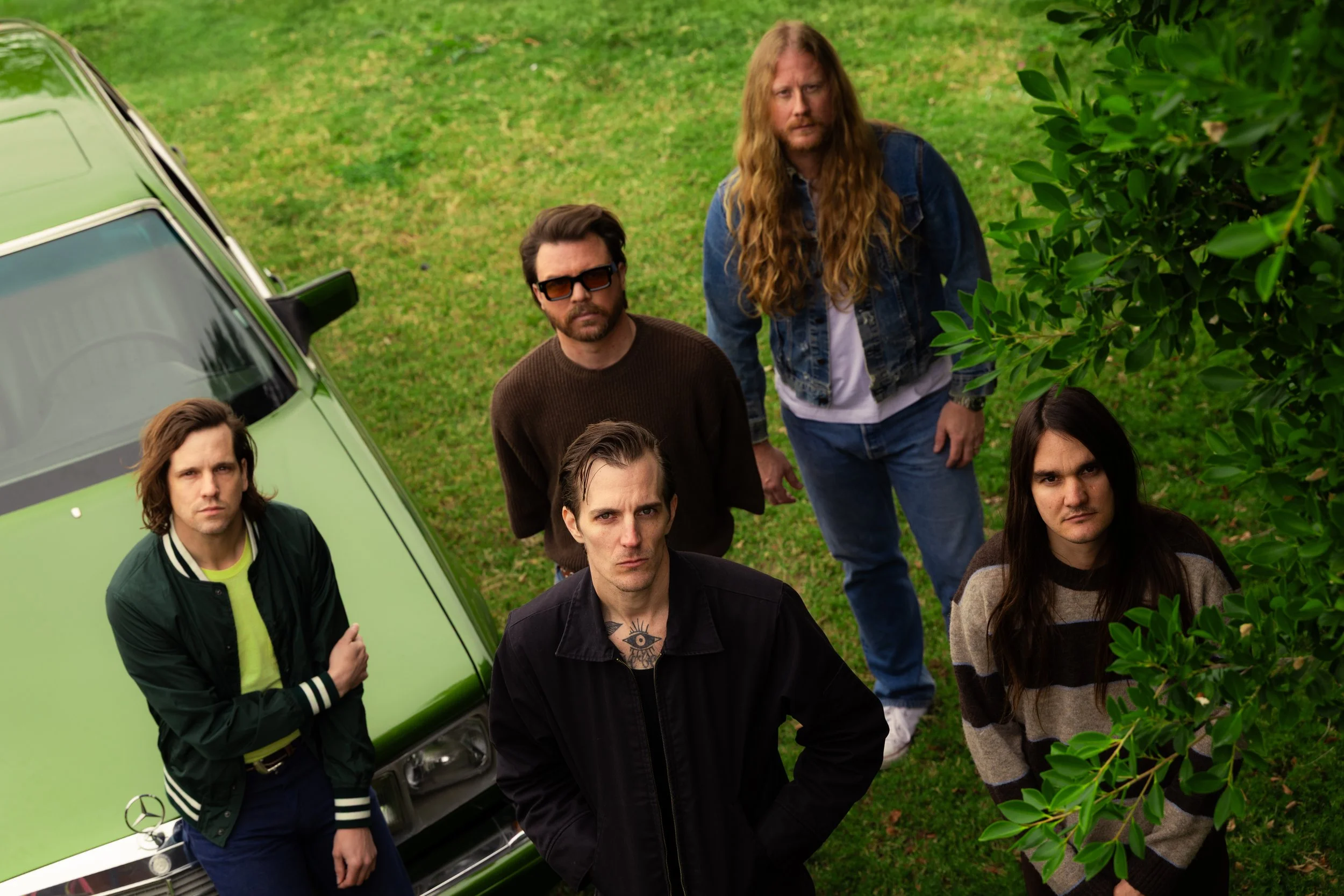
According to Kirch, Joy Next Door is The Maine’s “green era,” continuing their tradition of assigning each album a defining color. Green, embodied by the grass on the album artwork, mirrors the organic instrumentation and the choice to leave certain rough edges untouched.
Green also symbolizes growth, renewal, and presence — fitting for a record preoccupied with learning how to stand still long enough to feel the life you’ve built. Joy as something tangible. Attainable. Maybe even already there.
As the band prepares for the album’s release, they’re stepping into another defining moment: their first headline tour in nearly two years and the largest of their career. The 26-date run kicks off March 24 at the Brooklyn Bowl Las Vegas and will see the band take over stages from their hometown of Phoenix to Los Angeles, Chicago, Brooklyn and beyond.
Ten albums in, The Maine are still asking questions, still pushing themselves, still choosing vulnerability over comfort. The band continues to embrace vulnerability, imperfection, and presence, showing that true longevity isn’t measured in years or milestones, but in the courage to keep creating, keep connecting, and keep finding joy just next door.
LUNA: Thank you for talking to Luna. Our readers would love to get to know you and your music more. For any readers who aren’t familiar with you yet, what inspires the atmosphere or sonic world you aim to create for your listeners?
GARRETT: We're just such big fans of music and bringing interesting, unique experiences to shows and records. I think we would like to feel like every record of ours has at least a feeling around it. In this one, there was a little bit of nostalgia, a little bit of midlife crisis. We're all in our mid 30s, almost late 30s, where we've been doing this for almost 20 years. How do you deal with being an adult, but also being a musician? We like to put on a fun, crazy, weird show. We try to mix it up as much as we can. If someone calls out a song, we'll always be like fuck it. We'll try to figure it out at the moment. We’re trying to have some fun, but realize that life is weird.
LUNA: Joy Next Door is your tenth studio album — what did that milestone mean to you emotionally and creatively?
GARRETT: Me and Pat Kirch [drums], we pretty much talk every day about what we are going to do next. A weird moment happened where there were always different bands that we could pull from. Whereas, they did this, and they did this and then they did this. There's not a ton of bands who have made 10 albums. We're getting to this weird point where there aren’t a lot of bands in our scene who have accomplished that. We've always stayed pretty steady the whole time, and grown a little bit and a little bit and a little bit.
It's funny because thinking back on things we talked about on our second record, longevity is the thing. I was just like keep going, keep going. Now, you’re in that scene and this is the goal you hoped for. There’s no blueprint anymore. You’re figuring it out on your own, but it's cool. It's a really unique place to be. We've shown some people the record, and they're like, this is your best shit. 10 albums in, and people are either saying that it is the best record that we've done, or they're lying to us. That's okay too.
LUNA: Each Maine era has a defining color. Why was green the right representation for Joy Next Door?
GARRETT: It felt right. It was so funny that it has become a thing that has ended up being something we do, but that usually has come later. Pretty early on, the whole time we're making a record, I'm either putting something that had green in it and I think it helped shape the record, but it just felt right where some of the other ones have just been like, oh, that's cool. And this one was green, and I'm not 100% why, but it just felt right.
LUNA: Does listening to Joy Next Door front-to-back tell a narrative arc? If so, what story are you hoping listeners walk away with?
GARRETT: For sure, and more so than some other records, when we were making the record, I would send John [O’Callaghan] movie soundtracks and Garden State was a huge one for us. John starts the songs and writes all the lyrics and then we’re all working on it together. He sent me what each mood of the song was supposed to represent. It starts in the unknown and the weirdness of life, and then it starts a little existential and then dips down into sadness, and then by the end, we're hoping that it brings you out of it, and you can find joy in whatever's happening in your life. Even if you don't know the answer to what you're feeling, at least, you can realize that there's a way out of being sad and you can hope that sometime you will be able to get out of that.
LUNA: Joy Next Door was one of the toughest records to make. Have you taken any risks or experimented more, whether that’s lyrically, emotionally or sonically, with Joy Next Door made it more challenging than previous albums?
GARRETT: I think the big part was that arc we were trying to get across was sometimes you make records, whatever comes out, just go and record it. Each song had to feel a certain way. I know John was having a hard time, like, there's so much stuff going on in his head that he was trying to be perfect. Sometimes it's hard to even explain what that thing is missing. That was difficult to try to dig through someone else's brain and try to find what he's actually going for, and then, because the concept was figuring out your midlife, lyrically, that was hard to nail down for him.
This was the first time ever where he's asked for suggestions for lyrics. Sometimes you have an idea, but it's hard to even put it into words. In his demos, it's really funny, because he'll do mumble melodies. To me, you're saying this and this and this and this and this. And to him, it's something totally different. We did this practice where we would write down what we think he’s saying. We all wrote down all of the mumbled words. It's so weird to see some of those things come out, or a few of us hearing the exact same thing. I think the hard part was knowing what you want, but there's a big cloud in front of you, and you're just trying to move it away to see clearly. It can get frustrating, and it took more time than we thought it was going to be. But then, listening back, sometimes I hear some of the songs, I'm like, how is this our fucking band? It sounds like something I would love to listen to.
LUNA: What do you hope longtime fans feel when they hear this record for the first time? And what do you hope new listeners discover about The Maine through this era?
GARRETT: We love listening to full records, and I feel like my favorite records are ones that I want to put on during a long drive. If I have some streets I like to drive down and listen to a record, and I almost don't listen to those records unless I'm doing something like that. I hope people want to listen however they want, but I hope that it is a type of record where it makes you feel this certain way and want to go do this specific thing. For me, it's getting to drive down a street that makes me feel nostalgic for my youth. It's a driving record. Records like Jimmy Eat World’s Clarity and Death Cab for Cuties’ Transatlanticism and Wilco’s Yankee Hotel Foxtrot, these are ones that I just want to play on at certain times. Hopefully the record makes people want to do that.
LUNA: The band is about to embark on its biggest headline tour to date and first headline tour in two years. How does preparing for this run feel different from tours earlier in your career?
GARRETT: It's been crazy. We've wanted to do a lot of gear on stage for years now, and there hasn't been enough time off the road to figure out how to do all that stuff. The past couple months, I've been figuring out how to make five synthesizers play at the same time, or have a tape machine that runs through things and we're trying to have everyone move around the stage more and not just be sticking to their specific instrument. We're trying to switch up the set every night of the tour, so we never play the same thing twice, or there'll be staples in the set, but you'll get something different every time you go. We know a lot of our fans go to a couple shows, and they're always like, ‘you just played the same thing.’ We're trying really hard to mix it up and make it so if you do go to a couple you'll at least get a different set.
LUNA: Do you have any pre-show or post-show rituals or regimens that you do to help prepare for a big performance?
GARRETT: Pre-show, we like to do this thing called we like to party. We saw this band on our first tour do this chant thing, and we thought it was so funny and ridiculous. Poking fun at them, we kept doing it, and now we probably look like the crazy guys are doing it, but we've done it before every show for almost 20 years, and then after we have a couple beers.
LUNA: How are you feeling in this current era of your career and what does the rest of the year look like that you would like to share with Luna?
GARRETT: People seem pumped on “Die To Fall,” which is always nice. We're putting out a single “Quiet Part Loud” and it's one of my favorites, so hopefully people like that. The tour is going to be sweet. We're just pumped that we still get to do it. I guess doing that, we are planning some other things that aren't announced yet so I can’t talk about it.