
Q&A: waterbaby Confronts People-Pleasing on ‘Memory Be a Blade’
INTERVIEW
INTERVIEW
☆ BY SHEVON GREENE ☆
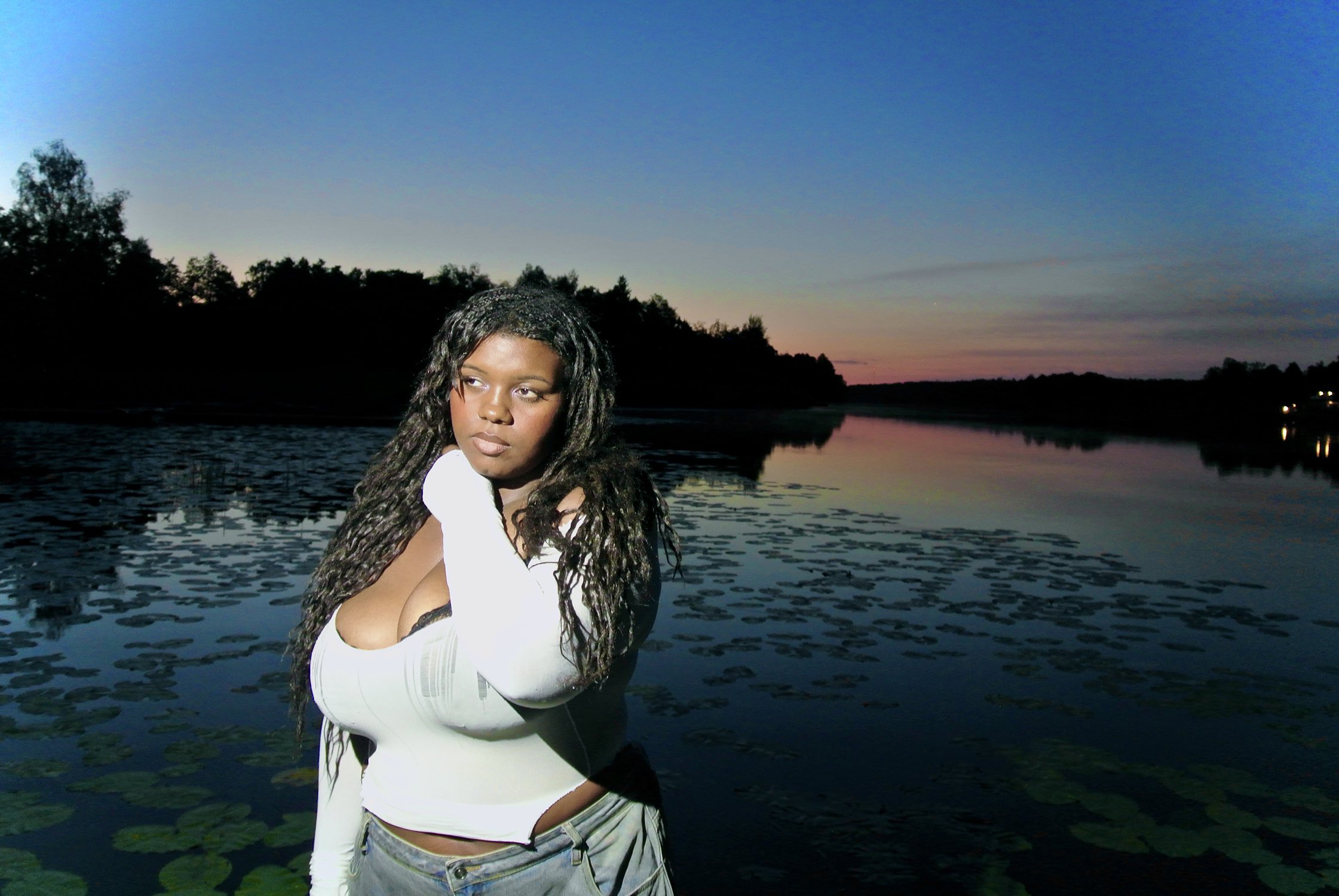
Photo by Levi Axene
SOME MEMORIES FEEL LIKE A WARM HUG ON A FRIGID DAY—and others feel like a knife you didn’t realize you were still holding. On Memory Be a Blade, Stockholm-born singer-songwriter waterbaby navigates that contrast, focusing on the tender yet dangerous ways nostalgia shapes who we become. Out today via Sub Pop, this eight-track debut is a darker and richer project compared to her 2023 EP Foam, where she tackles subjects of heartbreak, limerence and the versions of ourselves we showcase and perform for love.
Originally inspired by reflection on a past breakup, the album ended up shifting meaning mid-writing when a newer relationship ended unexpectedly. The songs she once thought were about a younger version of herself revealed something major: patterns she hadn’t fully outgrown yet. Paired with Marcus White’s string-forward arrangements and her own classical instincts and inspirations, the record is cinematic in its own unique and dreamy way and is a space where improvisation took the driver’s seat instead of overthinking.
With singles like “Amiss” and “Beck n Call” setting the tone for the project, waterbaby is ready to step into her debut era with a sense of transformation and more clarity than ever.
We sat down with waterbaby to talk about nostalgia’s sharp edges, people-pleasing, improvising in the studio and the evolution behind Memory Be a Blade. Keep reading for more.
LUNA: How did your artist name waterbaby come about?
WATERBABY: My name is Kendra, which is a Welsh name. I’m not Welsh, but my mom liked it. She was very “Americanized” media-wise here in Sweden. Kendra means “water baby.” A friend used to call me that, and I loved it. I knew I didn’t want to use just my name. One day, it just clicked. It still feels personal.
LUNA: The theme of Memory Be a Blade seems to be nostalgia as comfort, but also something sharper. When did you realize nostalgia wasn’t just soft for you, but could also have that cutting edge?
WATERBABY: During the album process, my past kind of reminded me of itself. I thought I had moved on and processed things differently. I think I mislabeled my sentimental tendencies and looking back, I thought it was part of processing for me. But then something from my past resurfaced, and it felt like I was back at square one, which really threw me for a loop. I thought I had made it much further. It felt like a false sense of security. That realization came while making the music.
LUNA: That’s important. People love nostalgia and looking back, but it’s not always the most progressive if you’re trying to move forward. You talked about starting the album looking back at one breakup, then your newer relationship ended and the songs shifted meaning. What was the weirdest moment of realizing a lyric had switched sides on you?
WATERBABY: I think that actually happened with “Memory Be a Blade.” When we started writing the songs, it wasn’t so much about the past relationship, but more about how I relate to love and relationships. I thought “Memory Be a Blade” was about a young, inexperienced me. Then I realized, oh my god, I accidentally did the exact same thing again. I thought I was further ahead. It was like a wolf in sheep’s clothing, but I was the wolf. I thought it was about who I used to be, but it’s very much still me.
LUNA: That’s the beauty of songwriting. A song doesn’t have to mean just one thing; it can change even after it’s released. You describe people-pleasing as loving the version of yourself through someone else’s eyes. What has it been like losing that lens?
WATERBABY: I think it’s going well. It was more like ripping the lens off. People-pleasing just doesn’t work. No one is ever pleased. It’s not real. The older I get, the more painful it is to be untrue. It feels more violent the older I get. There’s no other way. Anyone with those tendencies will reach a point where that becomes more painful than whatever scary situation might come from stopping.
LUNA: The title track is so gorgeous. How did Memory Be a Blade become the album title?
WATERBABY: It was one of the last songs we wrote. The line “Memory be the sharpest knife / Memory be a blade” came up, and I didn’t have an album title yet. We were close to sending it off for mastering. I originally didn’t want the album title to be a lyric, but it was the perfect way to encapsulate the theme and sentiment.
LUNA: You worked with Marcus White, who encouraged you to improvise into the mic instead of writing everything first. What did improvising unlock that planning couldn’t?
WATERBABY: I learned to let go. When you improvise into the mic, there’s no time to evaluate or be embarrassed. It’s recorded immediately. I hadn’t written like that before. A lot of things wouldn’t have made it onto paper because I would’ve dismissed them too quickly. Letting go can really be worth it.
LUNA: You’ve said you can get shy in the studio. What makes you feel safe enough to be fully honest?
WATERBABY: Making this album changed that. Since then, being in the studio hasn’t felt as daunting. Working with Marcus, who I’ve known for a long time and trust, created such a safe space. It unlocked something. I don’t feel that same fear anymore.
LUNA: You have a classical background, and there’s hints of that in the strings and cinematic arrangements. Why lean into those over synths or guitars?
WATERBABY: I did classical choir in school here in Stockholm. On my last EP, the final song “Wishing well” had piano and strings, and we were excited to explore more of that. Marcus put so much love into arranging the strings. They’re almost illustrative with sound. They add so much to the world-building. A lot of my emotional life exists in my head—in that space between dream, fantasy and reality. Sonically, the instruments add to that dreamlike quality.
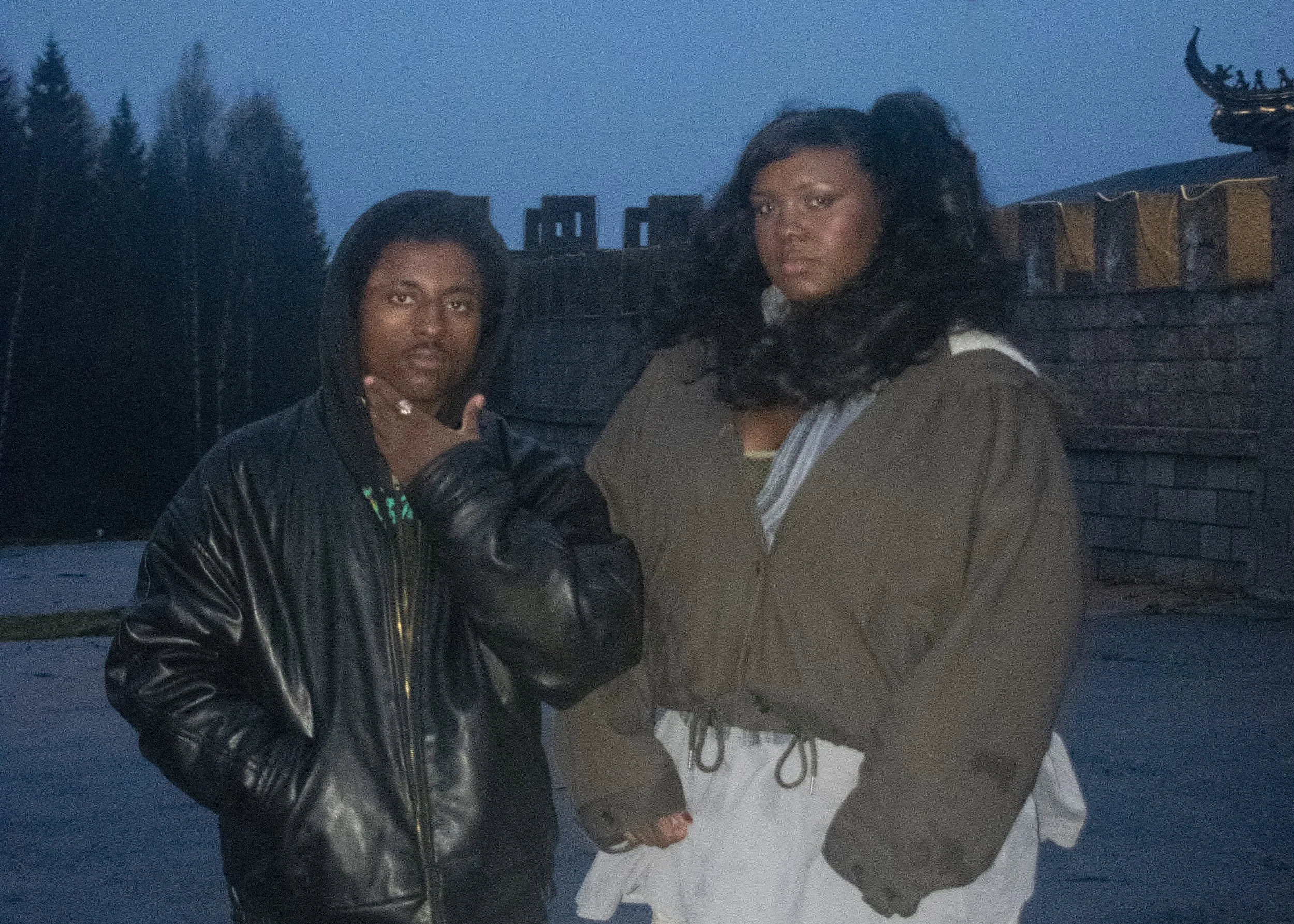
Photo by Levi Axene
LUNA: Your brother [ttoh] appears on “Beck n Call.” What changes when you’re recording with someone who knows your entire history?
WATERBABY: The song was written years ago, and something was missing. When we brought my brother in, he laid down his verse. What I got most from that experience was watching him work and knowing him that way. It felt lucky. Performing it live, I’ve just felt so proud and inspired by him. He’s the best.
LUNA: Let’s talk about “Minnie” and “Minnie Too.” How do they connect?
WATERBABY: Lyrically, not so much. We had the same guitar part, and when we tried writing on it, it grew into two different songs. It’s the same guitar in different keys with different sounds. “Minnie Too” is more storytelling and scene-setting. “Minnie” is about being a dreamer, maybe loving someone who isn’t, and that solitude—“you go live your life / I’ll go back to sleep.” They’re connected sonically but separate emotionally.
LUNA: How did you think about sequencing the album?
WATERBABY: I listened to it a lot. Some songs felt interconnected, like when one ends and you automatically start singing the next. I tried different orders and thought about what arc it needed dynamically.
LUNA: Do you want listeners to hear it in order?
WATERBABY: They can listen however they want. But “Sink” as the first track really sets the tone. For a first listen, the order makes sense.
LUNA: What do you hope listeners take away from the album?
WATERBABY: If someone hears it and feels like we’ve put words to something, or made something ugly feel or sound beautiful, that’s enough. I don’t usually talk about themes this directly. When I listen to music, I make my own connections. So I just want people to receive it however they do.
LUNA: After this release, where do you see yourself going next?
WATERBABY: I want to play live more. I’m excited about traveling and maybe doing new collaborations.
