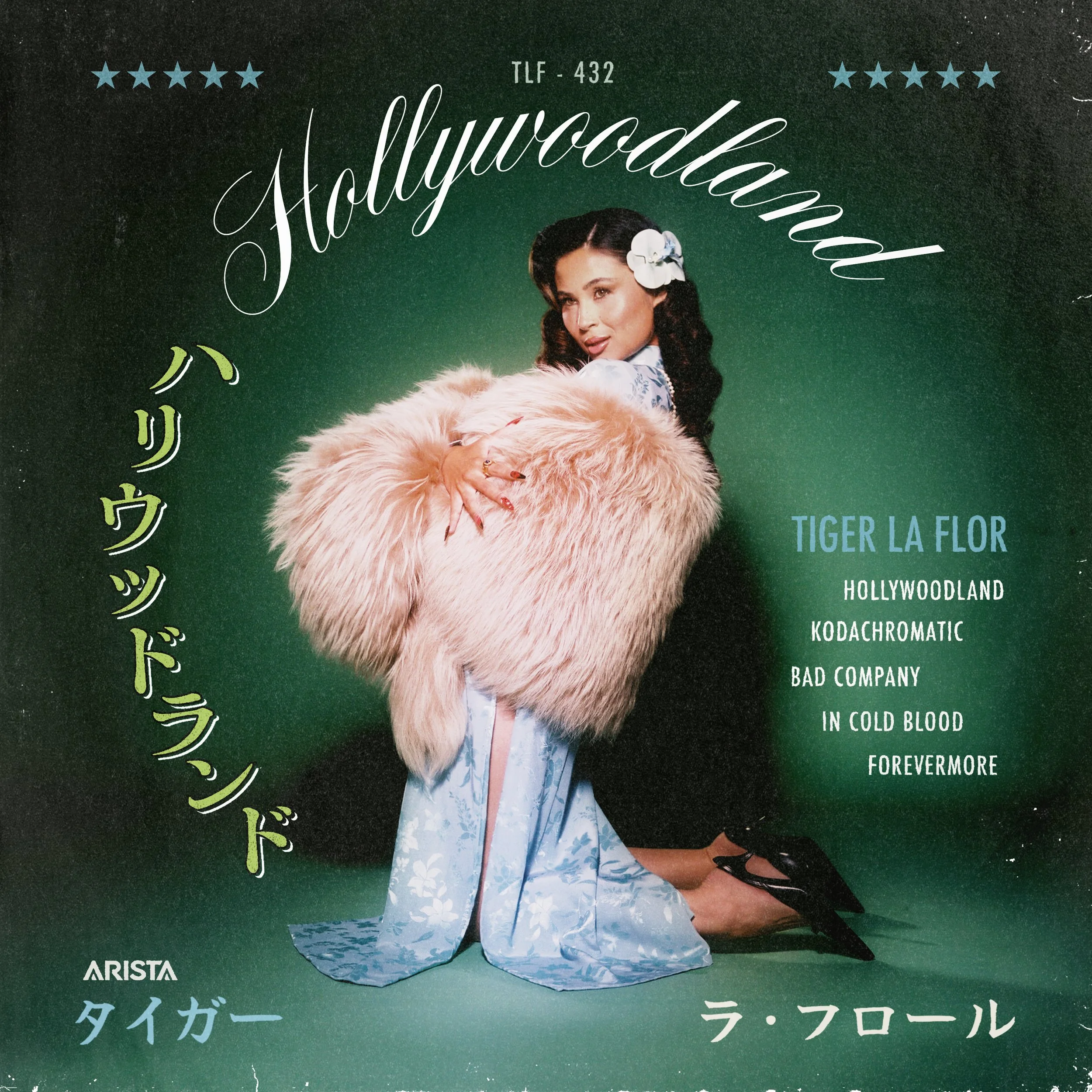
Q&A: Tiger La Flor Romanticizes a Lost Hollywood on “HOLLYWOODLAND”
INTERVIEW
INTERVIEW
☆ BY KIMBERLY KAPELA ☆
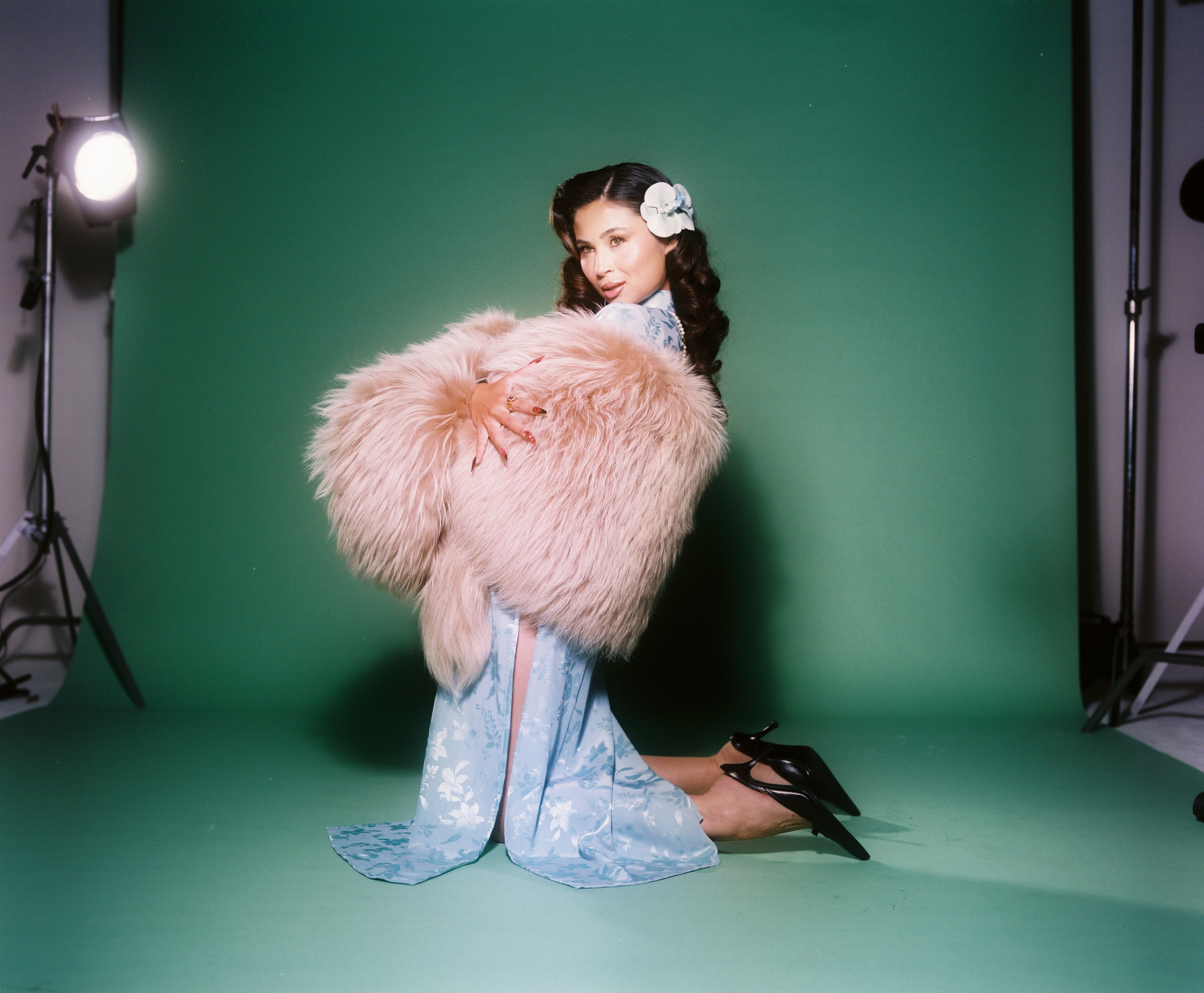
REIMAGINING THE GOLDEN AGE — Tiger La Flor romanticizes a Hollywood that exists more in memory and mythology than reality. On HOLLYWOODLAND, her new EP, the Americana-indie pop songstress looks to the glamor of vintage Los Angeles as a creative escape, imagining a city of sunset drives along Highway 1 and 60s and 70s records blasting from the radio.
After moving back to LA from Paris, La Flor found herself asking what she actually found romantic about the city. The answer wasn't its present-day, instead, she imagined herself there decades earlier, when Hollywood carried the glamor and mystique that had shaped her idea of the city.
That imagined setting became HOLLYWOODLAND: part fictional 1970s film, part reflection of La Flor's own life. Beneath its glamor and nostalgia are songs about complicated love, heartbreak and the pursuit of dreams in a city built around them. Rather than attempting to recreate LA today, the project reimagines a glossy, sun-drenched version of the city.
“I thought about it through the lens of, ‘What if I was living in L.A. when Once Upon a Time in Hollywood took place?’” La Flor explains. “That was romantic to me.”
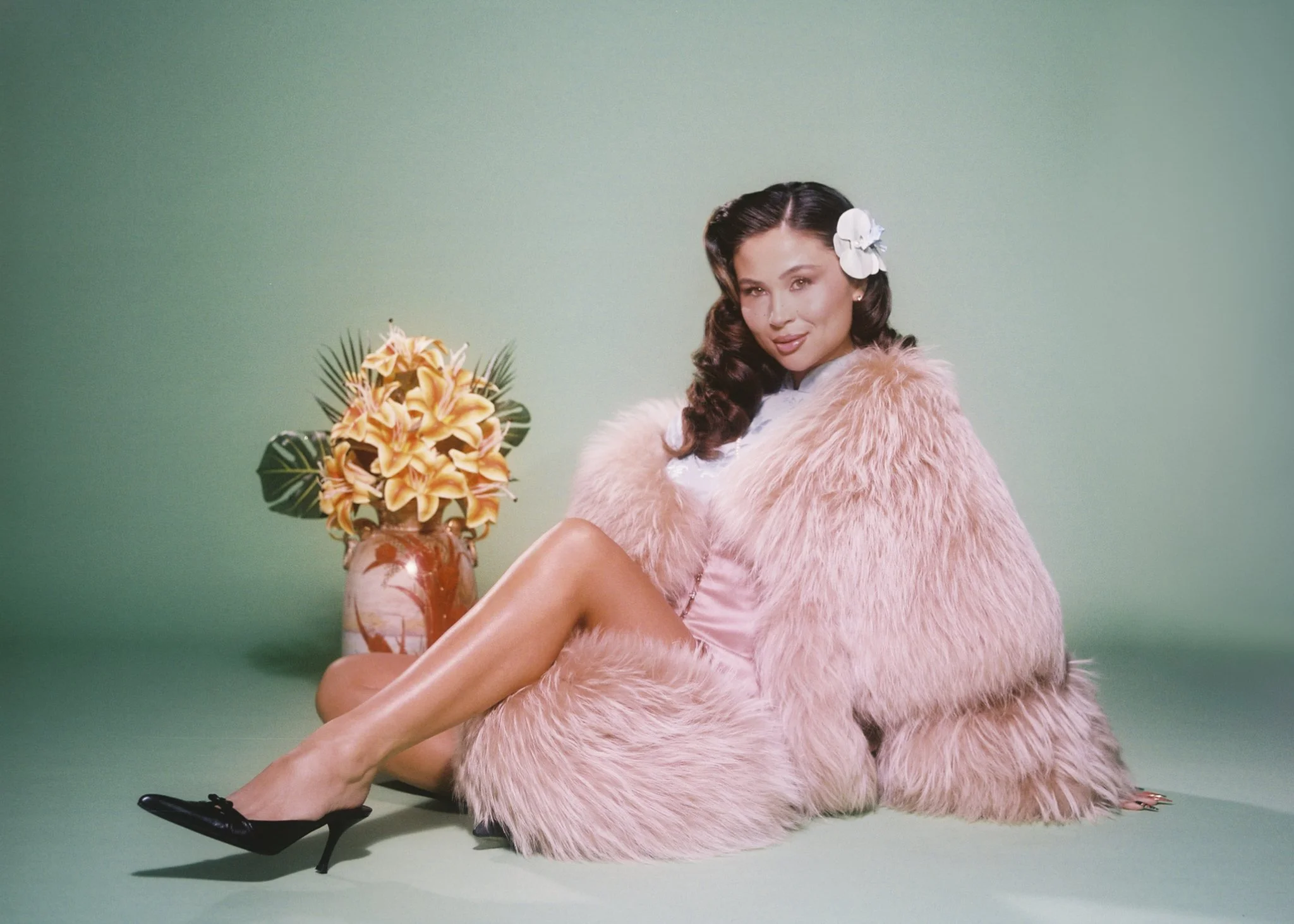
La Flor approached the fantasy with the dedication of a filmmaker constructing an alternate history. She created chronological playlists from the era, researched fashion trends and shot accompanying visuals on 16mm film, immersing herself in the textures and iconography of a Hollywood she never actually experienced.
“HOLLYWOODLAND is more than an EP to me, it is a nostalgic golden era of Los Angeles I never lived; part fiction, part truth,” she says. “I’ve always believed life ought to be lived cinematically, so I wanted to make a record that feels like the soundtrack to a lost film.”
That imagined film might be a 1974 studio picture directed by some impossible collaboration between Quentin Tarantino and David Lynch. Its heroine is a glamorous variety-show star moving through LA, singing her way through relationships.
“I wrote this EP as my own life in Los Angeles was unraveling in many ways,” La Flor says. “So beneath all the glamour there is real heartbreak, yearning, and the peculiar melancholy of chasing dreams in a city that sells them.”
Musically, HOLLYWOODLAND brings together two sides of La Flor’s artistic identity, interlacing the Old Hollywood fascination of her first project with the outlaw Western taste of her second, creating what she calls her “Laurel Canyon Western” sound.
“Like if David Lynch and Quentin Tarantino made country,” is how La Flor describes it.
Recorded with live orchestral elements and drums cut to tape, HOLLYWOODLAND is the most maximalist music La Flor has created.
The EP features “KODACHROMATIC,”which sets the scene in a rose-tinted haze as La Flor sings of a relationship built to last. But atop the sun-baked guitars of the title track, “HOLLYWOODLAND,” she laments the difficulty of the L.A. dating scene. On “BAD COMPANY,” she’s the one waving the red flag — “I know I seem sweet but honey, I’m no honeybee” — while “IN COLD BLOOD” confronts a man she just can’t quit. The credits roll with “FOREVERMORE,” a delightfully unexpected mash-up of Motown’s Supremes and mariachi horns, when the relationship is over but no one wants to admit it.
La Flor isn't just romanticizing the past. She's interrogating the cultural imagery she grew up loving and asking how she can inhabit it on her own terms. As an Asian woman, La Flor has also felt the absence of herself within many of the artistic worlds that shaped her. Creating HOLLYWOODLAND gives her an opportunity to reimagine those worlds rather than simply accept the limitations of their original versions.
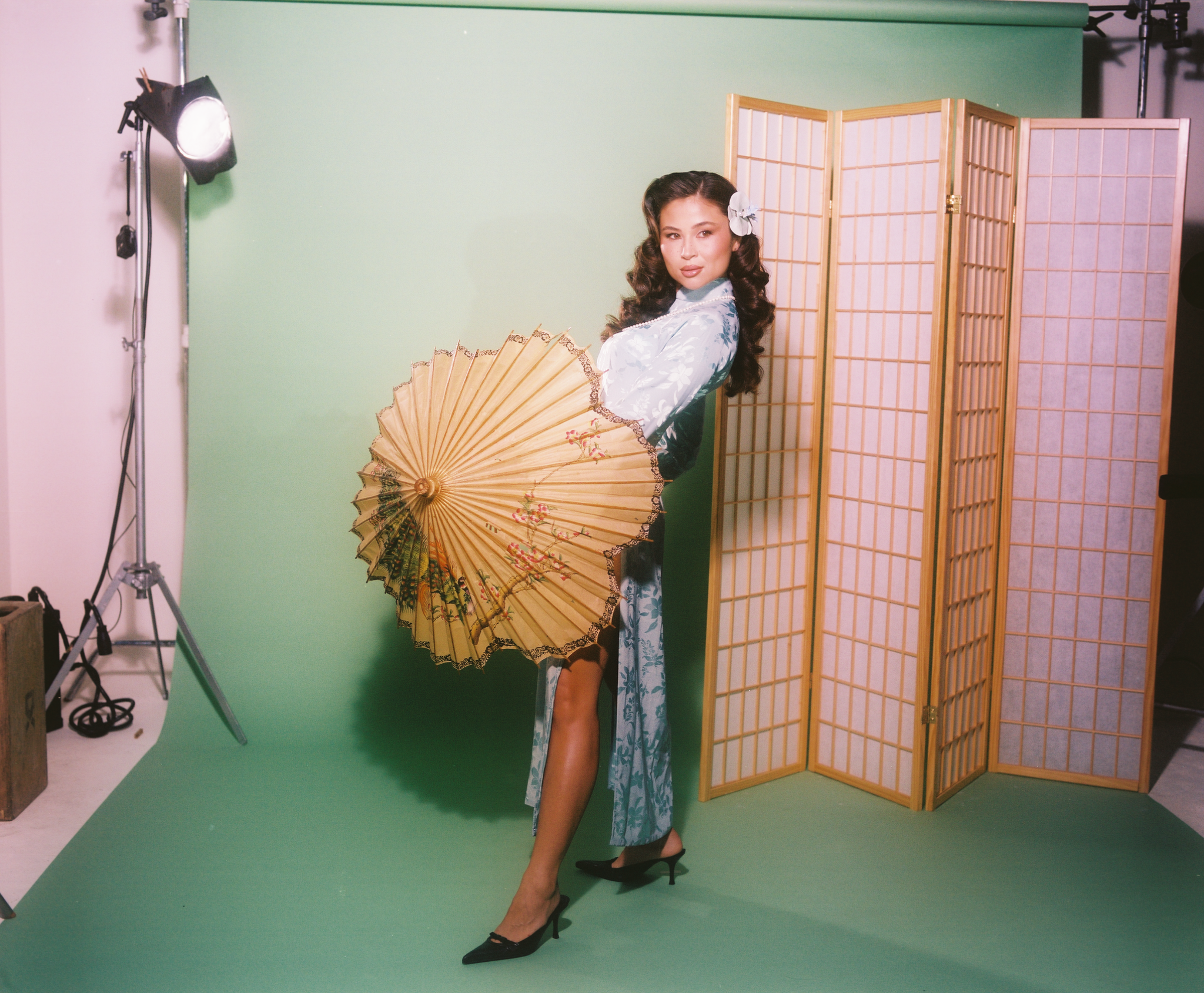
“I really wanted to honor my heritage as an Asian American woman, and so with HOLLYWOODLAND, a lot of the typography is in Japanese, and also trying to bring those aesthetics to nods to that into the styling as well,” La Flor says to Luna. “I'm hoping that 80 years down the line, people who also are inspired by old Hollywood with a nod to Asian heritage or a Japanese typography album cover, will find my stuff and be like, ‘it was done here,’ because it was so fun for me to have that vision and realize there's nothing I can really find that even exists in this world.”
HOLLYWOODLAND may romanticize a Hollywood that no longer exists, but its emotions belong entirely to the present. La Flor takes its beauty and visual language and transforms them into a project that’s timeless and multigenerational.
LUNA: Welcome back and thank you for talking to Luna again. It's super exciting to have you back since the last time we talked on the “Motel 6” release. I would love to catch up and see how life has been treating you and what have you been up to since the last time we talked.
TIGER LA FLOR: It's been good. Obviously, I was in the studio working on this new EP for HOLLYWOODLAND, and then a lot of the creative stuff that goes on behind the scenes after you finish the recording, making the music videos and shooting the album art. It's honestly been a lot of being in the recording studio. When you make a project, because it's a small set of songs, you have to make so many more songs that the world never sees. I feel like I was in the recording studio for months and planning out the creative for months, and then it all just gets condensed down to five songs that people are going to actually hear when the EP drops.
LUNA: I can’t begin to imagine how hard it must’ve been to cut down the project to its final top five songs.
TIGER LA FLOR: It was tough. We probably had 70 songs, and there's so many people who have opinions on it, but ultimately, the final word comes down to the artist. Which ones do I really feel strongly about? I'm really happy with the ones that we ended up with, but it is such a tough process having to cut a lot of songs that you also love.
LUNA: You’ve described HOLLYWOODLAND as an answer to the question, “What did I find romantic about Los Angeles?” What ultimately made you fall back in love with the city after returning from Paris?
TIGER LA FLOR: LA for me has been a tough city. A lot of the process was going back in time and finding old films that are set in LA, and watching scenes from Rebel Without a Cause and reading Eve Babbitt's Eve's Hollywood. All these older pieces of art inspired by Los Angeles that made me realize there's something here that may not be visible to me as a modern person, but if I go back and try and view LA through their eyes, there is something here. That's really where the inspiration came to make this record. I was inspired by a lot of the sounds and visuals from the 1960s and 1970s, because that's the LA that I really fell in love with when I was digging through archival art inspired by Los Angeles.
LUNA: The EP imagines a version of LA you never actually lived through. What drew you to creating this fictionalized, nostalgic version of the city rather than documenting contemporary LA as it is?
TIGER LA FLOR: I was definitely drawn to it just because I wish I was living in that version of LA today. It's so cool when you make an EP because you're really constructing a world. The way I listen to music mostly is in my shitty old convertible, and I'll drive around on the highway and I'll listen to these songs, and it's a certain feeling I have, and I wanted to make an EP that was the best representation of that feeling. And for me, the songs that I love listening to when I'm in the car are ABBA, the Bee Gees and Chris Isaak — especially if I'm in Joshua Tree — these records feel very analog and warm. I just wanted to capture my favorite feeling, which is that warm feeling I get when I'm driving and listening to those records.
I wanted the visuals to really feel like you had stumbled across like remnants of an artist that existed in the past, but people are obviously going to be discovering it now. Even when we shot the interviews about the story behind the songs, I wanted it to look like a casual film interview, as if someone had been interviewing someone in the 1960s, and they're leaning up against their old car, and it feels like you're watching an old interview clip that aired. I feel like that's the way I think about a lot of this stuff, maybe because that's my perspective as a listener today. I feel like a lot of the stuff that I love are these older artists who are dead now or they're very old. I'm always thinking about what is going to resonate to someone even after I'm gone generations down the line, like my grandkids' kids are going to find this Tiger La Flor project, and I want them to listen to it or find these clips and be like, “Wow, she was so sick! Tiger La Flor was so iconic.”
I'm always thinking about the records through that lens and thinking about the visuals through that lens because I feel like as an artist, it's crazy how slow getting commercial success is. Of course I want to be commercially successful today. I want to be the biggest pop star in the world. But more so than that, I'm always thinking about the longevity of the project. Regardless of how this EP is received when it drops, I'm thinking more so 80 years down the line, I still want people to be able to find the Tiger La Flor music videos and interview clips and records. I want them to age incredibly, regardless of how much commercial success it had on release date.
LUNA: You incorporated live orchestral elements and drums recorded to tape, making this your most maximalist project yet. How did working with live instrumentation and analog recording affect the emotional texture or cinematic quality of the songs?
TIGER LA FLOR: I think you really hear it. I became more aware of how important it is in regards to how things are engineered. Every element matters. The way that the composition matters in achieving a certain sound, and so does the production and the mixing. But engineering really matters a lot with the mics that you're using, if things are recorded to tape or if it's a live instrument. So with this record, we tried to do everything that we could to tape. All the drums are to tape. We also brought in a bunch of great musicians to play on the records. I love all the musicians we brought in to play on the record, but I especially have a soft spot for the mariachi horns on “Forevermore.”
LUNA: You researched fashion trends, created chronological playlists and even shot visuals on 16mm film. What was your research process like, and was there a particular discovery that significantly influenced the record?
TIGER LA FLOR: When I started the project, the sonics for me are always the very first thing that comes to mind and what I want the project to sound like. I was really casting a wide net when I started the process because I could make a record from any angle, so I started by putting all the songs that I love most onto a playlist, then I went back and back stocked their release years on Spotify, and then arranged them chronologically. I found that the majority of my favorite songs of all time were all from the 60s and 70s, specifically 1965 to 1972. I wanted to really hone in on what was going on here. For a long time, I was just listening to a bunch of songs from that era repetitively, and then when I went into the studio, it's almost like that music infuses you, and you find yourself making melodies that feel reminiscent of certain things. Same with the style, I was trying to figure out who were the biggest stars of that era, and then trying to figure out what are the common threads.
Figuring out the key components that really tie this era sonically together led me to the realization that everything was live and there's a lot of tape used even melodically when you hear a lot of those melodies, the melody composition is really different in a lot of those Beatles and ABBA songs. They're melodic things that you don't really hear in today's music. Things were shot on a certain type of film, so we got to use that. But then also figuring out the way that they were doing their hair and makeup, and finding all those throughlines. The last step is always now that I understand it, how do I break it and make it original? You're not just trying to recreate, because obviously that era already exists. It’s figuring out how I can put my own Tiger La Flor spin on things and understand the rules and then break the rules.
LUNA: You’ve spoken about wanting to reimagine bygone beauty for a new generation while creating space for yourself as an Asian woman within these aesthetics. What does reclaiming or reimagining that visual and musical language mean to you?
TIGER LA FLOR: I've never done this on a past record, but I really wanted to honor my heritage as an Asian American woman, and so with HOLLYWOODLAND, a lot of the typography is in Japanese, and also trying to bring those aesthetics to nods to that into the styling as well. I got to come up with something that I don't really see. I can't find anything on a Pinterest board that looks like this, so I have to come up with it myself. I'm hoping that 80 years down the line, people who also are inspired by old Hollywood with a nod to Asian heritage or a Japanese typography album cover, will find my stuff and be like, “it was done here,” because it was so fun for me to have that vision and realize there's nothing I can really find that even exists in this world. I'm hoping that it can inspire people years down the line.
LUNA: How do you hope listeners — especially your femme audience — can connect with or find power in this new era of music from you? What emotions or messages do you want to leave with them?
TIGER LA FLOR: I think it's especially important as a woman to have a lot of conviction in your own vision because something I realized with this EP, there's so many collaborators, which is incredible. You're always going to be collaborating with people in any career, but especially music and anything creative, I'm realizing how important it is to trust your opinion. I think especially too when it comes to the recording side of things, so many of the people I work with in the music industry — from mastering, mixing, production, songwriting — it's always men. If you don't really have conviction, it can be easy to get steamrolled in the room or on things where people are like, “You don't know what you're talking about. We're going to do the guitars this way, or we're just going to record this way.”
You have to really be able to stand up for yourself. I'm really proud because I feel like this EP turned out exactly what I had in my mind when I started out. I had to really fight for my conviction on things, being like, “No, we need mariachi horns on ‘Forevermore,’ and I need a live mariachi player, and I need a whole horn solo, and I want the levels on this horn solo turned all the way up in the mix so that it's blaring for everyone to hear, and I need it all done on tape.” A lot of guys will fight you on your opinions, and the entire time I stood firm in these beliefs. Now that the EP is done and it sounds amazing, I'm so happy that I did. That's my takeaway for all the women out there, especially people who are doing something creative, is to really have strength in your opinions.
LUNA: What is fueling your fire right now that’s pushing you into this new era of your career?
TIGER LA FLOR: I've been really inspired to go back to reading books. I definitely went through a phase where I’m on social media and everything is a quick consumption type of media and physical books and vinyl records take more effort and attention. I feel like our brains are getting trained to not have a long attention span. I've been trying to always have a book that I'm reading. Right now I'm getting through Eve's Hollywood, but I found that reading books has been really inspiring my artistic process because you have complete thoughts and people's visions. It's funny the way that even if you're making music, paying attention to just other art forms, you can get inspired by other artists even if they're not in your lane. It was so inspiring reading this book and seeing how she writes about her life as an author and takes what actually happened, but then has her own voice in the way that she writes. I wanted to do that same thing with the EP, this is loosely inspired by my life, but also this is an artistic take on it.
LUNA: How are you feeling in this current era of your career and what does the rest of the year look like that you would like to share with Luna?
TIGER LA FLOR: I'm feeling good right now. I think this is a good takeaway for a lot of artists, but I think in a weird way you have to learn how to detach from the outcome of your art. I've been finding a lot of peace in trying to learn how to master detachment over the course of the past year, because you make these things and then they go out in the world, and I was noticing my anxiety increasing as the project release like approached, and I was like, "What is going on?” And then I realized it's because you really pour out your heart and your soul in anything that you're making. You want to control how people receive your work, and it's been really good focusing on learning the art of detachment. It's been making me feel really at peace.
What I'm focused on for the rest of the year is getting this Christmas EP done. It's so funny because we're talking about this EP, but then there's another one coming out that I'm actually so pumped about. Since I love Martin Denny and his Exotica album, and being able to infuse Exotica into Christmas is something that brings me so much joy. I'm super excited to hop on onto planning all of that the second the EP is out.