
SPOTLIGHT: Women, Live Music, and the Industry That Still Isn't Listening
INTERVIEW
INTERVIEW
☆ BY SAGE GROVES ☆
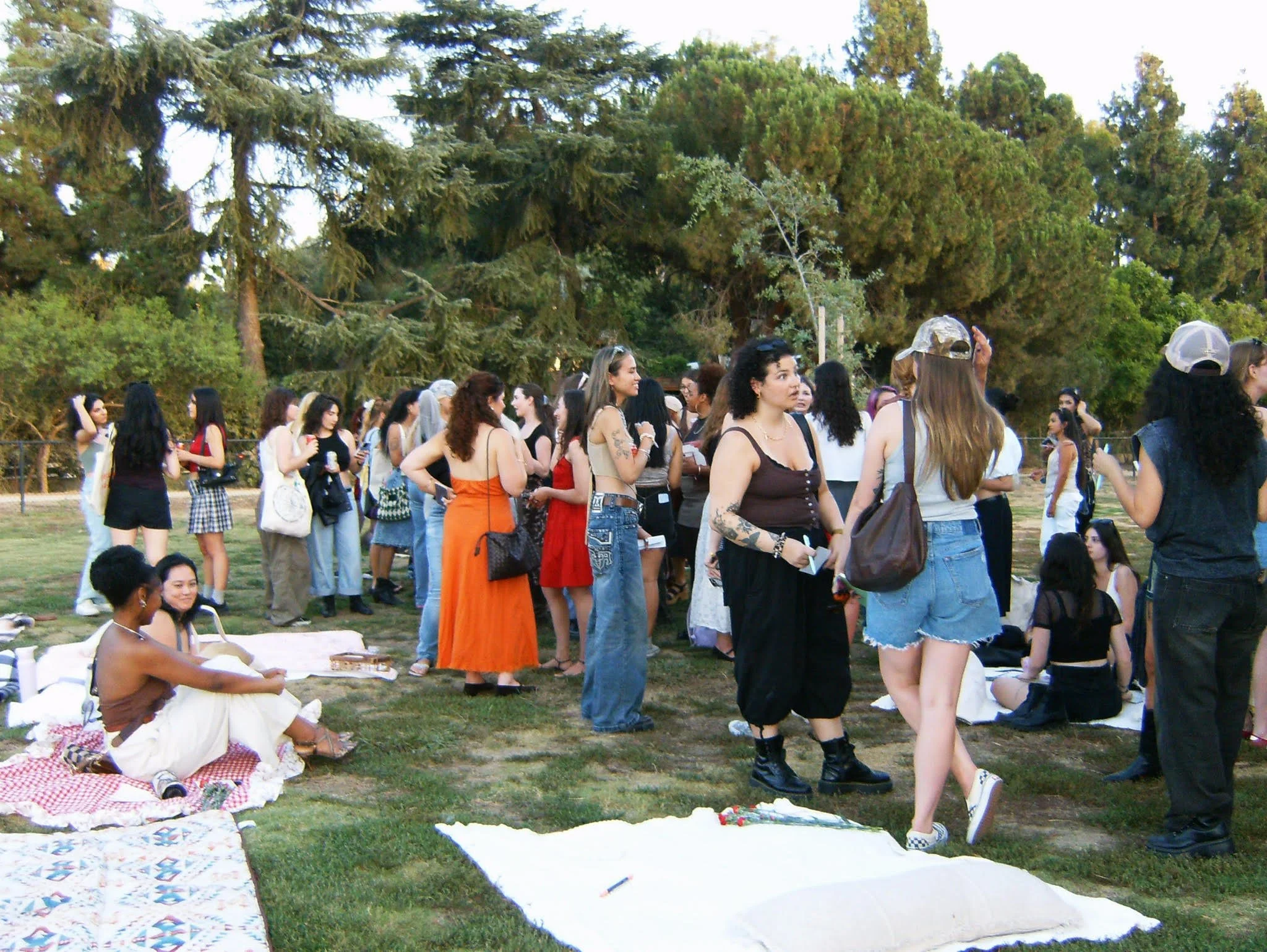
LA Girls Who Rock! Meet Up
FOLLOWING THE SUCCESS OF OLIVIA RODRIGO’S ALL-WOMEN FESTIVAL—Daisy Chain Fields, online discussions revolving around women's presence in the live music industry have flourished. We’ve seen various statistics and infographics circling social media, but what does the live music industry really look like for women musicians?
As an avid concertgoer, I find more often than not that when an artist walks on stage, their band is almost entirely composed of men. Sometimes this is to be expected, if I’m going to see an established band with permanent members. But for many touring artists, bands typically consist of musicians for hire. This is where it can be discouraging to see an all-men band on stage, especially when the front artist is a woman. There is no lack of exceptionally skilled women and non-men musicians in the world, so why the lack of representation on stage and in the studio?
According to USC Anneberg, in 2024, 38.9% of single performers in the Billboard Top 100 were women. This percentage was slightly lower than 2023 and no different from 2012. There were no women on the Hot 100 Year-End 2024 chart participating in duos or bands.
Statistics can only take us so far in this conversation. So many women are facing gender-based challenges in their careers every day. One of these women is multi-instrumental musician Soraya Rafat. A Berklee College of Music graduate, Rafat fell in love with live music at her first concert thirteen years ago, and has since dedicated her time to learning how to play instruments and produce music. Although she booked her first touring gig at nineteen years old, and considers herself lucky for that opportunity, Rafat has found that it isn’t always so easy. “You don't see a lot of women of color playing instruments on stage,” Rafat says, “but you sure do see a lot of white men do it. I want to change that.”
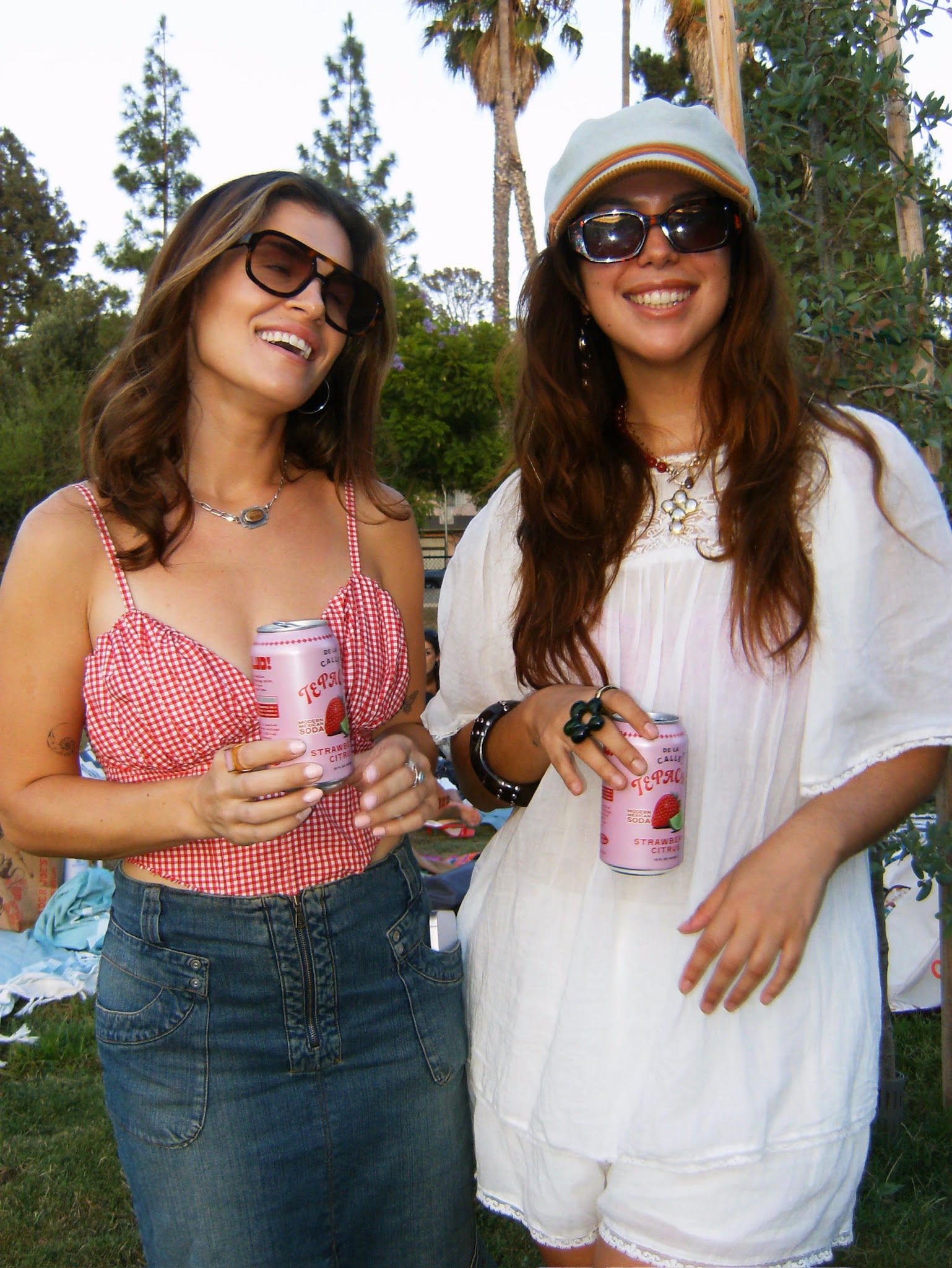
LA Girls Who Rock! Meet Up
Rafat finds that in such a male-dominated industry, there seems to be a double standard when it comes to honoring a person’s skillset. “There are so many women working extremely hard, pushing themselves beyond their limits and fighting for their lives to be noticed, while a man can get hired the second he strums four chords on a guitar,” she states. This is substantiated by Amplify Her Voice’s research showing that women only make up 22.3% of artists in the music industry on average.
When representation is already so bleak, and the standard for what makes a woman musician “hireable” is predicated on subjective bias, what would motivate women and non-men to continue pursuing a career in music? Rafat tells me, “It's tough out there. You can either whine about it and slow yourself down, or you can take up more space, keep your head up and BE LOUD. Make yourself unforgettable. The music industry will constantly try to chain up women/non-men, but it's up to us to figure out how to break free.”
When in pursuit of a touring gig, Rafat tells me that most of the artists that she ends up on the road with are fellow women or non-men. While this isn’t intentional, Rafat says that the only male artists she has played with are friends, while all the women or non-men she has played with have ranged from close friends to total strangers.
When she does interact with her male counterparts, Rafat immediately feels the difference in how she is treated. When in a space where men make up the majority of the room, Rafat says “it often feels like you're watching a TV show and you know something about the main character that the other characters don't know. It's like how Miley lived her double life as Hannah Montana. You'll hear men talking about a show they just played at a local bar, but they don't know that you're about to leave for a month-long tour. You'll hear men bragging about their gear to impress you, but they don't know you have an endorsement with your favorite company. You might get mistaken for a lead singer when you're actually anything and everything but that. There's even women working behind the scenes to help put on these huge tours and festivals, and I wish they would get more recognition for their work.”
It’s true that women are often overlooked as parts that make up a whole in the music industry. A huge 79% of women in music are performing musicians, but only 15% of live sound engineers and 12% of studio/mastering engineers are women. The assumption that most women in music are single artists is valid according to the statistics.
Even the departments of the industry that are women-dominated, have serious caveats hindering women’s careers. Currently, there are over 3,996 booking agents employed in the United States. 52.4% of all booking agents are women, making it the majority, however, it is estimated that in 2022, women booking agents earned $38,191 to the average male booking agents $43,599. In summary, women booking agents earn 88 cents for every $1 earned by men (Zippa). What incentive does this pay gap give future women in the industry?
So where do we go from here? How do we influence the masses about the truth of the industry: women are an integral part of the whole? Women have the potential to serve in all areas of the industry if given the opportunity.
But where does that opportunity come from? How do we cultivate a more representative industry? For Rafat, the answer is simple: HIRE MORE WOMEN.
There is an obvious gender bias when it comes to men hiring women, but what about women hiring other women? The concept of being a “girl’s girl” gets tossed around online, often as branding iconography, commercializing what should be an earnest endeavor to support fellow women. “We're supposed to be in this together,” Rafat tells me. She emphasizes the importance of having a good community around her, people who want her to succeed, and how important it is for her to give the same to others. “It's up to us to challenge the industry norms instead of waiting around for someone else to do it…That girl you don't know super well but can absolutely rip on an instrument? That girl who works super hard to put herself out there but hasn't played many shows? That girl who you've heard about through the grapevine? Reach out to her, or maybe recommend her to someone else. You never know how much you can change someone's life for the better and help people achieve their dreams that they've been chasing after.”
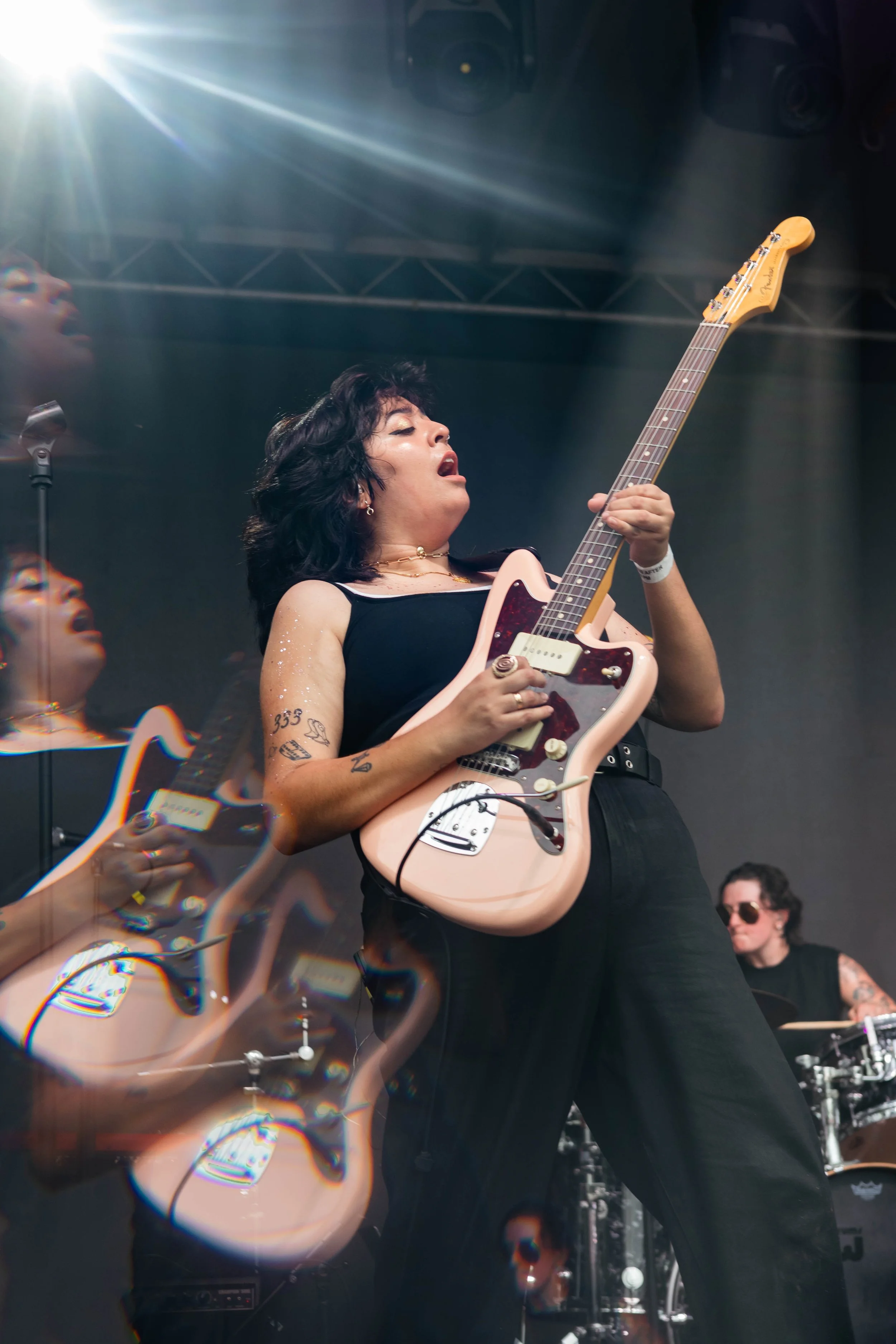
Soraya Rafat
Getting started in the music industry is challenging for everyone, but especially when you don’t have a community trying to uplift you. Like Rafat says, we’re supposed to be in this together. Fortunately, there are many women working hard to cultivate opportunities for their fellow women in music. Beats By Girlz, Amplify Her Voice, Book More Women—these are organizations bringing their all to the front lines of the fight to get more non-men seen on stage and in the studio.
I had the privilege of chatting with Emmy, co-founder of a new Los Angeles-based collective called LA Girls Who Rock! The collective, founded by indie artists Emmy and Lexi Bee, seeks to “make the LA music scene feel a little smaller and a lot more connected.” For Emmy and Lexi, building connections with other women in music starts in their own neighborhood. Their mission statement is clear and strong: “LA Girls Who Rock! brings women across the music community together to build genuine friendships, spark collaborations, share opportunities and grow alongside one another. Through meetups, showcases, workshops and shared experiences, we’re creating a space where women can find their people, support one another and build something bigger together.”
“Everyone is trying to get their music heard and capture people’s attention online, while also navigating all the other pieces that come with being an artist,” Emmy tells me when I ask her why she founded LA Girls Who Rock! “We realized there are so many women going through the same things who could be helping each other.”
Maybe a developing girl band needs a drummer, or a songwriter needs a voice—there are so many connections to be made in the music industry, and providing a place for women to be a part of the talent pool might be the only opportunity they get to start a career. Not only does LA Girls Who Rock! host meetups for their members, they also create opportunities for women and girls to access resources with social media experts and sessions with producers. LA Girls Who Rock! will be hosting a showcase where artists can perform and be discovered on October 16 in Koreatown. For more information, or to join the collective, message Lexi or Emmy on Instagram.
Developing connections among women and non-men in music is only one piece of the puzzle. There are many trailblazing women in the industry right now paving the way for generations to come. Festivals like the aforementioned Daisy Chain Fields Festival are not just opening conversations about women's representation in the industry, but providing inspiration—a priceless currency in today’s social climate—for people around the world.
When chatting with Soraya Rafat, she tells me how heartwarming it is to see huge artists like Olivia Rodrigo and Zara Larsson having all-girl bands on stage. “Even male artists like Conan Gray and Zayn have all-girl bands too. They are setting a new standard for representation and visibility on stage.” Rafat, who has toured with mostly non-men artists says “it's been such an honor to be included in all-girl bands for smaller artists as well, such as Molly Grace, Leanna Firestone, Kitty Coen and Daire McLeod—even my own band, Women in Peril, currently consists of all non-male band members.”
Regarding Daisy Chain Fields, Rafat tells me how happy she was to see how big of a success it was. “I can't imagine how amazing and inspiring it was for girls to see other girls on stage all day,” she says. “I picked up guitar because I saw One Direction when I was 11. That was such a life-changing moment for me. Imagine how much harder that would've hit if it was someone like Olivia Rodrigo who has lots of young fans that look up to her and her band members! I would love to play for a big artist who has an all-girl band like her someday.”
In addition to being a touring instrumentalist and producer, Rafat is also a music educator. She provides inspiration on a more intimate, community-based level, for all children but especially young girls. Encouraging her students to shoot for the stars and stay connected to their passion for music is her goal, especially for her students that are girls. “I didn't have as many opportunities to learn from women as a kid (aside from my band director in middle school and high school—she was awesome!),” Rafat remarks.
“I'm incredibly honored to be someone that kids can look up to. We need more of that in today's world of music.” Rafat believes that everyone should have access to music education and access to music communities where they can meet like-minded people and feel welcomed. She firmly states: “Everyone needs to be more open-minded, willing to inspire others and willing to help others out, whether you are a man, woman or anywhere in between.”
Rafat urges: “If any men in music are reading this and can't get away from the bros, I'd like to challenge you to hire a non-male instrumentalist to work with you. If you're a woman or non-man reading this, make yourself heard.”
The music industry is in constant flux, driven by social media trends and easily influenced by sociopolitical events. In an age of regression in women’s representation in all areas, it is undoubtedly important to take action where we can. Music is a universal language, and just as much as the world impacts it, music in turn also impacts our world.
If you are a woman or non-man looking for resources to get help in the music industry, please see our list of resources here:
She Is The Music: She Is The Music is a 501(c)(3) workforce development initiative convening the industry around a shared goal: measurable progress for women in music.
Girls Make Beats: GMB is to empower girls ages 5 to 17 to explore careers in music production by expanding the female presence of music producers, DJs and audio engineers.
Beats By Girlz: Engaging women and non-binary creators with music technology.
EqualizeHer: EqualizeHer exists to increase the number of young women enjoying successful careers in music by increasing access to professional training and hands-on experience.
Gender Amplified: A movement empowering women and gender-expansive music producers.
Women in Vinyl: Working to empower women, female-identifying, non-binary, LGBTQ+, BIPOC and otherwise marginalized humans working in the industry to create, preserve and improve the art of music on vinyl.
Women’s Audio Mission: Advances women and gender-expansive people in music/audio production and creative technology.
VOX Femina Music Education Programs: VOX Femina Los Angeles’ Music Education Programs inspire and empower singers by providing accessible, high-quality choral experiences to underresourced communities.
Future Front Texas: Cultural arts space and public exhibition series—with women and LGBTQ+ creatives at the front.
Women in Jazz Organization: Women In Jazz Organization works to help level the playing field in Jazz, so that women and non-binary people have equal opportunity to participate in and contribute to Jazz, leading to an improved and more rich, diverse and successful art form.
