
Q&A: GLASSIO’S ‘THE IMPOSTER’ IS A SONIC JOURNEY THROUGH SOBRIETY, IDENTITY AND TRANSFORMATION
INTERVIEW
INTERVIEW
☆ BY VICTORIA POLSELY ☆
LONDON-BASED INDIE POP MEETS ELECTRONICA ARTIST GLASSIO—has just unleashed his third full-length album The Imposter, February 25th. Across 13 tracks, the artist touches upon themes including change, new found sobriety and a long overdue reckoning with identity. The album was born from a transatlantic move that left the artist disorientated in a period of grief. The music became a catharsis for that change and a body of work that confronts imposter syndrome head-on. At its heart, The Imposter is about shedding illusion, embracing transformation and allowing the most human voice, however fragile, to come through.
The Imposter pushes the boundaries of genre, seamlessly weaving together elements of dreampop, melancholic disco, electronica, shoegaze and psychedelic folk into a richly textured and immersive musical collection. The album balances anthemic melodies with pulsating rhythms, creating moments that are both introspective and euphoric. Glassio’s signature blend of emotional vulnerability and sonic experimentation invites listeners to get lost in the music, discovering new layers with each listen, and solidifies The Imposter as a bold statement in indie pop.
In conversation with The Luna Collective, Glassio opens up about how his first year sober felt like “sitting in a house without furniture,” how SSRIs reshaped his relationship with impulse and creativity, and how the album became a self-portrait in motion—a gradual unmasking of the versions of himself he’d been performing for years.
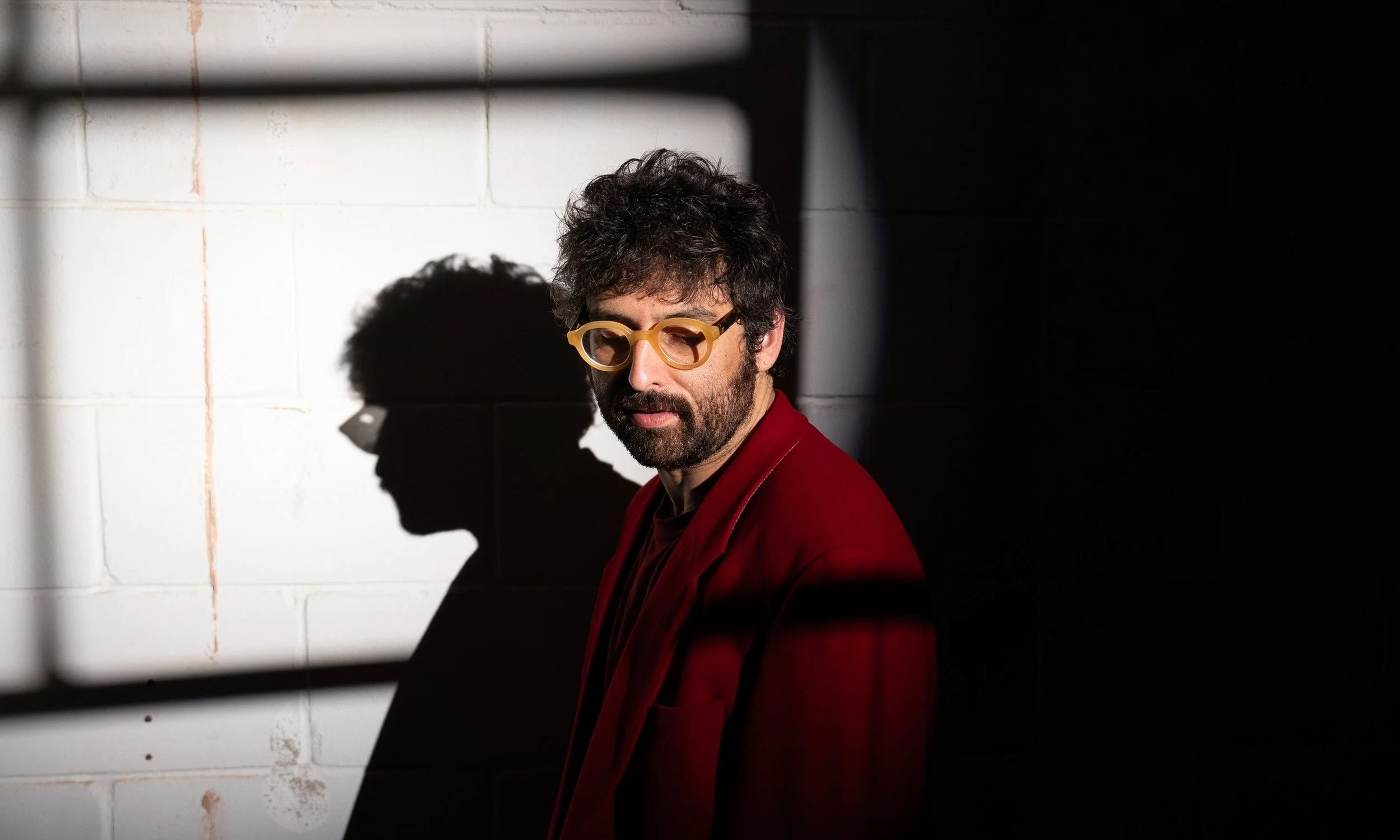
Photo by Nana Nabi
LUNA: The Imposter feels deeply personal. What shifted in you creatively after moving from New York to London?
GLASSIO: I found leaving NY had a major impact on my identity. I moved to NY when I was 17, and lived there for almost 15 years. The city was my lifeline emotionally and spiritually and I felt very disoriented leaving. It felt like I was grieving NY. So I think the most natural thing for me to do in that instance was to look inward and come up with a record that addressed that confusion and disarray.
LUNA: How did sobriety influence the songwriting and production process for this album?
GLASSIO: To be very honest, my first year of sobriety felt very odd…I couldn’t come up with anything. It felt like hanging out in your home without any furniture for a while. I was also taking SSRIs and that totally reshaped my relationship with dopamine and impulsivity and that had a huge impact on coming up with ideas. I eventually found my rhythm again, and now I’m back to coming up with melodies almost every day and feeling back in touch with myself
LUNA: You describe the record as a “self-portrait in motion.” What parts of yourself were you rediscovering while making it?
GLASSIO: Yes exactly. I realized I had been masking quite a bit over the course of my life, performing versions of myself that felt safer or more acceptable. Making this record was about taking that mask off and seeing what was underneath. I liked the idea of the vocoder in the intro and outro representing that mask…this artificial voice that slowly gives way to something more human.
LUNA: The album blends shoegaze, early-2000s electronica, psychedelic folk, and dream-pop. How did you approach merging these textures into one cohesive world?
GLASSIO: For me this process honestly happens without any intention or pre-conceived plan. I only ever stand back after and look at it all once I’ve had a moment to distance myself from the music and say, “oh yeah, I can totally see how me listening to Psychocandy by Jesus and Mary Chain alongside Talkie Walkie by Air for months had that effect on that song.” I usually set some rules for myself though…things like “create synths that sound like guitars, and guitars that sound like synths.” Rules like that help create a fun playground for my associations to mesh.
LUNA: How has your “melancholy-disco” sound evolved on this record?
GLASSIO: I think it’s probably less disco-oriented than some of my earlier songs…but the discotheque is still there in the distance somewhere. Maybe it’s the club manager upstairs in the office, writing and recording a record with a small drum machine, synth and guitar in their dusty office that sits above a closed disco that shut in 1998.
LUNA: The title suggests themes of imposter syndrome. When did that feeling first surface for you?
GLASSIO: I think it hit me big time when I first went to music production school in NY when I was 17. I was sitting in class with teachers who had produced Sonic Youth and Erykah Badu and with students whose parents had wax figure versions of themselves at Madame Tussauds, and I was just sitting there with my acoustic guitar thinking “uh oh.” But looking back, probably earlier. I’ve always had trouble with feeling like I’ve belonged to a group of people. I’m bad in group settings. I close off and tend to just go off and do my own thing alone. I’m best one to one. So school was never an easy place to feel comfortable.
LUNA: “Take a Look at the Flowers” features a collaboration with Madge. How did that partnership come about?
GLASSIO: Back in 2019, Madge had me remix their song “Fight or Flight Club” and I just really respect their music and artistry. We stayed in touch over the years a bit on socials and then fast forward to last year... I had the beginnings of this song in place and I couldn’t unhear their voice on it. I had just the initial idea for it down so I reached out and we planned a session when I was in NY in early 2025. We met up and started putting a few of the pieces for it together quite quickly.
LUNA: How do collaborations differ from your solo creative process, especially on such a personal project?
GLASSIO: Each is very different! But I think I just communicate and set boundaries with artists about what I’m set in stone ahead of time, and be honest about areas and spaces in songs that I’m open to changing and reshaping.
LUNA: If The Imposter represents shedding illusion, what feels most “real” to you now?
GLASSIO: Being excited about dark chocolate, singing opera in a southern accent to my cat, daydreaming about opening up a studio in New Mexico, not chasing tepid energy, being ok with stillness, being direct with people, DJing “Sportsmen” by Haruomi Hosono or “Fat Mama Kick” by The Walker Brothers at 2am and not caring if it thins out the dance floor.
LUNA: If someone struggling with identity or addiction hears this record, what do you hope they take away?
GLASSIO: I hope it inspires them to take off their own masks and reshape their life in the way that best suits them. I really want the record to be the equivalent of a sonic mirror people can see themselves in for who they’ve always wanted to be and have maybe been too nervous to open up to.
LUNA: Now that you’ve “stopped running,” what does your next creative chapter look like?
GLASSIO: I don’t know if I’m being more honest by answering this question by saying “I don’t know if I can ever stop running” or “I have absolutely no idea.” I think not having a plan right away is probably the healthiest option for me. I love the unknown. So I’m going to surrender to that for a little while.
