
Q&A: Inside Horsepower’s World of Volume, Earnestness and Letting Go
INTERVIEW
INTERVIEW
☆ BY SHEVON GREENE ☆
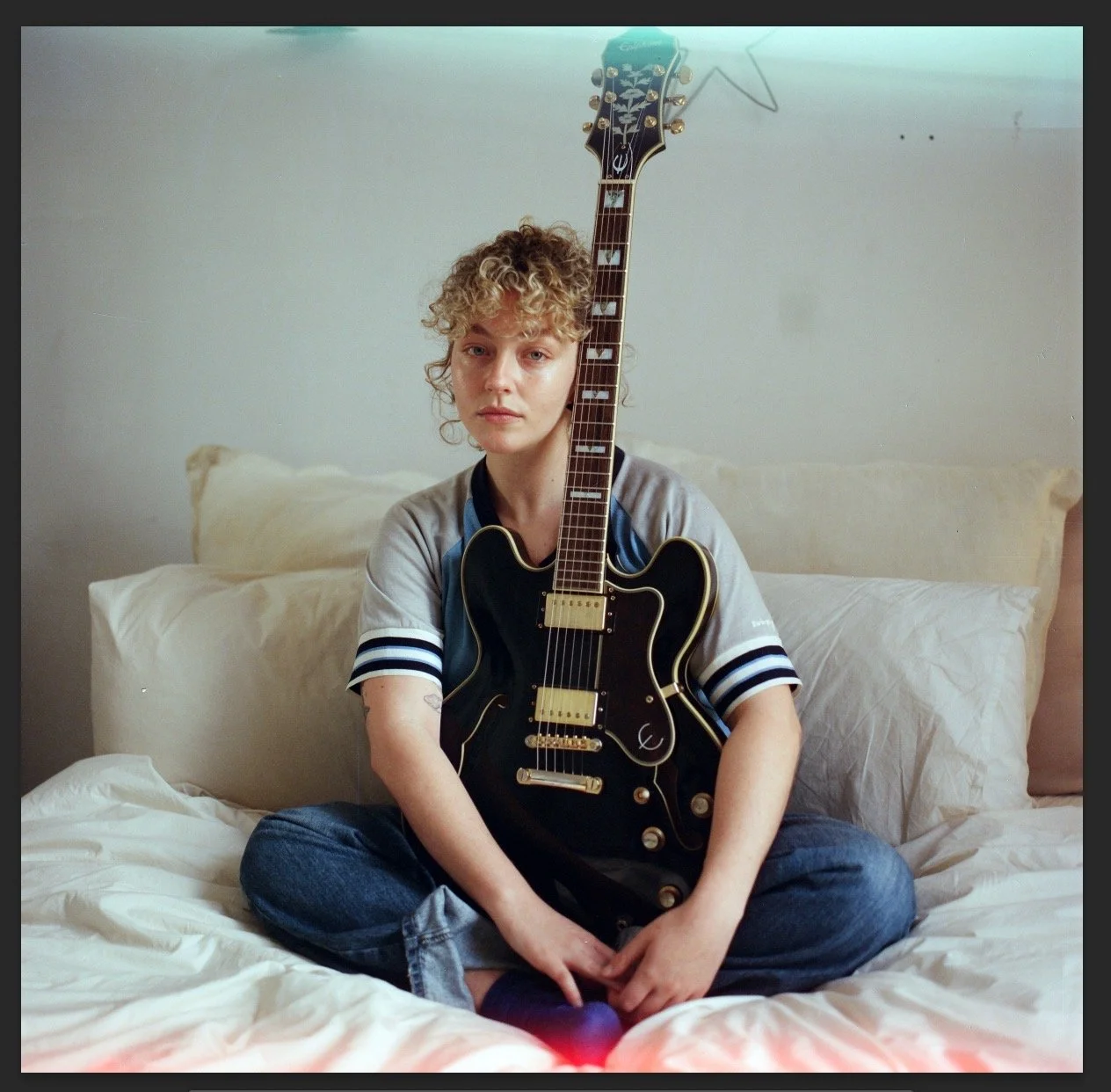
Photo by Arianna Shooshani
CHARLOTTE WEINMAN DOESN’T FLINCH AWAY FROM FEELING THINGS FULLY—As Horsepower, she lets her emotions out unfiltered, whether that means screaming at the peak of a song or lying in bed in a blue wig, singing like nothing’s wrong. Released together as “Force Quit b/w Flute,” the two tracks are braided, written in the same sitting and meant to exist in conversation with each other.
“Force Quit’s” portion of the combined music video was filmed in one continuous take as Weinman sings from the back of a pickup truck before shedding layers and stepping into a live-band crescendo. “Flute’s” portion of the video, in contrast, drifts into a surreal playfulness with candy props, karaoke energy, and a strange insistence that everything is fine.
The project sits at an intersection of indie rock urgency and theatrical instinct. With a background in playwriting, Weinman brings narrative intuition and emotional specificity into her songwriting by pairing heavy guitars with sensitive and searching lyricism. Horsepower’s debut EP grounded that balance early on, built through close collaboration with her siblings and a lifetime spent around art, music, and performance.
Throughout our conversation, Weinman continued to return to ideas of letting go, instinct over structure and what it means to stay present in your body (both onstage and off). From the catharsis of live performance to the freedom of treating songs as “movable objects,” Horsepower continues to be an ongoing experiment.
We sat down with Weinman to talk about pairing “Force Quit” and “Flute,” embracing earnestness without irony, and how playwriting continues to shape her approach to music. Keep reading to step inside the world of Horsepower.
LUNA: “Force Quit” and “Flute” kind of feel like two sides of the same coin. Why did you want them to arrive together as one release instead of separate singles?
WEINMAN: That’s a good question. I wrote them in pretty much the same sitting, and I thought of them as braided together, like a double helix. They’re talking to each other, looking at each other, about being looked at or understood or misunderstood. Because of that structure, it felt like if they sat on a bigger release, they’d interrupt the flow—like two people staring at each other without engaging with anything else (laughs).
They’re also the two songs I feel closest to right now. That will definitely change as I develop relationships with new songs, but with these two, I articulated something that made me feel really understood by myself. Which, on theme, was something I was trying to digest. My instinct was honestly, “I never want to put these out,” because it felt like giving something very personal away. And then I remembered, that’s the point. So it felt nice to send them off together.
LUNA: That makes total sense. They really do belong together. I watched the video for “Force Quit,” and I love that it’s almost one take—sitting in the truck, shedding layers, walking into the live band setup. How intentional was that one-take feeling, and what did you want it to mirror emotionally?
WEINMAN: I knew I wanted it to be one take. That song is about keeping it together and then fully letting go. Where “Flute” is about muscling acceptance, “Force Quit” is like laying down in the road and saying, “Whatever, let it happen.”
A one-take video felt right because when you let go, whatever happens happens. You can’t edit it out. Also, it was really cold when we filmed; it was the first weekend of January. That physical urgency felt tonally right.
LUNA: I love that. And the scream at the end of “Force Quit” feels like such a release. Did that come naturally while writing, or later in recording?
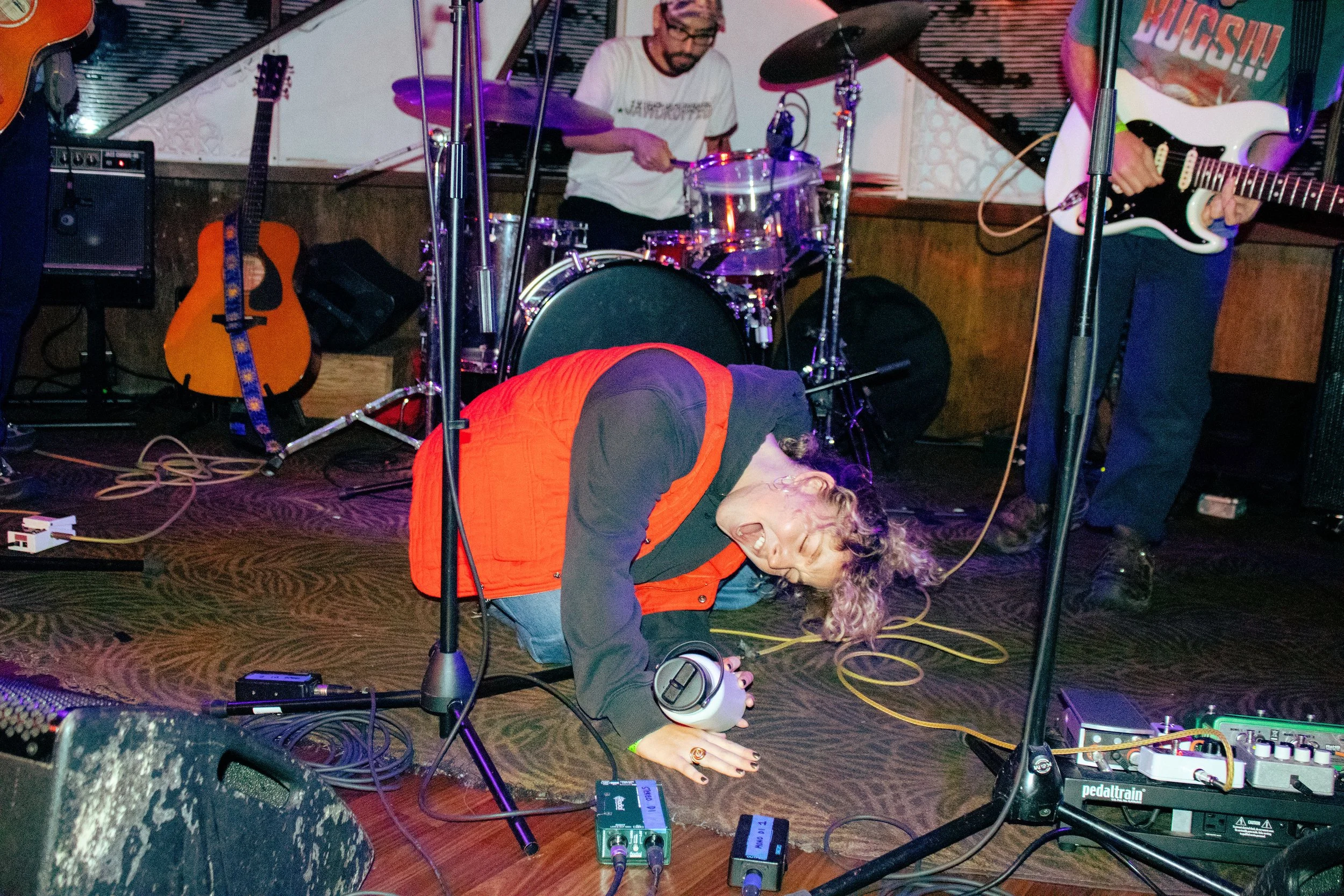
WEINMAN: It’s been there since the beginning. In the first voice memo in my Substack, you can hear it unraveling, but I didn’t scream because I have roommates (laughs). Every performance since includes it. It’s really fun live; it resets me. I like putting that song in the middle of a set because it forces me back into my body if I’ve been spacing out.
LUNA: Respect. Truly. Moving to “Flute,” the visuals are surreal and playful: wigs, candy, Ring Pops. How did you land on that concept, and what mood were you chasing?
WEINMAN: I love Lily Allen videos and that Y2K, exposed-digital, karaoke-video energy. Those weird unofficial music videos that make no sense (laughs). “Flute” is about clenching every muscle and saying that everything’s fine, so I wanted the video to feel carefree. Costumes and abstraction help me get closer to meaning. The more literally I try to represent myself, the more disappointed I feel. Abstraction makes me feel more seen.
LUNA: You’ve said you’re “never not earnest.” How do you define that in your work?
WEINMAN: It’s not about valuing earnestness over other approaches; I just can’t help it. If I try to seem a certain way, it reeks. I’m always asking myself, “Am I saying this because I mean it, or because I want to sound like someone I admire?” Urgency can’t be faked. Even if I’m writing fiction, the emotional core has to be real.
LUNA: That really comes through. You’ve talked about pairing heavy guitars with sensitive lyricism. How do you know when a song needs softness versus volume?
WEINMAN: I try songs a lot of different ways. I write on acoustic guitar, but I can tell if I’m imagining heavy drums or distortion. Sometimes I don’t know until it’s recorded. On tour, we played as a two-piece, which forced us to retrofit songs. It was fun treating them as movable objects instead of laminated things.
LUNA: Coming from playwriting, how much are you thinking about narrative versus instinct?
WEINMAN: Always instinct first, then I zoom out. My plays were written out of order, and I’d find the structure later. Songwriting is the same. Sometimes I’m stuck on a line because it serves a larger narrative I can’t see yet.
LUNA: Your lyrics often mix myth with modern slang. What draws you to that contrast?
WEINMAN: Taking emotions to mythic proportions feels validating. Keeping them “to scale” doesn’t help me. Then I reel it back because it’s ridiculous, and that tension is fun. Like, girl, you didn’t slay a dragon. You had a hard conversation (laughs).
LUNA: I love your horse girl lore. How does that past version of yourself show up in Horsepower?
WEINMAN: I love the word horsepower because it measures mechanical force using a living thing as reference. It represents a return to the body. I come from singing—not instruments—and making noise with my body felt powerful. Horses are tough. I felt tough on a horse. Horse culture is having a moment too. I’m fascinated by why young girls are sold on horses so hard. There’s something there.
LUNA: Horsepower feels like planting your own flag after supporting others’ visions. What’s been most freeing?
WEINMAN: Inviting people back in; choosing when to bring a song to collaborators. I love coming back together.
LUNA: Working with your siblings has been core. How does that trust change risk-taking?
WEINMAN: I’m not afraid of being misunderstood with them. They know what I mean, musically and personally. That confidence carries beyond music.
LUNA: With an upcoming show at Elsewhere in Brooklyn and SXSW this year, how will these songs change live?
WEINMAN: Live performance is everything to me. If I had to choose in F*ck, Marry, Kill between live performance, touring and recording, I’d marry live performance (laughs). It allows more teeth and dynamics.
LUNA: Looking ahead, do you see Horsepower staying earnest and stripped back?
WEINMAN: I hope it changes constantly. I want to make as many records as possible. I’m not attached to one thing; I’m just having fun.
