
Q&A: How Kevin Atwater Built the World of ‘Blush Red’
INTERVIEW
INTERVIEW
☆ BY SHEVON GREENE ☆
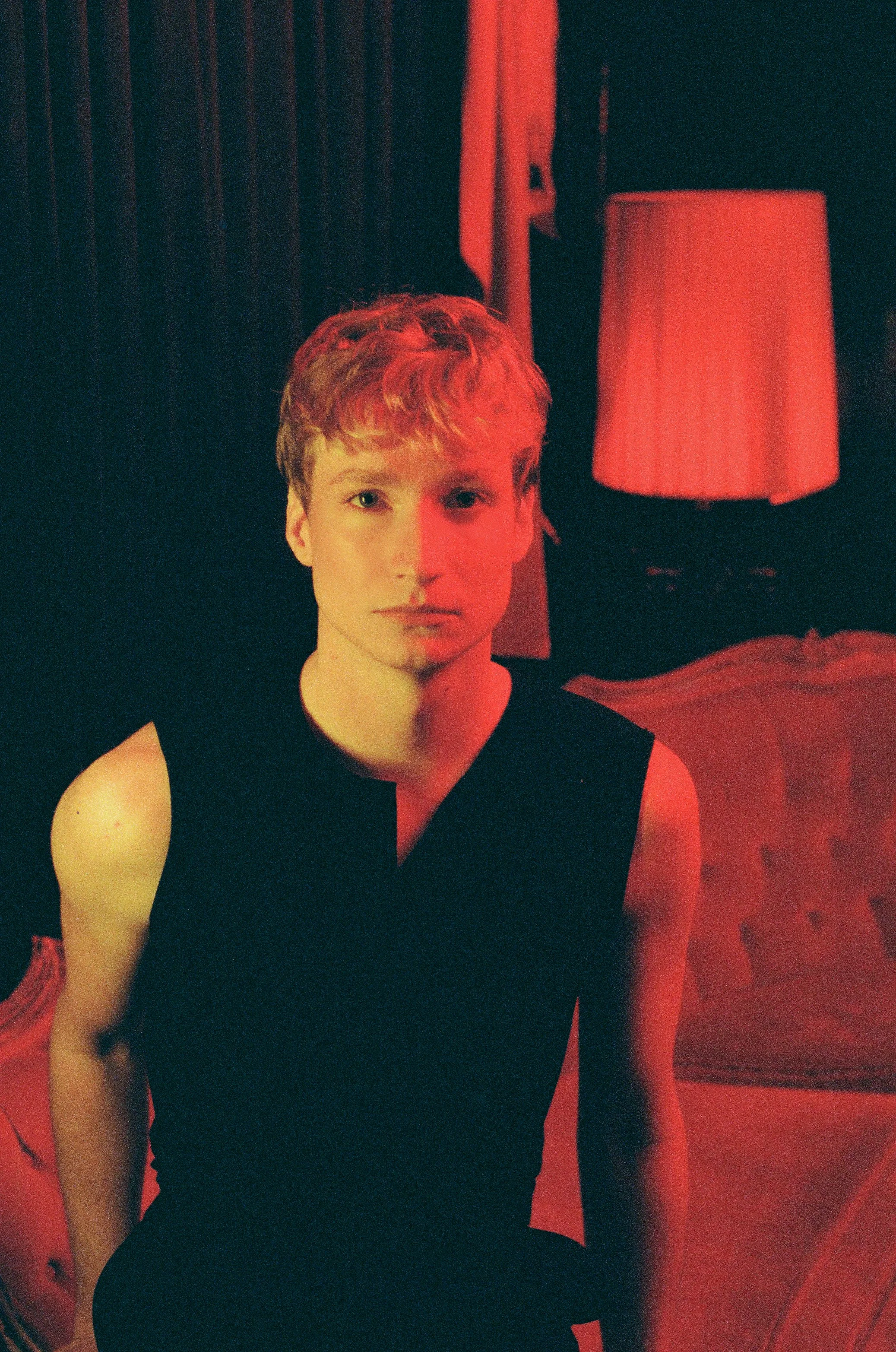
AT THE CENTER OF KEVIN ATWATER’S SOPHOMORE ALBUM—is a bar called The Red. Over the course of one night, it becomes the setting for infatuation, embarrassment, longing, rejection and all of the messy feelings in between. The idea of the “bar” didn’t fully reveal itself until several songs into the writing process, eventually becoming both the literal and emotional home of Blush Red.
Arriving today, Blush Red continuously builds on Atwater’s intimate and personal songwriting that first drew listeners to him through songs like “star tripping” and “why did you invite me to your wedding?” This time around, though, each story exists within an even larger cinematic world, expanded through beautifully crafted short films, recurring imagery and carefully sequenced storytelling.
What stuck out to me especially about chatting with Atwater was the way he described some of the tracks almost like scenes, albums as complete stories and each visual as a stairway down into The Red. Although it’s crushingly heartbreaking in numerous ways, Blush Red doesn’t fully sit in resentment. It still leaves room for grace, optimism and the hope that tomorrow brings another chance to fall in love.
We sat down with Atwater to talk about building The Red, the cinematic short films surrounding Blush Red, treating old heartbreak with grace and why every story deserves a world of its own. Keep reading for more.
LUNA:Blush Red feels like you've created this whole world around it, which seems really intentional. When did the idea for that world click, and how did it shape the way you started writing the record?
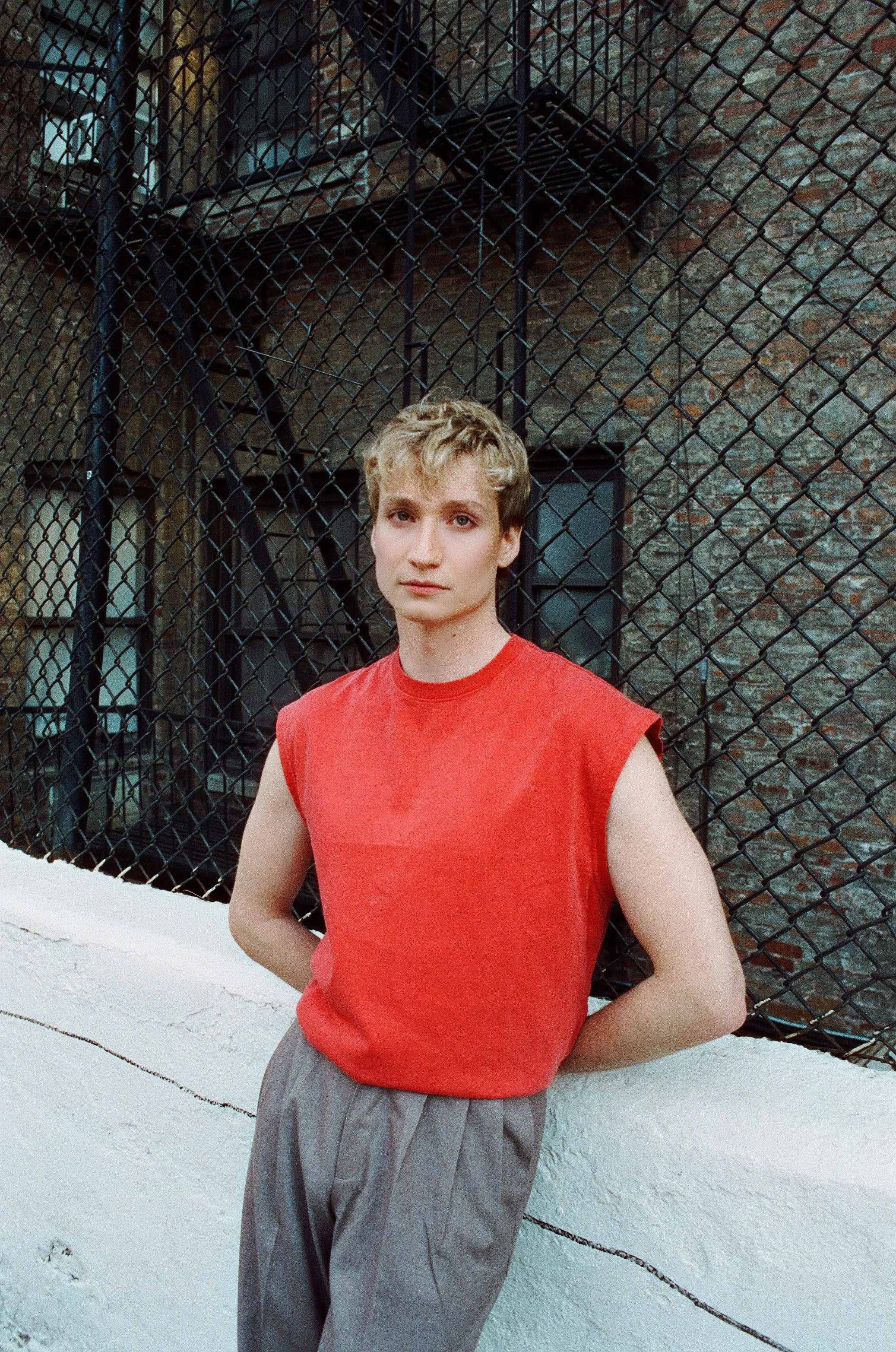
ATWATER: It's interesting because as soon as my last record came out, I knew exactly what the color palette of the new record would be. I was like, "I know what I'm gonna do. I'm gonna do bright red. I'm gonna do really romantic, emotional colors." But it didn't have a title, and it didn't really have a specific world until I was about four songs into writing intentionally for the project. I could suddenly see exactly what it was.
I remember having a meeting with my team where I was trying to explain it. I was like, "Well... it's sort of a concept album, but it's not really." They were like, "Go on." (laughs) I said, "You just have to bear with me here. The story will metabolize as it gets created and eventually starts coming out."
Around four songs in was when the idea of everything taking place at this bar really came to me. By chance, I'd been writing about going out. It was the summer after my Achilles tour. I was in New York with my friends, writing music all summer. Being hot in New York City and constantly going out naturally had me writing about this space where emotions are heightened and all the drama of the album could happen. The bar became both a literal place and a sort of metaphysical one.
LUNA: And what better place than New York for all of that inspiration? I love hearing about the inner workings of how those concepts come together, especially that it wasn't fully planned from the beginning but gradually revealed itself.
ATWATER: Exactly. Coming of age in the Midwest definitely informed me, but then I came to New York when I was 17 or 18. You're definitely not done coming of age at 18, in my opinion (laughs). I learned so much about myself during those years in New York, and that's really the beating heart of this album.
LUNA: All of the short films you've released have really tugged at my heartstrings. Watching the "up in flames" one especially got to me. They feel like these beautiful cinematic films that just happen to include your music. What made you want visual storytelling to become such a huge part of this era too?
ATWATER: First of all, thank you. I'm really glad they're affecting you; that was definitely the intention (laughs). As much as I want to roll my eyes at myself for saying this, I genuinely love using music as a medium for storytelling. Whenever I'm writing a song, I'm thinking about its world—where it starts, where it ends. I never want a song to end in the same place it started. I want there to be a journey. This album has so much storytelling already that it felt exciting to create another storytelling medium alongside it.
Whenever you're making an album, people start asking, "What's the music video?" But I didn't want to simply retell the story of the song visually. I thought it would push me further creatively if the short films told partner stories instead. They're not exactly the same stories as the songs, but they're connected emotionally. People can dive deeper into the sentiment if they want to. It was also just really fun to build out the world and invite people into it. And honestly... it was fun to make it extremely gay. I'm always into that (laughs).
LUNA: Sign me up. I also love that it feels like storytelling, but at the same time it feels like you're saying, "This is my world."
ATWATER: Exactly. We've also used some of the short films to present more optimistic endings than the songs themselves. Sometimes when people only know me through my music, they assume I'm constantly depressed. And I'm like... I don't haunt the streets sobbing all day (laughs). There's a lot of joy in my life. There's a lot of possibility for joy. It's hidden in the music, but it's there.
LUNA: I looked through The Red’s Instagram account and loved how it's described as this place where everyone ends up looking for something or someone. Was that storyline something that developed around the same time you realized the album should revolve around a bar?
ATWATER: Yeah, definitely. It stemmed from the lyrical references because I mention going out, drinking and bars throughout the record, so it naturally became a visual setting. But it also came from how I communicate with my producer. I almost never use actual music terminology. I'll say something like, "I want this to feel like you're walking down the stairs." And my producer will say, "Okay..." (laughs) Then I'll be like, "No, you don't get it. We're going into the dark." That kind of imagery actually informs how we build the sonic landscape. To me, this whole album feels like you walk into this bar, all the mess and drama unfolds over the course of one night, and then eventually you leave thinking, "It's okay. It was just one night. There will be many more."
LUNA: I also wanted to ask specifically about "house with windows." Listening to it, it felt so intimate. The lyrics really stood out to me, and I was curious to hear more about the story behind it. What was happening emotionally when you wrote that one?
ATWATER: That one is pretty personal. I mean, the whole record is personal, but that one is specifically about a situation I touch on pretty frequently in my songwriting—being with somebody who's in the closet and isn't able to picture themselves outside of it.
When you've been told your whole life what your future is supposed to look like, it's really hard to break that spell. It's impossible to be with someone who can't see you in their future. You can fight as much as you want, but until something really drastic changes, it's never going to be emotionally fulfilling. The song is about the pain of that.
A house with windows, to me, is such a symbol of established suburbia—perfection. You've got a house with windows, there's supposedly a family in there. It's realizing, "I can't give you that." You don't see me in your house. If we want to go full metaphor, that's what it means.
LUNA: That's exactly what stood out to me. The title itself immediately paints that picture of suburbia and this imagined future. Listening to the lyrics, it felt like someone saying, "I can try, but I can't force myself into the future you've already imagined for yourself." It really pulled at my heartstrings.
ATWATER: Thank you. That song is also the first song on the second half of the album. I intentionally put it right after "God in My Head" because it really is the climax of the record. That's the confession: finally telling the person you've been yearning for throughout the first half that you want them, and they don't want you back.
"House with Windows" is almost a regression after that. It's like, "Okay, I'm being rejected. Why do I always get rejected?" Then your brain immediately goes back to the worst experience you've ever had, looking for clues, wondering, "What is it about me?"
LUNA: Speaking of, the sequencing on this album feels so intentional. Even the ending of "basement bar," where you sing, "I don't want to watch you dance," flows directly into the “I don’t want to watch you dance.” Were you actively thinking about the track order from the very beginning, or did that come together later?
ATWATER: That was extremely intentional. I was thinking about this as one complete story almost from the beginning. The first song I wrote for the album was "Know You." At that point, I wasn't sure where it belonged, but after that, every song I wrote, I knew exactly where it fit in the story. When we had our first tracklist meeting, I was extremely stubborn. I was basically like, "This is the tracklist."
LUNA: "I will not be taking your feedback." (laughs)
ATWATER: Exactly. I was like, "I'll take your feedback... and then I'll ignore it." (laughs) Everyone was really supportive of it, though. "basement bar" is the introduction. You're walking down into this bar where all the mess is about to happen. You're anxious. You're with someone you want so badly. Then something snaps, they're with someone else, and the album just explodes. The story takes over.
Then with the final song, "time to kill," I intentionally put it last because the final line flips the very first line of the album on its head. Depending on how you want to interpret it, it can be optimistic... or it can mean you're about to repeat the whole cycle again. I'm going to keep what it means to me close to my chest and let listeners decide for themselves.
LUNA: I love when artists are intentional about sequencing. The first time I listen to any album, I always go front to back in order. Then after that, I'll start picking favorite songs.
ATWATER: Same. As much as I can be, I'm like, "I made this in order, and it's important." I always listen to albums straight through first, then afterwards I'll decide which songs are going into playlists.
LUNA: I also wanted to ask how you decide which personal moments are worth zooming in on. I'm sure there were stories where you thought, "Should I include this? Is this too personal?" How did you decide what belonged on Blush Red?
ATWATER: Great question. I let my original concept guide me. From the beginning, I knew this was going to be a romance album. It's about yearning, which is obviously part of romance. I actually wrote a lot of songs during this period that I really liked, but they weren't part of this world. Some were about family, some were about grief. Those songs can exist somewhere else, maybe on a future project. I just stayed really intentional about this being a love album. I also used to be a lot more anxious about how specific I was being. Now I'm at a point where I know who I am, and hopefully my fans know who I am too.
I also think this record does a good job of treating everyone I write about with grace. I don't really hold resentment toward anyone I write about. Hopefully that's what comes across, especially in the final few songs. It's like, "I just said all of this about you... but it's going to be okay."
LUNA: I definitely felt that. Even though the songs are vulnerable, they never felt spiteful. I've always been curious how artists decide where that line is between being honest and sharing something that feels almost too personal.
ATWATER: Honestly, the one I went back and forth on the most was "stripper." I love that song dearly, but I definitely thought about the conversations it might lead to with people I know.
LUNA: Especially family, I bet. I've always thought about that. If I were an artist writing vulnerable songs, my family could hear everything.
ATWATER: Exactly. But at this point... they've heard my last couple records (laughs). There's really nothing left I could say that would surprise them.
LUNA: I know your background is in theater, and it almost feels like The Red, the bar, is a stage being set. Do you think your theater background still influences how you build stories now, even though they're living in songs instead of on a stage?
ATWATER: Yeah, constantly. It's in my DNA. I went to school for theater, I did it in high school and it's still a passion of mine. I've been listening to Spring Awakening a lot. I don't know if you're familiar with musical theater, but it's such a phenomenal musical. I've always been obsessed with it, but I was listening to it a lot last year while writing the album.
There are songs on this record, specifically "I don't want to watch you dance" and "God in My Head," where I was writing chorus parts thinking, "They're all going to sing over each other. They're all different characters. I can see this in my head, but I'm singing all of the voices." There are a lot of overlapping moments, especially at the ends of those songs. In "God in My Head," I started singing earlier lines from the song over each other, almost like they're taunting me.
That song starts from this hopeful place where everything could be amazing if this person would just love me back. Then the second half becomes, "Well... that really didn't work out, and now I'm doomed." Those earlier optimistic lines come back in a much sadder way, almost mocking me. Even the way I'm describing it right now feels theatrical. I naturally think in terms of characters and different voices. I don't think I can escape that.
LUNA: Were there any filmmakers, books or visual references that you kept coming back to while building this era?
ATWATER: One thousand percent. There's a movie called Weekend by Andrew Haigh about these two gay men who meet, hook up and then the whole movie takes place over the next couple of days as they just... talk. They get intimate, maybe too intimate too quickly, and start asking themselves, "Is this even something we want?" It's so understated and beautiful. Both the script and the concept hugely inspired me; not just the short films, but the actual content of the album too.
And then there's a book of poetry called Crush by Richard Siken. I read it for the first time last year, and it completely stopped me in my tracks. I've never experienced poetry like that before. I highly, highly recommend it—even if you're someone who says, "Poetry isn't really my thing." It's different. It'll absolutely smack you in the heart. After I read it, I immediately thought, "Yep. This album is going to be about romance." About crushing, basically.
LUNA: You're making your festival debut at Austin City Limits Music Festival and All Things Go, then you're heading out on a world tour. How does it feel preparing these songs knowing they'll be experienced in such different settings? At a festival, you have a mix of people who may not know your music yet alongside longtime fans, and then on your own tour you're playing for people who are specifically there to hear these songs.
ATWATER: They're definitely different environments, so that's been top of mind. I've been thinking about which songs are best suited for a festival set. You can technically do whatever you want, but some of my writing translates better in a smaller room.
That said, I think people are actually much more open to different kinds of songwriting at festivals than you'd expect. The first festival I ever went to was the Governors Ball Music Festival. I went from seeing Big Thief to Megan Thee Stallion to Phoebe Bridgers. That was the best possible route. It was a complete musical whiplash, but I was open to every single set. Phoebe's was during the Punisher era, and it was a quieter performance overall, but it was just as magical as when I'd seen her at a different venue.
I also played British Summer Time Hyde Park last year, and that was my first time performing at a festival. I remember thinking, "Alright, I'm about to fingerpick guitar by myself. We'll see how this goes." People were really receptive.
I will say I wrote this record much more with live performance in mind than I ever had before. Before the Achilles tour, I wasn't really thinking that way. This time it was, "How is this going to feel when I get to sing it with people?"
LUNA: If Achilles captured one chapter of your life, what do you think Blush Red says about who Kevin Atwater is today?
ATWATER: I really consider Achilles to be an Illinois-grounded record. It's a Midwestern coming-of-age album. Those stories are almost exclusively about me when I was much younger. They're very first-love. This record feels like it’s New York City, more grown-up, but still complicated. If someone listened to Achilles and thought, "Dang, how's this guy ever going to pick himself back up?" Blush Red is my way of saying, "Well... you do." You pick yourself back up, and you continue to get knocked down.
There's so much elation on this album, though. There's so much joy in yearning for somebody, even if it doesn't work out. There's something really exciting about having a crush on someone. Hopefully there's optimism in that too, in knowing that you'll be able to want somebody again, even if, in the moment, it feels like you never will.
