
Q&A: Yumi Zouma Explore Both Ends of Loud and Quiet on No Love Lost to Kindness
INTERVIEW
INTERVIEW
☆ BY JASMINE AGUIRRE ☆
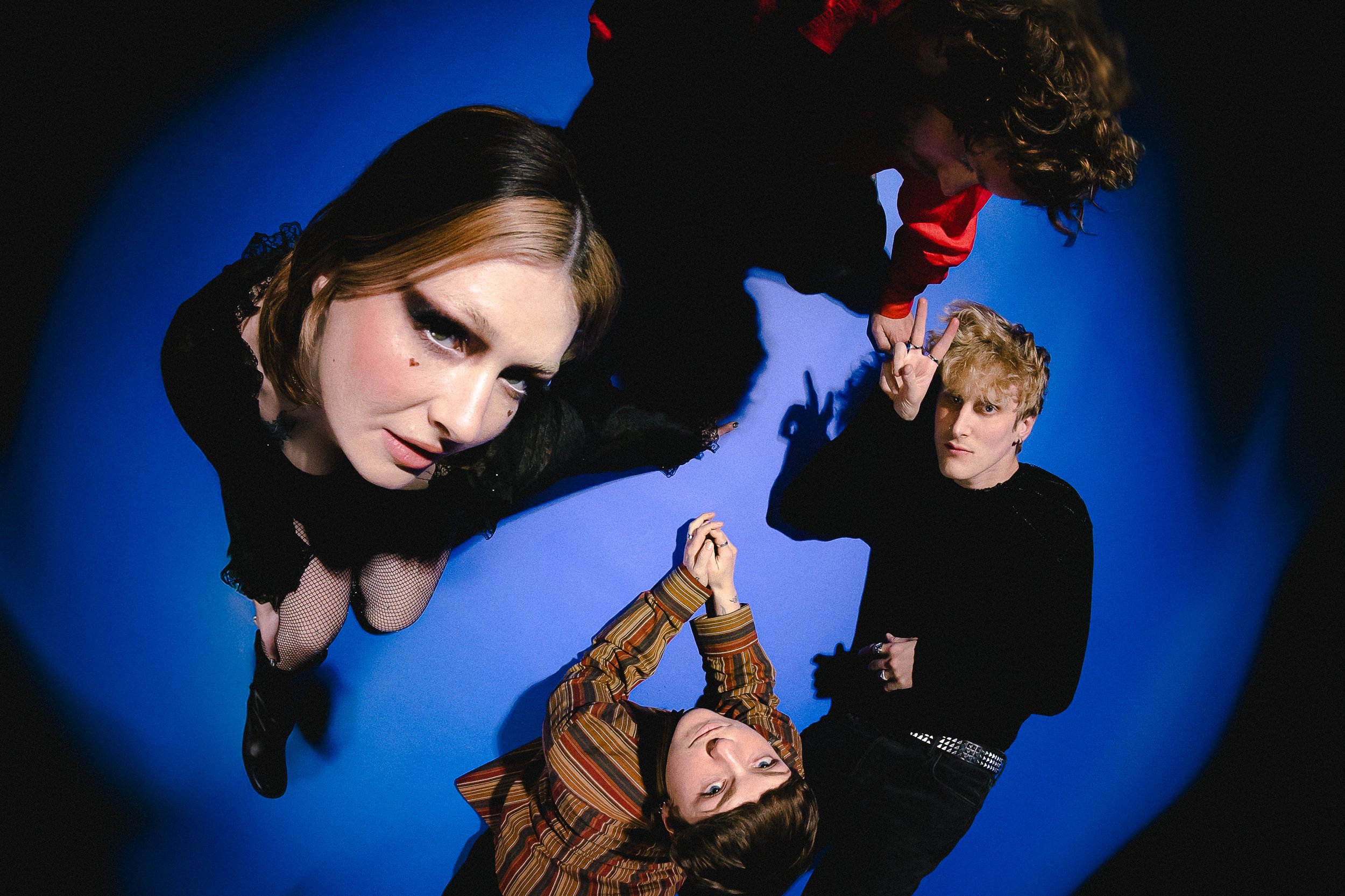
VULNERABILITY, CREATIVE TENSION AND GROWTH — Yumi Zouma opens up about the freedom that came from finally letting go creatively on their latest album No Love Lost to Kindness. More than a decade together, the New Zealand band continues to evolve sonically and emotionally without losing what makes them unmistakably Yumi Zouma.
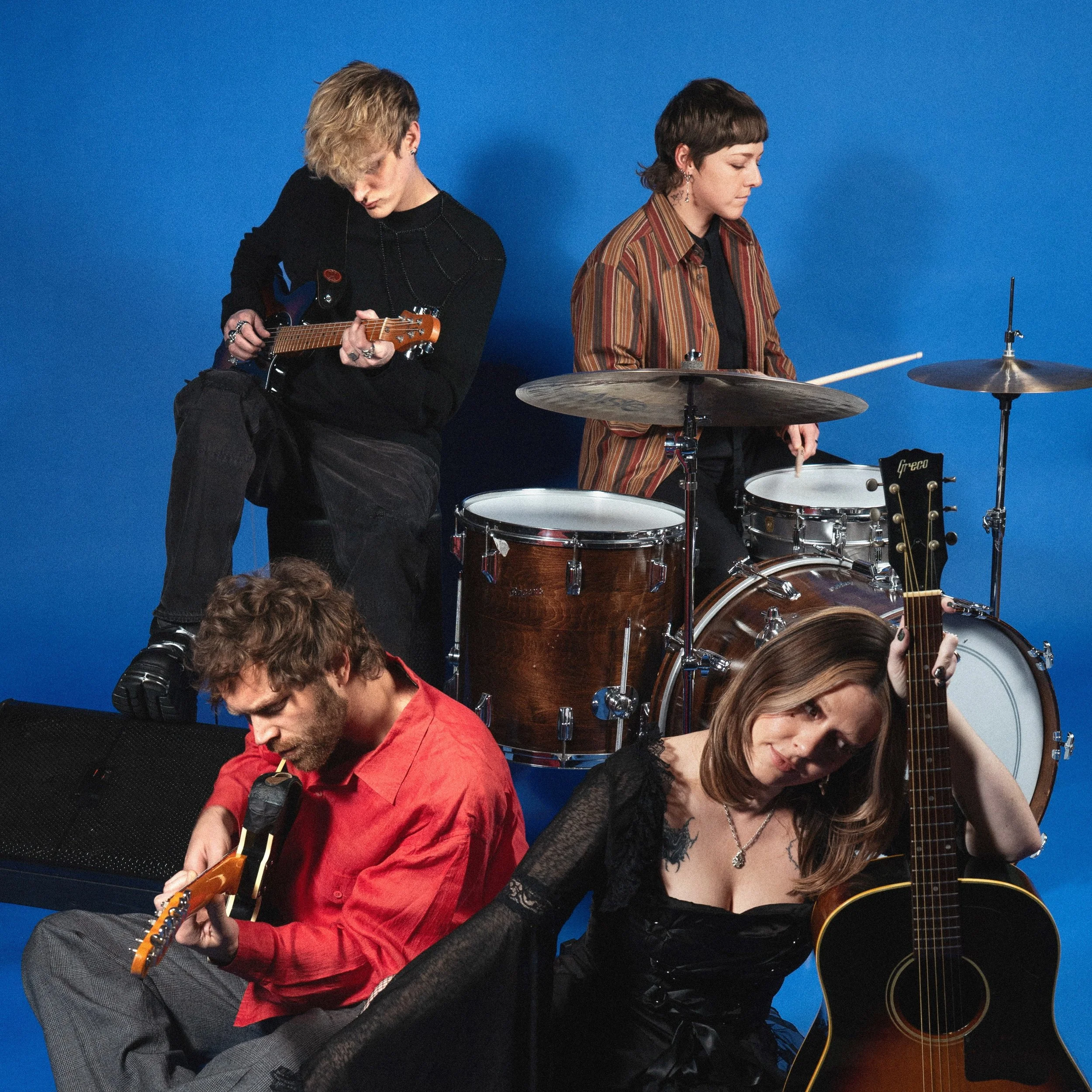
Long distance is no issue for the band as vocalist and keyboardist Christie Simpson lives in Melbourne, guitarist/multi-instrumentalist Charlie Ryder lives in London, guitarist and vocalist Josh Burgess resides in New York, and drummer Olivia Campion lives in New Zealand. For them, living scattered across cities and countries continues to shape the way they work together, and only enhances their chemistry even more as a band. “We’re never getting sick of each other,” Simpson states.
No Love Lost to Kindness captures a more chaotic and exposed side of Yumi Zouma without losing the warmth and intimacy of their near and dear dream-pop roots. The rock-leaning album moves fluidly between mental health themes, angsty creative risk, and lighter, playful moments. This record explores “both ends of loud and quiet,” as Simpson describes it. Though the album’s louder moments may feel like a seismic shift to longtime listeners, the band describes the evolution less as a reinvention of Yumi Zouma and more as a continuation of ideas they’ve been slowly expanding toward for years.
Now, with their headline tour freshly underway after kicking it off on April 30, the band is finally bringing these new songs to life on stage.
Read below to read Yumi Zouma’s reflection on the emotional weight behind No Love Lost to Kindness and what letting go creatively means to them as they kick off their North American headline tour.
LUNA: Now that your album No Love Lost to Kindness has been out, how are you guys feeling about it all?
SIMPSON: Very exciting! It's been a long time coming. It's great to finally have it out and have people hear it.
LUNA: This album’s been described as a big shift for you guys. Did it surprise you by the end of making it?
SIMPSON: I would say it definitely is a shift. I think the part that I felt maybe had been overstated was that we were no longer a dream-pop band, and we're a rock band now. While that is true for a lot of the songs, I think there is a little bit more nuance in the singles, especially those that have a more rock feel. The remainder of the album definitely can't really just be described as rock. There's still a lot of our dream pop roots in there. A “shift” is the perfect way to describe it. It's continuing the shift that we'd started in our last EP, with a kind of more rock sound and a little bit more emo songwriting and lyrical inspiration. There's a little bit more of that in this one. But then there's also some fun, happy, cute stuff too. So we got a bit of both.
RYDER: This is just one of the after-shocks in the entire seismic shift that started back in 2014 with EP one, very soft-synth pop, and now we're in the crevice of grunge. Laughs
BURGESS: I think it is interesting that the way that people listen to music feels way less linear than it once was. So I can totally appreciate that if you heard “In Camera,” our most popular song, which is very steeped in the dream pop sort of tradition and then put on “Blister” from this album, it would sound like a huge seismic shift. But if you’re one of the few people who listen to everything we release intently in sequential order, it would make sense. That's just not how people digest music in the age of TikTok. You see songs blow up 10, 15, 30 years after the fact
LUNA: Do you guys see yourself trying out any different genres in the future too?
RYDER: I think with Yumi Zouma, I don't think we ever really set out to create anything in particular. We just make whatever comes naturally to us. We’re very lucky because it feels like we have a very wide range of sounds that we can go across without ever losing what Yumi Zouma sounds like. It's very freeing. As an artist, I feel like we can pursue whatever we really want to do, and it's the combination of all of us together as people that Yumi Zouma.
SIMPSON: When we're writing a song, we think, “Oh, my God, this is so different than anything we've ever done before,” and then other people might listen to it and it still just sounds Yumi Zouma to them. It’s so hard to see it from the outside, but I do think it is something that is actually a strength of ours. No matter what we do, it’s always going to sound like us at the end of the day. Even though we're pushing boundaries and changing styles and references that we're pulling from there's our sensibility there. It's still my voice, even though my voice might sound different if I'm singing a little bit more direct rather than this very soft kind of layered vocal. It’s nice to be able to do both. I think this album is one of my favorites for the fact that we really did explore both ends of, louder and quieter.
We did explore going more aggressive, more rock, more early 2000s rock radio that we really just felt would be fun to do, and we asked ourselves, “how can we make it feel raw?” It's very minimal, or it's really moody, it's extra sad, because we've always been a little bit shy of that end of the scale too. It's nice to just have a chance to explore avenues. We've been in this middle section exploring within that. Every time we write an album, we try and push a little further out. There’s so much we can do and that we want to do, because it can get really boring doing the same thing.
People forget that we are more than 10 years older now than when we started and we're different people now. Our lives are different, and we've been going through different things. And I also think the world is very different now to when we started. This album wasn't created in the same optimistic world that we used to create albums in. It's a different world. In my personal experience, there's been a lot more challenges. You can't help but feel like writing angstier and sadder songs. That's a vessel for that.
LUNA: This record definitely feels more personal, vulnerable, and raw. Was that harder to write, or more freeing?
SIMPSON: For these guys, it probably is harder when it is more personal. Historically, we've been more collaborative on lyrics and this album is probably the one that has more songs that are just about a single subject matter, and one person sort of took the reins more. Usually, a lot of them are more about my personal experiences, because I just had a lot to say. Laughs It can be really hard to relinquish that control of a story. Charlie and Josh were working so closely on writing the song, starting the track, and doing a lot of the work that goes into creating the instrumentals and the melodies of it all. But there are lots of songs where they did say, “let go. you can tell your story on this one,” which was very free. It’s a real blessing to be able to do that on some of them.
It does make it hard, too, because then you feel you hold on a lot more tightly to the story that you're trying to tell and the lyrics. You're way more sensitive if somebody does want to change some lyric or something that doesn't sit right with them. It can feel much harder for me to also let go and say, “yes, okay, I'm willing to compromise,” when it is that personal. I think that's where the whole process becomes a little bit trickier, but it was worth it in the end.
BURGESS: I don't think anyone was ever super controlling in the band, but this record definitely felt like a bit of an exercise of letting go. It’s a record that has less of a heavy hand on things, and I think that that actually entered like in every part of the process, whether it was producing the songs or writing them. We were a lot more willing than ever to let things be, however they unfold. There’s this kind of power in some of the heavier stuff that it sort of propels itself forward a little bit more.
SIMPSON: I feel like the song carries itself, and then the message sometimes pops up naturally, and then it feels better to just let that message stick with it to the end instead of trying to change. In the past with different styles of songwriting that we've done, it's easier to find lyrics to fit the mood, but I think these songs felt like they got entwined quite early.
LUNA: Was there any specific track that you guys clashed on when making the album?
RYDER: We really just let whatever happen on this album. For the first time we were just like, “if a song needs to be ridiculous, let's just be totally ridiculous.” A good example of that is the track “Blister.” We fully leant into trying to make the most intense, pop-rock, kind of cell phone commercial ad song that we could do. Like, what would be a Super Bowl halftime advertisement, kind of song, or what would be the theme tune to Madden? We just had fun and we didn't really care.
SIMPSON: I think Charlie's point is that there are probably an equal part of songs on this album that were fun and we just rode out the wave. “Drag” was a similar one where it felt hard to finish, but I think we were all on board with the vision from the start. I actually think a lot of the songs we clashed on didn't make it on the album. Laughs So I think that's a really good sign that the ones that made it onto the album were meant to be on there. Not because they offered the path of least resistance, but It's just that we felt it was worth it to keep pushing wherever we got stuck with them.
LUNA: I really enjoyed the track “Drag.” How was it writing something so vulnerable and personal?
RYDER: It was a song that came together relatively quickly in the studio. The instrumentation was really fun to do, because it was one of the first ones that we really connected on and vibed with.
SIMPSON: It came together quickly at the start. I remember being in the studio room in Mexico City and doing scratch vocals for the chorus. I was channeling another album I was stuck on in the whole year leading up to us starting to write the album which was Blue Rev by Alvvays. I was channeling that kind of energy, like a big echoey and really big reverberant feeling. I don't know how we got into the lyrics. I had been just diagnosed with ADHD a couple months before, and had just started medication just before we left on tour. I was thinking about my inner child and being a kid and realizing I actually wasn't a very good kid, but I just learned to be good as a coping mechanism.
Then I realized what I'd already done for the chorus could be framed and rewritten slightly to make sense in the context of this reflection on my past life, pre-ADHD diagnosis. And these guys were very supportive of that. It made sense for the feeling of the song as well, which was this big, cathartic, and optimistic chorus after these moody reflections in the verse.
LUNA: Were there any particular artists or albums inspiring you while making this record?
BURGESS: I really love an artist called Nilüfer Yanya, and her record Shameless. That was a really cool mix of heavy but also really delicate at times. It felt like it was a nice way to get some of that heaviness, but also keep those soul-crushingly sad moments. Our track “95” is a good example of where we sort of leant into that. But also a lot of 2000s alternative rock.
RYDER: For me, it was a mix of really niche New Zealand bands from the 90s and then from the States I’d say The Smashing Pumpkins.
SIMPSON: I made myself a Spotify playlist for this exact moment. I listened to a bit of Blondshell, and saw her play live twice in Australia. The first time just absolutely blew my mind and then her album became a total obsession. Hearing someone sing with that much power and some of her songs are so angry, but so beautiful. Some of them are much more chill, but I just loved her lyricism. I wanted to do songs that we can perform live where we can have this same level of energy. Also, early 2000s rock, I was pulling a lot from The Veronicas, who are an amazing Australian duo from the early 2000s and of course Avril Lavigne, she was a huge one in my childhood that I feel like I finally got the full circle moment. We hit this Y2k influence this time. I’ve also always been in love with Fleetwood Mac. There's a couple songs on their albums where I got to lean into the more moody, quiet or witchy songs. But it feels really cool going back and listening to these specific songs and being able to pin-point the influences. Like at this specific time, it was a Blondshell, but then when I was five, it was Avril Lavigne. And then since I was 15, it's been Stevie Nicks. It’s a nice lifespan that goes into it, especially for vocals. These are the vocal influences that hopefully people can hear on this album.
LUNA: How has living in different cities and countries affected the way you collaborate?
BURGESS: We started this record together in Mexico City, and I think being somewhere unfamiliar together really helped creatively. It was like a unique bonding exercise for us. You're all sharing new experiences together like figuring out where to eat, exploring the city, discovering things as a group. I think that openness naturally carried into the music and pushed us toward making different creative choices than we might have if we were all just hanging at home.

LUNA: You guys have been playing together for more than a decade now, how do you guys feel about that?
SIMPSON: Makes time feel strange. It is kind of strange. It’s funny when I look at old photos from the first big tours with the band that I was on, and I was 20 years old. I was so little and just that I've been doing it that long. You feel like a whole different person. We go through periods of getting really used to being on tour, and then we haven't been on tour for a while now, and you sort of feel disconnected from it by just virtue, as well, of being separated from each other. It’s kind of amazing that we've been doing it at the level we have been for as long as we have, and we all still like each other. think that's the real testament to being in different cities as well. It’s harder but it does make us stay bonded and emotionally connected to each other. We're never getting sick of each other either.
LUNA: What songs on the record are you most excited for people to connect with?
BURGESS: “Cowboy Without a Clue.” I feel like it’s the most classic Yumi Zouma song on the record, but also one that feels like a progression. I'm quite curious to hear if people connect with that one.
RYDER: I'm most excited for people to hear this moment at two minutes and fifty-eight seconds in the song “Judgment Day.”
SIMPSON: There are certain songs that it's nice to know they're out in the world. But I feel like when I'm thinking about that, I'm really just thinking of the second half of the album, because we did release the first half of the album as singles. The first half is more of the rock half, and maybe a little bit less serious, a little more frivolous, all the big feelings. Then it changes into this different mood. And I think all the rest of those songs are songs I am really excited for people to hear, because I think they're quite different to what we've done before, even “Cowboy Without a Clue,” is more of a throwback to songs we've written before. That's probably one of my favorites on the album. The last song on the album, “Waiting for the Cards to Fall", is very different from anything we've done before and I feel like it's the perfect closer. So we really hope people will make it all the way through the end when listening.
LUNA: How are you guys feeling about the tour? Any specific song you guys are most excited to play live?
SIMPSON: I think we're all excited. I'm also really nervous. It’s been a while since we've played a show. I’m excited to play “Phoebe's Song” since it’s one of my favorites on the album and it's just fun to sing.
RYDER: I'm really excited to play “Bashville in the Sugar” and “Blister” because they're going to be big rock and roll moments in the set.
LUNA: Nice! Well I hope tour goes amazing for you all!. Thank you guys for joining in today! To end on a fun note, other than music, what's something that's been bringing you guys joy lately?
SIMPSON: I've just moved into a new apartment. My partner and I have a new obsession of finding furniture on Facebook marketplace and then making him drive us to go pick it up from random strangers' houses. So that's really fun. And dare I also say “Heated Rivalry” brought me a lot of joy watching, really good show.
RYDER: I saw a lot of great shows like Alex G and Water From Your Eyes. I’ve also seen a lot of great movies, which brought me joy recently like Hamnet, Sentimental Value. and Marty Supreme.
BURGESS: I’ve been traveling a bit recently and just trying to be in the moment and see different parts of the world, which is a very privileged thing. Traveling has brought me a lot of joy, and I'm looking forward to doing even more of it under the guise of touring.
